
What snooker odds really cost the bettor in 2026
 Available in US
Data current as of 30 October 2026; every bookmaker detail verified against the UK Gambling Commission’s remote-operating register.
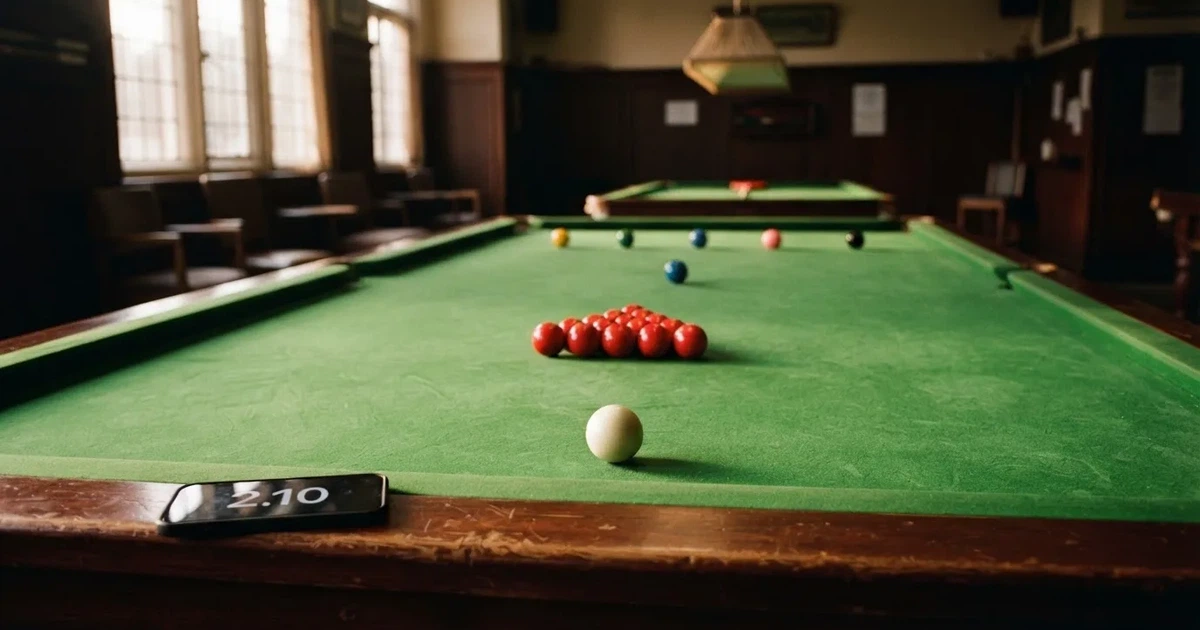
A bookmaker’s price on a snooker frame is not a guess at who wins. It is one slice of a margin built into every market — frame winner, total frames, handicap, century break, session line. The same 1.90 on either side of a two-way line costs the reader around 5% of every pound they put on it before a ball is potted, and the cost climbs sharply the more one-sided the match is. This page reads the snooker odds that licensed UK bookmakers are publishing in 2026 for what they cost the punter: where the margin sits, what the welcome offers actually demand in turnover, what in-play and cash out look like for a frame-by-frame sport, and which markets the top ten GB-licensed brands on the Commission’s register actually run. Snooker is not a high-margin sport for the back office, but it is also not a courtesy line: a 147 max-break market sits at 250/1 and above, and a frame handicap on a first-round qualifier carries a heavier take than a televised final.
Where crypto and anonymity meet snooker
Snooker betting with bitcoin, ethereum or any other coin sits in a peculiar spot: every GB-licensed bookmaker on the public register requires a name, address and date of birth before the first deposit and uses GAMSTOP and a financial vulnerability check to keep a customer in view, so the strict “anonymous” pitch belongs to operators outside the UK regime. What the licensed end of the market does offer is a payment-rail choice: bank transfer, debit card, a few e-wallets, and in some cases an Apple Pay or Google Pay front-end, but never a coin balance settled on a public ledger as the deposit record.
What the crypto question really asks
A reader typing “crypto snooker betting” is not after a coin wallet; they are after a payment method that does not name them on the bank statement, does not bounce off a credit-card ban and does not run the deposit through a GamStop-permitted account. A crypto deposit at a licensed bookmaker still hits the licensed operator’s own verification flow — same account, same KYC, same GAMSTOP check — so the protection of a coin ledger disappears the moment the coin is converted back into a sterling balance on the betting account.
Offshore crypto-native books do the opposite: a wallet address and a signature, no Commission licence, no GAMSTOP, no £150 vulnerability check, no 10x bonus cap. The trade is a clean price line for a punter who has self-excluded, or a stake funded from a source the bank would not entertain, against the loss of every British consumer-protection route if the operator declines to pay out. Crypto is therefore not a payment-method question on this page — it is a jurisdiction question, and the answer is the one the rest of the page makes plain.
Pseudonymous wallets and the Commission register
The Commission’s public register lists business names, trading names, account numbers and the categories each licence covers: remote general betting standard (real events), remote betting intermediary, remote pool betting. It does not record a payment-method field. A punter looking for a brand that takes bitcoin will find no such column on the register, because the register is about the licence, not the cashier. The cashier is in each operator’s own terms page.
Blockchain rails in plain language
A blockchain rail settled in coin moves value from one wallet to another without a clearing bank; that is the whole pitch. Once the coin arrives at the bookmaker, the bookmaker either credits a sterling balance (and the deposit shows on the bank statement as the bookmaker, not as “BTC purchase”) or credits a coin balance at an internal rate. Either way, the licensed operator’s KYC, AML and affordability controls apply unchanged — they are the conditions of the licence. The pseudonymity lives on the rail, not on the betting account.
Bonuses, free bets and what they really cost
A welcome offer is the part of the snooker page where marketing writes one number and the small print writes another. The headline number is the pounds of free bet on the table; the cost number is the turnover, the minimum price, the deadline and the cap on winnings — read together, they tell a punter whether the offer is worth claiming or simply worth walking past.
Welcome offers from the licensed bookmakers on the register
Three of the ten reviewed brands carry a sports welcome offer worth describing in detail. Coral’s terms state a deposit and a sports bet of £20 or more at minimum odds of 2.0 (1/1), with £40 in free bets issued within 7 days and expiring 7 days after issue, for new GB customers who opt in. Unibet runs the same headline — “Get £40 in Free Bets when you bet £20” — under Platinum Gaming Limited, with a debit card or instant bank transfer funding the deposit. BetMGM’s sports welcome for new UK customers is four £10 free bets (two football accumulators of 4+ selections and two sports multiples of 2+), issued once a £10 or larger deposit is followed by a sports bet within 7 days; minimum odds and an opt-in are required, and the free bets are valid for 7 days.
The Commission has been running a staged promotion regime since 19 January 2026: wagering requirements on bonuses are capped at 10x, and mixed-product promotions — an offer that asks a punter to gamble on two product types such as betting, casino, bingo or lottery to clear one bonus — are banned. None of the three offers above carries a wagering multiplier on the free-bet credit itself, which is what most readers expect, but each carries a minimum price at which the qualifying bet must be settled for the free bets to be issued. A minimum price is a bettor’s gate: an odds-on single on the World Championship favourite fails it.
What a free bet really pays
A free bet is a credit, not a refund. If a £10 free bet wins at 3.00, the bookmaker pays £20 — the winnings — and keeps the £10 stake. That is the rule of every free bet on the licensed UK market, and it is the rule that decides what the offer is worth on average. The arithmetic is straightforward: the expected value of a free bet depends on the odds at which it is placed and on the payout share of the market it is placed in. A free bet is worth more on a long-priced frame winner at a small-payout market than at a short-priced favourite — but the longer the price, the lower the implied win probability, so the expected value sits in a band, not at one point.
Two practical points follow. First, the punter does not have to win the qualifying bet to claim a free bet — Coral, Unibet and BetMGM’s offers pay out in free-bet credit on settlement regardless of result — but the free bet cannot be split, cannot be cashed out before settlement, and expires 7 days after issue across the three. A punter who lets the free bet expire reads as having donated the credit back. Second, the headline offer figure is gross, not net: a £40 free-bet bundle on a £20 qualifying bet is worth between £20 and £28 in expected value on a market that pays out 80–85%, not the £40 the headline promises.
The bonus cap and what it removed
The 10x wagering cap on bonuses has pruned the heavy end of the welcome table — the £10 bonus with a 50x playthrough, once a market staple, is now outside the rule. BetMGM, Coral and Unibet publish offers without a wagering multiplier on the free-bet credit itself. The cap does not address the value of the bonus in pounds, which is one of the limits the Commission has not set. The result on the page: every licensed welcome offer on this list is structured as a free-bet credit after a qualifying bet, not as a cash bonus with a playthrough, and that is the shape the small print now allows.
Live betting, in-play and cash out on a frame-by-frame sport
Snooker is the rare sport that lends itself to in-play betting at the frame level: a match is a sequence of discrete, decided events, and the scoreboard updates after every pot. A frame winner market can be suspended and reopened between frames; a total-frames market can move on the actual break; a next-century-break market can come alive mid-frame.
What “in-play” means in a frame-by-frame sport
In-play betting in snooker is set-priced and suspended, not a continuous market. After each frame, the bookmaker’s traders reprice the next-frame winner and the match outright, and the betting slip opens for a short window. A punter who sees a player three frames up in a best-of-9 race to 4 is looking at a market that has just shortened the favourite to a price that reflects the scoreline — and at a handicap line that has shifted accordingly. The bookmaker’s margin on an in-play frame is usually wider than on the pre-match price, because the trader has to build the price without a market’s depth. That is the cost of the timing.
Cash out on snooker
Cash out is the operator’s offer to settle the bet before the match is over, at a price the operator sets from its own model. On a frame-by-frame sport the price moves cleanly with the score: a 2-0 lead in a best-of-7 sees the cash-out value rise, a missed match-ball sees it fall. Coral and 888sport publish cash out as a standard feature of the bet slip; BetMGM and Unibet carry it on their main markets; the betting exchanges Smarkets runs a lay price that functions as the punter’s own cash-out. Cash out is not the same product as the price the operator gave at bet placement — it is the operator’s price now, with a margin inside it, and the operator has the discretion to suspend it mid-frame.
Live streams and the data feed
A small number of the reviewed brands carry racing streams (888sport’s terms describe racing streams; Snooker is rarely inside a bookmaker’s own streaming contract). Most snooker punters watch the feed from a broadcaster and bet from the slip. The data feed that drives the in-play market — frame score, current break, points required — is the operator’s own; the price is the operator’s own. There is no shared exchange of live snooker prices across the licensed market the way there is for horse racing, which means the punter’s only live-price benchmark is the same operator’s pre-match price.
Predictions, tips and what a tip really pays
A search for “snooker betting tips” and “today’s snooker predictions” returns a long tail of writers, podcasts and model output that turn form, head-to-head and ranking into a name on a slip. What it returns, in honest terms, is a price the punter already has on screen. The tip is a stake-and-selection call. The price is the bookmaker’s.
What a tip changes
A tip changes which side of the price the punter takes, not the price itself. If the tipster ranks Player A as the favourite to beat Player B, the price on Player A is already shorter than on Player B, and the tip is a vote of confidence on a price the punter could have read directly from the outright market. The punter’s edge, if there is one, is the gap between the tipster’s probability and the market’s implied probability — and the bigger the gap, the more the price is likely to have moved on the tip’s publication.
Form, ranking and the framing of a tip
Form, head-to-head, ranking and the venue are the four inputs most tipsters weight. The Crucible in Sheffield, where the World Championship has been held since 1977, is its own input — long-format matches (best of 19 in the first round, best of 35 in the final) reweight the favourites list, and a best-of-9 qualifier at a neutral venue plays differently. None of this changes the price. The punter’s decision is to back a player at the price the book has published, or to walk past the tip.
Why the tip is not the value
The tip is a vote; the value is the gap between the voter’s read and the market’s read. On a sport where the field is small and the public form table is thin (the World Snooker tour carries roughly 130 ranked players, of whom perhaps 30–40 are realistic outright contenders at any one ranking event), the tipster’s value over the market is small. The market also has more data than any single tipster — bookmaker traders watch the in-running markets in real time and have access to the exchange-side liquidity on Smarkets and the Betfair exchange. The punter’s edge is the rare price discrepancy between a tipster’s call and the bookmaker’s price. There is no model on the public market that pays more reliably than the bookmaker’s margin costs.
Bet types, odds and the markets snooker actually runs
A snooker match from the World Snooker tour opens four families of market: the match outright, the frame, the handicap, and the in-running. Inside each family, the licensed UK bookmakers publish frame winner, total frames, next-frame winner, century breaks in the match, session winner, handicap frames and outright tournament winner. The shapes are familiar; the price moves on snooker are smaller than on football or tennis because the field is smaller and the events are more discrete.
The four families
The match outright is the headline market: a single price on each player to lift the trophy, or to win the match. The frame market is the granular one: winner of frame N, total frames over/under, next century, first to 50. The handicap market is the spread of frames — Player A minus 2.5 frames in a best of 11, Player B plus 2.5 — and the price is set to balance the bookmaker’s book on either side. The in-running market reprices after every frame.
Each family carries the bookmaker’s margin in its price. A clean two-way line, both sides at 1.90 decimal (9/10 fractional), implies a margin of about 5% — the calculation this page runs is set out below. A frame handicap on a first-round qualifier, with one player priced at 1.45 and the other at 2.60, implies a margin of around 6–7%. A 147 max-break market sits at 250/1 and above; the implied margin is wider because the implied probability is small and the bookmaker does not need to balance the book on either side.
Price, value and the bookmaker’s margin
The bookmaker’s margin is what the book keeps of every pound bet on the market. The punter’s price is what the book pays out on a winning bet, plus the original stake; the return is stake × odds. The margin is the difference between a “fair” price and the published price, summed across all outcomes. A two-way market with both sides at 1.90 pays out 0.95 on every pound wagered if either side wins — a 5% margin, which is the standard for a balanced snooker match market. A three-way market on the outright tournament winner, where one player is 3.50, the second is 7.00, and the rest of the field is 50.00, carries a margin closer to 8–10%, because the field is harder to balance and the bookmaker has to leave more on the long shots.
Specific markets to read carefully
The frame-handicap market is the one most likely to carry a heavier margin than the outright, because the line is set per match and the bookmaker has less pricing depth. The session-winner market on a multi-session match (best of 35 in the final) carries a margin that widens as the match progresses, because the price depends on the running score and the trader has to reprice between sessions. The next-century market, where the price moves with the player’s current break, is the most volatile in-play price on the page. The 147 max-break market is a long-shot market and should be treated as a lottery stake rather than a value bet — the price pays the headline and the bookmaker keeps a wide margin.
Snooker tournaments, the calendar and where the action sits
Snooker runs almost year-round: the World Snooker tour stages ranking events from late summer through to the World Championship in spring, with invitational and major events outside the ranking list. The World Championship at the Crucible Theatre in Sheffield, held since 1977, is the calendar’s centre of gravity, with a final contested over best of 35 frames. The UK Championship, the Masters and the Champion of Champions run alongside the World Championship as the season’s invitational majors; the Scottish Open, the English Open, the German Masters and the China Open fill the calendar through the winter.
The season’s shape
The ranking season runs roughly from late May to early May the following year; the World Championship’s closing weekend is the season’s end. The 2026 World Championship, played at the Crucible between 18 April and 4 May 2026, was won by Wu Yize over Shaun Murphy 18–17 in the final, with the winner’s share of the prize fund at £500,000 out of a £2,395,000 pot. The prize numbers are the line on snooker’s commercial gravity and on why a bookmaker is willing to publish deep markets on the World Championship and thinner markets on a first-round ranking qualifier.
The field and the record book
Stephen Hendry and Ronnie O’Sullivan share the modern-era men’s record at seven world championships each; Joe Davis won 15 in a row from 1927 to 1946, an era with a much smaller field and a different match format. The professional tour is governed by the World Professional Billiards and Snooker Association (WPBSA), which owns the official rules; the International Billiards and Snooker Federation (IBSF) governs the amateur game. Most professional matches are best of 7, 9 or 11 frames; the World Championship’s first round is best of 19, the semi-final best of 33, the final best of 35.
Why the venue matters
The Crucible Theatre is a small, contained auditorium with a single table on stage, and the format of best-of-19 and longer has shaped the way the World Championship is bet. Long-format matches give more frames for a handicap to settle and more points for the outright market to move; the in-running frame markets open at the first interval and stay open through the closing balls. A ranking event in a different venue, played over best of 7, runs shorter markets and tighter prices, because the field is smaller and the price is set on a smaller betting base.
How the ten GB-licensed bookmakers price snooker
A reviewer stands on the Commission’s public register and reads the licensed set, not the search-engine set. The ten brands below are the ones the Commission’s remote register lists as holding a remote general betting standard (real events) licence — or, in one case, a remote betting intermediary licence — for customers in Great Britain, and they are the brands whose snooker markets, terms and welcome offers this page has read. Each carries a short note on what sets it apart in the comparison.
BetMGM
BetMGM’s UK sports welcome offer for new customers is four £10 free bets — two football accumulators of 4+ selections, two sports multiples of 2+ — issued once a £10 or larger deposit is followed by a sports bet within 7 days at the stated minimum odds, with an opt-in required and 7 days to use the credit. The platform is operated under LeoVegas Gaming PLC on Commission account 39198. Snooker markets sit inside the main sportsbook; the in-play frame markets and acca-builder are standard. The BetMGM offer is structured around accumulators, not singles, which raises the qualifying-bar question for a snooker punter who would prefer to back a frame winner. A single at 2.0 or longer will not unlock the accumulator-shaped free bets; a 4-fold football acca at minimum odds will. The cost is the punter’s preference between singles and multiples, and the read on the welcome is that the offer is built for the football accumulator, not for the snooker outright.
Bar One Racing
Bar One Racing trades as BAR 1 Betting — an Irish independent bookmaker with shops across Ireland and sponsorships at Dundalk, Fairyhouse, Navan, The Curragh, Curraheen Park and Cork. The Commission’s register lists Bar-One Racing Limited on account 56516. The platform’s snooker coverage is a thin layer over the racing-first product: horse and greyhound racing are the day’s work, and the snooker markets appear for the World Championship, the UK Championship and the Masters, less so for a winter ranking event. The punter’s question on Bar One is whether the snooker line is deep enough to take the price from one event to the next; the racing product is the firm’s strength.
QuinnBet
QuinnBet runs a Best Odds Guaranteed concession on Irish and UK horse racing from 10:00am daily on singles, multiples and system bets, capped at £150 per customer per race. The platform is licensed on Commission account 61011 under QuinnBet (Gibraltar) Limited. Snooker markets are inside the main sportsbook alongside the racing offer, and the in-play product carries the same shape as the firm’s racing product. The BOG cap is the headline spec and is a racing feature, not a snooker feature — a snooker punter reads it as a benchmark for the operator’s pricing discipline, not as a benefit on the snooker slip.
Coral
Coral’s sports welcome offer is “Get £40 in Free Bets when you bet £20”: a deposit and a sports bet of £20 or more at minimum odds of 2.0 (1/1), with the £40 issued within 7 days and expiring 7 days after issue, for new GB customers who opt in. The Commission lists LC International Limited on account 54743. Coral runs a deep snooker product across the World Championship and the UK Championship, with frame winner, total frames, century breaks and session markets; cash out is standard on the slip. The punter’s read is a high-street name on a licensed product with a long history of snooker coverage. Coral also runs the Ladbrokes product under the same licence, which is the reason the Commission’s register lists the licence under LC International.
Smarkets
Smarkets is the reviewed set’s only betting exchange: the Commission’s register lists Smarkets (Malta) Limited on account 39173 under the remote betting intermediary category. Deposits by open bank transfer are instant from £10 up to £10,000, and withdrawals are processed within 6 hours from £10 up to £100,000; UK debit card deposits are instant from £10 up to £15,000. The exchange is the price benchmark for the snooker market — back and lay prices, peer-to-peer matching, and a commission on net winnings rather than a margin baked into every price. A snooker punter looking for the cleanest price on a frame winner reads Smarkets first and the fixed-odds books second, because the exchange price is the closest the licensed market gets to the “fair” line.
VBet
VBet’s sports welcome offer is a £10 free bet issued when a new, verified customer stakes £10 or more on a first-ever bet that loses. The Commission lists SCGO Limited on account 44662. VBet’s snooker product sits inside a wider sportsbook with a strong football and basketball focus; frame winner and match outright are standard at the World Championship. The punter’s read on VBet is the risk-reversal shape of the welcome: a free bet on a loss is a one-shot refund, not a £40 bundle, and the value is narrower than Coral’s headline. The platform suits a snooker punter who wants a price on a wider range of events than the bigger brands publish, not the headline shape of the welcome offer.
Unibet
Unibet has operated since 1999, with the UK site run by Platinum Gaming Limited, Gibraltar, under Commission account 45322. Unibet’s sports welcome is “Get £40 in Free Bets when you bet £20”: a deposit and sports bet of £20 or more at minimum odds of 2.0 (1/1), with the free bets expiring within 7 days of issue, for new GB customers funding the deposit by debit card or instant bank transfer. Snooker coverage is deep — frame winner, total frames, century breaks, session markets and outright tournament winner — and the in-play product is one of the stronger ones in the reviewed set. The punter’s read on Unibet is a long-history operator with a strong snooker product and a headline-shaped welcome offer that mirrors Coral’s.
888sport
888sport’s product description on its app listing names pre-match and in-play betting, Cash Out, Bet Builder, racing streams, BetFinder form tools, a live bet feed and daily boosted odds. The Commission lists 888 UK Limited on account 39028. Snooker markets include the match outright, frame winner, total frames and century breaks across the World Championship and the UK Championship; the Bet Builder product is a same-game multi, and the boosted odds land on a curated shortlist of events each day. The punter’s read is a platform where the boosted-odds and Bet Builder shapes sit alongside a snooker product of standard depth.
Tote
Tote is the pool-betting brand in the reviewed set: the Commission’s register lists TDCO Limited on account 54779, with pool betting as the principal product alongside the standard sportsbook. William Hill’s Best Odds Guaranteed on UK and Irish horse racing — from 8 AM on the day of the race, on both single and multiple bets, excluding ante-post, tote and pari-mutuel bets — sits on the same platform family. The punter’s read is a brand with a long history in pool betting and a snooker product that sits inside the wider sportsbook; the Tote’s strength is the pool product on horse racing, and the snooker price is read alongside the firm’s racing line rather than as the headline.
Kwiff
Kwiff describes itself as a trademark operated by Spryme Ltd, licensed by the UK Gambling Commission on account 44448 under Eaton Gate Gaming Limited, with a 17+ App Store age rating. Kwiff’s product is built around “supercharged” odds — a price that is randomly boosted at placement — and the snooker markets carry that shape on the outright, frame winner and match markets. The punter’s read is a brand that sells the price moment rather than the long-term margin, and the snooker product is a vehicle for the boost mechanic as much as a market in its own right. That is the spec, not a recommendation; the punter reads it as the operator’s positioning.
Reading the table below
The comparison below lists each reviewed brand, the licence number and licence holder on the Commission’s register, and what the operator’s own terms state on the key subject of snooker betting. It is not a ranking and not a recommendation: the place in the list is the place on the register, not a verdict on the brand. A blank cell means the operator’s terms do not publish the point.
| Brand | Gambling Commission remote licence and holder | What the operator’s terms state on snooker |
|---|---|---|
| BetMGM | 039198-R-319450-029 (Commission account 39198) — LeoVegas Gaming PLC | Welcome offer is four £10 free bets on accumulators after a £10 deposit and qualifying bet, valid 7 days; snooker markets inside main sportsbook |
| Bar One Racing | 056516-R-332750-007 (Commission account 56516) — Bar-One Racing Limited | Racing-first bookmaker; snooker markets for major events only |
| QuinnBet | 061011-R-335683-004 (Commission account 61011) — QuinnBet (Gibraltar) Limited | Standard snooker markets alongside racing product; BOG on horse racing only |
| Coral | 054743-R-330863-014 (Commission account 54743) — LC International Limited | Deep snooker product on World Championship and UK Championship; cash out standard |
| Smarkets | 039173-R-319366-011 (Commission account 39173) — Smarkets (Malta) Limited | Exchange-only product; back and lay on snooker frame and match markets; bank transfer payouts within 6 hours |
| VBet | 044662-R-324273-022 (Commission account 44662) — SCGO Limited | Standard snooker markets inside wider sportsbook; welcome offer is a £10 free bet on a losing first bet |
| Unibet | 045322-R-324275-019 (Commission account 45322) — Platinum Gaming Limited | Deep snooker product with in-play and outright markets; welcome mirrors Coral’s £40 free-bet shape |
| 888sport | 039028-R-319297-014 (Commission account 39028) — 888 UK Limited | Cash Out, Bet Builder, boosted odds; snooker markets on majors with in-play frame product |
| Tote | 054779-R-331321-008 (Commission account 54779) — TDCO Limited | Pool betting principal product; snooker markets inside wider sportsbook |
| Kwiff | 044448-R-323408-017 (Commission account 44448) — Eaton Gate Gaming Limited | “Supercharged” odds mechanic on snooker outright and frame markets |
What the GB-licensed snooker market actually looks like
A snooker punter in Great Britain is buying from a licensed bookmaker or a licensed exchange. The whole commercial market sits under the Gambling Commission, a non-departmental public body sponsored by the Department for Culture, Media and Sport, and the framework is the Gambling Act 2005 — which covers Great Britain (England, Scotland and Wales). Northern Ireland is outside the Act and operates under its own older law, so a GB licence does not regulate Northern Ireland, and the Commission’s register covers GB licences only.
The licence question
Since the Gambling (Licensing and Advertising) Act 2014, an operator whose remote facilities are used in Great Britain needs a Commission licence wherever it is based (sections 33 and 36 of the 2005 Act as amended). A Curaçao, Maltese or Gibraltar licence is not a substitute, and a GB-facing operator without a GB licence commits an offence under section 33 of the Act (on summary conviction, up to 51 weeks’ imprisonment, a fine up to level 5, or both; six months in Scotland). The licence categories are remote general betting standard (real events), remote general betting standard (virtual events), remote general betting limited, remote pool betting and remote betting intermediary (the licence for betting exchanges).
The Commission’s public register can be searched by business name, trading name, domain or account number, and it is the whole test of whether a brand holds a licence. The register lists licence categories against each account, so a punter can read the licence type as well as the licence status. The ten brands on this page each sit on the register against a current remote licence at the date of the currency stamp on the page.
The categories and what they mean
A remote general betting standard (real events) licence covers fixed-odds betting on real sporting events, including snooker. A remote betting intermediary licence covers the exchange model — peer-to-peer matching of back and lay bets — and is the licence category that Smarkets holds. A remote pool betting licence covers pool products such as the Tote’s horse-racing pool. The licence category is on each register entry, and a punter reading the register can see which category a brand holds before opening an account.
Verification, age and the first deposit
GB-licensed remote operators verify name, address and date of birth before a customer can deposit or gamble (in force since 7 May 2019), and the verification applies to free bets and bonuses as well as to cash deposits. Minimum age is 18. A licence is therefore not a route to anonymous play, and an offer that claims anonymity at a GB-licensed brand is making a claim the licence conditions will not support.
In-play and what is on the menu
There is no statutory list of permitted bets or markets in Great Britain: an operator holds a licence for a category and offers markets under its own rules and the LCCP. In-play betting on snooker is offered across the reviewed set, with controls and price limits set by the operator. Esports and virtual events are treated separately under the licence categories; bets on politics, TV shows and novelty markets are offered by some GB bookmakers and no statutory prohibition was found. Spread betting on financial markets sits under the Financial Conduct Authority, not the Commission, and Spreadex — regulated by the FCA for spread betting and by the Commission for fixed-odds — states that spread betting losses can exceed the deposit.
Tax and what the punter pays
The punter pays no tax on betting winnings in Great Britain (general information, not tax advice; a professional gambler should ask HMRC or an adviser). General Betting Duty is the operator’s tax on gross profits, currently 15%, with a new remote betting rate of 25% from 1 April 2027 within the duty structure; remote bets on UK horse racing, SSBT bets, pool betting and in-person betting stay at 15% (HM Government policy paper of 26 November 2025). Until 1 April 2027 the remote rate is 15%; whether operators pass the duty on through odds is not established, and it is never correct to write that the player is charged duty.
Advertising and the bonus cap
Advertising is not licensed by the Commission; it runs through the CAP Code (non-broadcast) and the BCAP Code (broadcast), enforced by the ASA, alongside the LCCP marketing conditions. CAP Code section 16 sets the socially responsible line: marketing must not be of strong appeal to under-18s, and no one who is or seems to be under 25 may be featured gambling or play a significant role (an exception applies to marketing placed where a bet can be made directly). Since 19 January 2026, wagering requirements on bonuses are capped at 10x and mixed-product promotions are banned. The Premier League clubs’ voluntary withdrawal of gambling sponsorship from matchday shirts from 2026/27 is a club-level decision, not law. The Commission never endorses a brand, and the register lists brands, it does not recommend them.
Offshore and what the punter loses
A punter who uses an unlicensed offshore brand trades the licence for the absence of every British consumer-protection route: no GAMSTOP coverage, no Commission complaints route, no approved dispute-resolution body, no British consumer redress if funds are withheld, and the offer is not bound by the 10x bonus cap or the £150 vulnerability check. The Commission’s enforcement is disruption rather than blocking — cease-and-desist notices, search-engine referrals, work with registrars, hosts and payment providers, and court-order DNS blocking powers the Commission has been given or is about to receive. ISP blocking is not in operation. Providing gambling facilities in Great Britain without the licence the Act requires is an offence aimed at the operator. No offence aimed at the customer who bets on an unlicensed site was found: the framing is loss of protection, never legality.
Responsible gambling and the safeguards in place
Snooker runs year-round, and the punter’s exposure is to a stream of events rather than a single match. The licensed market’s player-protection architecture sits on four pillars: GAMSTOP, the financial vulnerability check, deposit limits, and the help services (GamCare, GambleAware, NHS gambling clinics, Gamblers Anonymous).
GAMSTOP
GAMSTOP is the national multi-operator online self-exclusion scheme and a mandatory licence condition for online operators since 31 March 2020. Exclusion periods are six months, one year, five years, or five years with auto-renewal. After the minimum period, the exclusion stays in place for a further seven years unless the customer asks GAMSTOP to remove it. GAMSTOP covers online sites and apps; betting shops use a separate service. Kalooki Sportsbook is a GAMSTOP member, and every remote operator with a GB-facing product is bound by the GAMSTOP condition.
The financial vulnerability check
A financial vulnerability check (LCCP condition 3.4.4, in force since 30 August 2024) applies to licensed remote betting when a customer’s deposits minus withdrawals exceed £150 in a rolling 30 days (since 28 February 2025). It is a public-record check (bankruptcy, county court judgments), not an income check and not a credit reference check. Financial risk assessments — the “affordability checks” the press describes — are announced in a staged plan (Commission article of 7 July 2026), with no start date. The status is “announced, staged, no start date”. The £150 vulnerability check is the active layer; the affordability checks are the announced layer.
Deposit limits
Operators must offer a gross deposit limit on a fixed time frame (RTS 12): the first changes have applied since 31 October 2025, a second phase was postponed to 30 September 2026, and whether the second phase is live is not established. There is no state-set deposit or loss ceiling for betting: limits are the customer’s choice. Fitzwilliam Sports publishes instant deposits, fast withdrawals, timeouts and deposit limits alongside its safer-gambling links.
Help and where to go
GamCare runs the National Gambling Helpline. GambleAware funds treatment and research. NHS gambling clinics provide specialist face-to-face support. Gamblers Anonymous runs peer-support meetings. The links sit on every licensed operator’s safer-gambling page, including the reviewed set on this page. The Commission’s register is the test of the licence; the safer-gambling page is the test of the operator’s compliance.
How a margin is read in the odds
A bookmaker’s margin is the slice of every pound the book keeps on a market. The arithmetic is straightforward: take a two-way market with two outcomes, both priced at 1.90 decimal (9/10 fractional). The “fair” price on a 50/50 outcome is 2.00; the bookmaker pays 1.90. The payout share is 1 ÷ (1/1.90 + 1/1.90) = 0.95, or 95% of every pound wagered. The margin is 1 − 0.95 = 0.05, or 5%.
What the 5% means
The 5% margin on a 1.90 / 1.90 line is the cost of betting on this market. Every pound the punter wagers across the market pays out 95p on average, and the bookmaker keeps 5p. The number is independent of which side the punter backs: a £100 bet on either side at 1.90 returns £190 if it wins, and the expected value of the bet across the market is £95. The punter’s edge is the gap between their read of the outcome and the market’s read; the market’s edge is the 5%.
Reading different lines
A two-way line at 1.85 / 1.85 implies a margin of about 8%. A two-way line at 1.95 / 1.95 implies a margin of about 2.5%. A frame handicap at 1.45 / 2.60 implies a margin closer to 6–7%. A three-way outright tournament winner at 3.50 / 7.00 / 50.00 implies a margin in the 8–10% band, because the field is harder to balance. The narrower the margin, the better the price for the punter, and the wider the margin, the more the book keeps.
What the margin does not tell
The margin is an average across the market, not a prediction of the outcome. A punter who backs the favourite at 1.45 wins less often than the implied probability suggests, because the favourite is shorter than the fair price and the price is the bookmaker’s view of the favourite’s win rate. A punter who backs the outsider at 2.60 wins more often than the implied probability suggests, because the outsider is longer than the fair price. The margin is the bookmaker’s cut; the rest is the matchup on the table.
Frequently asked questions on snooker betting odds
How do you bet on snooker?
A punter opens an account with a GB-licensed bookmaker, completes the name, address and date-of-birth verification that the licence requires, deposits by debit card or bank transfer (credit cards are banned for gambling in Great Britain since 14 April 2020), and selects a snooker market from the sportsbook — match outright, frame winner, total frames, century breaks, handicap or in-play frame market. The stake is set against the published odds and the bet is placed on the slip. The settlement follows the match result, with cash out available on most markets before the match ends.
Can you bet on snooker?
Yes, snooker is on the licensed UK market and is offered as a real-event sport by every GB-licensed bookmaker on the Commission’s register, alongside other ranking sports and the invitational events such as the Masters and the Champion of Champions. There is no statutory list of permitted bets in Great Britain; the operator offers markets under its own licence conditions. The minimum age is 18, and identity is verified before the first deposit.
How can a bookmaker’s Gambling Commission licence be checked?
The Commission’s public register is searchable by business name, trading name, domain or account number. A punter enters the brand name or domain, confirms that the licence status is current (not lapsed, surrendered or under review), and reads the licence category — remote general betting standard (real events) for a fixed-odds sportsbook, remote betting intermediary for an exchange, remote pool betting for a pool product. The register entry lists the licence holder and the operating domains, so a brand that uses multiple trading names under one licence will appear once at the licence-holder level.
How is the return on a bet worked out from the stake and the odds?
The return on a winning single is stake × odds, where odds are in decimal form (a £10 stake at 3.00 returns £30, with the original stake included). The net profit is stake × (odds − 1), which is £20 on the same bet. For an accumulator, the odds of each leg multiply into one price — a treble at 2.00, 3.00 and 4.00 is a single price of 24.00 — and the return is stake × the combined price. Each-way bets double the stake (one half on the win, one half on the place), and the place terms vary by event and operator.
What is the bookmaker’s margin and how can it be seen in the odds?
The margin is what the book keeps of every pound bet on a market, averaged across all outcomes. On a two-way market priced 1.90 / 1.90, the payout share is 1 ÷ (1/1.90 + 1/1.90) = 0.95, so the margin is 5%. On a market priced 1.85 / 1.85, the margin is closer to 8%; on a market priced 1.95 / 1.95, the margin is closer to 2.5%. The narrower the margin, the better the price for the punter, and the wider the margin, the more the book keeps.
How do fractional odds such as 5/1 convert to decimal odds such as 6.00?
The conversion is decimal odds = (a ÷ b) + 1, where a/b is the fractional price. So 5/1 becomes (5 ÷ 1) + 1 = 6.00; 11/4 becomes (11 ÷ 4) + 1 = 3.75; evens (1/1) becomes (1 ÷ 1) + 1 = 2.00. Fractional odds are the British convention and decimal odds are the European convention; the two express the same price in different forms. The return on a £10 stake at 6.00 is £60; the return on a £10 stake at 5/1 is £60 (the £10 stake plus £50 profit). The decimal form includes the stake in the return; the fractional form separates the profit from the stake.
Tennis, darts & cue sports – signupbetsguide.com
Content created by the «signupbetsguide.com» team
