
Greyhound racing betting tips, 2026: how to read form, find value and avoid paying for hype
 Available in US
30 October 2026 — verified against the Gambling Commission’s public register and the operators’ own UK pages.
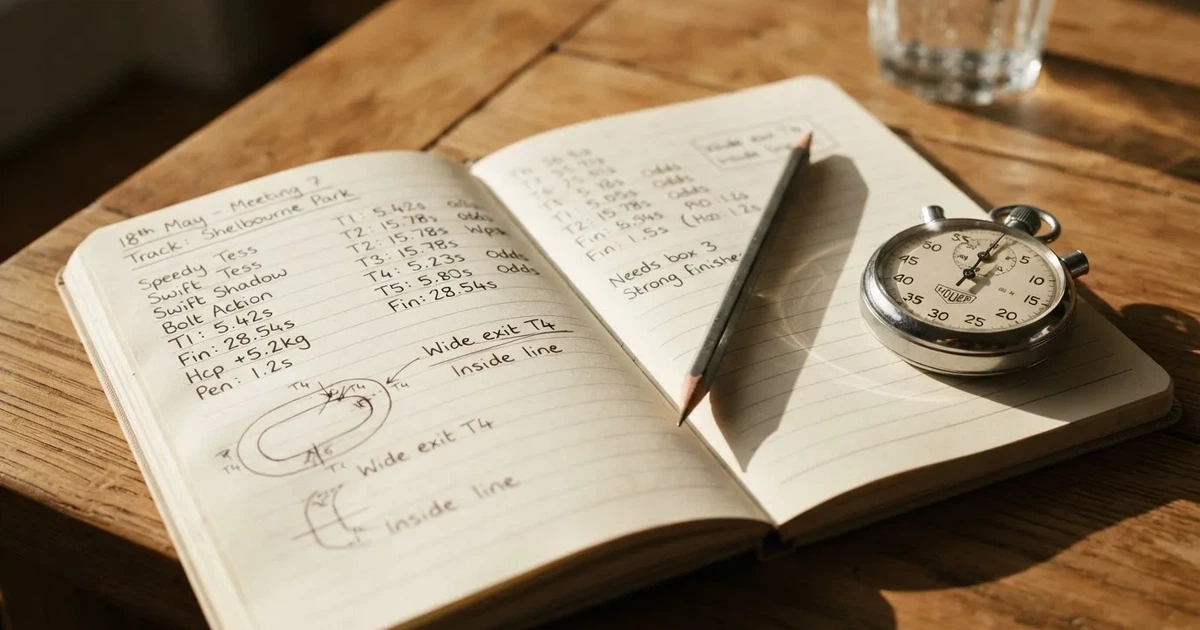
Searchers who type “greyhound racing betting tips” want picks. This one is not a tip sheet. It explains what a tip actually is — a price on a runner dressed up as a forecast — and then walks through the arithmetic that decides whether the price is worth what the bookmaker is asking. The angle throughout is cost: what this sport asks of the punter, what the welcome offers really take, and where the money stops mattering once a different number sits beside it. Greyhound racing in Britain is regulated by the Greyhound Board of Great Britain, which has 18 licensed stadia. That figure alone, twice the number of tracks most punters think they know about, is a hint of how much goes on beneath the surface.
Bonuses and free bets on greyhound racing: what they really take
The marketing lands first, so it goes first. Every welcome page in British greyhound betting uses the same handful of words: free bet, bonus, boosted odds, risk-free. They are not the same thing, and the gap between the headline and what the punter actually pays is where the cost of this sport lives.

A free bet, properly speaking, is a token the punter stakes but whose stake is not returned with a win. BetGoodwin’s Best Odds Guaranteed pays the bigger of the price taken and the starting price, up to £1,000 per bet on UK and Irish horse and greyhound racing — that is a price concession, not a free bet, and the cap on a single wager is the part the marketing copy does not lead with. Fafabet runs a parallel BOG on UK and Irish racing from 9am on race days. Unibet’s welcome is the textbook small print: £40 in free bets when you stake £20 at minimum decimal odds of 2.00 (1/1 fractional), free bets expiring seven days after they are credited, new GB customers only, debit card or instant bank transfer for the qualifying deposit. A £20 qualifying bet, four £10 free bets, seven days to use them, minimum price 2.00 on whatever the punter picks — the rule, not the headline, is what governs the value.
BetTom’s welcome splits into a sports arm and a casino arm: 50% back as a free bet up to £50 on the sports side, and 50% back up to £50 as free slot funds on the casino side. Two products, two conversions, two different clocks. The Commission caps wagering requirements on bonuses at 10x since 19 January 2026, and bans mixed-product promotions that require gambling on two product types to unlock an offer. A “bet on football, get free spins” link-up is not allowed; a sports-only welcome that pays back in free bets is. That is the shape of what survives.
The arithmetic of a free bet whose stake is not paid back is straightforward. Value = free-bet amount × (odds − 1) ÷ odds × payout share of that market. At decimal odds 4.00 on a six-runner race priced roughly to a 78% payout share, a £10 free bet is worth about £5.85 on average — not £40, not £10, and emphatically not the stake. The number that matters is the price the bookmaker is offering at the moment the punter uses the token, because the value scales with it.
The hidden costs sit elsewhere. Wagering conditions, where they apply, are capped at 10x: a £10 bonus carries a £100 turnover ceiling, no longer the £500 a 50x rollover used to demand. Minimum prices for qualifying bets usually sit between 1.50 (1/2) and 2.00 (1/1); minimum prices for bets placed with free bet stake usually sit between 1.50 and 5.00. Deadlines range from a few days to ninety. Caps on free-bet winnings exist on some offers and not others, and the absence of one in the marketing is not proof the offer has none — it is proof the marketing chose not to mention one. Every term listed in this paragraph is a small leak from the headline, and the leaks add up.
The cost-first read on a greyhound welcome is therefore: take the qualifying bet at the minimum price the terms accept, since price does not affect qualifying turnover but a higher price does raise the chance the qualifying bet itself becomes the bet the offer is supposed to fund; check the wagering multiple against the 10x cap; check the deadline against the diary; check whether the offer is paid in cash, in free bet credit, or in a token that can only be redeemed on a market the punter would not otherwise touch. After that, the price — the thing the searcher came for — finally gets a turn.
Greyhound betting on mobile: what the app changes and what it does not
The phone in the punter’s pocket is where most British greyhound bets are now struck. Most bookmakers in the field below run their greyhound product through the same browser view they use on desktop, with an app on top that handles the login, the deposit, the bet placement and the cash-out. The feature surface is what differs.

Unibet’s app is the heavyweight: live streaming across a deep racing schedule, bet builders on the bigger football and tennis cards, a casino attached, and the safer-gambling tools wired into the account — deposit limits, Player Profile test, product restrictions, self-exclusion, live chat, links to BeGambleAware, GamCare, GAMSTOP, Gambling Therapy and the BGC. 888sport ships a similar kit at a slightly different scale: pre-match and in-play, Cash Out, Bet Builder, racing streams, BetFinder form tools, a live bet feed and daily boosted odds. Betfred adds Sub Switch, Racing Post data, Extra Places, live casino and bingo. London Bet’s app is the smaller end: greyhound and horse racing alongside Pragmatic Play casino slots and a live in-play tab, published by Thistle Bet Limited and rated 17+ on the App Store. BetWright’s app is similar — UK-licensed, 18+, responsible gaming tools — without the racing-side depth. Lottoland’s app is the odd one out: lottery betting, casino, scratchcards and a sportsbook, with greyhound racing present but not the lead product.
The cost angle is the storage and data budget. Live streams are an extra cost in battery and bandwidth the punter did not ask for, and the streaming rights attached to British greyhound meetings are uneven across bookmakers — a meeting on one app is not always on another. Push notifications are a second hidden price: every operator wants the punter to accept them, and an offer alert that fires three minutes before the off is the closest thing the modern greyhound market has to a tip.
The browser route remains a real option. The Commission’s identity checks apply at the point of first deposit, not the point of first device — a punter who clears the check on the phone can usually clear it on the laptop too, and a bookmaker’s mobile site tends to be the desktop site with a thinner chrome. For the punter who keeps the bets to a budget that fits a small weekly envelope, the browser route keeps the streaming and the bonus code out of the equation, and the cost is the same.
Live betting and cash out on greyhound races
In-play on greyhound racing is fast, fragmentary and unforgiving. A six-dog race over 480 metres runs in under thirty seconds, and the in-play markets the bookmaker offers are shaped to that window. Match odds are the lead market, with a short cash-out window while the traps open and the rails fill. Forecast and tricast markets tend to suspend at the off and not reopen. Quinella, each-way and certain exotic markets are pre-off only.
Cash out on greyhound races is offered by the bigger books — 888sport lists it, Betfred lists it, BetBuilder-adjacent books list it — and it is the in-play lever most relevant to the cost story. A cash-out price is the bookmaker’s mid-market read of what the bet is worth at that second, with a margin of its own. Cashing out a winning bet early usually returns less than letting it ride, because the bookmaker’s mid-market price already accounts for the chance the leader gets caught; cashing out a losing bet early returns less than the original stake by a margin that is the bookmaker’s hedge. Both directions of the cash-out button cost the punter something, and the cost is opaque because the margin on the cash-out price is not disclosed.
Live streaming on racing is the in-play enabler for the bigger books and is restricted on the smaller ones. A punter who wants to bet in-play on a Wednesday night graded card at an independent track will find the streaming rights thin on the ground — the track produces pictures, the bookmaker pays for them, and only the bookmakers who pay carry the feed. Star Sports, Fitzwilliam Sports and the smaller Irish books like BAR 1 Betting have a narrower schedule.
The cost of in-play on greyhounds is therefore twofold. The bettor pays the wider margin on the in-play market compared to the pre-off price, and the bettor pays the cost of the cash-out margin twice if the bet is settled early. For the punter who wants to bet in-play, the right read on the bookmaker’s offer is not “live betting is offered” — almost every book in the field below offers it — but “what does the in-play margin cost on a six-runner graded race compared to the pre-off price, and is the cash-out window useful on a sport that finishes in thirty seconds?” The honest answer to that second question is usually no.
Predictions and strategy: what a tip can and cannot do
A greyhound tip is a forecast written as a price. It is not a guarantee and it is not a system. The reasons it is not a system are the reasons this guide exists.
Form reading on greyhounds is built from a handful of inputs that the bigger books make available and the smaller ones do not. Race grade (A1 to A10 on the open circuit, lower on graded cards) sets the class of the field. Trap draw is the start position, and it matters more on the bends than on the straight tracks. Recent times, sectional times at the bends and the run-home figure are the three numbers that separate a serious form student from a casual one. Weight is mostly irrelevant. Age matters up to about three and a half years, after which greyhounds plateau and decline. Track and distance preferences matter. Trainer-kennel form and the new-kennel bounce-back rate — a greyhound returning after a break winning a higher share than its form suggests — are inputs the sharpest form students use.
Statistics are not a tip. They are the raw material a tip is built from. A tip that names Trap 3 at 4.00 is a bet the tipster thinks Trap 3 has a 25% chance of winning the race, while the market thinks it has a 20% chance. That gap is the value bet, and the value bet is the only reason to take a tip over the market. A tip that names Trap 3 at 2.50 is a bet the tipster thinks Trap 3 has a 40% chance, while the market thinks it has a 40% chance — there is no edge, and the bet is paying for the bookmaker’s margin.
Staking and bankroll discipline are where most tipping plans fall apart. The Martingale — double the stake after every loss — looks like a system until the third or fourth loser in a row wipes a week’s bank. The Fibonacci adds the same risk in a smaller wrapper. Level staking — a fixed unit of one or two per cent of bank on every selection — is dull, hard to scale, and the only staking rule that does not eventually ask the punter for a stake they cannot afford. The right staking plan on greyhounds is a small unit on every bet, no escalation after losses, and a stop-loss at the size the punter is comfortable losing in a session.
The “system” sold under the greyhound tips search is usually one of three things: a tipster service, a staking plan sold as a system, or a software package that ranks runners. None of them overcomes the bookmaker’s margin. None of them overcomes the simple fact that the bookmaker sets the price and the punter takes it or leaves it. The honest framing is: build your own form, set your own price against the bookmaker’s price, and stake at a unit you can lose ten times in a row without flinching. Anything that promises more is asking the punter to pay for the privilege of finding out.
Bet types and odds on greyhound racing
The bet types on greyhound racing are short and well defined. Win is one bet on one dog. Each-way is two bets of equal size — one win, one place — so the stake the punter pays is double the unit stake the betting slip shows. Place terms vary by race and operator: most British graded races pay the first two, some pay the first three, and a small number pay the first four in big fields. Forecast is a bet on the first two in order, tricast on the first three. Quinella pays the first two in any order. Reverse forecast is the same bet twice, so a £1 reverse forecast is a £2 stake.
The accumulator — the acca — is a string of legs whose odds multiply. Three winners at 3.00, 4.00 and 5.00 return the stake at 60.00. Acca insurance refunds the stake as a free bet or as bonus credit if one leg lets the punter down, and the refund terms vary — which leg fails, how many selections the acca had, and whether the refund is paid as cash or as a free bet whose stake is not returned. Midnite’s acca builder and popular accas sit inside that feature, with maximum-stake limits on the boosted versions.
Bet builders are the newer tool. A bet builder on a greyhound race is unusual because the inputs that move a greyhound race — trap draw, race grade, recent form — are already priced in the match odds. Bet builders are more useful on football and tennis, where the inputs are independent. 888sport lists its bet builder across the bigger sports; Betfred’s is similar. On greyhounds specifically, the bet builder is mostly a marketing tool.
Spread betting on greyhound racing is a different product and a different licence. Spreadex is regulated by the FCA for financial spread betting and by the Gambling Commission for fixed-odds betting; the FCA route is the one that lets a punter take a position on the length of a winner’s winning margin, the time of the first bend or the total number of finishers in a meeting. Spread betting losses can exceed the deposit, which is the regulator’s plain-English warning on the front of the Spreadex site. The greyhound-specific spread products are a niche inside a niche, and the cost angle is the leverage: a small stake on a moving market can become a large loss before the punter can react.
The arithmetic of a single bet is short. Return on a winning bet = stake × decimal odds. Profit = stake × (odds − 1). A £10 win bet at 3.00 returns £30, of which £20 is profit. An each-way bet of £2 each way at 3.00 is a £4 stake; if the dog wins, the win half returns £6 and the place half returns roughly £2 (a third of the win odds for a place), for a £4 return on a £4 stake; if the dog places, the win half loses and the place half returns, for a loss of £2. The each-way is a useful bet for the punter who fancies a dog at a bigger price but wants a place cushion; it doubles the stake and halves the profit per outcome.
The starting price (SP) is the on-course fixed-odds price when the race begins. Best Odds Guaranteed (BOG) pays the bigger of the price the punter took and the SP, on UK and Irish racing, from 9am on race days at Fafabet and across all UK and Irish racing at BetGoodwin up to £1,000 per bet. The cap on a single wager is the part the marketing copy does not lead with, and the cap is what stops a small BOG concession from becoming a sharp tool against the bookmaker on a hot favourite. The punter who wants BOG should read the cap.
The price is the number that carries the bookmaker’s margin. Every British bookmaker’s greyhound market is built on the same skeleton: a payout share of roughly 78% to 82% on a six-runner graded race, with the rest kept as margin. The way the price carries the margin is by shortening every runner below its true chance — Trap 1 at 4.00 should be 5.00 if the dog really has a 20% chance, and the gap between 5.00 and 4.00 is the bookmaker’s cut. That gap is what a value bet tries to beat, and the gap is what no tipster can promise to beat on a regular basis.
Greyhound betting sports, tournaments and where the meetings live
Greyhound racing in Britain is the sport the searcher thinks it is: trap racing over distances from 250 to 950 metres, mostly on sand, with an artificial lure running along the rail ahead of the dogs. The bigger meetings are the Greyhound Derby at Towcester, the English Greyhound Derby, the Scottish Greyhound Derby and the category-one finals through the summer. The bigger independent tracks — Towcester, Hove, Monmore, Romford, Crayford, Yarmouth, Perry Barr, Sheffield — are the ones the bookmakers lead with their markets on. The smaller tracks run a steady diet of graded cards that are where most of the volume sits.
Greyhound racing in New Zealand is in the middle of being shut down. The Racing Industry (Closure of Greyhound Racing Industry) Amendment Act 2026 passed on 2 April 2026 and the phase-out is set for 1 August 2026. Winston Peters announced on 10 December 2024 that greyhound racing in New Zealand would be banned and phased out by 2026. Before the ban, Greyhound Racing New Zealand organised seven affiliated clubs — Auckland, Waikato, Whanganui, Palmerston North, Canterbury, Otago and Southland. The international angle matters to the British punter only because a few bookmakers offer NZ meetings alongside the British and Irish schedule, and the markets on those meetings will run down through 2026 as the tracks close.
The punter who bets on greyhounds in Britain today is betting on a sport whose retail footprint is large, whose television footprint is small, and whose media coverage outside the Racing Post and the bigger bookmakers’ own form tools is thin. That thinness is the cost the punter pays in time, and the time is real. A punter who bets on football can read four papers and watch Match of the Day; a punter who bets on greyhounds reads the race cards at the track and the form on the bookmaker’s own site, and trusts the sharper form tools where they exist.
The bigger tournaments the British punter cares about are the ones the bookmakers price weeks ahead. The Greyhound Derby ante-post market is the headline, with the English Greyhound Derby, the Scottish Greyhound Derby and the category-one finals forming the calendar. Ante-post markets are bets placed before the final declarations, with the rule that a non-runner voids the bet at most operators — the punter’s stake is returned, but the value of the bet is gone. The ante-post is the place where a serious form student can find an edge, because the early bookmaker’s margin is wider than the day-of-race margin and the early prices move further when the form is read well.
The 10 bookmakers compared for greyhound betting in 2026
The ten below are the brands whose UK pages and apps carry a greyhound racing product and whose Gambling Commission remote licences are listed on the public register against a remote general betting standard (real events) category. The comparison closes with a verdict on each, not a ranking — a place in the table is not a recommendation. Several bookmakers can run under one licensee; the licence holder is named in the table.
| Operator | Gambling Commission remote licence | What the operator’s own terms state on greyhound racing |
|---|---|---|
| BetGoodwin | 002927-R-327985-008 (account 2927) — Goodwin Racing Limited | Best Odds Guaranteed on all UK and Irish horse and greyhound racing, up to £1,000 per bet |
| BAR 1 Betting | 056516-R-332750-007 (account 56516) — Bar-One Racing Limited | Irish independent bookmaker rebranded from Bar One Racing; horse racing sponsorships at Dundalk, Fairyhouse, Navan, The Curragh, Curraheen Park and Cork |
| Star Sports | 009177-R-104555-019 (account 9177) — Star Racing Limited | Self-described UK’s leading independent bookmaker; virtual sports, casino and live casino alongside the sportsbook |
| 888sport | 039028-R-319297-014 (account 39028) — 888 UK Limited | Pre-match and in-play betting, Cash Out, Bet Builder, racing streams, BetFinder form tools, a live bet feed and daily boosted odds |
| Fitzwilliam Sports | 048760-R-335434-009 (account 48760) — SBKI Limited | Phone and live chat support, office open 09:00 to 21:00 seven days a week, messenger replies within roughly 90 seconds |
| BetTom | 064959-R-339314-003 (account 64959) — Bet Tom Limited | Sports welcome of 50% back as a free bet up to £50, paired with a matching 50% back up to £50 in free slot funds for casino |
| Unibet | 045322-R-324275-019 (account 45322) — Platinum Gaming Limited | Sports welcome of £40 in free bets on a £20 qualifying bet at minimum decimal odds of 2.00, free bets expiring within seven days |
| London Bet | 066162-R-340278-004 (account 66162) — Thistle Bet Limited | App combining sports betting across football, tennis, horse racing, greyhounds, darts, golf, cricket, NFL, NBA, MLB and snooker with Pragmatic Play casino slots |
| Betfred | 039544-R-319290-010 (account 39544) — Petfre (Gibraltar) Limited | Bet Builder, Sub Switch, Racing Post data, Extra Places, live casino and bingo inside the app |
| Fafabet | 057385-R-333191-006 (account 57385) — Taichi Tech Limited | Best Odds Guaranteed on UK and Irish horse racing win and each-way bets from 9am on race days |
BetGoodwin
The small British book that prices up the full British and Irish greyhound card and pays BOG on every meeting, up to £1,000 per bet. The cap is the cost the marketing copy does not lead with, and the cap is what stops a small concession becoming a sharp tool against the book on a hot favourite. BetGoodwin offers a precise, margin-conscious service for punters who value guaranteed price payouts on standard and open racing.
BAR 1 Betting
An Irish independent bookmaker with shops across Ireland and a rebrand from Bar One Racing fresh enough that some punters still know it by the old name. The greyhound schedule is solid and the racing sponsorships run across the bigger Irish tracks. This Irish independent provides a solid retail connection and a no-frills betting experience for those who prefer an established high-street name.
Star Sports
The self-described UK’s leading independent bookmaker, with virtual sports, casino and live casino bolted onto a sportsbook whose racing schedule is the lead product. The greyhound markets are deep on the bigger meetings and thinner on the smaller ones, and the live-streaming schedule sits behind the bigger books. It serves the dedicated follower of the sport who wants a traditional, independent service rather than a generic app experience.
888sport
The mainstream British book with the in-play and cash-out depth a serious greyhound punter needs, plus Racing Post data, BetFinder form tools and a live bet feed. The BOG concession is not in the marketing, and the welcome offer is not the lead reason to take 888sport on. The platform suits the punter focused on in-play tactical adjustments, comprehensive form data and integrated streaming access.
Fitzwilliam Sports
A small British book with phone and live chat support that opens at 09:00 and closes at 21:00 seven days a week, with messenger replies inside roughly ninety seconds. The greyhound schedule is steady and the price-taker service is the lead product. The service is built for the traditionalist who still values direct phone communication and a personalised betting experience.
BetTom
A smaller British book with a welcome that splits 50/50 between a sports free bet up to £50 and a casino free-spins bundle up to £50. The sports side is the greyhound side and the casino side is the casino side, and the Commission cap on wagering and the ban on mixed-product promotions means the offer sits inside the new rule. It attracts the balanced player who appreciates the combination of sports betting and casino engagement, provided the terms of both are read clearly.
Unibet
The 1999-vintage European book whose UK site runs under Platinum Gaming Limited in Gibraltar on a Commission account in good standing. The welcome is the textbook small print — £40 in free bets on a £20 qualifying bet at minimum decimal odds of 2.00, seven days to use the free bets — and the safer-gambling tools are wired into the account at the level the Commission’s LCCP requires. The site appeals to the heavy user who demands robust app performance, deep market variety and the full suite of responsible gambling protections.
London Bet
A smaller British book whose app combines sports betting across football, tennis, horse racing, greyhounds, darts, golf, cricket, NFL, NBA, MLB and snooker with Pragmatic Play casino slots and a live in-play tab. The greyhound schedule is solid, the App Store rating is 17+, and the licence is held by Thistle Bet Limited. This option provides a wider sports catalog on a compact interface, suitable for the punter who wants broad market access without excessive app bloat.
Betfred
The mainstream British book with the longest retail footprint in the comparison and the deepest greyhound product. Bet Builder, Sub Switch, Racing Post data, Extra Places, live casino and bingo sit inside the app, and the racing schedule is the lead product. This is the choice for the punter who values the deep integration of retail shop reliability with a comprehensive, feature-rich digital offering.
Fafabet
The smaller British book with a BOG concession on UK and Irish horse racing from 9am on race days — win and each-way bets, the bigger of the price taken and the SP. The greyhound product is solid and the welcome is the smaller of the offers in the comparison. It is geared towards the punter who prioritises reliable price guarantees on a regular racing schedule with a straightforward, lighter app footprint.
What the bookmaker’s margin really costs
The price on every greyhound market carries the bookmaker’s margin, and the margin is the number that decides what a tip is worth. Take a two-way market priced at decimal odds 1.90 and 1.90 — a 50/50 line with a margin, not a quoted price. The arithmetic is short: the reciprocal of each price is 1 ÷ 1.90 = 0.5263, the two reciprocals sum to 1.0526, the payout share is 1 ÷ 1.0526 = 0.95, and the margin is 1 − 0.95 = 0.05. Five per cent. At decimal odds 1.85 and 1.85 the margin is closer to eight per cent; at 1.95 and 1.95 it is closer to two and a half. The spread between these numbers is the difference between a sharp bookmaker and a soft one, and the spread is wider on smaller meetings and exotic markets than it is on the bigger graded cards.
The general rule of thumb is that a six-runner graded race on a mainstream British bookmaker prices to a payout share of about 78% to 82%, which is a margin of 18% to 22%. That is the number the searcher is paying for, on every bet, on every race, every time the slip is struck. A free bet that returns £5.85 on a £10 token at 4.00 on a 78% market is paying for the margin twice — once on the price, once on the value. The only way to come out ahead of the margin is to take prices longer than the true chance of the runner, and the only way to do that on a regular basis is to read form well and stake small.
The band a player should write down is 78% to 82% payout share on a six-runner graded race at a mainstream bookmaker, with the wider spread on the smaller meetings and exotic markets. That is the band. Anything inside it is the bookmaker’s margin; anything outside it is a price concession like BOG. The cost of a tip is the gap between the tip’s true chance and the bookmaker’s price, and the margin is what the punter pays when that gap is wrong.
How UK greyhound betting is licensed
The Gambling Commission licenses the whole commercial market in Great Britain under the Gambling Act 2005. Since the Gambling (Licensing and Advertising) Act 2014 an operator whose remote facilities are used in Great Britain needs a Commission licence wherever it is based — a Curaçao, Maltese or Gibraltar licence is not a substitute for a GB licence on a GB customer. Northern Ireland is outside the Act and runs on its own older law, so a GB licence regulates a GB customer and not a Northern Ireland one.
The Commission’s public register can be searched by business name, trading name, domain or account number, and the register is the whole test of whether a brand holds a licence. A punter who wants to verify a bookmaker looks the brand up on the register, checks the licence category against what the operator offers, and checks the trading name against what the betting slip shows. The ten bookmakers above are all on the register under the remote general betting standard (real events) category, and the licence number on the betting slip should reconcile to the register entry. Several bookmakers can run under one licensee — the Ladbrokes-Coral and Paddy Power-Betfair pairings are the headline examples — and the punter who sees two brand names on the betting slip should check whether both names sit under one licence.
Financial spread betting is regulated by the Financial Conduct Authority, not the Commission. Spreadex is the greyhound-relevant example: regulated by the FCA for spread betting and by the Commission for fixed-odds betting, with the regulator’s plain-English warning that spread betting losses can exceed the deposit sitting on the front of the UK site. The fixed-odds and the spread-bet are two different products under two different regulators, and a punter who moves between the two is moving between two different consumer protections.
The minimum age is 18. Identity verification — name, address and date of birth — is required before a customer can deposit or gamble at a licensed site, including with a free bet or a bonus. The verification has been the rule since 7 May 2019, and the rule applies to every licensed site in the table above. Anonymous play is not on offer in the GB-licensed market, and the punter who wants it is the punner who needs to leave the licensed market.
Responsible gambling and safer betting in Britain
GAMSTOP is the national multi-operator online self-exclusion scheme and a mandatory licence condition for online operators in Great Britain since 31 March 2020. The self-exclusion periods are six months, one year, five years, or five years with auto-renewal, and after the minimum period the exclusion stays in place for a further seven years unless the customer asks GAMSTOP to remove it. GAMSTOP covers online sites and apps; the betting shops run a separate self-exclusion service, and a punter who wants both needs to register with both. Every GB-licensed online operator takes part, and the ten bookmakers above are no exception.
A financial vulnerability check (LCCP condition 3.4.4, in force since 30 August 2024) applies to licensed remote betting when a customer’s deposits minus withdrawals exceed £150 in a rolling 30-day window, since 28 February 2025. The check is a public-record check — bankruptcy or county court judgments — not an income check and not a credit reference check. The £150 is the trigger, not the ceiling, and a customer who crosses it is asked questions the bookmaker will not always publish in advance. Financial risk assessments (the “affordability checks” of the press) are announced in a staged plan (Commission article of 7 July 2026), with no start date. The right framing is “announced, staged, no start date”, not “in force”.
Deposit limits (RTS 12) require operators to offer a gross deposit limit on a fixed time frame. The first changes have applied since 31 October 2025, a second phase was postponed to 30 September 2026, and whether the second phase is live is not established. The first phase is in force; the second phase is a moving target. There is no state-set deposit or loss ceiling for betting — limits are the customer’s choice. Help is at GamCare (the National Gambling Helpline), GambleAware, the NHS gambling clinics and Gamblers Anonymous.
The credit-card ban (LCCP condition 6.1.2, in force since 14 April 2020) covers credit cards and credit-card-funded e-wallet payments. Debit cards and bank-based payments are not covered by the ban. The ban is a Commission rule, not a payment-industry rule, and it is the rule that decides which payment method the punter uses. The punter who wants to bet on a credit card is the punter who needs to leave the licensed market.
The advertising rules sit alongside the licence rules. The CAP Code (non-broadcast) and the BCAP Code (broadcast), enforced by the ASA, run alongside the LCCP marketing conditions. CAP Code section 16 says marketing must be socially responsible, must not be of strong appeal to under-18s, and no one who is or seems to be under 25 may be featured gambling or playing a significant role in an advertisement — with an exception for marketing placed where a bet can be made directly. The rule concerns who may appear in the advertisement, not who may bet. The wagering cap on bonuses (10x) and the ban on mixed-product promotions are in force since 19 January 2026. Whistle-to-whistle — the ban on betting advertisements on TV from five minutes before a live sporting event to five minutes after it, before the 9pm watershed — is an industry code, not law, and horse and greyhound racing are excluded.
The honest framing of safer gambling on greyhound racing is this. The licensed market in Great Britain offers a set of protections the offshore market does not: GAMSTOP coverage, the Commission’s complaints route, an approved dispute-resolution body, the 10x bonus cap, the £150 vulnerability check and the credit-card ban. The licensed market also requires verification before the first bet, which is the cost of those protections. Neither is the safe choice by default; the licensed market is the choice for a punter who wants the protections, the offshore market is the choice for a punter who does not, and the searcher’s job is to decide which set of trade-offs they want.
Frequently asked questions
How do you bet on greyhound racing?
Pick a meeting, pick a race, pick a trap. The mainstream bet types are win (one dog, one bet), each-way (one dog, two bets of equal stake — one for the win, one for the place), forecast (first two in order), tricast (first three in order) and quinella (first two in any order). The stake on each-way doubles because two bets are placed, and the place terms vary by race and operator.
How do you bet on greyhound dogs?
The bet placement is the same as on horses. Decide the stake, decide the bet type, take a price or take BOG, place the bet before the off or in-play on a bookmaker that offers in-play. The punter who bets on graded cards pays the wider margin on smaller fields and the tighter margin on bigger fields, and the punter who bets ante-post accepts the non-runner rule that voids the bet.
How do you win at greyhound betting?
The honest answer is that no tip wins on a regular basis, and no system beats the bookmaker’s margin. The way a punter comes out ahead of greyhound betting over time is to take prices longer than the true chance of the runner, which requires reading form well, and to stake small — one or two per cent of bank on every selection — with no escalation after losses. Anything that promises more is selling the punter the privilege of finding out.
What is a value bet, and why is no tip ever certain?
A value bet is a bet whose price is longer than the true chance of the outcome. If Trap 3 has a 25% chance of winning and the bookmaker is offering 5.00, the price is fair (decimal odds of 5.00 imply a 20% chance); if the bookmaker is offering 6.00, the price is value. A tip is never certain because the form reading that produces it is built from incomplete information — sectional times, recent runs, kennel form — and the market’s price already accounts for most of what the form student knows.
What is the bookmaker’s margin and how does it sit inside the odds?
The margin is the share of every pound bet that the bookmaker keeps on average. On a six-runner graded race at a mainstream British bookmaker, the margin sits in the 18% to 22% band, with a payout share of 78% to 82%. On a two-way market priced at 1.90 and 1.90 the margin is 5%; at 1.85 and 1.85 it is 8%; at 1.95 and 1.95 it is 2.5%. The margin is what the punter pays when the tip is wrong.
How is the return on a bet worked out from the stake and the odds?
Return = stake × decimal odds. Profit = stake × (odds − 1). A £10 win bet at 3.00 returns £30, of which £20 is profit. An each-way bet of £2 each way at 3.00 is a £4 stake; if the dog wins, the win half returns £6 and the place half returns roughly £2, for a £4 return on a £4 stake; if the dog places, the win half loses and the place half returns, for a loss of £2.
Horse racing & greyhounds – signupbetsguide.com
Content created by the «signupbetsguide.com» team
