
Hurling Betting Odds 2026
 Available in US
Hurling is one of those sports where the betting page sits oddly behind the action on the pitch. The fixture calendar runs through summer, the matches last seventy minutes of stop-start intensity, and the scores rack up in twos and threes rather than units. Yet on most bookmaker apps in Great Britain the sport is hidden two or three taps below football, racing and tennis – if it lives in the menu at all. That is mostly a supply issue, not a demand one. The customers who want to back the All-Ireland Senior Hurling Championship do exist, they just aren’t large enough to anchor a homepage.

What’s interesting about the market is the gap between how rich the betting opportunities actually are and how thinly the bigger operators cover them. Hurling offers match result, total goals, handicap lines, half-time markets, player props and outright winner markets across the senior championship and the provincial round-robins. The bookmakers that take the sport seriously run a deep book. The ones who treat it as a seasonal curiosity publish a handful of prices on the final and move on. That distinction shapes everything that follows: where you can bet, what you can bet on, and what price you’ll end up paying.
This guide is built around one question: what does this market cost the punter who wants in? Each section works through the angle of price, requirement and deadline. Bonuses turn out to mean rollover before any winnings become yours. Live betting hands back a margin the pre-match price didn’t carry. Accumulators compound the bookmaker’s edge on every leg. The table at the end lists where the offering is licensed, what its own terms say about hurling, and which brands hold a Gambling Commission remote licence.
Current as of 30 October 2026· Verified against the Gambling Commission’s public register.
Bonuses and Free Bets: What the Offer Really Costs
The marketing copy for hurling welcome offers reads the same on every app. Four free bets on settlement, a stake-back if your first acca loses, a price boost on the weekend’s championship match. The numbers vary. The arithmetic they imply doesn’t.
A free bet is not the same thing as a bonus cash. When a bookmaker credits a £10 free bet to your account, the stake is paid out as winnings only – the £10 itself does not come back. The actual value of that free bet to the bettor is the free-bet amount times the odds minus one, divided by the odds, then multiplied by the market’s payout share. A £10 free bet at odds of 6/1 (decimal 7.00) on a market with a 95% payout share works out at £10 × 6 / 7 × 0.95 = roughly £8.14 in expected value. That is the best-case reading. The bonus that comes as cash, with full stake return on a win, is worth more from the same headline number.
Hollywoodbets structures its welcome around exactly this trade-off. New players who deposit £10 by card get a free bet of up to £30 if their first qualifying accumulator loses – three legs or more, odds of 4/1 or greater, settled within seven days, one free bet per customer. The £30 ceiling looks generous compared to the deposit trigger; the seven-day window is the catch. If the qualifying bet doesn’t settle inside a week, the offer is gone. The minimum odds of 4/1 push the customer up the price ladder, into a range where the bookmaker’s margin on accumulators runs higher. On a five-leg acca priced at average odds of 3.00 per leg (a rough proxy for an offer-priced multi), the margin can comfortably sit between 8% and 12% per leg, depending on how each event is priced.
BetMGM takes a different shape. Its sports welcome gives four £10 free bets – two on football accumulators with four or more selections and two on sports multiples of two or more – to customers who deposit £10 and place a sports bet within seven days. The seven days are a hard deadline; miss it, lose the credit. The minimum odds on each qualifying leg are not zero, and each free bet must be used within its own seven days once issued. Two of the four free bets are tied to football, which leaves the hurling customer with two bets usable on a sport they actually want. The headline £40 of free bets is the marketing number; the actual ceiling for hurling is £20 if you don’t also wager on football.
The proportion of the welcome that is genuinely worth something depends almost entirely on what you bet on with it and at what price. A free bet on a 3/1 shot (decimal 4.00) has a higher expected value per pound than the same free bet on a 1/4 shot (decimal 1.25), because the margin of any market is typically lower on the longer-priced outcome at the same event. Promotions rotate around the championship calendar – early Munster and Leinster round-robin weekends are commonly used to dress up a price boost on the eventual county champion – and the smart punter checks the terms before being drawn in by the marketing.
The single rule that applies across all of them: a bonus or free bet whose headline number looks too good is paying for itself with a rollover, a deadline, a minimum-price condition or a market exclusion. Read the terms. The promotion is the easy bit.
Live Betting and Cash Out: Watching the Margin Move
Live betting is where the hurling market is most uneven. Pre-match, most major GB-licensed bookmakers publish at least match odds, total goals, a small number of handicaps and a winner market on the All-Ireland. In-play, the picture fragments. Some operators carry live hurling throughout the summer championship; others go dark until a televised weekend.

The practical reason for the gap is liquidity. Hurling is a high-scoring sport – a goal is worth three points, a point over the crossbar worth one – and goals arrive in clusters. Bookmakers hate clustering because the in-play price has to be repriced in seconds, and a goal swings the margin of every related market on the same event. The trader who manages hurling in-play has to hold a line on every market: match odds, handicap, total, next goal, half-time, first scorer. Each reprice moves the others. A book that runs a thin in-play offering can avoid this by simply not running one.
What this means for the customer is that live hurling prices tend to be less sharp than the equivalent football price on the same trading desk. Spreadex’s app, for example, runs fixed-odds and spread betting side by side with live streaming on UK and Irish racing, greyhounds, tennis and selected football. Hurling is on the menu but is not in the named streaming list. Swifty Sports lists cash out and in-play for racing and football; hurling appears when it appears on the schedule. The pattern is consistent across the smaller operators: live hurling is offered, but rarely on the marquee weekends when the bigger sports also want the trader’s attention.
Cash out adds a layer that pays for itself in another way. The cash-out value is the bookmaker’s estimate of what the bet is worth right now, usually with a small discount for the uncertainty of the remaining minutes and a margin. Punters who use cash out as a habit give back the edge they had on the original price, because the cash-out number is built on the bookmaker’s own model. On a volatile market – hurling, with its goal clusters, sits firmly in this category – cash out is more expensive than it looks on quieter sports.
The honest trade-off: in-play on hurling is a real product at operators like Spreadex, Swifty Sports and Sporting Index, but it is rarely the operator’s strongest product. The pre-match price is usually the cleanest one. Live is for the punter who wants to react to what they’ve just seen, not the one hunting the tightest line.
Bet Types and Odds: How a Hurling Market Is Built
The market menu on a senior championship match, at an operator that takes hurling seriously, runs deeper than most customers realise. Match result – win or lose, no draw because hurling can be tied – opens the slip. Total goals, set at a line that typically moves between 20.5 and 28.5 points depending on the matchup, sits beside a handicap that gives the underdog a head start of three or four points. Half-time markets cover the score at the break and the result of each half. Player props – first goalscorer, top points scorer, man of the match – appear at the bigger firms and disappear entirely at the smaller ones.
The price on each market is built around the same arithmetic: the probabilities of every outcome, expressed as odds, sum to more than 100%. The excess is the margin. On a clean two-way market priced at decimal odds of 1.90 / 1.90, the payout share works out at 1 ÷ (1/1.90 + 1/1.90) = 1 ÷ 1.0526 = 0.95, or 95%. The bookmaker’s margin is the remaining 5%. This is the headline price most operators run on a tight hurling match result around the All-Ireland final.
State the band, not a number: the margin on a hurling match-result market sits between roughly 4% and 8% at the bigger firms, depending on the event. Provincial finals and All-Ireland semi-finals run tighter than early round-robin fixtures, where the bookmaker is pricing more uncertainty. Totals, handicaps and first-goalscorer markets run wider – between 6% and 12% is normal. Combining outcomes – an accumulator or a Bet Builder – compounds the margin leg by leg. A four-leg acca at an average margin of 8% per leg comes out at roughly 1 – 0.92⁴ = 28% combined margin before any price boost is layered in. That’s the price of combining things.
Odds on hurling are written in fractional form by tradition – 5/1, 11/4, evens (which is 1/1) – and as decimal odds (6.00, 3.75, 2.00) by every modern sportsbook. The conversion is mechanical: a/b in fractional becomes a ÷ b + 1 in decimal. 5/1 is 6.00. 11/4 is 3.75. Evens is 2.00. The exchange-style odds-on market – 1/4 (1.25), 2/5 (1.40) – carries the lowest margin per pound staked, but also the lowest payout if the favourite obliges. Spreadex’s terms put a fine point on the spread side of the same idea: losses can exceed deposits if the customer is using spread products. Fixed-odds markets don’t behave that way – the most you can lose is the stake.
In one major GB operator’s Gaelic games rules, bets settle on the official result at the end of normal time including injury time. Extra time does not count unless the market explicitly says so. That detail matters more in hurling than in most sports, because championship fixtures go to extra time in knockouts and the scorebook can read completely differently at the end of seventy minutes and at the final whistle. A bet on the half-time market settles at the break; a bet on match result settles at the end of normal time, regardless of whether extra time follows.
The All-Ireland and the Provincial Setup
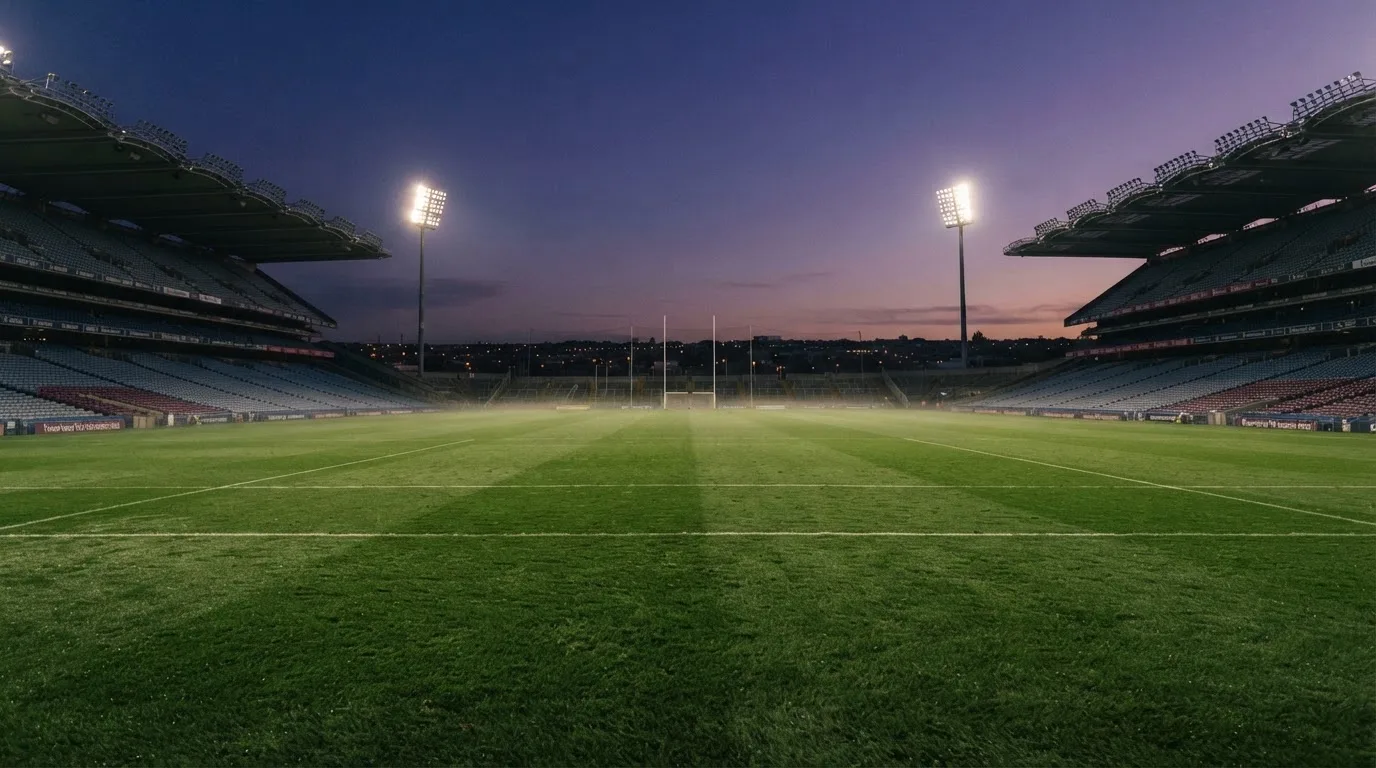
The 2026 All-Ireland Senior Hurling Championship concluded on 19 July 2026 at Croke Park, Dublin. Limerick beat Galway in the final. The provincial round-robins sit underneath it: Leinster with six teams, Munster with five, each playing a round-robin group. The top two in each province meet in the provincial final; the third-placed team goes through to the All-Ireland quarter-finals. That structure runs every year – what changes is the order of the names.
The fixture list is what drives the betting calendar. Pre-season outright markets open in the autumn and run until the provincial finals narrow the field. The senior championship proper runs from late spring into high summer. The club championship, including the All-Ireland Club Hurling Championship final in January, gives the calendar a winter counterpart and a separate outright market at most bookmakers that cover GAA.
The 2025 championship is part of the same picture: Tipperary took the title. The pattern of winners across the last decade – Kilkenny, Tipperary, Limerick, Galway, Wexford – is the kind of historical context that outright punters trade on. The team that hasn’t won for two years is the team whose odds shorten through spring as the form firms up. The team that has just won twice is the team whose odds drift into the autumn because the public has already had its payout and is looking elsewhere.
For GB-licensed bookmakers, what can and cannot be bet on GAA fixtures is set by the operator, not by statute. There is no statutory list of permitted or prohibited markets. An operator with a remote general betting standard (real events) licence may offer GAA markets under its own rules, and may add or withdraw them as it chooses. The fixture coverage is therefore a competitive feature: the operator that commits to a full championship programme, including provincial finals and the All-Ireland series, is doing more for the hurling punter than the one that prices only the final.
The market menu at a championship fixture, on a serious book, typically includes: match result; total goals over/under at a line; handicap; half-time result; first goalscorer; top points scorer; man of the match; outright winner of the championship; top scorer of the championship; player of the year. Most of those are settled against the official GAA result – the GAA keeps the scorebook and the awards – and most operators run them at the senior inter-county level only. Club hurling betting is offered through specific markets, including outright markets on the All-Ireland Club Hurling Championship.
Where the Best Hurling Betting Sites Sit
The comparison below lists ten bookmakers that hold a Gambling Commission remote licence and run a sports product that includes GAA coverage, either outright or through a seasonal programme. The information on hurling markets for each operator is reproduced from the operator’s own terms or app store listing – it is the operator’s own statement of what it runs, not a judgement of how deep the coverage is in practice.
| Brand | Licence (GC account) | What the operator’s terms state on hurling / GAA |
|---|---|---|
| Hollywoodbets | 53028 (remote general betting standard, real events) | Welcome offer is a stake-back free bet on the first qualifying losing accumulator; sportsbook covers a wide multi-sport menu including GAA outrights. |
| Smarkets | 39173 (remote betting intermediary) | Exchange-style sports betting with debit card and open bank transfer deposits from £10 and withdrawals processed within 6 hours. |
| Bar One Racing | 56516 (remote general betting standard, real events) | Irish-focused independent bookmaker with racing sponsorships at Dundalk, Fairyhouse, Navan, The Curragh, Curraheen Park and Cork; GAA fixtures are part of the wider sports menu. |
| London Bet | 66162 (remote general betting standard, real events) | Sportsbook covers football, tennis, horse racing, greyhounds, darts, golf, cricket, NFL, NBA, MLB, snooker and in-play with Pragmatic Play casino on the same app. |
| Swifty Sports | 58957 (remote general betting standard, real events) | Best Odds Guaranteed and cash out on horse racing and football; daily price boosts; live streaming on the sports it covers; Bet Builder listed as coming soon. |
| Spreadex | 8835 (remote general betting standard, real events; also FCA-regulated for spread betting) | Fixed-odds and spread betting in one app; partial cash out, Bet Builder across fixed odds and spreads; streaming on UK and Irish racing, greyhounds, tennis, NFL and selected football. |
| Sporting Index | 27343 (remote general betting standard, real events) | Switch between fixed odds and spread betting, with in-play, football Bet Builder, auto cash-out and Multi-Markets. |
| BetMGM | 39198 (remote general betting standard, real events) | Sports welcome gives four £10 free bets to new UK customers depositing £10+ and placing a sports bet within 7 days, with minimum-odds and 7-day free-bet rules. |
| DragonBet | 64908 (remote general betting standard, real events) | Welsh football and rugby markets, racing, American football, in-play betting and Bet Builder markets across its sport menu. |
| Fitzwilliam Sports | 48760 (remote general betting standard, real events) | Dublin bookmaker with capped membership; high-stakes welcome subject to compliance criteria; instant deposits, fast withdrawals, timeouts and deposit limits. |
Gaelic games betting at the smaller end of the operator set is often a two-state product: prices are up pre-match on the bigger fixtures, and the rest of the calendar is left to in-play and outrights. Customers who want a full championship programme on every weekend typically need a second account. The trade is the GAA punters actually make.
Regulation in Great Britain: How a Licence Is Checked
The Gambling Commission licenses every commercial gambling operator that takes remote bets from customers in Great Britain – England, Scotland and Wales – under the Gambling Act 2005. Since the Gambling (Licensing and Advertising) Act 2014, the rule applies wherever the operator is based: a Curaçao, Maltese or Gibraltar licence does not let a brand take bets from a customer sitting in London. Northern Ireland is outside the 2005 Act, so a GB licence does not extend there; if a brand claims to be “UK-licensed” for Northern Ireland, that is not how the regime works.
The Commission’s public register is the whole test of whether a brand holds a licence. It is searchable by business name, trading name, domain and account number. A registered account number on the right category of licence – for hurling the relevant category is remote general betting standard (real events), with betting exchanges running under remote betting intermediary – is what makes the operator legitimate. Licensed operators commonly run on .com as well as .co.uk, so the domain proves nothing on its own. The register is what proves it.
The rule that matters most on the first bet: since 7 May 2019, name, address and date of birth are verified before a customer can deposit or gamble at a licensed operator – including with a free bet or a bonus credit. There is no anonymous play at a licensed site. The verification asks for an identity document, sometimes a proof of address, and on higher spend the operator may run a source-of-funds check. The point of the rule is to keep gambling out of the hands of under-18s, problem gamblers and people using stolen identities. The cost of the rule is the time it takes to onboard, which is usually a day or two if the documents check out first time.
Spread betting is split between two regulators. Financial spread betting is regulated by the Financial Conduct Authority, not the Commission. Spread bets on sports that don’t fall under FCA rules sit inside the Commission’s regime, but at Spreadex the FCA registration covers the financial side of the same product. The cost of spread products is built into the product itself: losses can exceed the deposit. That is not an error in the marketing – it is the nature of the bet.
The 10x bonus cap is the rule that has reshaped welcome offers over the last year. Since 19 January 2026, wagering requirements on bonuses at GB-licensed operators are capped at ten times the bonus amount. A £10 bonus can be cleared with no more than £100 of qualifying bets, and any promotion that bundles two or more product types – an offer that requires gambling on betting and casino, for example – is banned. The cap makes the headline number the more honest number: a £30 free bet with no rollover and a £50 bonus with a 10x rollover look similar on the front page and behave very differently in practice. Free bets without a wagering condition are not covered by the cap explicitly, so the small-print check is still the better read than the headline.
Responsible Gambling: What a Licensed Operator Has to Provide
GAMSTOP is the national multi-operator self-exclusion scheme and has been a mandatory licence condition for online operators since 31 March 2020. A customer who registers with GAMSTOP is blocked from every GB-licensed online operator for six months, one year, five years, or five years with auto-renewal. After the minimum exclusion period ends, the registration stays in force for a further seven years unless the customer asks GAMSTOP to remove it. Betting shops use a separate self-exclusion arrangement; GAMSTOP itself does not cover them.
Two further controls arrived on the timeline in 2025 and 2026. The financial vulnerability check has been in force since 30 August 2024 (LCCP condition 3.4.4) and applies when a customer’s deposits minus withdrawals cross £150 in a rolling 30 days (the £150 threshold has been the live trigger since 28 February 2025). It is a public-record check – bankruptcies, county court judgments, similar entries – not an income check and not a credit-reference check. The financial risk assessments that the press has called “affordability checks” were announced by the Commission in July 2026 in a staged plan; no start date has been published. The phrase “in force” is the wrong one to use, and the more accurate wording is “announced, staged, no start date”. Deposit limits under RTS 12 are also moving through phases: the first changes applied 31 October 2025, a second phase was postponed to 30 September 2026, and whether that second phase is live is not established.
What a licensed operator has to offer on its own platform is the practical floor: deposit limits set by the customer, time-out periods from 24 hours to six weeks, reality checks at session boundaries, the option to view account history, and clear links to GamCare (the National Gambling Helpline), GambleAware, the NHS gambling clinics network, and Gamblers Anonymous. Fitzwilliam Sports, for instance, lists instant deposits, fast withdrawals, timeouts, deposit limits and links to GambleAware, GamStop and Gamblers Anonymous on its own platform. Smaller brands don’t always surface every control in the marketing, but the underlying duty is on them – it is a licence condition, not a feature.
The hard limits are: minimum age 18; credit cards banned for gambling in Great Britain since 14 April 2020 (including credit-card-funded payments through an e-wallet); debit cards and bank-based payments are not covered by that ban. Identity verification at the first deposit rules out anonymous play. There is no state-set deposit or loss ceiling; the ceiling is the customer’s choice, not the regulator’s. A customer who wants a hard ceiling sets one with the operator or uses GAMSTOP to step away altogether.
The help-line numbers and the self-exclusion schemes are free to use. The cost of using them is the time it takes to register, and the cost of not using them when gambling has stopped being enjoyable is what every responsible-gambling campaign is trying to name.
The Operator Reviews
Hollywoodbets – Stake-Back on the First Loser
Hollywoodbets runs a sportsbook with a wide menu: football, horse racing, tennis, American sports, cricket, rugby, and a GAA outright market that covers the senior championship. The brand’s licence is in the holder Hollywoodbets International UK Limited, registered under Gambling Commission remote licence 053028-R-330019-013 on account 53028.
The welcome offer is structured around a refund rather than a bonus. New players who deposit £10 or more by card receive a free bet of up to £30 if their first qualifying accumulator loses – stake of £10 minimum, three legs or more, odds of 4/1 or greater, settled within seven days. One free bet per customer. The free bet credited is not a refund in cash: the stake of the free bet itself is not returned with any winnings. The ceiling on the credit (£30) and the floor on the qualifying bet (£10) set the expected value of this offer in the same range as a typical £10 free-bet welcome elsewhere, with the seven-day settlement deadline as the binding constraint.
What to watch: the minimum odds of 4/1 push the qualifying bet into a price band where the bookmaker’s margin is wider than at evens or odds-on. The seven-day settlement rule means a postponed fixture can cancel the offer entirely – the customer has no fallback. The £10 deposit trigger is the minimum on debit card; other deposit methods may carry higher thresholds or no eligibility. Read the offer page before depositing.
Verdict. A clean stake-back offer for the punter who plans their first bet as a small accumulator and is happy to lose it as the price of admission. The promotional terms are favourable compared with the rolling deposit-match bonuses that some competitors run.
Smarkets – Exchange Pricing and Quick Withdrawals
Smarkets is a betting exchange licensed by the Gambling Commission under account 39173 (remote betting intermediary), held by Smarkets (Malta) Limited. Customers on the UK side bet against each other rather than against the house, with the exchange taking a commission on net winnings. For hurling, the implication is that prices on the bigger fixtures can be sharper than at a traditional bookmaker, because the exchange’s prices aggregate what the public is willing to pay rather than what the trader has set.
Deposit and withdrawal mechanics are tight. UK debit card deposits are instant from £10 up to £15,000. Open bank transfer deposits are also instant, from £10 up to £10,000. Withdrawals are processed within 6 hours from £10 up to £100,000. That processing window is a feature for the punter who wants the winnings out the same day. The exchange model means the margins are different in kind: the commission replaces the overround, so the cost of betting is on the winnings rather than baked into the odds.
What to watch: not every operator that runs an exchange carries GAA markets; the smaller GAA fixtures can be thin or absent because the active customer base on hurling is small. The 6-hour withdrawal window is a processing time, not a settlement time – bank transfer clearing still adds a few hours depending on the receiving bank.
Verdict. Best for the customer who understands exchange pricing and wants the cleanest market for the championship’s bigger fixtures. The GAA coverage is fitful outside the marquee weekends.
Bar One Racing – Irish Roots, Racing-First Bookmaker
Bar One Racing rebranded to BAR 1 Betting in 2025. The brand is an Irish independent bookmaker with shops across Ireland and horse racing sponsorships at Dundalk, Fairyhouse, Navan, The Curragh, Curraheen Park and Cork. The licence is held by Bar-One Racing Limited under Gambling Commission remote licence 056516-R-332750-007 (account 56516). The orientation is unmistakably racing-first: the racing sponsorships drive the brand, and the rest of the menu sits underneath.
Where that matters for hurling is in coverage depth. The GAA markets are listed among other sports rather than being the centrepiece, and the outrights and weekly fixtures work but rarely with the same number of markets as a book whose primary sport is GAA. The racing strengths – Best Odds Guaranteed, each-way terms, non-runner rules – translate into cleaner markets on those events than on the hurling side.
What to watch: the racing heritage does not automatically generalise to GAA pricing. The smaller fixtures can run on tight margins because the trading desk is racing-led. Payment methods on the Irish-facing site are tuned for euro and sterling customers; the GB-licensed remote product runs on sterling.
Verdict. Solid for the punter whose hurling betting is one of several sports interests and who likes an Irish-rooted book. Less compelling for the hurling-only customer who wants the deepest GAA menu.
London Bet – Full-Sportsbook with Casino Tacked On
London Bet holds a remote general betting standard licence under Gambling Commission account 66162, held by Thistle Bet Limited. The app combines a sportsbook – football, tennis, horse racing, greyhounds, darts, golf, cricket, NFL, NBA, MLB, snooker – with Pragmatic Play casino slots and live in-play. The mix is a broad menu rather than a deep one in any single sport.
GAA appears on the schedule. The fixtures populate in the days leading up to the weekends and the outrights run through the championship. The app’s in-play product supports a sensible range of markets on the bigger fixtures. The casino side is a separate product with its own licence, its own bonus structure, and its own controls – the mixed-product promotion ban that took effect in January 2026 means cross-product welcome offers are no longer the way casinos and sportsbooks cross-sell to each other.
What to watch: the menu’s breadth is not the same as a specialist’s depth. The number of markets on a championship GAA fixture is modest compared with a sport-focused book. The casino product on the same platform is a temptation for some punters and an irritation for others.
Verdict. A multi-product app with a workable GAA section. The right answer for a customer who wants the GAA betting inside a broader betting-and-casino account, and not for the dedicated hurling punter.
Swifty Sports – Horse Racing Tools, GAA as a Seasonal Add-On
Swifty Sports is licensed under Gambling Commission remote licence 058957-R-334734-006 (account 58957), held by Swifty Global (UK) Ltd. The headline feature is Best Odds Guaranteed and Cash Out on horse racing and football, with daily price boosts, live streaming and in-play betting. Bet Builder is listed as coming soon.
For the hurling punter, Swifty is a weekday-punt and weekend-check kind of app. The product page is built around racing, with other sports filling in around the edges. GAA prices go up for the bigger fixtures and the outright markets. The cash-out tools work on the markets that are live; the GAA in-play section is thin unless the fixture has national visibility.
What to watch: the “coming soon” tag on Bet Builder means a same-game multi product isn’t on the platform at time of writing. The product strengths – BOG, price boosts, streaming – are calibrated for racing and football. GAA punters get the menu but not the marquee tools.
Verdict. Useful as a secondary app for a punter who already has a GAA-first book elsewhere. Not the strongest choice as the only home for championship betting.
Spreadex – Fixed Odds and Spread Under One Roof
Spreadex holds a Gambling Commission remote licence under account 8835 (remote general betting standard, real events), held by Spreadex Limited, and is also regulated by the FCA for spread betting. The product runs fixed-odds and spread betting through a single app, with one-click, auto and partial cash out, Bet Builder across fixed odds or spreads, and live streaming of UK and Irish horse racing, greyhounds, tennis, NFL and selected football.
GAA is on the fixed-odds menu. Spread markets on GAA are listed where the firm offers them. The brand’s licence covers fixed-odds betting and the FCA registration covers the financial side of spread products. The associated caveat is in the operator’s own homepage: losses on spread products can exceed the deposit. That is the nature of a spread bet, and it is not the same as the fixed-odds line where the maximum loss is the stake.
What to watch: the spread product is its own thing. A customer who wants a straight fixed-odds GAA bet can do that at Spreadex. A customer who opens a spread position on a hurling total-goals market is using a different product with a different risk profile and a different cost.
Verdict. Strong for the customer who likes both fixed odds and spreads on the same app. The GAA menu on the fixed-odds side is workable, and the spread angle adds another option for the punter who reads the markets carefully.
Sporting Index – Spread and Fixed Odds With Multi-Markets
Sporting Index runs under Gambling Commission remote licence 027343-R-308898-011 (account 27343), held by Sporting Index Limited. The app lets customers switch between fixed odds and spread betting, with in-play betting, Bet Builder for football, auto cash-out and Multi-Markets across the menu.
The proposition is similar in shape to Spreadex: one app, two product families. The GAA menu runs through the same platform; the spread product covers the same fixture list. Multi-Markets is the named feature for fixtures where multiple selections can be combined; on hurling that means a multi-leg winner market or a combination of championship outrights.
What to watch: the football-only labelling on Bet Builder means hurling punters looking for a same-game multi product are out of luck at present. The in-play product on GAA is sensitive to whether a fixture has a TV deal attached; the bigger the broadcast, the deeper the in-play coverage.
Verdict. A reasonable spread-focused book for the experienced customer. The GAA menu is workable; the tools are spread-shaped first and fixed-odds-second.
BetMGM – Welcome Free Bets Tied to Football
BetMGM holds a Gambling Commission remote licence under account 39198, held by LeoVegas Gaming PLC. The sports welcome for new UK customers works like this: deposit £10 or more, place a sports bet within 7 days, get four £10 free bets – two on football accumulators with four or more selections, and two on sports multiples with two or more – valid for 7 days each with minimum odds and an opt-in.
The structure rewards a customer who places bets on football accas in the first week. For the hurling-only punter, two of the four free bets are usable on the sport they want; the football pair are usable on football only. The headline number is £40 in free bets; the realistic ceiling for a hurling customer is £20. The opt-in and minimum-odds checks are the operational points to clear before the bonus lands.
What to watch: the seven-day windows are tight and stack – one for the qualifying bet, one for each free bet. A postponed championship fixture during the qualification window costs the punter the bet. The football tie-in dilutes the headline number for non-football customers.
Verdict. A reasonable welcome for the punter who plays football and hurling in parallel. Less compelling for the hurling-only customer, because the headline number doesn’t all land on their sport.
DragonBet – Welsh Heritage, Multi-Sport Coverage
DragonBet is operated under Gambling Commission remote licence 064908-R-339041-003 (account 64908), held by DragonBet Ltd. The app is published by DragonBet and features Welsh football and rugby markets alongside racing, American football, in-play betting and Bet Builder markets. The product centre is on Welsh domestic sport, with other sports flowing through around it.
GAA fits the “other sports” brief. The championship is priced at the bigger weekends, with outrights and match-result markets running through the summer. The Bet Builder product on the platform works on sports where the markets compose into a sensible multi; the GAA side is best used for outrights and singles rather than constructed accumulators.
What to watch: the multi-sport book is the right context for a GAA fixture that lands on a Welsh-sport-free weekend. A customer whose betting calendar is mostly GAA will not use the Welsh-football strengths; the menu is broad but the depth is uneven.
Verdict. A reasonable regional book with GAA included on the schedule. Best for a customer who has reason to be on the app for other reasons and treats the hurling betting as a useful add-on.
Fitzwilliam Sports – Capped Membership, Dublin-Led Bookmaker
Fitzwilliam Sports is licensed under Gambling Commission remote licence 048760-R-335434-009 (account 48760), held by SBKI Limited. The brand describes itself as a Dublin bookmaker with capped membership, and its welcome is positioned as a “High Stakes Welcome” subject to compliance criteria. Customer-level controls include instant deposits, fast withdrawals, timeouts and deposit limits, with links to GambleAware, GamStop and Gamblers Anonymous on the platform.
The capped-membership model means the customer base is closed. A new account is approved against compliance criteria – identity verification, source-of-funds where the spend warrants it, an assessment of the customer’s betting profile – and the welcome is calibrated for higher-spend rather than starter customers. The GAA coverage runs through the championship.
What to watch: the high-stakes welcome is not the same as a free-bet-for-a-fiver product. Compliance criteria can take longer to clear than a standard onboarding. The capped membership is a feature for the customer the brand wants and a barrier for the one it doesn’t.
Verdict. A premium GAA-positioned book with controls that match the high-stakes positioning. Right for the customer who values compliance speed at the deposit end and has reason to bet at the higher end of the stake range.
Tax, Payments and the Offshore Question
Betting winnings in Great Britain are not taxed in the hands of the customer. The player’s tax position on a winning bet is none – General Betting Duty is the operator’s tax, levied on gross profits at a rate that rises from 15% to 25% on remote bets from 1 April 2027 (the remote rate stays at 15% until that date; the 15% continues to apply to remote bets on UK horse racing, to self-service betting terminal bets in licensed premises, to pool betting and to in-person betting – a tiered structure, not a flat one). Until 1 April 2027 the change is not yet in force, so customers can ignore it on this season’s settling. Whether operators pass duty on through odds is not established by any published methodology, and a safe page does not claim it does. Spread betting has its own rates: 3% on financial, 10% on other.
The customer-side rule that the page cannot erase: identity is verified before the first deposit. There is no anonymous play at a GB-licensed site. The check takes a day or two if the documents and the address match, longer if the operator needs a second pass. The check is mandatory under the LCCP and is part of the deal with being licensed. Some punters find it heavy-handed; the regulator’s view is that anonymity is what allows the harms the rest of the system exists to prevent.
On payment methods: credit cards are banned for gambling in Great Britain (LCCP condition 6.1.2, in force since 14 April 2020), including credit-card-funded payments through an e-wallet. Debit cards and bank-based payments are not covered by that ban. Whether a particular operator accepts cryptocurrency deposits, and what the named-account rules are for a given brand, vary – describe them from the operator’s own terms rather than from a general statement. Bitcoin, altcoin and other crypto deposits are not a uniform product across this market, and no legal duty sits on a GB-licensed operator to accept or refuse them.
The offshore question is the sharpest one in the back of this market. A brand that takes bets from a customer in Great Britain without holding a GB licence is operating illegally. The customer who bets at such a brand is not committing the offence – the law is aimed at the operator – but the customer is also outside the licensed protections. No GAMSTOP coverage. No Commission complaints route. No ADR body to escalate a dispute. No £150 vulnerability-check trigger. No 10x bonus cap. The brand is offshore; the rules are the operator’s house rules. Where a customer’s funds are held matters as much as where the odds are printed. The Commission’s enforcement tools are cease-and-desist notices, search-engine referrals, registrar and payment-provider work, and forthcoming court-order DNS blocking – never a flat claim that ISP blocking is operating today.
Looking at the Hurling Betting Market With Eyes Open
Hurling betting in Great Britain, in 2026, is a market with a clear top, a populated middle and a thin tail. The customers who want to bet on the All-Ireland and the provincial round-robins can do so at every licensed operator named above; the depth and the live coverage vary across the set. The bonuses are competitive on the surface and conditional underneath; the welcome free-bet offers tend to be worth what a same-day qualifier can capture, not what the headline implies. The live markets are real but not as deep as on football or tennis, and the cash-out feature applies a discount that costs more on a goal-volatile sport. The accumulators compound the margin, the totals run at a wider overround than match odds, and the outright market on the championship is the cleanest line on the schedule.
The operator that suits a particular punter is the one that lines up with what they actually bet on. The racing-first book is right for the punter whose hurling betting sits inside a broader racing focus. The spread-and-fixed pair is right for the punter who reads the spread market as well as the fixed line. The exchange is right for the punter who wants the sharpest price on the bigger fixtures. The welcome-heavy book is right for the new account at the right time. The Dublin-led premium book is right for the customer the brand wants to take. None of them is the right answer for everybody, and most serious GAA punters end up holding two accounts to cover the gaps in any one of them.
What the page cannot resolve is which team wins the next championship. The bookmaker’s margin is in every price, the gambler is playing against it, and a price on Limerick or Galway or Kilkenny is a price the punter has decided is worth taking – it is not a forecast. The market is honest about what it offers; the punter who reads it honestly is the one who picks the bet they would have laid even after the price moved against them by ten ticks.
Frequently Asked Questions
How can it be checked that a bookmaker holds a Gambling Commission licence?
The Gambling Commission maintains a public register of licence holders, searchable by business name, trading name, domain or account number at its own website. A registered account number on the right category of licence – for hurling and other sports betting, remote general betting standard (real events) for fixed-odds books, remote betting intermediary for exchanges – is the test of whether a brand is licensed for GB customers. A .com domain on its own proves nothing; the register is what proves it.
How is the return on a bet worked out from the stake and the odds?
Return equals stake multiplied by decimal odds, and net profit is stake multiplied by odds minus one. A £10 stake at decimal odds of 4.00 returns £40 and pays £30 in profit. The same formula applies to combination bets, where the odds of each leg multiply into a single price for the accumulator before the stake is applied.
What is the bookmaker’s margin and how can it be seen in the odds?
The margin is the share of every pound staked that the bookmaker keeps on average across a market. On a two-way market priced at 1.90 / 1.90 in decimal, the implied probabilities sum to more than 100%, the payout share works out to 95%, and the margin is the remaining 5%. Wider margins are how the bookmaker gets paid; a margin between 4% and 8% is typical on hurling match-result markets, with totals and handicap markets running wider, and accumulators compounding the leg-by-leg margin into a much larger combined figure.
How do fractional odds such as 5/1 convert to decimal odds such as 6.00?
The conversion is a fraction’s numerator divided by its denominator plus one. Five divided by one is five, plus one is 6.00. Eleven divided by four is 2.75, plus one is 3.75. Evens (1/1) is two. The arithmetic is the same in both directions: subtract one from the decimal and turn the result back into a fraction. The fraction and the decimal represent the same price; the difference is the formatting the customer is reading.
Which tools for controlling play does a licensed bookmaker have to offer?
A licensed bookmaker has to offer customer-set deposit limits, time-outs from 24 hours to six weeks, reality checks at the boundaries of a betting session, account history on demand, GAMSTOP self-exclusion for the multi-operator block, and links to GamCare, GambleAware and Gamblers Anonymous. The financial vulnerability check at £150 of net deposits in a rolling 30 days is a backstop the operator runs from the regulator’s side. The newer financial risk assessments are announced but not yet in force, with no published start date – the customer-facing controls above are the live ones.
Are betting winnings taxed in Great Britain, and who pays General Betting Duty?
No betting winnings tax is paid by the customer in Great Britain; the punter keeps everything the bookmaker pays out. General Betting Duty is the operator’s tax, currently levied at 15% on gross profits, and from 1 April 2027 a new remote betting rate of 25% applies to bets placed remotely, while the 15% rate continues to apply to remote bets on UK horse racing, to self-service betting terminal bets, to pool betting and to in-person betting. Spread betting has its own rates of 3% on financial products and 10% on other spread bets. The duty is the operator’s liability, not the customer’s, and the customer is not asked to gross it up.
Rugby, cricket & Gaelic – signupbetsguide.com
Content created by the «signupbetsguide.com» team
