
What online darts betting actually costs the punter in 2026
 Available in US
Darts is a small sport that travels well through a betting app. The calendar is long, the matches last under fifteen minutes once you cut out the walk-ons, and the prices refresh between legs. That density of action is the reason bookmakers love it and the reason the offer pages lean on it. It is also why a punter who only looks at the welcome screen is the one the marketing is built around. The point of this page is what happens after the headline — the market margin, the free-bet rules, the in-play settlement, and the licence question that decides whether a complaint goes anywhere if anything goes wrong.
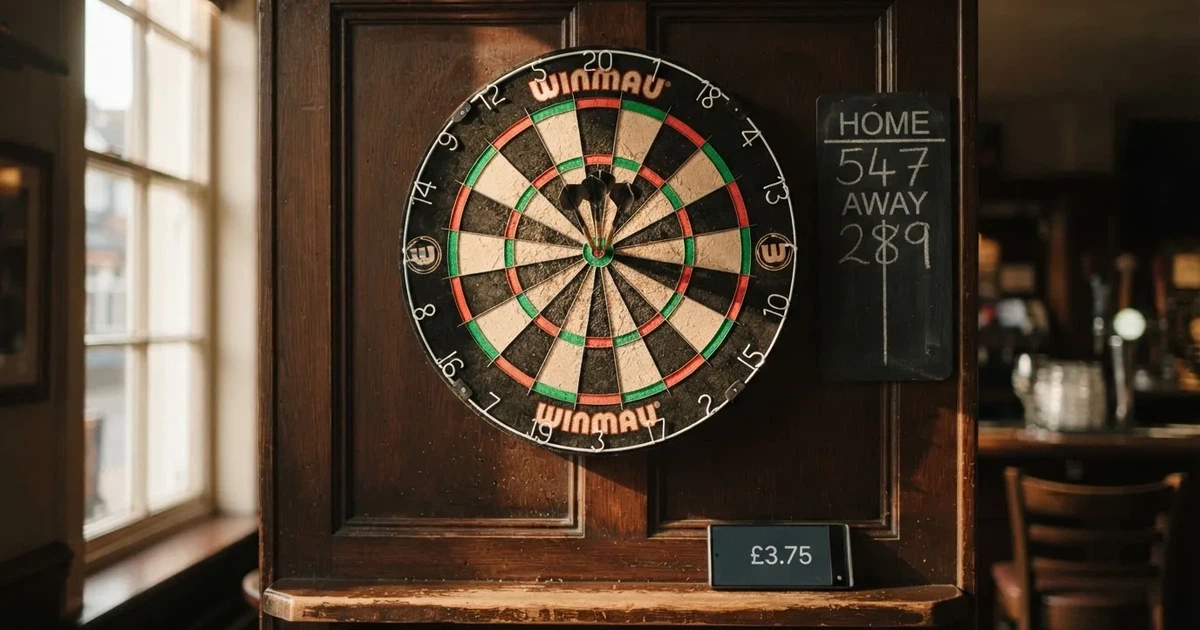
The coverage is the British market in 2026. Where this page talks about a bookmaker, it is a brand on the Gambling Commission’s public register for remote general betting standard (real events). Where it talks about a price or a margin, the figure sits inside a snapshot date. Where it talks about an offer, it describes what the operator’s own terms state and what those terms cost the punter who meets them halfway.
*Currency £ figures and licence details current as of 30 October 2026; cross-referenced against the Gambling Commission’s public register.*
Where the offer money really goes
The welcome page of a darts book is a small industry. Each brand’s first deposit triggers a free-bet package, a price boost on the televised tournament, or an acca-insurance line tied to the weekend’s Premier League Darts card. The numbers behind those headlines determine what the offer is worth, and the difference between them is the difference between a free £5 flutter and a hundred-pound trap.
The general rule: a free bet whose stake is not returned with winnings is worth less than face value. Take the simplest shape of the offer, a £20 single free bet at evens on a market with a 5 per cent margin. The book gives the punter £20 to stake, keeps whatever they win minus the £20 stake, and walks away with 5p on every pound matched. The free bet’s true worth, before any selection is made, sits below the headline number. The smaller the odds chosen, the less it pays out; the bigger the odds, the more it pays, but only on the rare winning ticket. Pick the market most bookmakers frame, the match winner on a televised PDC fixture, and the average value comes out where the maths puts it — not where the marketing puts it.
Wagering requirements are the other thing the marketing softens. The promotion rules in force since 19 January 2026 cap wagering on bonuses at 10x for Great Britain, which means a £10 bonus needs £100 of qualifying bets before the bonus, or the winnings from the bonus, can be withdrawn. A “£40 in free bets” headline that resolves into a £20 deposit, a £20 qualifying stake at minimum odds of 2.0 (1/1), and £40 issued as stake-not-returned free bets is in a different league from a £40 headline where the bonus and the qualifying bets were £100 in turnover at minimum odds. Coral’s sports welcome offer follows the first shape: a £20 deposit and qualifying bet at minimum odds of 2.0 releases £40 in free bets, which expire seven days after they are issued. The seven-day shelf life matters because the punter who waits to use them sees the fixture list run out underneath it.
Three restrictions recur across free-bet terms and they are worth naming before any individual offer:
- Stake return. Sky Bet free bets do not return the stake with winnings. That single sentence is the difference between a winning £10 free bet at 5.0 paying £50 and one paying £40.
- Market restriction. Sky Bet’s free bets are usable only on single or each-way markets, not multiples, and exclude virtuals. Anything with two legs or more is locked out.
- Expiry. The Sky Bet shelf is thirty days from credit. Coral’s shelf is a week. A “free bet” with a thirty-day shelf is something a punter can plan around; one with a seven-day shelf forces a bet that may not exist on the right day.
Price boosts are simpler in structure and harder in execution. Bet365’s Super Boost and its daily Bet Boosts increase one price on a specific market for a specific stake ceiling, with the boost price replacing — not adding to — the original price. The new odds are shorter than the headline implies once the boost mechanics are read. Sky Bet, 888sport and Betfair run similar mechanic with different ceilings. A boosted odds promotion on a televised first-leg winner, with a maximum stake of £10, has a hard ceiling on the upside that a large-stake punter hits immediately. The smaller-stake punter who never reaches the cap never notices.
Acca insurance is the third pillar of the offer shelf and the one most prone to misreading. The typical line: a refund as a free bet if one leg of an accumulator lets the punter down, often tied to fourfold or higher. The refund is stake-not-returned, comes with an expiry, and is capped — a £10 free bet for a stake of £5 is not the same refund as £20 for a stake of £20. The marketing names the refund; the terms name the cap. The cost to the punter is the strike rate they need to clear the qualification window before the refund cap is reached.
The October 2026 promotional landscape for British darts punters settles into a pattern:
- Welcome packages skewed to football and horse racing, with darts as a permitted single or each-way market for free-bet use.
- Tournament-tied price boosts at the PDC World Championship, the Premier League and the World Series, with maximum stake ceilings of £5 to £20.
- Each-way concessions and acca-insurance lines on weekend multi-event cards, with refund caps and stake-not-returned refund mechanics.
- Loyalty mechanics — Betfair’s Betfair Bonus Drop, Sky Bet’s Rewards Club, the bet365 bet credits balance — that pay in free bet tokens, not cash, with the same stake-not-returned economics.
The single piece of advice that survives every promotion read is this: the headline number is the deposit or the refund cap. The actual offer is the value of the free bet at the price the punter takes it, after the stake-not-returned haircut and the minimum-odds filter. The two are never the same.
Live darts betting and the cash-out button
Darts is a fast-moving in-play sport. The legs run three to six minutes, the bookmaker’s algorithms re-price every throw, and the value — or the trap — sits in the rhythm between one price and the next. Bookmaker marketing treats this as the page where the customer spends the deposit. The mechanics say otherwise.
The in-play product on darts is essentially a three-line market. The pre-match outright winner resolves into who takes the next leg, who takes the next set, and who wins the match — the same shape at three different granularities. The leg market prices a single scoring burst; the set market prices the swing that decides a set; the match market prices the form across an evening. Pricing each of them at the right moment is what the in-play model does well, and what it does badly when one player catches fire.
The cash-out button is the second piece of in-play kit that matters. It lets the punter settle a pre-match or in-play bet before the match finishes, with the book offering a live price based on the current scoreline and the time left. The button is useful when the leg swung against the original pick; it is harmful when the cash-out price is below the pre-match price plus the live swing, which is more often than the marketing suggests. Two mechanics recur across bookmakers:
- Full cash out settles the entire position at the live price.
- Partial cash out books a fraction of the position and leaves the rest on, which is a way to lock in profit on one half of an each-way or to scale out of an acca leg that is winning but no longer looking like the original pick.
Neither is a guaranteed profit. Both depend on whether the bookmaker’s live price is close enough to where a sharp exchange would price the same outcome to be worth taking. On British bookmakers, darts in-play usually is not priced off an exchange, because the darting public is exchange-light; the price is set by the bookmaker’s own model, and the cash-out comes off that model. A punter taking a £10 cash-out on a pre-match treble at 9.0 that has drifted to 4.5 in-play is being offered a price the book has set, and the spread within that price is the bookmaker’s margin for the leg they would otherwise have to settle only on the final whistle.
Live streaming on darts is rarer than on football or horse racing. Betfair’s app streams selected events within the platform, and the racing-focused books (Sky Bet, Betfair, Bet365 on selected football) extend the same to darts only on the televised tournaments. The small-scale floor events on the PDC Challenge Tour, the Development Tour and the women’s circuit usually run without a stream, which means in-play price moves for those matches rely on the bookmaker’s data feed alone. The punter without a stream sees the price change without seeing why, and the lag between price moves is where the margin gathers.
Where the in-play product suits darts particularly: short-form markets where the leg-to-leg data is consistent (most televised matches), high-frequency in-play with low latency (the better-licensed books), and a clear cash-out mechanic with a spread that does not punish small-stake punters disproportionately (the better-licensed books, most of the time). Where it does not: floor events without a stream, off-tournament challenges between ranked players, and any match where one player has already established a leg-break in the first set, since the cash-out price reflects the gap quickly and any in-play comeback is paid at compressed odds.
Tips, predictions and the analyst problem
Darts tipsters exist in some number, and they work the same beat tipsters work on every other sport: model ratings on three-dart averages, checkout percentages and head-to-head form; tournament stage weightings; conditions around travel and crowd. The marketing of a tip is the certainty that the pick is “today’s banker”; the maths is somewhere more cautious.
The honest shape of a darts prediction begins with sample size. A PDC ranking event has between six and fifteen matches per player, run across a weekend or a week. A Premier League card has nine matches per player across sixteen weeks. The averaging horizon for a player on the PDC Tour who does not reach finals is around twenty-five to forty matches across a season — a thin sample for any model. The bookmaker’s margin sits over that thin sample and gives the tipster’s edge a narrow margin to outperform. The tip that wins at 3.0 with a 5 per cent margin needs a strike rate of about 35 per cent to break even on turnover; the tipster picks that hit higher than that are the ones worth following, and the tipster’s pricing strategy is usually to publish enough picks that the record looks strong in volume and hides the strike rate per stake.
What the punter should take from a tip is not the prediction itself but the structure of the reason. A prediction that names the tournament, the opponent’s recent form, the head-to-head record, the three-dart average differential and the checkout percentage differential is a structured prediction. The same pick with no reasoning is closer to a guess dressed as analysis. The punter’s job is to read both kinds of tip and to understand which is which.
The so-called “tournament outrights” — bets on who wins the whole event — are where the bookmaker’s margin is widest and the tipster’s edge is smallest. Outright markets are priced months before the first dart is thrown, with the field priced off ranking and recent form, and as the field narrows and the betting pattern firms, the prices shorten on the front of the market while drifters lengthen at the back. The price a punter backs at the start of a PDC World Championship is rarely the price that pays the best after the format is known and the first-round giant-killings have folded the favourites back to even. Back in-running and lay at the exchange, where one exists, is the only outright strategy with the structure to beat the margin, and even that is a small edge on a thin sample.
Single-match and individual-leg markets are the ones where a model has the most signal and the bookmaker’s margin is the smallest. A good darts model on a single televised match will assign its probabilities by combining three-dart averages, checkout attempts, the doubling rate over the last twenty matches, and the opponent’s defensive doubling rate (how often the opponent converts their own darts into a checkout). The model’s probability against the bookmaker’s odds is the bet; the bet at minimum odds 2.0 against a 50 per cent-model probability is a positive expectation, before the margin, of breaking even. Take the 5 per cent margin and the model needs a 52.6 per cent strike rate to break even. That is the kind of marginal edge a disciplined tipster can show across a season; it is also the kind of edge a casual punter cannot, which is why most casual darts punters lose.
Markets and odds: the shape of every line the book shows
Darts markets sort into four groups. The British books price each with their own margin, but the shape is consistent across operators.
Match-result markets. Outright winner, set betting, correct score, handicap. Outright winner is priced around 5–7 per cent margin on televised matches and a touch wider on the floor. Correct score (predict the sets each player wins) runs wider because the outcome space is larger. Handicap (one player starts a set up, or a legs-up line) sits between the two.
In-play and short-form markets. Next leg, next set, first to N legs, first to N sets. Margin here is wider than pre-match, because the book is pricing against time and live feed. The cash-out price offered on a pre-match bet is itself priced off this market, and that cash-out price carries the same wider margin as the live market it is derived from.
Player props. Total 180s, highest checkout, race to a checkout, both players to hit a 180 in a specified leg. These are the markets with the longest odds and the widest margin, where a rare outcome pays many times stake and the strike rate required is high. The marketing likes them for the headline price; the maths likes them less.
Outrights. Tournament winner, top nationality, reach the final, group winner. The widest margin of all, because the field is long and the price is set against a probability distribution the book has constructed.
The odds format on every British bookmaker site is fractional by default, with decimal shown alongside. The conversion is the same as anywhere: 5/1 → 6.00, 11/4 → 3.75, evens → 2.00. The decimal odds are the cleaner working price for any margin calculation, because the maths on a fractional form repeats itself and the rounding error compounds. Always work the margin in decimal, then quote the result as a probability in percent.
How the bookmaker’s margin sits inside the odds. Take a two-way market priced at 9/10 each (1.90, 1.90 in decimal). The reciprocal sum is 1/1.90 + 1/1.90 = 0.5263 + 0.5263 = 1.0526. The payout share per unit staked — what the book returns in total across all winning tickets on a one-unit-per-outcome stake — is 1 ÷ 1.0526 = 0.9500, or 95.00 per cent. The bookmaker’s margin is 100 − 95.00 = 5.00 per cent. The punter’s break-even strike rate, before the price the bookmaker charges to withdraw, is the model’s probability against that 95 per cent ceiling: a true 50 per cent chance priced at 1.90 returns 0.95 per unit staked; the punter needs the model to give them 0.50 ÷ 0.95 = 52.63 per cent to break even.
The pattern across British bookmakers on televised darts is consistent: a margin of around 4.5–6.0 per cent on match-result markets, around 6.0–8.0 per cent on player props, and 8.0+ per cent on outrights. The exception is the in-play market, where the margin varies with how quickly the book can re-price and the depth of liquidity on the selection; for televised matches with a stream and live data, the in-play margin closes toward the pre-match level; for floor events without a stream, the in-play margin can run to 10 per cent or more.
The single biggest variable the punter controls is the choice of market. A correct-score punt on a five-set match at 6.0 has an implied break-even strike rate of (1/6.0) ÷ 0.95 = 17.54 per cent — and a true strike rate, on a random-correct-score pick, of about 14 per cent on a five-set match. The punter loses 3.5 per cent of stake to the model’s noise alone. The same £5 on the match winner at 1.90 with a 50 per cent-model probability beats the break-even by 2.63 per cent of stake. Match winner on a televised match is the closest thing to a fair market on a British darts book.
The tournament calendar and where it leaves the punter
Darts is a calendar sport, and the betting calendar is denser than the play calendar. The PDC runs a year-round programme, the World Darts Federation runs its circuit alongside it, and the British bookmakers price both. The shape of the year, in terms of where the punter’s attention goes and where the offers cluster, runs like this.
The PDC World Championship is the headline event and the highest-margin bookmaker offering of the year. The 2026 PDC World Darts Championship ran from 11 December 2025 to 3 January 2026 at Alexandra Palace, London, with the field expanded to 128 players from 96. The final was Luke Littler against Gian van Veen, with Littler winning 7–1; the prize fund was £5,000,000, with £1,000,000 to the winner. The round structure moved up a step: rounds one and two were first to three sets, rounds three and four first to four, quarter-finals first to five, semi-finals first to six and the final first to seven. The format lengthening gives the in-play market more legs per match to re-price and the outright market more set-play to discount by the time the quarter-finals arrive. The bookmaker’s offers on the World Championship are the largest of the year — boosted odds on the winner, each-way concessions on the quarter-finals, acca-insurance on the multi-event cards across Christmas and New Year.
The Premier League Darts is the second-largest live event. Sixteen weekly cards from February to May, head-to-head matches at a fixed venue layout each week, with the top four into the play-offs and the winner from the play-offs taking the title. The Premier League format is the easiest to model because the venue, the opponent list and the schedule are fixed in advance; the bookmaker’s in-play market is the cleanest of the year on this format; the cash-out price sits closest to the live model price. The 2026 Premier League ran through 2025 and 2026 and the next edition begins the calendar again.
The World Series of Darts is the third pillar, run across the summer and into the autumn with events in cities outside the UK and Ireland. The format is a smaller field (typically 8–16 players) and a shorter match structure, which makes it the highest-variance tournament on the calendar and the easiest place for a giant-killing price to land. The bookmaker’s margin on a World Series event is, on average, wider than on the World Championship because the field is less well known to the betting public — and the wider margin is what gives an experienced punter an outright value pick when a non-tour player reaches the second round.
The World Darts Federation, the BDO’s successor body and the parallel organisation to the PDC, runs its own world championship and a circuit for national associations. The WDF calendar is lighter and the British bookmakers’ coverage is thinner. Where a book does price a WDF event, the margin tends to be wider because the data feed is less consistent and the field is harder to model.
The Players Championship events, the floor events of the PDC tour that run most weeks, are the meat of the betting calendar for serious darts punters. Each event has 32 entrants, runs over a single day, and the British bookmakers price most of them with a primary outright market and a 180s market. The floor events are also the lowest-margin product of the calendar from a model perspective, because the field is small and the data is rich; the easier the bookmaker’s job, the tighter the margin, the smaller the punter’s edge.
The Grand Slam of Darts (autumn), the Grand Prix (October), the Masters (January), the UK Open (March), the World Matchplay (July) and the World Grand Prix complete the calendar of headline events. Each one runs as a multi-day tournament with a structure of seeded and unseeded draws and a knockout format from the early rounds. The British bookmakers’ offers are densest on these events and thinnest on the WDF circuit.
Punters who want to bet on darts all year round have a structure of events roughly every two weeks, with breaks around the UK Open, the Grand Slam, the World Championship and the off-season in mid-summer. The bookmaker’s offerings follow the same rhythm: welcome offers and price boosts cluster around the headline tournaments, free-bet packages thicken in the weeks before Christmas and in February, each-way concessions thicken in March and around the Premier League play-offs.
The 10 licensed brands that show up in a UKGB comparison
This is the comparison read against the Gambling Commission’s public register for remote general betting standard (real events) licences active for Great Britain. Order and set are fixed; the angle is what each brand does well against the others and where each one costs the punter the most.
The 10bet sportsbook and its mobile-first coverage
10bet (Blue Star Planet Limited, Commission account 43173) runs a full sportsbook across football, tennis and horse racing, with Cash Out, Bet Builder and Live Streaming on selected events. The darts offering is parked inside the wider sports product: small market depth, single-match markets on televised fixtures, no sports-tied welcome offer on darts. The 10bet mobile app is the primary channel; the site is functional but light on the acca-builder mechanics that more football-heavy books push. The verdict: 10bet is a brand for a punter who already uses it for football or tennis and wants darts on the same slip. For a punter choosing a book on darts alone, the market depth and the offers against darts are light compared with the sportsbook-first brands below.
The Sky Bet platform and its tournament shelf
Sky Bet (SBG Sports Limited, Commission account 67370) runs deep on British sport with the Sky Sports feed behind it. The free-bet shelf on Sky Bet’s terms is stake-not-returned, restricted to single or each-way markets excluding virtuals, non-withdrawable and expires thirty days after crediting. The Acca Club and the Sky Bet Rewards Club push regular free-bet drops into the customer account; the welcome offer is football-led and not the darts punter’s first choice. The Bookmaker’s darts coverage runs through the major televised events with match-result, handicap and 180s markets, plus the live in-play product. The verdict: Sky Bet suits a punter whose betting stretches across football, horse racing and darts and who can wait to use a thirty-day-shelf free bet on a televised singles match. The shelf life and the single-only restriction are the two conditions that bite.
The DragonBet angle on British sport
DragonBet (DragonBet Ltd, Commission account 64908) is a smaller platform with a tilt toward Welsh football, Welsh rugby, racing, American football, in-play and Bet Builder. The darts offering on the published app is limited to televised fixtures with single-match markets. The mobile-first app experience is the brand’s marketing edge. The verdict: DragonBet suits a punter whose betting lives in Welsh football, racing and American football and who wants darts as a secondary line. The platform’s depth on darts is light; the bookmaker’s wider product is its reason for being.
The 888sport offering and its in-play tooling
888sport (888 UK Limited, Commission account 39028) runs pre-match and in-play with Cash Out, Bet Builder, racing streams, BetFinder form tools, a live bet feed and daily boosted odds. The boosted odds line is the marketing edge and the everyday promotional mechanic. The darts coverage runs through televised fixtures with a primary outright and match-result lineup, plus acca-builder markets on the multi-event cards. The verdict: 888sport suits a punter who values in-play tooling and daily boosts over the welcome shelf. The brand’s welcome offer is light on darts-specific mechanics; the daily boosts and the acca-builder are the everyday value.
The Fafabet racing-led sportsbook
Fafabet (Taichi Tech Limited, Commission account 57385) runs Best Odds Guaranteed on UK and Irish horse racing win and each-way bets from 9am on race days; if the starting price is bigger than the original price, the bigger odds are paid. The brand is racing-led; the darts offering is a standard match-result lineup on televised fixtures with limited outright depth. The BOG mechanic on racing is the marketing edge and the everyday fixture. The verdict: Fafabet suits a punter whose betting lives on horse racing and who wants darts as a one-off single. The racing product is the reason for the brand; darts is a permitted single at standard market depth.
The Star Sports telephone-counter offer
Star Sports (Star Racing Limited, Commission account 9177) keeps the high-street bookmaker feel with a phone counter: customers can speak to a trader directly on 08000 521 321 to open an account, place bets or ask customer queries, with email support at [email protected]. The mobile app is lighter than the major platforms but the in-app offering covers standard match-result markets. The verdict: Star Sports suits a punter who wants the telephone-counter option for higher-stake wagers and is comfortable with a smaller in-app product. The telephone channel is the reason for the brand; the mobile product is functional, not the brand’s edge.
The Coral welcome-offer mechanics and shelf life
Coral (LC International Limited, Commission account 54743) runs a sports welcome offer of £40 in free bets on a £20 deposit and qualifying bet at minimum odds of 2.0 (1/1), with £40 in free bets issued within seven days and expiring seven days after issue, for new GB customers who opt in. The seven-day shelf is the standout condition; the rest is a standard welcome shape. The platform runs a deep sportsbook with the Ladbrokes sibling brands underneath the LC International licence. The verdict: Coral suits a punter who will use the free bets inside the seven-day shelf on a televised Premier League or World Championship match. The marketing’s headline is favourable; the shelf life is short.
The Betfair exchange-and-sportsbook split
Betfair (PPB Counterparty Services Limited, Commission account 39439) runs in-play betting, Bet Builder, free live streaming of events including UK and Irish horse racing and football inside the app, and a 90 Minute Payout market on football. The Betfair brand covers both the exchange and the sportsbook; the darts offering runs through the sportsbook with the same match-result and in-play lineup as the rest of the British majors. The exchange is where a sharp darts punter lies an overpriced back at the outlaws’ prices, but the liquidity on darts at Betfair is thinner than on horse racing or football. The verdict: Betfair suits a punter who uses the exchange on football or horse racing and wants a Sportsbook product for darts. The in-play streaming inside the app and the Betfair Bonus Drop are the everyday value; the darts-only liquidity is moderate.
The DAZN Bet deposit mechanic and the brand’s wider sport brief
DAZN Bet (DZBT Limited, Commission account 48756) runs a sportsbook with deposits starting at £5 by debit card, Apple Pay, Paysafecard, Trustly and Skrill, and at £20 by PayPal, with no processing fees. The deposit floor is the lowest of any major British book on the named methods; the PayPal restriction at £20 is the rule on the second-tier methods. The darts offering is standard match-result on televised events. The verdict: DAZN Bet suits a low-stake punter who values the £5 deposit floor on the main methods and is comfortable with a thin darts offering. The deposit mechanic is the brand’s edge; the darts product is functional, not the headline.
The Kalooki Sportsbook and the GAMSTOP read
Kalooki Sportsbook (Kalooki Sportsbook Limited, Commission account 57730) is run by Kalooki Sports Book Ltd (company number 12938274) and is a GAMSTOP member. The platform is built around the mobile app, the smaller sport offering and the safer-gambling front-end. The darts coverage runs through televised fixtures at standard match-result depth. The verdict: Kalooki Sportsbook suits a punter who wants a smaller-platform feel with the safer-gambling front-end full visible. The brand does not push the welcome offer as hard as the majors; the safer-gambling depth is the reason for choosing it.
| Brand | Gambling Commission remote licence | Licence holder | Operative line on darts betting |
|---|---|---|---|
| 10bet | 43173 (remote general betting standard — real events) | Blue Star Planet Limited | Cash Out, Bet Builder and Live Streaming; darts covered as a permitted single with standard market depth. |
| Sky Bet | 67370 (remote general betting standard — real events) | SBG Sports Limited | Free bets stake-not-returned, single/each-way only (no multiples), no virtuals, non-withdrawable, 30-day expiry. |
| DragonBet | 64908 (remote general betting standard — real events) | DragonBet Ltd | Welsh football and rugby tilt with racing, American football, in-play and Bet Builder; darts at standard depth. |
| 888sport | 39028 (remote general betting standard — real events) | 888 UK Limited | Pre-match and in-play, Cash Out, Bet Builder, racing streams, BetFinder form tools, live bet feed, daily boosted odds. |
| Fafabet | 57385 (remote general betting standard — real events) | Taichi Tech Limited | Best Odds Guaranteed on UK and Irish racing from 9am on race days; darts at standard depth. |
| Star Sports | 9177 (remote general betting standard — real events) | Star Racing Limited | Telephone-counter option on 08000 521 321 and email support at [email protected]; standard match-result markets. |
| Coral | 54743 (remote general betting standard — real events; remote betting intermediary) | LC International Limited | £40 free bets on a £20 qualifying bet at min odds 2.0, issued within 7 days, expiring 7 days after issue. |
| Betfair | 39439 (remote general betting standard — real events) | PPB Counterparty Services Limited | In-play, Bet Builder, free live streaming (racing and football), 90 Minute Payout on football. |
| DAZN Bet | 48756 (remote general betting standard — real events) | DZBT Limited | Deposits from £5 (debit card, Apple Pay, Paysafecard, Trustly, Skrill) and £20 (PayPal); no processing fees. |
| Kalooki Sportsbook | 57730 (remote general betting standard — real events) | Kalooki Sportsbook Limited | GAMSTOP member with safer-gambling front-end; darts at standard depth. |
What darts betting actually is
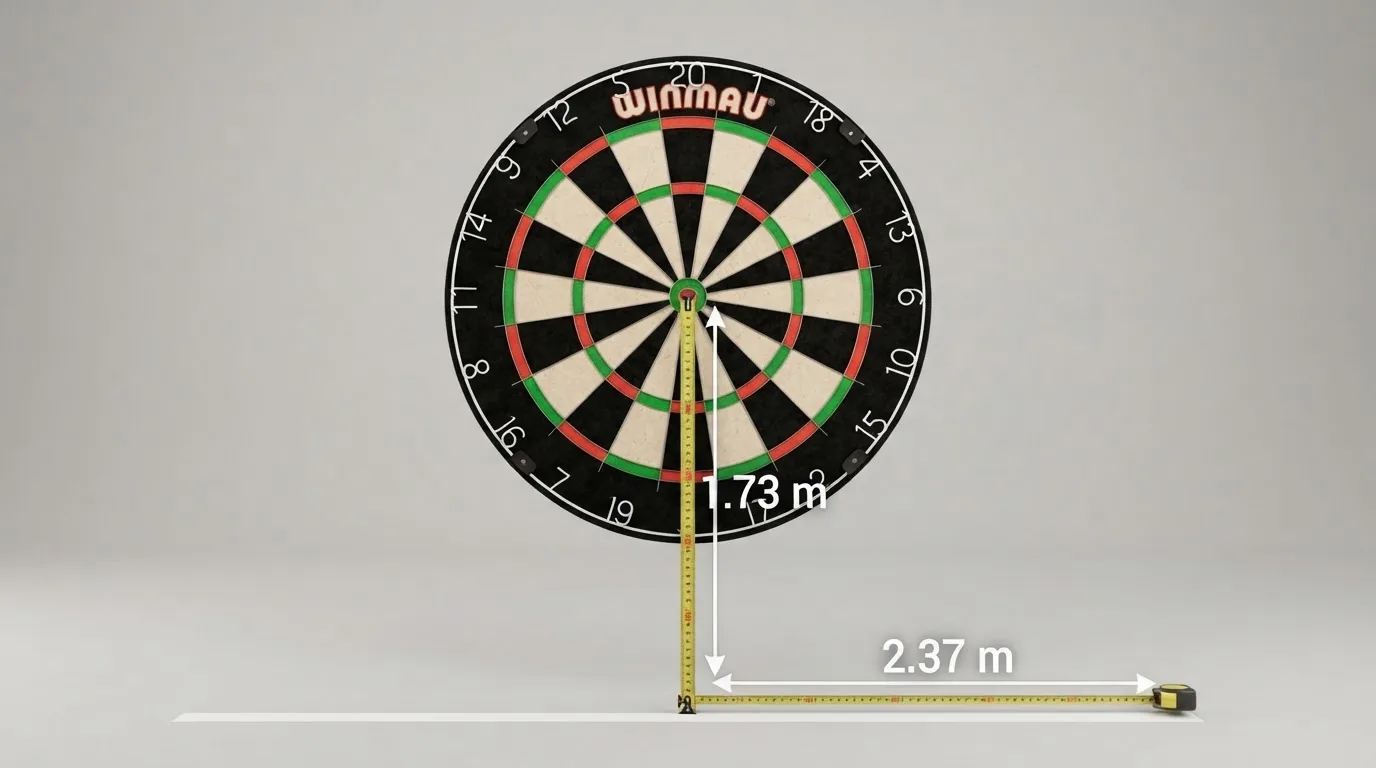
Darts betting is the practice of staking money on the outcome of a darts match, leg or set, or on outcomes within a leg such as the first to a checkout or the higher checkout. The sport at the professional level is built around the 501 format: each player starts at 501 and must finish on a double or the bullseye, with the highest possible three-dart finish 170 and the minimum possible leg nine darts. The standard dartboard has 20 numbered segments with single, double and treble areas; the bullseye is worth 50, the outer bull 25. The standard throw distance is 2.37 m (7 ft 9 in) with the bullseye 1.73 m above the floor.
Darts betting as practised by British bookmakers runs through three pillars. The first pillar is the pre-match market — match winner, set betting, correct score, handicap. The second pillar is the in-play market — next leg, next set, race to N, with prices that re-price between throws. The third pillar is the outrights market — tournament winner, top nationality, group winner — set weeks or months before the first dart is thrown. The bookmaker’s margin sits inside every price across all three pillars.
The comparison between darts betting and a sport like football betting is not just one of scale. Football has a small outcome space (three results per match) and a long match length (90 minutes plus stoppage), with the in-play market structured around minute-by-minute price moves. Darts has a longer outcome space per leg (20 segments, 50 on the bullseye) and a short match length (under fifteen minutes per match once you cut out the walk-ons), with the in-play market structured around leg-by-leg price moves. The data feed on darts is finer per leg than the data feed on football per minute, and the bookmaker’s models on televised matches run with tighter margins than the equivalent on lower-division football.
The standalone comparison with the casino or the slots product is the cleaner one for a punter who has not bet on darts before. A bet on a darts match is a bet on a sporting outcome with a fixed margin and a settled result against the actual score; a slot spin or a roulette hand is a bet against a house edge with a result drawn from a random-number generator. The two products are licensed separately under the British regime: betting is its own licence type (remote general betting standard — real events), casino games are their own licence type. The two products can sit on the same app under one licence holder, but the marketing for one is not the marketing for the other, and the safer-gambling tools apply differently.
For a British punter, a darts bet is a bet against a licensed bookmaker, settled against the result of a real darts match, on a price the book has set with its own margin. The question of whether to bet, how much, and on which match is the punter’s own judgement against the structure of the prices. The bookmaker provides the venue; the punter takes the position.
The legal floor and what a GB licence covers
Any brand that takes bets from customers in Great Britain needs a Gambling Commission remote licence. The Commission’s public register is the whole test of who holds one: it can be searched by business name, trading name, domain or account number and it is the single source for licence verification. The register does not list every brand a punter sees in advertising — affiliates, comparison sites and aggregator pages carry brand names without licence status, and the only way to verify the licence is to look the brand up on the register directly. Never call a single brand “the only” licensed one: the register lists far more licensed operators than this page features.
The legislative frame is the Gambling Act 2005, which covers Great Britain (England, Scotland and Wales), with Northern Ireland outside the Act on its own older law. The Gambling (Licensing and Advertising) Act 2014 made a Commission licence compulsory for any operator whose remote facilities are used in Great Britain, wherever that operator is based (sections 33 and 36 of the 2005 Act as amended). A Curaçao, Maltese or Gibraltar licence does not substitute; a brand advertised as “licensed” offshore is, from a Great Britain consumption point of view, unlicensed. The duty to hold the GB licence runs on the operator. The customer who bets on an unlicensed site commits no offence under the Act as found, but loses the British consumer protections the licensed operators carry.
Identity verification is the next legal layer a punter meets at a GB-licensed site. Since 7 May 2019, name, address and date of birth are verified before a customer can deposit or gamble, including with a free bet or bonus. The verification is a hard step in the customer journey; the brand that lets a customer register and deposit without it is, by definition, not a GB-licensed brand. The licence register is verified against the brand’s published names; the operator’s own terms page carries the same registration in finer detail; the punter who skips the verification check has skipped the only signal that the licence is current.
Player protection is the third legal layer. GAMSTOP is the national multi-operator online self-exclusion scheme and a mandatory licence condition for online operators since 31 March 2020: periods are six months, one year, five years, or five years with auto-renewal, and after the minimum period the exclusion stays in place for a further seven years unless the customer asks GAMSTOP to remove it. GAMSTOP is the safety net every licensed book is part of; a brand that does not appear in GAMSTOP is not a GB-licensed online operator. A financial vulnerability check applies since 28 February 2025 on a rolling 30-day basis at £150 in deposits minus withdrawals — a public-record check (bankruptcy, county court judgments), not an income check and not a credit reference check. Financial risk assessments (the “affordability checks” of the press) are announced in a staged plan with no start date as of the licensing position in 2026 — write “announced, staged, no start date”, never “in force”. Deposit limits sit under RTS 12 with the first changes since 31 October 2025 and a second phase postponed to 30 September 2026.
Advertising is the fourth legal layer. The Commission licenses the operator, not the advertisement; advertising runs through the CAP Code (non-broadcast) and BCAP Code (broadcast), enforced by the ASA, alongside the LCCP marketing conditions. The CAP Code’s section 16 requires socially responsible marketing, no strong appeal to under-18s, and no one who is or seems to be under 25 may be featured gambling or play a significant role in the advertisement (with an exception for marketing placed where a bet can be made directly) — that rule is about who may appear in the marketing, not who may bet. The promotion rules in force since 19 January 2026 cap wagering on bonuses at 10x for Great Britain and ban mixed-product promotions: an offer that requires gambling on two or more product types is not allowed. The “Whistle-to-Whistle” rule — no betting ads in TV live sport from five minutes before to five minutes after the live event, before the 9pm watershed, horse and greyhound racing excluded — has applied since 1 August 2019.
Tax is the fifth and last legal layer for the punter to know about. The player pays no tax on betting winnings in Great Britain; a professional gambler should ask HMRC or an adviser. General Betting Duty is the operator’s tax on gross profits at 15 per cent, with a new remote betting rate of 25 per cent from 1 April 2027 within it, while remote bets on UK horse racing, bets on self-service betting terminals in licensed premises, pool betting and in-person betting stay at 15 per cent (HM Government policy paper of 26 November 2025). The operator’s tax is not a customer charge; whether the operator passes the duty on through the odds is not established, and the page does not write that the player is charged duty.
Offshore is the last piece of the legal floor, and the one that bites the punter hardest. A brand licensed only in Curaçao, Malta or Gibraltar is, by the test above, unlicensed for Great Britain consumption. The pages the unlicensed brand displays — the welcome offers, the boosted odds, the no-verification sign-up — read as ordinary marketing, but the structure behind them is: no GAMSTOP coverage, no Commission complaints route, no approved dispute-resolution body, no British consumer redress if funds are withheld, not bound by the 10x bonus cap, not bound by the £150 vulnerability check, no guarantee the verification step that is hard at a GB book is hard at the offshore brand. The honest framing is: licensed = checks, limits, GAMSTOP, the bonus cap, the marketing code, the dispute route, with verification before the first bet as the price of admission; unlicensed = none of those protections and the possibility that funds are withheld with no recourse beyond the offshore regulator.
Safer gambling on darts
The fact that darts is a fast-moving, low-stakes-per-leg sport makes it particularly prone to a particular kind of over-betting. A punter who places ten £5 in-play bets across a televised evening has staked £50 across ninety minutes and watched the screen more than the page; the cognitive load of the bets is low; the boredom of the betting is high; the cumulative stake can be several hundred pounds across a tournament week.
The licensed bookmaker’s safety net is a three-piece kit. The first piece is GAMSTOP, the national self-exclusion scheme every licensed GB online operator is part of — six months, one year, five years, or five years with auto-renewal, after which the seven-year cooling-off rule applies. The second piece is the deposit limit under RTS 12 — the operator must offer a gross deposit limit on a fixed time frame, with the first changes since 31 October 2025 and a second phase postponed to 30 September 2026. The third piece is the financial vulnerability check on a 30-day rolling basis at £150 in deposits minus withdrawals, applied since 28 February 2025 as a public-record check rather than an income check.
The self-imposed safety net is the punter’s own deposit limit and stake limit at the brand they use. Every licensed book offers these in the safer-gambling section of the account; the punter who wants to bet on darts across a tournament week sets a deposit limit equal to the full week of intended stake (no top-up at the limit), and uses a time-based reality check to step away from the screen.
Help, for a punter in or near trouble, runs through GamCare (the National Gambling Helpline), GambleAware, NHS gambling clinics and Gamblers Anonymous. The 24/7 helpline is free and confidential; the NHS clinics run in person and online across the regions; the peer-support groups are local and anonymous. Fitzwilliam Sports’ homepage links to GambleAware, GamStop and Gamblers Anonymous as an example of how every licensed brand displays the same set of links.
The punter who reads this page should treat the safety net as a license condition at the book and as a personal decision at the screen. The bookmaker provides the kit; the punter uses it.
How the margins read in 2026
Take a two-way match-priced market at 9/10 (1.90 decimal) on each side, the kind of price the British books show on a televised PDC match result. The reciprocal sum across both outcomes is 1/1.90 + 1/1.90 = 0.5263 + 0.5263 = 1.0526. The payout share, what the book returns in total across all winning tickets on a one-unit-per-outcome stake, is 1 divided by 1.0526, which equals 0.9500, or 95.00 per cent. The bookmaker’s margin, the share of every unit staked that the book keeps on average, is 100 minus 95.00, which equals 5.00 per cent. The punter’s break-even strike rate on a 1.90 pick is the model’s implied probability against that 95 per cent ceiling, which is 0.50 divided by 0.95, or 52.63 per cent. Anything the model gives above 52.63 per cent is positive expectation for the punter; anything the model gives below is negative. On a real market the model rarely beats the 52.63 per cent floor across a full season, which is why most casual darts punters lose and why the bookmaker’s margin is the structural feature of the price.
The 5.00 per cent figure is an illustrative band, the kind of band a televised match-result market sits in across the British books on the day. The wider the margin, the higher the break-even strike rate and the steeper the punter’s hill. The next section of the comparison book — the 180s market and the highest checkout — runs wider, around 7–9 per cent on the named-tournament pages; the outrights market runs wider still, around 10–15 per cent on a World Championship winner four weeks before the event; the in-play market runs narrower in the leg market when the data feed is clean and wider on floor events without a stream.
The composite read: a disciplined darts punter, betting at minimum odds 2.0 on televised match-result markets on a 5 per cent-margin book, breaks even at a 52.6 per cent-model strike rate and beats the book at higher strike rates. A casual darts punter, betting at minimum odds on a 7–9 per cent player props market, breaks even at higher strike rates and loses to the book more often. The market chosen matters more than the book chosen, but the book chosen does matter, by 1–2 per cent of stake on the same market.
The punters this serves and the punters it does not
The licensed British bookmakers, the in-play and cash-out mechanics, the welcome and loyalty offers and the tournament calendar all together suit a particular kind of punter. They suit a UKGB resident aged 18 or over with a UKGB address for verification, a deposit method that is not a credit card, an interest in the televised PDC calendar at least three days a week, and a willingness to read the smaller print on free-bet shelf life and minimum-odds filters. They suit a punter who treats darts as one sport among several and who uses the bigger sportsbooks’ multi-sport bonuses.
They do not suit a punter who wants to bet anonymously. Verification is the front door; no licensed GB book takes a deposit before the name, address and date of birth are confirmed. They do not suit a punter who wants to use a credit card; credit cards are banned for gambling in Great Britain. They do not suit a punter who wants higher limits than the operator allows; the operator sets the maximum stake and may restrict the customer at its discretion.
They do not suit a punter who wants offshore prices or offshore offers. The unlicensed book is outside the GB legal frame, and the offer pages on the unlicensed book are often priced against a sharper-margin model that reflects the absence of the 10x bonus cap, the £150 vulnerability check and the LCCP marketing code. The price is rarely the same as the GB book, the offer is rarely transparent on its restrictions, and the recourse if the operator withholds funds is the offshore regulator. The British punter who wants a British recourse on a British bet goes through a British book.
The single read on what the page is worth
The value of this page is not the welcome offer screen; it is what sits behind it. The bookmaker’s margin on the darts markets is around 5 per cent on match-result and around 7–9 per cent on player props; the welcome offer is a free-bet package at stake-not-returned value with an expiry of seven to thirty days; the in-play model on televised matches is the cleanest market in the calendar; the outrights market is the widest margin and the easiest place for a casual punter to lose. The licensed brands above carry the safer-gambling front-end at the same depth; the unlicensed brands do not. The choice between the two is the choice the punter makes at the sign-up screen, and the choice the rest of the page is built around.
The bonus headline that reads as a “free £40” is worth less than £40 in punter money on the day; the cash-out button on a pre-match treble is the bookmaker’s price, not the exchange’s; the boosted odds price is fixed for a stake ceiling that the small-stake punter may never reach; the live stream on a televised match is the in-play data feed the small-stake punter watches and the large-stake punter prices against. The structural read is honest; the marketing read is not.
Frequently asked questions about online darts betting
How do I bet on darts in the UK?
Place a bet with a brand on the Gambling Commission’s register for remote general betting standard (real events), deposit through a debit card or a bank-based method, choose a televised PDC fixture or a Players Championship event, pick a market (match winner, set betting, correct score, handicap or outright) at the listed odds, and stake an amount the bankroll supports. The minimum age is 18 and verification of name, address and date of birth is required before the first deposit.
What exactly is darts betting?
A stake on the outcome of a darts match, leg or set, or on an outcome within a leg, against a licensed bookmaker’s price. The standard format is 501 to a double or the bullseye; the typical professional match runs best-of-N sets with each set best-of-N legs. The bookmaker’s prices carry an inbuilt margin — the difference between the punters’ pure probability and the price the book offers — and the resolution runs against the actual result.
How does handicap betting on darts work?
A handicap line gives one player a head start in sets or legs, with the bet settled after the head start is applied. A -1.5 set handicap on a best-of-five-sets match means the favoured player must win 3-0; the underdog wins the bet at +1.5 by winning the match or losing 2-3. The handicap rebalances a one-sided match into a closer price on either side; the margin is wider than on the outright match-result market.
How can a punter check the bookmaker’s licence?
Search the Gambling Commission’s public register by business name, trading name, domain or account number. The register is the whole test of licence status. The licence types of interest for a darts bookmaker are remote general betting standard (real events) and remote betting intermediary for exchanges. A brand that does not appear on the register is not a GB-licensed brand for the purposes of this page.
How is the return on a winning bet worked out?
At decimal odds, the return is the stake multiplied by the odds. At fractional odds, the return is the stake plus the stake multiplied by the fraction. Take a £10 stake at 5.0 decimal: the return is £50, the profit is £40, and the stake is returned with the winnings. Take the same £10 at 5/1 fractional: the return is £60 (£10 stake plus £50 profit), with the stake returned as part of the winnings. Note that stake-not-returned free bets follow a different rule: at 5.0 the return is £40, not £50.
What is the bookmaker’s margin and how does it show in the price?
The margin is the share of every unit staked that the book keeps across both outcomes of a market. For a two-way market priced at 1.90 and 1.90, the reciprocal sum is 1.0526, the payout share is 0.9500, and the margin is 5.00 per cent. A wider margin means a higher break-even strike rate for the punter; a narrower margin means a lower break-even. The single best read is that the margin is the structural cost of every bet, before the punter’s judgement enters.
Tennis, darts & cue sports – signupbetsguide.com
Content created by the «signupbetsguide.com» team
