
NASCAR betting odds 2026 — what the price actually costs the punter
 Available in US
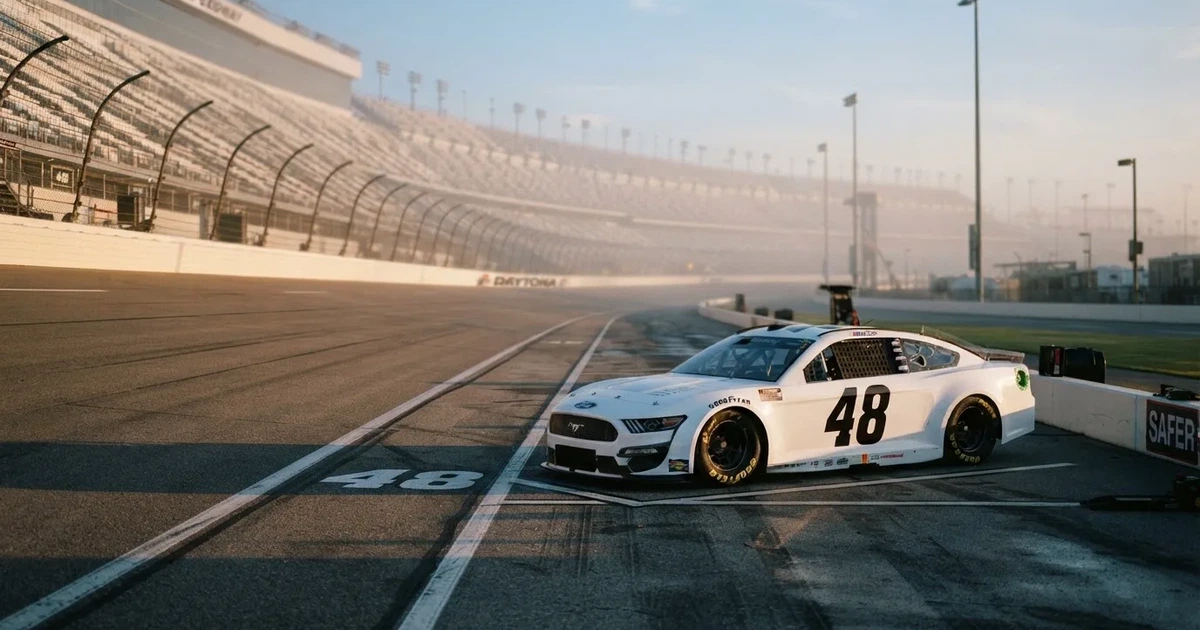
The 2026 NASCAR Cup Series fills a 39-race calendar: 36 points-paying rounds, the Cook Out Clash, the Duel at Daytona and the All-Star Race, a 16-driver playoff ladder after 26 events, and the Straight Talk Wireless 400 at Homestead–Miami Speedway on 8 November 2026 as the closer. The Daytona 500 opened the year on 15 February 2026 and was won by Tyler Reddick in its 68th running. The shape of the season matters more to a bettor than any single name on the entry list, because the schedule, the playoff structure and the race format are the three things that decide which markets a bookmaker prices and how thin or how wide the price gets from week to week. This guide walks through how NASCAR odds are built, what the bookmaker’s margin takes out of every price, where a UK punter can place a bet under a Gambling Commission licence, and what an offer or a feature is actually worth once the small print is read.
_Data current as of 30 October 2026; operator and licence data checked against the Gambling Commission’s public register._
The shape of the 2026 season and why it matters to the price
NASCAR’s calendar runs on a rhythm that almost no other major motorsport series follows. Tracks repeat, the same venue hosts a race in February and a second one in the autumn, and the distance and stage structure change by circuit type. The 2026 Cup Series is no exception. 36 points-paying races, plus three non-championship events, give bookmakers 39 weekends of pricing work, and that volume is part of why the headline odds on race winner, podium finish or top-six finish tend to look generous on the long tail: bookmakers must name a price for every car on every weekend, including backmarkers who have not sniffed the top ten in months.
The playoff, which begins after race 26 and takes the top 16 in points, has dropped its old win-and-you’re-in rule. Starting points are staggered by regular-season standings, which means a driver who has banked stage wins all year carries an advantage into the post-season even if his race pace has cooled. For a bettor reading a futures market on the Cup Series champion, the playoff structure matters: a regular-season leader at +400 in October is not the same proposition he was in July, because the staggered reset compresses the field. The bookmaker’s price on the futures book moves with it, and sharp punters watch that movement rather than the headline.
Stage betting — a NASCAR-specific market built on the three race segments that make up a typical Cup event — also depends on the schedule. Short tracks, intermediates and road courses each split the stage structure differently, and some events do not stage at all. A bookmaker offering stage winner odds has to price three separate mini-races within a single 400- or 500-mile event, and the bookmaker’s margin stretches across all of them. The narrower the field a stage market covers — a top-ten finish, a top-six — the wider the margin tends to be, because the bookmaker’s pricing model is less confident the deeper into the pack the bet goes.
How the price is built, and what the margin takes
Every decimal odds figure a UK punter sees is a statement of two things at once: how likely the result is, and how much the bookmaker keeps of every pound staked. The second is the margin, also called the overround, and it is the reason a “fair” bet — one where the prices add up exactly to 100 per cent — almost never lands in front of the punter.
Take a clean two-way market priced at 1.90 / 1.90 (fractional 9/10 each side). The implied probability from each side is 1 ÷ 1.90, or 52.63 per cent. Add the two together and you get 105.26 per cent. That 5.26 per cent of excess is the bookmaker’s margin. It is the slice the bookmaker keeps of every pound matched on that market, on average over the long run. The punter who bets on either side pays that margin as part of the price; the difference between the price he took and the “true” price is the cost of doing business.
The worked example matters because NASCAR markets are not all priced the same. Race winner, the headline market, is typically the bookmaker’s sharpest — the market with the most money on it, the tightest margin, sometimes as low as 3 to 4 per cent on a marquee race. Podium finish, top-six, top-ten and group bets (driver A or driver B) carry higher margins, often 6 to 8 per cent, because the field is wider and the bookmaker’s confidence in any single outcome is lower. Stage winner and head-to-head matchups sit somewhere in between. The wider the market, the more the punter pays in margin, and that is true on every race weekend of the season.
For a 1.90 / 1.90 two-way line, the payout share to the punter is 1 ÷ (1 ÷ 1.90 + 1 ÷ 1.90), or about 94.74 per cent. The margin is roughly 5.26 per cent. Stated as a band — and it is a band, not a single figure, because margins move from race to race and from market to market — a NASCAR race-winner line at a major UK bookmaker sits between roughly 4 and 7 per cent on a marquee weekend, with the long-tail props and stage markets wider.
The markets a UK bookmaker prices on a Cup weekend
Race winner is the headline, but it is rarely where a sharp NASCAR punter lives. The depth of the menu is what separates a serious motorsport bookmaker from a thinner one, and the categories below are the ones worth knowing.
Outright and futures markets run all year: Cup Series champion, manufacturer championship, race winner per round. These are the slowest-moving markets on the board, often priced weeks or months ahead, and they tend to carry the widest margins because the bookmaker has to commit to a line on every driver before any of them has turned a wheel on the weekend in question.
Race-day markets include race winner, podium finish (top three), top-six, top-ten, group winner (a cluster of drivers priced as a single outcome), head-to-head (driver A versus driver B, finishing position the decider), and stage winner. Stage winner is the NASCAR-specific market built on the segmented race format and is one of the more interesting places for a bettor to find value, because bookmaker pricing models are less mature on stage markets than on the headline race-winner line.
In-race markets depend on the bookmaker’s live offering and on whether the event is televised with the data feed the bookmaker needs to suspend and re-price. Leader after N laps, head-to-head after a stage break, and position at the next caution are the kind of markets a serious bookmaker prices during the race.
Prop markets vary by operator and by race. Manufacturer of the winning car, margin of victory, number of cautions, lead changes and whether the race goes to overtime are the kind of novelty props that show up on marquee weekends and disappear on a midweek short-track race.
The menu the punter sees in front of him is the menu the bookmaker’s trading team has decided to staff. NASCAR is a thin market relative to Premier League football, and some UK bookmakers staff only race winner and a couple of podium markets. The thinner the menu, the higher the margin tends to be on what is offered, and the less room the punter has to find value.
The licence test: how a UK punter confirms a bookmaker is allowed to take his money
A bookmaker serving customers in Great Britain needs a Gambling Commission licence wherever it is based. The Commission’s public register is the whole test of who holds one, and any operator detail — bonus terms, payment methods, market depth — should be confirmed against that operator’s own published terms rather than against a marketing page.
The register can be searched by business name, trading name, domain or account number. The licence categories that matter for a NASCAR punter are remote general betting standard (real events) — the standard sportsbook licence — and remote betting intermediary, the category that covers betting exchanges. A Curaçao, Malta or Gibraltar licence is not a substitute for a Commission licence for bets placed by a customer in Great Britain. Several brands can run under one licensee, so two names that look like rival bookmakers may in fact be the same legal entity on the register.
All listed operators maintain a remote general betting standard (real events) licence on the Commission’s public register. Licence details including account numbers and holders are provided in the comparison table below; we advise readers to consult the register directly as the authoritative source, as details may be updated when the Commission issues, varies, or revokes licences.
There is no statutory list of permitted sports or markets. A bookmaker holds a licence for a category and offers markets under its own rules and the Licence Conditions and Codes of Practice. The punter who finds that his bookmaker does not price a NASCAR race-winner market has not found an unlicensed operator; he has found a thin one, and the answer is to take his custom elsewhere.
Anonymity, crypto and the licensed-UK reality
There is no anonymous play at a licensed UK bookmaker. Name, address and date of birth are verified before a customer can deposit or gamble, and that includes claiming a free bet or a bonus. Source-of-funds questions become routine at higher spend and are normal under the money-laundering rules the operator follows.
Cryptocurrency is not a banned payment method at the licensed end of the market, in the sense that the Commission’s published guidance has not laid down a hard prohibition. In practice, the licensed UK bookmakers that take bets on NASCAR do not advertise crypto deposit rails as a feature, and the customer-verification regime means a bet paid for in bitcoin or ethereum would still be tied to a verified identity at the betting end. Where a punter goes looking for an anonymous NASCAR bet — no name, no address, no source-of-funds check — he leaves the licensed market and the consumer protections that come with it. Offshore sites offer that, and they do so without GAMSTOP coverage, without a Commission complaints route, without an approved dispute-resolution body, and without the bonus cap and financial vulnerability checks that a licensed bookmaker is required to apply.
For a UK punter the honest framing is: licensed means checks, limits, GAMSTOP, a 10x wagering cap on bonuses, but also identity verification before the first bet. Unlicensed means none of those protections and a real risk of funds being withheld without recourse. Neither is the safe choice by default — they are different choices with different costs.
What a bonus and a free bet really cost
The marketing on a sportsbook welcome page is built to convert a deposit into a stake. The arithmetic of the offer, when read carefully, almost always comes out worse for the punter than the headline suggests.
A deposit bonus that pays 100 per cent up to £100 in bonus money is the standard shape. The headline says “£100 free”; the small print says the £100 of bonus funds carries a wagering requirement, the cost of converting the bonus into withdrawable cash by placing a series of qualifying bets. Since 19 January 2026 the Commission has capped wagering requirements on bonuses at 10x the bonus amount — a £10 bonus at 50x was the old shape, £500 of bets; under the cap, no more than £100. A £100 bonus at the 10x cap means £1,000 of qualifying bets before the bonus is cleared, and only bets at or above the minimum price (typically 1.50 or 1.80, depending on the operator) count toward the requirement.
The cost of clearing a bonus is the margin of the market the punter wagers on, applied to the turnover. If the punter is betting on NASCAR race winner at a 5 per cent margin and needs to turn over £1,000, the expected cost of clearing the bonus is £50 in margin — a real cost, paid in expectation across many bets, on top of any variance in the betting line. The bonus pays £100 in headline value; it costs £50 in margin, plus the time, plus the restriction on what bets count. That is the bargain the punter is making.
A free bet is a different offer. The stake is usually not paid back with a win, and the value of a £10 free bet at 3.00 is £20 (£10 × (3.00 − 1)), not £30. A free bet on a heavy favourite is worth less than the same free bet on a long shot, because the formula weights the price against the implied probability of the market. For a punter who already bets on NASCAR, the question is not whether to take a free bet — they cost nothing to claim — but whether the qualifying bet he has to place to unlock it costs more than the free bet is worth.
Mixed-product promotions, an offer that requires gambling on two or more product types (a free bet paid for by casino play, a sports bonus tied to a slots wager), have been banned since 19 January 2026. That removes a category of offer that used to be a common way of moving punters between products. A sportsbook welcome that is genuinely sports-only no longer carries the cross-product sweetener, and the headline is closer to the actual deal than it used to be.
The mobile bookmaker: what the app does that the desktop does not
A serious NASCAR punter follows a race weekend from a phone, not a desktop. The bookmaker’s app is the difference between catching a price before the green flag and watching it walk away.
The features that matter on a NASCAR app are: live in-play pricing, with the ability to suspend and re-price as the race unfolds; cash out, the bookmaker’s offer to settle a bet early at a price the trader has set; bet builder, the same-game multi tool that lets a punter combine several markets from one race into a single price; live streaming or live timing, since NASCAR in the UK is paywalled and the bookmaker’s data feed is often the only running commentary a punter has; and a fast, stable bet slip that does not drop a bet at a busy moment, which on a Cup race weekend is the last 30 laps before the chequered flag.
Bet builder is the feature that has reshaped NASCAR betting in the last three years. Combining race winner, top-six finish, lead a lap and manufacturer of the winning car into a single price is the kind of bet a punter could not place five years ago. The trade is that bet builder lines carry a margin premium over the same selections priced separately, because the bookmaker’s correlation model is conservative. A punter who knows the underlying lines can sometimes build the same bet cheaper as two singles; a punter who does not, gets the convenience and pays for it.
Cash out is the feature the marketing team loves, because it is the one that lets the bookmaker quote a price on a market the trader is still trying to manage. The cash-out number is set by the trader and is not the same as the fair price. A punter who uses cash out as a stop-loss is paying an explicit cost in margin; a punter who uses it as a discipline tool — to lock in a price the bookmaker would otherwise move against him — is getting a real service. The two uses are different, and the punter should know which one he is making.
Live betting on a NASCAR race
NASCAR in-play is one of the harder products to trade, because a single caution can flip the order and a fuel-mileage gamble can change the leader with 20 laps to go. Bookmakers that offer NASCAR in-play tend to manage it conservatively — suspending the market during cautions, re-pricing quickly when the green flag drops, and offering a thinner menu than the pre-race board.
The bookmakers on this page that price NASCAR in-play do so at varying depth. The most serious operators offer race winner, podium and a few group markets live, with the bet slip updating in seconds. The thinner operators offer race winner only, with a 30- to 60-second delay between the price changing on the screen and the price the back end is willing to accept. That delay is the punter’s edge or his tax, depending on the direction he is betting.
In-play betting on a motor race is not unrestricted. The bookmaker’s licence conditions and customer-protection duties require that markets be suspended at material events — a multi-car crash, a red flag — and the bookmaker’s own terms specify when a market is closed. A bet placed in that suspension window is void, and the punter’s stake is returned. The marketing line of “bet live on every lap” is not the same as a market that is open every lap, and the punter should know the difference before he expects a price at the moment he wants one.
Strategy, predictions, and the case for not having one
The internet is full of NASCAR betting tips. Most of them are not predictions in the statistical sense; they are narratives — a driver who has run well at the track before, a chassis setup that suits the surface, a manufacturer streak that has to end. The value of a narrative in motorsport is real, because the data is thin: a 36-race season with six-month gaps between visits to the same track does not give a serious statistical model much to work with. The punter who treats the narrative as a price signal and the price as the question is closer to a sharp bettor than the punter who treats the narrative as the answer.
The honest framing on predictions and strategy is that nobody can know who will win a NASCAR race. A reader who acts on a predicted winner loses real money on the page’s word, and no system, no model and no streak of form changes that. What a punter can do is price-shop — take the best price available on the market he wants, and accept that the bookmaker’s margin is the cost of doing business — and bankroll-manage, which is the unglamorous end of the activity but the one that decides whether the punter is still betting in October.
Bankroll management, the unglamorous end, is the one that decides whether the punter is still betting in October. A punter who stakes 1 to 2 per cent of his bank on a single bet, prices the bookmaker’s margin into his expected return, and walks away from a market he cannot price is a punter who will last the season. A punter who chases a loss, who doubles a stake to make it back, who treats a NASCAR futures book as a lottery ticket, will not.
The Cup Series through the season, and what each phase prices
The 2026 season breaks into three pricing phases, and the menu a bookmaker offers in each is different.
The pre-season and the Daytona 500, which opened on 15 February 2026, is when the futures book is set. Cup champion, manufacturer champion, race wins over/under and most-stage-wins are the markets that are live from January and into the spring. The margin on a futures book is wide — often 12 to 20 per cent on a Cup champion line — because the bookmaker has to commit to a price on 36 drivers before any of them has turned a competitive lap in the new car. The punter who wants a futures bet pays a premium, and the punter who waits until the summer to back a mid-season surge gets a tighter line.
The regular season, races 2 through 26, is the heart of the menu. Race winner, podium, top-six, top-ten, group bets, head-to-head, stage winner, manufacturer of the winning car, margin of victory, cautions and lead changes — the full menu. This is when the bookmaker’s margin on race-winner tightens to its season-low (4 to 7 per cent on a marquee race) because the data is fresh and the money is on.
The playoff, races 27 through 36, is when the menu narrows. The field is cut to 16 after race 26, and the bookmaker’s pricing model can be more confident in any single driver’s chance. Race-by-race futures on the Cup champion are still available, but the menu of race-day markets narrows because the playoff format introduces elimination, and a four-car field prices differently from a 36-car field. The Straight Talk Wireless 400 at Homestead–Miami on 8 November 2026 closes the year and the futures book, and the day after is when the 2027 line goes live.
Where a UK punter can bet on NASCAR under a Gambling Commission licence
The comparison below covers operators with a remote general betting standard (real events) licence from the Gambling Commission that also feature NASCAR in their sportsbook. This list is not a ranking. The order follows the Commission’s published register, and market details are based on each operator’s own terms. Readers should rely on the register for licence status and the operator’s terms page for specifics on their offerings.
| Brand | Gambling Commission licence | What the operator’s own terms state on the subject |
|---|---|---|
| QuinnBet | 061011-R-335683-004 (QuinnBet (Gibraltar) Limited) | Best Odds Guaranteed on Irish and UK horse racing from 10:00 daily, on singles, multiples and system bets, maximum benefit £150 per customer per race. |
| Betway | 039372-R-319367-029 (Betway Limited) | Free Bet Club gives up to £10 in free bets every week after opt-in; spending £25 or more on sports earns 2 x £5 free bets. |
| Bet600 | 044731-R-323941-016 (Tyche Tech Limited) | Best Odds Guaranteed on horse racing — if the starting price is bigger than the early or show price taken, the bet is paid at the SP. |
| Geoff Banks | 054095-R-330366-010 (GB Sports Advisors Limited) | App published by GB Sports advisors Ltd, with live in-play prices and ante-post prices on future events. |
| London Bet | 066162-R-340278-004 (Thistle Bet Limited) | App combines sports betting (football, tennis, horse racing, greyhounds, darts, golf, cricket, NFL, NBA, MLB, snooker) with Pragmatic Play casino slots and live in-play. |
| 888sport | 039028-R-319297-014 (888 UK Limited) | Pre-match and in-play betting, Cash Out, Bet Builder, racing streams, BetFinder form tools, a live bet feed and daily boosted odds. |
| bet365 | 055148-R-331498-002 (Hillside (UK Sports) ENC) | Bet Builder+ combining markets from one event into a single bet, Super Boosts, Winnings Boosts on Bet Builders and selected singles, daily Bet Boosts, live streaming, in-play, Bet Track, Match Live and a Live Golf Tracker. |
| Copybet | 053774-R-330743-010 (Copybet UK Limited) | Best Odds Guaranteed all day, every day, on all UK and Irish racing; pays first past the post on horse racing even if the winner is later disqualified. |
| Fitzwilliam Sports | 048760-R-335434-009 (SBKI Limited) | Dublin bookmaker with capped membership, a “High Stakes Welcome” subject to compliance criteria, instant deposits, fast withdrawals, timeouts and deposit limits. |
| LiveScore Bet | 056859-R-332720-005 (LiveScore Betting and Gaming (Gibraltar) Limited) | Bet Builder allows up to 10 selections and covers match result, both teams to score, corners, total goals, player scoring and card markets. |
Several of the brands above are best known to UK punters for horse racing, and their NASCAR menu is a smaller slice of a larger product. That matters: a bookmaker whose trading team lives on horse racing and football may not have the motorsport trading depth to staff 36 Cup weekends at competitive margins. The punter who wants the tightest NASCAR line should shop the price on race winner, podium and top-six across two or three of the brands above and take the best. The bookmaker’s margin is the cost; the price is what the punter pays it at.
QuinnBet
QuinnBet holds a remote general betting standard (real events) licence, Commission account 61011, and offers a 10:00 daily Best Odds Guaranteed window on UK and Irish horse racing with a £150-per-race benefit cap. This cap is a horse-racing feature, not a NASCAR one. For a NASCAR punter, the brand provides a price on race-winner and a menu that varies in depth by event — a smaller operator than some on this list, with a tighter racing focus. The punter who already has a QuinnBet account for the racing has a price to compare on Sundays in the Cup season; the punter who does not may find a thinner menu and a wider margin than at the bigger brands. Worth a price check on race winner, especially on a marquee weekend.
Betway
Betway’s Free Bet Club — up to £10 in free bets per week after opt-in, with £25 of sports spend unlocking 2 x £5 — is the most visible part of its offer, and the relevant fact for a NASCAR punter is that the qualifying spend of £25 is on sports at minimum price. For a punter who bets on NASCAR anyway, the free bet is a small sweetener, not a reason to open the account. The brand’s NASCAR menu is mid-depth: race winner, podium, top-six, top-ten, group bets, head-to-head, and the props that show up on marquee weekends. The mobile app is the part the punter will use most, and the in-play offering is competent if not the deepest in the field. A solid mid-table choice on price and menu, with a free bet that costs the punter nothing to claim and is worth roughly the free bet amount at 3.00, or £10 if the bet wins at that price.
Bet600
Bet600 is a smaller UK-licensed brand; its Best Odds Guaranteed feature is horse-racing-only, paying out at SP if it exceeds the early price. Its offering for the NASCAR punter focuses on headline markets and a straightforward mobile app. A quick price check on a Cup race is feasible, though the menu is thinner than at larger operators. The honest read is that this is a smaller bookmaker with a horse-racing focus and a NASCAR offering that is not its centre of gravity. The punter who wants a price comparison will find one; the punter who wants deep motorsport menu depth will not.
Geoff Banks
Geoff Banks’ app is published by GB Sports Advisors Limited, the same name that appears on the Commission’s public register as the licence holder, and the offering is built around live in-play prices and ante-post markets on future events. For a NASCAR punter, that means a brand whose product is structured around the kind of betting that does not require a pre-race commitment — in-play, futures, ante-post — and a smaller pre-race menu than the larger sportsbooks. The punter who wants to back a driver for the Cup championship before the season starts, or to take a price on a race in three weekends’ time, will find a market here. The punter who wants a deep race-day menu on Sunday will find a thinner one than at bet365 or 888sport. A niche play, well suited to futures and ante-post NASCAR.
London Bet
London Bet is a UK-licensed bookmaker whose app combines sports betting (football, tennis, horse racing, greyhounds, darts, golf, cricket, NFL, NBA, MLB, snooker) with Pragmatic Play casino slots and live in-play. NASCAR is a smaller part of that menu than at the motorsport-focused brands, and the punter looking for a deep Cup Series offering will find a thinner board. The brand’s value is breadth — a single account for a punter who bets on NFL and NBA as well as NASCAR, with a casino product bolted on. The punter who wants the tightest price on a Cup race winner will likely find it elsewhere, and the punter who wants a single account across a dozen sports will find one here. A breadth play, with a motorsport offering that is competent but not the centre of gravity.
888sport
888sport is a UK-licensed brand with a full sportsbook offering — pre-match and in-play betting, Cash Out, Bet Builder, racing streams, BetFinder form tools, a live bet feed and daily boosted odds. For a NASCAR punter, the relevant features are the Bet Builder, the in-play coverage and the boosted odds on marquee weekends. The brand’s menu depth is solid: race winner, podium, top-six, top-ten, group, head-to-head and the stage markets. The punter who wants bet builder combinations on a single race and the chance to take a boosted price on a headline market will find both. The honest read is that 888sport is a strong mid-to-top choice on a Cup weekend, with a menu deep enough to find the value bet a thinner bookmaker does not price.
bet365
bet365, the largest UK-licensed sportsbook by customer count and official UEFA Champions League partner, provides extensive menu depth and in-play coverage for NASCAR. Bet Builder+ allows pre-match and in-play market combinations, complemented by Super Boosts and daily Bet Boosts. The in-play experience is among the deepest in the field, including live streaming, Bet Track, Match Live and a Live Golf Tracker. The punter seeking the tightest race-winner line, the most comprehensive in-play menu and extensive bet builder options will find this an excellent choice. It follows the standard large-sportsbook model: wider menus, tighter margins, and a stable app experience. A top contender for a weekly NASCAR bettor.
Copybet
Copybet’s headline offer for racing punters is Best Odds Guaranteed all day, every day, on all UK and Irish racing, with first-past-the-post paid even if the winner is later disqualified. For a NASCAR punter, the racing features are not directly relevant, and the brand’s value is the price it offers on the headline NASCAR markets and the depth of its menu. Copybet’s sportsbook is mid-depth, and the punter looking for a quick price check on a Cup race winner will find one. A solid mid-table option, with a racing-heavy offer side that does not translate directly to a motorsport punter’s needs.
Fitzwilliam Sports
Fitzwilliam Sports is a Dublin bookmaker with capped membership, and the welcome is a “High Stakes Welcome” subject to compliance criteria. The features listed on the operator’s home page are instant deposits, fast withdrawals, timeouts and deposit limits, with links to GambleAware, GamStop and Gamblers Anonymous. For a NASCAR punter, the relevant facts are the capped membership, the high-stakes focus, and the deposit-limit feature. The punter who wants a small-stakes account and a deep menu will find neither here; the punter who wants a higher-stake account and a tighter relationship with the bookmaker will. A niche play, well suited to the high-stakes NASCAR punter rather than the weekend casual.
LiveScore Bet
LiveScore Bet’s Bet Builder supports up to 10 selections covering match result, goals, cards, and player markets. This tool is primarily football-focused; for NASCAR, the operator provides competitive pricing on headline markets and a responsive mobile app. The NASCAR menu is mid-depth, and punters seeking extensive bet builder combinations for Cup races will find the options less expansive than for major football events. A reliable mid-table choice, with a bet builder optimized for football and a functional NASCAR offering.
What a UK punter needs to know about offers and marketing
The marketing of a sportsbook is built to convert a deposit into a stake, and the punter who reads the marketing as a price signal — rather than as a value signal — is the punter who lasts the season. A “risk-free” bet is a free bet whose stake is not returned with a win, and the value of a £10 risk-free bet at 3.00 is £20, not £30. A “boosted odds” offer is a price the bookmaker has decided to enhance, and the punter should check the un-boosted line elsewhere before concluding the boost is worth taking. A “best odds guaranteed” offer is, in the UK, a horse-racing feature, not a motorsport one, and the punter looking for it on NASCAR will not find it.
Wagering requirements on bonuses have been capped at 10x since 19 January 2026, and mixed-product promotions — an offer that requires gambling on two or more product types, such as a sports bonus tied to casino play — have been banned on the same date. The cap removes the worst shape of bonus, the 50x or higher turnover that used to be standard, and the mixed-product ban removes the cross-product sweetener that used to move punters between verticals. Neither change makes a bonus a good deal; both make a bonus a less bad one.
A British punter does not pay tax on betting winnings. General Betting Duty is the operator’s tax on gross profits, currently 15 per cent, rising to 25 per cent on remote bets from 1 April 2027 within the existing structure; the rate change is the operator’s tax bill, not the punter’s, and whether it is passed on through odds is not established. The punter who acts on the assumption that the rate change will tighten prices is making a forecast about bookmaker behaviour, not reading a rule.
How a UK punter protects himself
Every UK-licensed online bookmaker is a member of GAMSTOP, the national multi-operator online self-exclusion scheme. The exclusion periods are six months, one year, five years, or five years with auto-renewal, and after the minimum period the exclusion stays in place for a further seven years unless the customer asks GAMSTOP to remove it. GAMSTOP covers online sites and apps; betting shops use a separate service. The punter who wants to stop is one registration away from being locked out of every UK-licensed online bookmaker at once.
A financial vulnerability check, a public-record check for things like bankruptcy or county court judgments, applies to licensed remote betting when a customer’s deposits minus withdrawals exceed £150 in a rolling 30 days. The check is not an income check and not a credit reference check; it is a check the bookmaker runs to satisfy the money-laundering and player-protection rules. The punter who is over the £150 threshold and has a county court judgment on the public record will be asked questions, and the punter who cannot answer them will have the account restricted.
Financial risk assessments — the affordability checks that have been in the press — have been announced in a staged plan, with no start date. The punter who reads a press article about “affordability checks” and assumes they are in force is reading ahead of the regulator. The honest framing is: announced, staged, no start date.
The help lines are real and they are free. GamCare runs the National Gambling Helpline, GambleAware funds treatment and research, the NHS runs gambling clinics, and Gamblers Anonymous runs peer-support meetings. The punter who needs help is one phone call or one web search away from it.
What the small print on a NASCAR bet says
A bookmaker’s terms specify when a bet is settled, what happens if a race is shortened, and what the bookmaker’s policy is on driver changes and qualifying cancellations. A NASCAR punter should read those terms before placing a futures bet, because the small print on a futures book is where the bookmaker’s risk management lives.
A race that is shortened by weather and does not reach the chequered flag under green-flag conditions may be settled on the official NASCAR result, or may be voided depending on the bookmaker’s policy and the stage the race reached. A driver who does not start the race — a pre-race withdrawal, a fail to qualify — usually means the bet is void and the stake returned. A driver change mid-race, where one car is taken over by a relief driver, may void certain markets and not others.
A bookmaker’s maximum stake varies by market and by customer. A sharp NASCAR punter with a six-figure bank may find his race-winner stake limited well below the headline maximum, because the bookmaker’s risk-management team will set a per-customer cap on a thin market. The punter who expects to bet bigger than the bookmaker is willing to take should contact the trading team before the race, not after.
How a punter reads the price on race day
The price the punter sees on Sunday morning is not the price he will see on Sunday afternoon. NASCAR in-play markets move quickly, and the pre-race price is the bookmaker’s first offer, not his last.
A punter with a model that prices a driver at 4.00 and sees the bookmaker offering 5.50 has found a value bet, and the question is whether the price is still there when he clicks. Bookmakers adjust pre-race prices as money comes in, and a price that was available at 9:00 may be 4.50 by 11:00 if the smart money landed on the same driver. The punter who wants the value bet takes the price when it is available, not when he has finished thinking about it.
A punter who wants to back a long shot for a small stake to add interest to the race has a different question. The cost of that bet is the bookmaker’s margin, applied to a market that is wide to begin with, and the expected return is a small positive — or more often a small negative — once the margin is priced in. A long-shot bet on NASCAR is closer to a lottery ticket than an investment, and the punter who treats it as the latter is making a category error.
The price the bookmaker offers on Saturday night and the price he offers at the green flag on Sunday are two different questions. The pre-race price reflects the bookmaker’s model and the money that has come in; the in-play price reflects the model, the money, and the practice and qualifying data from the weekend. A driver who qualified second at 8.00 on Saturday may be 6.00 at the green flag on Sunday, and the punter who waited has paid a tax on his patience.
The long view: a season of NASCAR betting under a UK licence
The 2026 Cup Series is a 39-race calendar, and a punter who bets on every race will turn over more money than a punter who bets on the Premier League every weekend. The bookmaker’s margin compounds across the season, and a punter who prices the margin into his expected return is the punter who understands what he is paying for the service.
The Cup champion futures market opens in January, the playoff structure compresses the field after race 26, and the Homestead closer on 8 November 2026 closes the year. The bookmaker’s menu narrows in the playoff and widens again in the pre-season, and the punter who adjusts his expectations with the menu is the punter who is not surprised by the thinner board in October.
A UK punter betting on NASCAR in 2026 is betting under a regulatory regime that checks his identity, caps the wagering on his bonus, requires the bookmaker to run a GAMSTOP exclusion if he asks for one, and gives him a Commission complaints route if the bookmaker withholds funds unfairly. The cost of that regime is the friction at sign-up and the slow first deposit. The benefit is the protection if something goes wrong. The honest framing is that neither the cost nor the benefit is the deciding factor for most punters — the price on the race and the depth of the menu are. The punter who prices the regime as a feature rather than a friction is the punter who is buying what he is paying for.
Frequently asked questions
How does a punter bet on a NASCAR race?
The punter opens an account with a UK-licensed bookmaker, completes the identity check, deposits by debit card or bank transfer (credit cards are banned for gambling in Great Britain), and finds the NASCAR race in the sportsbook menu. The available markets vary by operator but typically include race winner, podium finish, top-six, top-ten, head-to-head, group bets and stage winner. A bet is placed by adding a selection to the bet slip, entering the stake and confirming; the bet is settled at the conclusion of the race under the bookmaker’s published settlement rules.
Where can a UK punter bet on NASCAR?
NASCAR markets are priced by all major UK-licensed sportsbooks and several smaller ones. The section above covers brands holding a remote general betting standard (real events) licence on the Gambling Commission’s public register that offer NASCAR markets. Punters should verify current licence status directly on the register, as details can change as the Commission updates its data, meaning a previously licensed operator may have since had their licence revoked or varied.
How does a punter bet on NASCAR races in detail?
The bet slip is the entry point. A race-winner bet is a single selection: driver A to win the race. A podium bet is driver A to finish in the top three. A top-six bet is driver A to finish in the top six. A group bet is one of a cluster of drivers to win — the bookmaker names the cluster. A head-to-head bet is driver A to finish ahead of driver B. A stage bet is a driver to win one of the three race segments. A bet builder combines several markets from the same race into a single price. Each market carries its own margin, and the punter who prices the margin into his expected return is reading the offer correctly.
How can a punter check that a bookmaker holds a Gambling Commission licence?
The Commission’s public register can be searched by business name, trading name, domain or account number. The punter enters one of those in the search field, finds the matching licence, and confirms the licence category, the licence holder, the status of the licence and the site listed on the register. The register is the source of truth, and any offer or feature the bookmaker claims is worth checking against the register as well as against the operator’s own terms.
How is the return on a bet worked out from the stake and the odds?
The return on a winning single bet is the stake multiplied by the decimal odds. A £10 stake at 3.00 returns £30 — that is the stake plus the profit. The net profit is the stake multiplied by (odds minus 1), so £10 at 3.00 produces £20 of profit. A combination bet multiplies the odds of the legs together, and a £10 treble at 3.00, 4.00 and 5.00 has combined odds of 60.00, returning £600 if all three win. A free bet whose stake is not returned pays the profit only: a £10 free bet at 3.00 returns £20, not £30.
What is the bookmaker’s margin and how can it be seen in the odds?
The margin is the slice the bookmaker keeps of every pound matched on a market, on average across many bets. It is the difference between the implied probability the prices add up to and 100 per cent. A two-way market priced at 1.90 / 1.90 implies 52.63 per cent on each side, for a total of 105.26 per cent; the 5.26 per cent of excess is the margin. The punter who converts the prices of every outcome in a market to implied probability, adds them up, and subtracts from 100, sees the margin. Tighter margins sit on the markets the bookmaker is most confident pricing — race winner on a marquee weekend — and wider margins on the long tail of prop and novelty bets.
Combat & motorsport – signupbetsguide.com
Content created by the «signupbetsguide.com» team
