
Where the Big Bet Goes, and Why Most Books Won't Take It
 Available in US
Data current as of 30 October 2026, cross-referenced against the Gambling Commission’s public register.
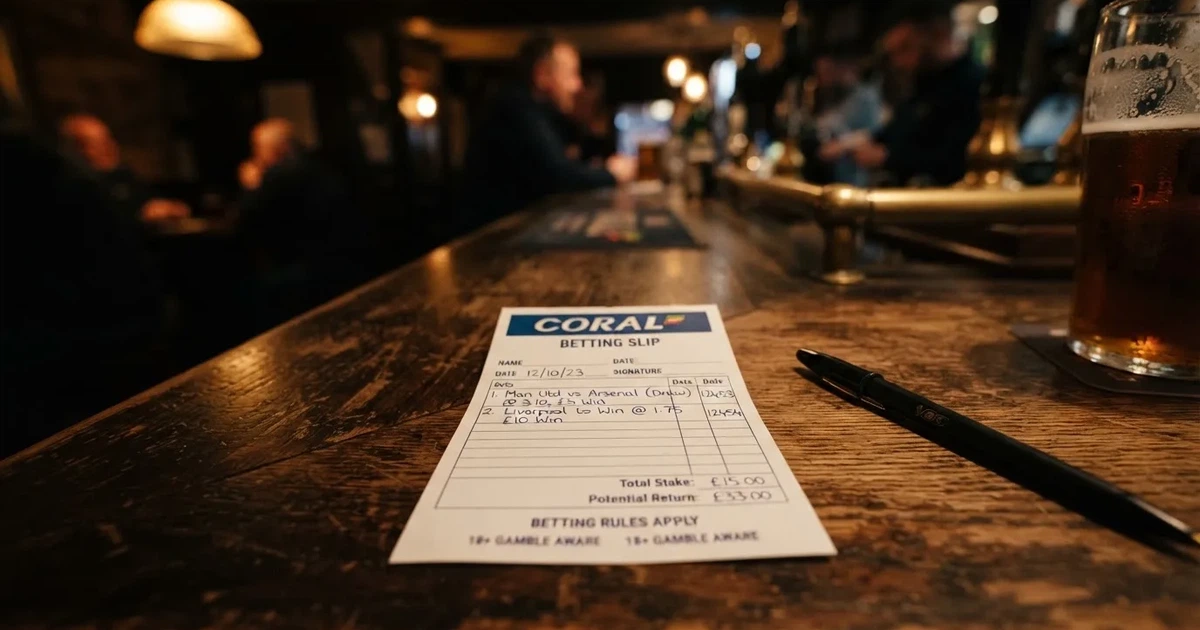
A punter who wants to place a £500 wager on a Premier League match or run a four-figure position through the racing card will find, sooner or later, that the betting site does not want that bet. The slip accepts £10. It accepts £50. It stops accepting £500, or £1,000, or anything approaching what a serious backer would consider serious money. The ceiling is rarely published. It is communicated by a refusal, or by an automatic cut-down at the bet-placement stage, and the operator’s own terms dress it up as risk management.
This is a guide for UK punters who want to know which bookmakers will actually take a large bet, why those ceilings exist in the first place, and what “no limit” actually means when an operator says it. The angle is cost: what a no-limit account costs the operator, what it costs the punter to find one, and what the bookmaker quietly keeps out of every price.
What a “No Limit” Site Actually Means
“No limit” is a marketing phrase before it is anything else. A bookmaker can advertise that it takes big bets and still cap any individual wager at £100 if the selection is a tight price. The phrase that matters is maximum stake, and the phrase underneath that one is exposure. Exposure is the worst-case liability the bookmaker takes on if every leg of a multiple wins and every outcome lands against the firm’s position. Every sportsbook in Britain runs a live exposure model: an automated system that watches how much it stands to lose on a market and refuses bets that would push it past the threshold. A £20,000 liability on a single football match is normal at the sharp end. A £200,000 liability is not.

The reasons bookmakers set those limits are not complicated. The Gambling Commission does not cap stakes — there is no statutory maximum bet in Great Britain, and never has been. The ceiling is the firm’s own. A bookmaker is a counterparty that loses when the punter wins, and the bigger the bet, the bigger the potential loss. A sharp punter, one who consistently beats the closing line, is also a liability. So is a syndicate, or anyone whose staking pattern suggests professional operation. The standard response from the industry is a stake cap: a polite ceiling below which the bookmaker is happy to take the action, and above which it is not.
The categories to keep separate: a stake limit caps the size of any single bet; a winning-bettor limit is a stake cap applied to a specific customer because of their betting record; a market limit is a ceiling on a particular selection regardless of who backs it. A no-limit bookmaker promises that the first of these is generous. It cannot promise the second or the third are absent, and the best of the bunch are candid about that distinction.
The Practical Shape of a Limit
For most punters the ceiling never appears. The £10 accumulator, the £20 weekend Yankee, the casual each-way flutter on the 3.10 at Kempton — none of those touch the line. The limit bites the punter who wants to back a strong fancy at the available price, who wants to lay a position on a betting exchange, or who trades in-running with a stake that would be routine on a financial platform.

The way the limit surfaces: the slip accepts the stake at £100, then reduces it to £25 at confirmation; the bet is accepted but paid at a fraction of the requested stake; the selection is “suspended” for that customer only and stays that way until the market settles. The bookmaker’s own help pages will say something about maximum payouts, maximum stakes on selected markets, and the right to restrict any customer’s activity. The right is real, and the exercise of it is the single biggest reason a UK punter shopping for a no-limit site ends up reading a comparison page like this one.
Crypto, Pseudonymity and the Offshore Question
There is a category of sportsbook that advertises no limits, no identity checks, and Bitcoin deposits. None of those operators holds a Gambling Commission licence. The Commission’s own position is unambiguous: an operator whose remote facilities are used in Great Britain needs a Commission licence, wherever it is based. A Curaçao, Maltese or Gibraltar licence does not substitute. The point of consumption rule has applied since the Gambling (Licensing and Advertising) Act 2014, and the Commission’s enforcement is the disruption of those services inside Great Britain: cease-and-desist notices, search-engine referrals, work with registrars and payment providers, and court-order DNS blocking powers that are either in place or imminent.
What a punter gives up at an unlicensed site: the GAMSTOP self-exclusion scheme, which is a mandatory condition of a remote licence and the only British-registered multi-operator exclusion tool; the Commission’s complaints and ADR route; the British consumer protection that applies if funds are withheld; the bonus cap of 10x wagering introduced on 19 January 2026; the £150 rolling financial vulnerability check; the credit-card ban and the safer-gambling obligations. None of that applies. The fund held by an unlicensed bookmaker sits outside the British regulatory perimeter entirely.
What a punter gains: pseudonymity at signup, larger advertised limits, and crypto rails that licensed sites do not match. Whether that trade-off is worth it is the punter’s call, but it is not a question to answer without knowing both sides of it. The honest framing: a licensed bookmaker runs identity checks, deposit limits, GAMSTOP and a 10x bonus cap, and may still cap stakes at its own discretion; an unlicensed bookmaker runs none of those checks, has none of those caps, and offers no British recourse if a withdrawal stalls.
There is no question the two products are different. There is also no question the regulator’s enforcement is aimed at the operator, not the punter — no offence aimed at the customer who merely bets on an unlicensed site has been established. But the customer-side argument is about consumer protection, not legality of access.
Markets, Selections and What the Odds Actually Carry
A no-limit bookmaker is, almost by definition, a bookmaker worth measuring. The price is the only number that matters once the limit question is settled, and the price carries the bookmaker’s margin in every digit.
The Shape of a Margin
A two-way market at decimal odds of 1.90 on each side looks generous. It is not generous at all. Take the reciprocal of each price: 1 ÷ 1.90 is 0.5263 for the home win and the same again for the away win. Add them together: 1.0526. That is the payout share — the proportion of every pound staked that the bookmaker returns across the two outcomes in the long run. The margin is 1 minus that share: 4.76%. On a pound staked across the two outcomes, the bookmaker keeps roughly 4.8p as gross profit.
The same shape, different prices. At 1.85 / 1.85 the reciprocals add to 1.0811, the payout share is 92.5%, and the margin is 7.5%. At 2.00 / 2.00 — the even-money line — the reciprocals add to 1.0000, the payout share is 100%, and the margin is zero, because even money is fair money at that mathematical limit. In practice, a bookmaker offering 2.00 / 2.00 is leaving nothing for itself, and no bookmaker anywhere offers that price on a two-way market of any consequence.
The illustration above is for two outcomes only. The same arithmetic extends to a three-way market (home / draw / away), and the margin grows with the number of outcomes and with the spread between the favourites and the outsiders. The headline price on a market and the margin of that market are two numbers that describe the same thing from two directions. A punt at 1.90 / 1.90 carries a margin between roughly 4% and 6% depending on how the calculation is rounded. A punt at 1.70 / 1.70 carries an overround of 17.6%, which corresponds to a margin of approximately 15%, because the reciprocal sum climbs as the price shortens.
The takeaway: a no-limit bookmaker is worth more if its headline prices carry thinner margins. A bookmaker that caps every stake at £50 but pays 1.95 on both sides of a two-way market returns more in the long run than a bookmaker that accepts £5,000 but pays 1.80. The size of the stake is not the only number worth tracking.
Markets That Move Quickly
In-play markets carry a wider margin than pre-match, and that is before any commission or premium for liquidity is added. The bookmaker’s exposure model updates in real time, and a bookmaker unsure of the score will widen the overround to protect itself against the kind of bet that arrives milliseconds after a goal. A no-limit bookmaker on the in-play side is rarer than on the pre-match side, and the price on offer tends to be wider still.
Same-game multiples, the bet-builder products that combine match result, totals and goalscorers into a single price, also carry a heavier margin than the underlying singles. The correlation between selections is hard to model, and the bookmaker prices accordingly. A punter who wants the no-limit treatment for a £500 bet-builder is asking the firm to take a position it has only a rough handle on. Most firms will not.
Sports, Tournaments and Where the Limits Bite Hardest
The sport matters. The fixture matters more. The same bookmaker that takes £10,000 on an Ashes test will cap a £500 stake on a Conference play-off, because the firm’s exposure model is calibrated to the liquidity of the market and the price available to lay the position off elsewhere.
Horse Racing
The British racing market is the deepest pool in the world. Best Odds Guaranteed — the rule that says the punter is paid the higher of the price taken and the starting price — is offered by the major firms (William Hill, BetVictor, Bet600, Coral among them), and that commitment is itself a form of limit, because the firm is on the hook for the difference if the SP drifts out. BOG is offered from 8 AM on the day of the race on UK and Irish racing, on both singles and multiples; it does not apply to ante-post bets, tote or pari-mutuel pools.
Ante-post markets carry the widest margins because the book cannot lay off the position until close to the race. A no-limit bookmaker at ante-post is a no-limit bookmaker for a reason: the firm is confident in its book, or it is unconcerned about the worst case. The punter should treat that confidence as a piece of information.
Football
The Premier League and the Champions League are the deepest football pools. A firm that takes £25,000 on Manchester City to win at home will not take £5,000 on a Tuesday night in the Copa Libertadores. The shape of the limit follows the shape of the liquidity. A bookmaker that promises “no limits” without qualifying which fixture is being talked about is promising nothing.
Bet builders in football carry the same trade-off as same-game multiples anywhere else: the correlation between selections is hard to price, the firm charges a premium for the difficulty, and the limit on the combined stake is tighter than the limit on any of the underlying singles. A punter wanting a £1,000 bet-builder at most firms will find the slip scales back the stake.
Cricket and Other Markets
Cricket carries its own limit problem. The draw on a Test match is a market the firm models carefully, and the limit on the draw side of a long-priced game is often tighter than the limit on the favourite. The reason: the firm is exposed to a single outcome that the wider market also expects, and the liability adds up. Punters who ask “is there a limit on sports betting” in cricket will find the answer is yes, and the limit is on the outcome the firm is most worried about.
Esports, virtual sports, politics and novelty markets all carry their own caps. The credit-card ban does not extend to esports specifically, but most licensed firms will not run a credit deposit at all. The deeper limit is the firm’s own: a £100 bet on the winner of a League of Legends match is more than many firms will entertain, because the firm’s model is less reliable on those markets and the price reflects that.
How a No-Limit Account Actually Works
A punt at a licensed bookmaker starts before the bet. The Commission requires name, address and date of birth to be verified before the first deposit or the first bet, including a free bet. That has been the case since 7 May 2019. There is no anonymous play at a GB-licensed site, and no no-limit bookmaker can waive that requirement without losing its licence.
The Verification Process
The flow: open the account, supply the standard details, deposit using a debit card or a bank-based payment method. The firm runs an identity check against public records and credit-reference data, and the deposit is cleared. The first bet can be placed once the verification has returned a positive result, which is usually minutes but can be longer. The firm may then ask for proof of address — a utility statement, a bank statement — and that is a one-off exercise in most cases.
The £150 rolling vulnerability check applies once a customer’s net deposits (deposits minus withdrawals) exceed £150 in a 30-day rolling window. The check is a public-record check — bankruptcies, county court judgments — not an income check, not a credit check. The check was in force from 28 February 2025, and it is the formal limit the firm imposes on the customer’s stake by asking for source-of-funds information. A punter whose net deposits are running above £150 a month will be asked to evidence their income. A punter whose net deposits are below that threshold will not.
Deposit Limits and the Customer’s Own Ceiling
GAMSTOP is the national self-exclusion scheme and a mandatory condition of every remote licence. The minimum exclusion is six months; the maximum is five years plus auto-renewal, with a seven-year tail after the chosen period. The scheme covers online sites and apps; the betting shops run their own equivalent. GAMSTOP is the strongest limit a UK punter can impose on themselves, and the limit that has the most institutional weight behind it.
The customer’s own deposit limit sits on top of that. Operators are required to offer a gross deposit limit on a fixed time frame under the Remote Technical Standards, and the first changes have applied since 31 October 2025; a second phase was postponed to 30 September 2026, and whether it is in operation has not been confirmed. The deposit limit is the customer’s setting, not the firm’s; a punter who wants to deposit £5,000 a week sets the limit at £5,000 a week and the firm cannot raise it without a cooling-off period. The limit is the strongest ceiling a no-limit bookmaker will agree to, because it is the ceiling the customer sets themselves.
The Flow of a Large Bet
A punt of £1,000 on a Premier League match: open the bet slip, enter the stake, confirm the price, place the bet. The slip accepts the stake or reduces it. If accepted, the bet is matched at the price displayed, and the position sits in the account. If the firm reduces the stake, the slip shows the reduced stake and the punter can either accept or cancel. The firm may also void the bet if the price has moved between the slip and the placement; that is a standard occurrence on a fast market, not a sign of restriction.
A restricted customer sees something different. The bet is placed and matched, the position sits in the account, and then within 24 hours the firm emails to say the maximum stake on certain markets has been reduced to £5. The reason is not given; the customer knows the reason. The customer’s account has been flagged as a winning account, or as a sharp account, and the firm has applied its standard response. That is the limit the marketing does not talk about.
The Ten No-Limit and Near-No-Limit UK Bookmakers
The comparison below covers ten Gambling Commission-licensed bookmakers and one exchange, and the matrix below summarises the licence and the firm’s own published terms on stake sizes. The reading order on this page follows the firm’s licence number, which is the easiest way to cross-check the public register.
| Brand | Gambling Commission remote licence | Licence holder | What the operator’s own terms say on stake limits |
|---|---|---|---|
| Star Sports | 009177-R-104555-019 (account 9177) | Star Racing Limited | Pre-event and in-play markets; Bet Boosts and Weekend Enhanced Boosts; stake capped per market at placement |
| NetBet | 039170-R-319343-032 (account 39170) | Netbet Enterprises Limited | Daily Boosts, Profit Boosts and free bet offers; Bet Builder with instant dynamic odds; per-bet stake caps apply |
| Swifty Sports | 058957-R-334734-006 (account 58957) | Swifty Global (UK) Ltd | Best Odds Guaranteed; Cash Out on selected markets including horse racing and football; live streaming; Bet Builder listed as coming soon |
| Lottoland | 038991-R-319408-020 (account 38991) | EU Lotto Limited | Casino, lottery betting, sports betting and scratchcards combined; stake caps vary by product |
| DragonBet | 064908-R-339041-003 (account 64908) | DragonBet Ltd | Welsh football and rugby markets, racing, American football; in-play and bet builder markets; per-event caps |
| Hollywoodbets | 053028-R-330019-013 (account 53028) | Hollywoodbets International UK Limited | Welcome offer caps free-bet value at £30; per-event stake limits apply on racing and football |
| Bet600 | 044731-R-323941-016 (account 44731) | Tyche Tech Limited | Best Odds Guaranteed on horse racing from the morning of the race; stake caps per market at placement |
| VBet | 044662-R-324273-022 (account 44662) | SCGO Limited | Bet Builder, pre-match and in-play betting, live streaming; per-bet stake caps apply |
| Smarkets | 039173-R-319366-011 (account 39173) | Smarkets (Malta) Limited | Betting exchange; 2% standard commission on eligible bets; 0% commission promotion for 60 days subject to a £10 minimum first deposit; lay stakes limited by available liquidity |
| BetUK | 039198-R-319450-029 (account 39198) | LeoVegas Gaming PLC | Free bets exclude virtual sports, esports and non-UK/IE horse racing; minimum odds apply; per-bet stake caps |
A wider guide: every licence number in the table above is searchable on the Commission’s public register by business name, domain or account number. The licence number, the trading name and the registered domain all have to match, and any mismatch is a finding to take seriously. The register is the whole test of whether a brand holds a licence, and no other document substitutes.
Reading the Matrix
The columns are deliberately limited to what research carries. There is no row for “is this brand anonymous”, because every brand in the table is licensed and therefore verified. There is no row for “does this brand accept Bitcoin”, because none of these operators has been confirmed to accept cryptocurrency. There is no row for “best odds guaranteed”, because that product is the firm-specific decision and varies within the table by the rule (Swifty Sports and Bet600 pay BOG on UK and Irish racing; other firms do not).
The columns that would be repetitive have been cut. Every brand holds a remote general betting standard (real events) licence or, in the case of Smarkets, a remote betting intermediary licence. Every brand operates inside the GAMSTOP scheme. Every brand runs the standard verification, the £150 vulnerability check, and the deposit-limit framework. The point of cutting those columns is not to hide them; it is to keep the table to what varies across the brands, and to direct the reader to the sections above and below for what does not.
The Anatomy of a Stake Limit, and What the Punter Pays
The price of a no-limit bookmaker is not the price on the betting slip. The price is everything else: the price the firm keeps in the margin, the price the punter pays in restricted markets when the firm wins, the price the punter pays in the time spent working around the limit. The sections below work through the mechanics of what a no-limit bookmaker charges, in plain numbers and plain prose.
The Margin Band
A two-way market priced at 1.90 on each side carries a margin in the band of 4% to 6%, with the exact figure depending on the rounding. The reciprocal sum is 1.0526, the payout share is 95.05%, and the margin is 4.95% — call it 5% for a clean number. At 1.85 on each side the margin lifts to 7.5%; at 1.80 the margin is 10.6%; at 1.70 the margin is 17.6%. The band is wide and the wide end is reached fast. A bookmaker whose average two-way market runs at 1.85 is keeping 7.5p on every pound staked, against the 5p a tighter firm keeps.
The shape of the band is the shape of the trade-off between stake size and price. A no-limit bookmaker paying 1.90 on both sides returns more per pound staked than a stake-capped firm paying 1.85, and the difference compounds across a season. A punter who values the size of the stake will pick the first firm; a punter who values the size of the return will pick the second. There is no objectively right answer, but the numbers are worth holding onto.
What a Bonus Costs
The bonus cap of 10x wagering, in force since 19 January 2026, changes the shape of the welcome offer. A £10 bonus with a 50x wagering requirement is now banned, because 50x is above the cap; the firm is willing to require up to £100 of qualifying bets before the bonus is withdrawable. The cap applies to bonuses, not to free bets with no wagering condition; whether a free bet with no wagering condition counts against the cap is not established, and the punter who wants certainty should read the firm’s own terms.
A promotional bet described as ‘risk-free’ and refunded as a free bet is not a cash refund, as the stake is not returned with a win; only the winnings are paid. A £10 promotional bet at even money returns £10 if it wins, compared to the £20 a cash stake would return. The refund value is half the cash equivalent at even money, and the ratio worsens as the price shortens. These offers are marketing tools, not guarantees of safety, and carry no promise of deposit or payout security.
A stake-cap offer — Hollywoodbets’ £30 free bet on a losing accumulator — caps the upside at £30, and the punter’s only path to a larger payout is a winning selection. The free-bet value on a £30 free bet at 5/1 is £30 × (5/1 ÷ (5/1 + 1)) = £25 in expected return; on a £30 free bet at 4/1, the value is £24. The expected return never exceeds the free-bet amount itself, because the stake is not paid back with the win. That is the rule the marketing does not tell you.
What the Punter Pays in Restricted Markets
A bookmaker that caps every bet at £100 has set a stake limit. A bookmaker that takes £5,000 on Premier League football but £50 on Conference play-offs has set a market limit. A bookmaker that takes £5,000 from the average punter but £5 from a flagged winning account has set a customer limit. The three limits look similar from the slip, and the punter who treats them as the same will misunderstand what the firm is doing.
The cost of a restricted market is the price the punter pays by not betting on it. The cost of a flagged account is the price the punter pays in lost edge across every other market. The cost of a stake cap is the price the punter pays by downsizing the bet or by laying the position off on an exchange. The exchange’s commission is the punter’s price for the second route, and Smarkets’ 2% standard rate is typical of the segment. The 0% commission offer for 60 days subject to a £10 minimum first deposit is a marketing entry point, not a permanent rate, and the punter’s expected cost should be calculated at 2%.
Reading the Licence
The Commission’s public register is the source of truth for whether a brand holds a licence. The register is searchable by business name, trading name, domain or account number, and the record shows the licence categories, the licence holder, and any conditions or activities attached. A licence number on the firm’s own website is a starting point, not a confirmation; the punter who wants to be sure checks the register.
A licensed firm operating in Great Britain carries the legal framework behind it: the Gambling Act 2005, the Gambling (Licensing and Advertising) Act 2014, the Licence Conditions and Codes of Practice, and the Remote Technical Standards. The Act sets the offences — providing gambling facilities in Great Britain without the licence the Act requires, on summary conviction up to 51 weeks’ imprisonment, a fine up to level 5, or both (six months in Scotland). The Codes set the social responsibility duties. The Technical Standards set the technical and operational requirements. A licensed brand has agreed to all of those, and the punter’s recourse runs through the Commission’s complaints procedure and the approved alternative dispute resolution bodies.
An unlicensed brand has agreed to none of that. The punter’s recourse runs through the firm’s own terms and the firm’s own jurisdiction, and the firm is operating outside the British regulatory perimeter entirely. A punter who chooses an unlicensed brand chooses that recourse on purpose, and the cost of that choice is the loss of the protections the Act provides.
Responsible Gambling and the Cost of a Limit
The Commission’s safer-gambling framework is built around the customer’s own limits, the firm’s duty to monitor, and the GAMSTOP scheme for self-exclusion. A no-limit bookmaker is bound by all of it.
GAMSTOP is the national multi-operator online self-exclusion scheme. A punter who signs up excludes themselves from every online operator licensed in Great Britain for six months, one year, five years, or five years with auto-renewal. The exclusion stays in place for a further seven years after the chosen period unless the punter asks GAMSTOP to remove it. The scheme is mandatory for every online operator, and an operator that failed to enforce it would lose its licence. The punter’s own deposit limit sits on top of that, and the firm cannot raise it without a cooling-off period.
The £150 vulnerability check applies once a customer’s net deposits cross £150 in a rolling 30-day window. The check is a public-record check — bankruptcies, county court judgments — and it is not an income check and not a credit check. The check is a flag for source-of-funds questions at higher spend, and a punter with a clean record will pass it. A punter with a record will be asked to evidence their income, and that is the firm’s safer-gambling duty.
Help is available outside the firm’s own framework. GamCare runs the National Gambling Helpline. GambleAware funds treatment and support. The NHS runs gambling clinics. Gamblers Anonymous runs peer-support meetings. A punter who feels the betting has stopped being entertainment can use any of those services; a punter who wants the strongest limit on themselves can use GAMSTOP.
The £150 vulnerability check, the GAMSTOP scheme, the deposit limit and the bonus cap are the four pieces of the Commission’s safer-gambling framework that bear on a no-limit account. The punter who values the no-limit treatment values the absence of those pieces. The punter who values the safer-gambling framework values their presence. The two positions are not compatible, and the choice between them is the punter’s.
Tax, Duty and What the Punter Does Not Pay
The punter in Great Britain pays no tax on betting winnings. General Betting Duty is the operator’s tax on gross profits, currently 15%, and from 1 April 2027 a new remote betting rate of 25% applies within it; bets on UK horse racing, bets on self-self-service betting terminals, pool betting and in-person betting stay at 15%. Until 1 April 2027 the remote rate is 15%, and whether operators pass duty on through odds is not established. Spread betting has its own rates — 3% on financial spread bets, 10% on other spread bets.
The duty is the operator’s, not the punter’s. A punter who wins £500 at evens receives £1,000 in return, with no tax withheld and no further liability. A punter who treats betting as a profession should ask HMRC or an adviser, because the tax treatment of professional gambling is different from the tax treatment of a casual punter. The general information above is not tax advice.
The Specific Operators, and What Sets Each Apart
Star Sports — Racing Depth and the Saturday Card
Star Sports operates as Star Racing Limited and holds Commission account 9177. The firm’s range is pre-event and in-play markets with Bet Boosts, Daily Specials and Weekend Enhanced Boosts, and the in-play product covers football, horse racing, golf and US sports. The depth of the racing book and the specials attached to the Saturday card are the firm’s distinguishing features, and the stake caps that apply are per-market rather than per-customer. The punter who backs the favourites on a Saturday will not feel the limit; the punter who wants a four-figure position on a 20/1 outsider will.
The licence is the standard remote general betting standard (real events), and the firm is a GAMSTOP member. The verification, the deposit limit and the £150 vulnerability check apply in full.
NetBet — Boosts and the Bet Builder
NetBet operates as Netbet Enterprises Limited and holds Commission account 39170. The firm’s distinguishing product is the Bet Builder with instant dynamic odds, which lets the punter build a same-game multiple and see the price update as selections are added or removed. Daily Boosts, Profit Boosts and free bet offers sit on top. The stake caps that apply are per-bet, and the price on offer is the headline metric; the Bet Builder’s correlation premium is wider than the underlying singles.
Swifty Sports — Best Odds Guaranteed on the Racing Card
Swifty Sports operates as Swifty Global (UK) Ltd and holds Commission account 58957. The firm offers Best Odds Guaranteed on horse racing, Cash Out on horse racing and football, daily price boosts, live streaming and in-play betting, with Bet Builder listed as coming soon. The Best Odds Guaranteed commitment is the distinguishing feature, and the punter who backs the morning price on the morning card will be paid at the SP if the SP is bigger. The trade-off: the price available early on a hot favourite is the wider price, because the firm is offering a guarantee on the difference.
Lottoland — Combined Sports, Lottery and Casino
Lottoland operates as EU Lotto Limited and holds Commission account 38991. The firm’s range combines casino, lottery betting, sports betting and scratchcards in a single product, and the gambling licence covers customers in Great Britain. The stake caps vary by product — lottery betting and sports betting have different ceilings — and the punter who wants the no-limit treatment on a specific market needs to check the firm’s own terms on that market. The product breadth is the firm’s distinguishing feature, and the punter who wants everything in one place will find it here.
DragonBet — Welsh Markets and the Bet Builder
DragonBet operates as DragonBet Ltd and holds Commission account 64908. The firm’s range covers Welsh football and rugby markets, racing, American football, in-play betting and bet builder markets. The Welsh coverage is the distinguishing feature — the firm offers markets on the Welsh leagues and the Welsh rugby that other firms do not. The stake caps apply per-event; a punter seeking to place a four-figure bet on a Welsh rugby international should confirm the ceiling directly with the firm before committing funds.
Hollywoodbets — Welcome Offer and the Losing Accumulator
Hollywoodbets operates as Hollywoodbets International UK Limited and holds Commission account 53028. The firm’s welcome offer for new players deposits £10 or more by card and returns the stake as a free bet of up to £30 on the first qualifying losing accumulator (stake £10+, 3+ legs, odds of 4/1 or greater, settled within 7 days). One free bet per customer. The free-bet value is the stake-not-returned kind: the punter’s upside is capped at £30, and the wagering requirement, if any, sits in the firm’s own terms. The per-event stake limits on racing and football apply in full.
Bet600 — Best Odds Guaranteed and the Racing Card
Bet600 operates as Tyche Tech Limited and holds Commission account 44731. The firm’s distinguishing feature is Best Odds Guaranteed on horse racing: if the starting price is bigger than the early or show price taken, the bet is paid at the SP. The rule is the same as the rule at Swifty Sports and William Hill, and the punter who backs the morning card will not lose to a drifted SP. The stake caps per market apply at placement, and the punter who wants a four-figure position on a 10/1 outsider needs to confirm the ceiling.
VBet — Live Streaming and the In-Play Card
VBet operates as SCGO Limited and holds Commission account 44662. The firm’s range covers Bet Builder, pre-match and in-play betting, live streaming and a live calendar with results and stats. The live-streaming depth is the distinguishing feature, and the punter who wants to watch the in-play markets while betting on them finds the product here. The per-bet stake caps apply, and the in-play exposure model is the reason the limits are tighter than on the pre-match side.
Smarkets — The Exchange and the 2% Commission
Smarkets operates as Smarkets (Malta) Limited and holds Commission account 39173. The firm’s range is a betting exchange: the punter bets against other punters, not against a traditional bookmaker, and the firm takes a commission rather than a margin. The standard commission is 2% on eligible exchange bets, and a 0% commission offer has been made available to new customers for 60 days subject to a £10 minimum first deposit. The lay stakes are limited by the liquidity available on the platform — a lay of £5,000 on a 4/1 outsider is straightforward; a lay of £50,000 on the same selection is not, because there is no punter on the other side to match it. The exchange’s distinguishing feature is the absence of a margin and the presence of a back-and-lay product, and the punter who wants to lay the favourite finds the product here.
The exchange is a betting intermediary under a separate licence category — remote betting intermediary — and the rate, commission and platform rules are set by the firm’s own terms. The Commission’s licence categories cover the framework; the firm’s own terms cover the product.
BetUK — Free Bets and the Exclusion List
BetUK operates as LeoVegas Gaming PLC and holds Commission account 39198. The firm’s distinguishing feature is its free-bet product: free bets exclude virtual sports, esports and non-UK/IE horse racing, and minimum odds apply. The punter who claims a free bet and tries to use it on a virtual or esports market will not be allowed to; the punter who uses it on a UK or Irish horse race at the right price will. The exclusion list is the firm’s own policy, and the punter who values clarity over breadth finds it here.
What the Numbers Mean, in Plain Prose
The arithmetic of a no-limit bookmaker does not live in the headline stake figure. It lives in the margin, the commission, the bonus cap and the exposure model. The punter who tracks the size of the stake is tracking one number; the punter who tracks all four is tracking the actual cost.
Take a £500 wager on a two-way market priced at 1.90 on each side. The return at the firm is £500 × 1.90 = £950 if the selection wins, and the punter’s profit is £450. The expected cost across both outcomes, averaged over many bets, is £500 × the margin of 5%, which is £25. The £25 is what the firm keeps on average across the market, and the £500 stake is what the punter risks to make the bet. The trade-off is the same at every bookmaker combination of stake and price; the only variables are the stake and the price.
Take a £100 free bet at 5/1 (decimal 6.00) on a two-way market with a 5% margin. The free-bet value, with the stake not returned, is £100 × (6.00 − 1) ÷ 6.00 × 0.95 = £100 × 5/6 × 0.95 = £79.17. The expected value of the free bet is roughly £79, against the £100 face value, because the stake is not returned with the win. The punter who treats a £100 free bet as a £100 stake is overpaying by £21. The marketing never says that, and the firm’s own terms may not either; the arithmetic is the punter’s responsibility.
Take a £1,000 accumulator of four legs, each at 1.50, with a margin of 8% across each leg. The combined price is 1.50⁴ = 5.0625, and the return on a win is £1,000 × 5.0625 = £5,062.50. The expected cost across the four outcomes, averaged, is £1,000 × the composite margin of roughly 28%, which is £280. The £280 is what the firm keeps on average across the four legs, and the £1,000 stake is what the punter risks to make the bet. The composite margin grows with the number of legs, because each leg carries its own margin and the margins multiply into one another. A punter building a ten-leg accumulator is paying a margin that compounds across the ten legs, and the payout share is correspondingly smaller.
The Operator-Side Limits, and the Puntee’s Recourse
The limits above are the firm’s own, set by the exposure model and applied per market or per customer. The punter’s recourse, when the limit is too tight, runs through three routes: lay the position off on an exchange; split the stake across multiple firms; or accept the limit and bet within it. Each route has a cost.
Laying off on an exchange is the cleanest route. The punter backs the selection at the firm and lays the same selection on the exchange, locking in a position regardless of the outcome. The cost is the exchange’s commission (2% at Smarkets standard rate), and the constraint is the available liquidity on the exchange. A lay of £5,000 on a 4/1 outsider is straightforward; a lay of £50,000 is not. The punter who lays off trades a stake cap for a commission cost.
Splitting the stake across multiple firms is the second route. The punter places £250 at four firms, each capped at £250, and the bet is matched across the four. The cost is the four-way price discrepancy — each firm has a different price, and the punter’s average price is a blend. The constraint is the number of firms willing to take the bet at the limit. The punter who splits the stake pays in price, not in commission.
Accepting the limit is the third route. The punter places £100 at a firm that caps at £100, and the bet is matched at the firm’s price. The cost is the foregone stake, and the punter’s expected return is the return on £100, not the return on £500. The punter who accepts the limit is paying in stake size, and the trade-off is the firm’s price.
The route the punter picks is the route that suits the situation. A no-limit bookmaker is one that removes the third route, and the punter who values the absence of a stake cap values the presence of either of the other two.
Frequently Asked Questions
Which bookmakers do not limit?
None of the licensed bookmakers in Great Britain promises to take every bet at every price. The expression “no limit” in the marketing is shorthand for a generous stake ceiling relative to the rest of the market, not for the absence of a ceiling. The honest answer: a licensed bookmaker accepts the bet until the firm’s own per-market or per-customer limit is reached; beyond that, the bet is reduced, suspended or refused. The bookmakers in the table above are the firms with the most generous published stake caps among the Commission’s licensed set, and the punter who wants confirmation of the current cap checks the firm’s own terms.
Why do sportsbooks limit winning bettors?
A bookmaker that consistently loses to a customer will reduce that customer’s stake cap, because the customer’s edge is the firm’s loss. The reduction is the firm’s risk-management response, and the firm’s licence allows it. The customer who has been limited is not told the reason; the firm usually communicates a maximum stake on selected markets, and the customer infers the rest. The reduction is not a ban, and the account is not closed; the customer’s stake cap is reduced to a level the firm is comfortable with, and the rest of the account continues.
Why do sportsbooks limit sharp bettors?
A sharp bettor is a customer who consistently beats the closing line — the final price the firm publishes before the event starts. Beating the closing line is the standard test of a sharp customer, and the firm that identifies one will apply a stake cap to protect itself against the customer’s edge. The cap is the same response as for any winning customer; the trigger is the customer’s pricing accuracy, not the size of the stake.
How can it be checked that a bookmaker holds a Gambling Commission licence?
The Commission’s public register is searchable by business name, trading name, domain or account number. The punter enters the firm’s name and confirms the licence number, the trading name and the registered domain all agree. A mismatch is a finding to take seriously, and the punter who wants to confirm a specific licence checks the register before depositing.
How is the return on a bet worked out from the stake and the odds?
The return is the stake multiplied by the decimal odds. At decimal odds of 1.90 on a £500 stake, the return is £950. The profit is the return less the stake, which is £450. The same formula applies to an accumulator: the combined decimal odds is the product of the legs, and the return is the stake multiplied by that product. The profit is the return less the stake, and the punter’s edge is the difference between the expected return and the stake, averaged across many bets at the same margin.
What is the bookmaker’s margin and how can it be seen in the odds?
The margin is the proportion of every pound staked that the firm keeps on average across the market. It is calculated from the decimal odds: take the reciprocal of each price, add the reciprocals together, and subtract the sum from 100%. On a two-way market at 1.90 on each side, the reciprocals are 0.5263 each, the sum is 1.0526, the payout share is 95.05%, and the margin is 4.95%. On a market priced at 1.85 on each side, the margin is 7.5%; at 1.80, 10.6%; at 1.70, 17.6%. The margin is the number that sits inside every price, and the wider the margin, the less the punter keeps per pound staked in the long run.
Betting sites & exchanges – signupbetsguide.com
Content created by the «signupbetsguide.com» team
