
The cost of a sports betting app in Great Britain — what the licence buys and what it doesn't
 Available in US
The price a betting app quotes is rarely the price a punter pays. Between the headline number, the marketing line at the top of the page, and the figure that lands in the betting account once the offer is cleared, three or four deductions sit: a margin built into every odds line, a verification step that gates the first deposit, a free-bet stake that is not paid back on a win, a turnover requirement that runs into hundreds of pounds on a modest bonus. The cheapest way to read this market is to count those costs before counting the offers.
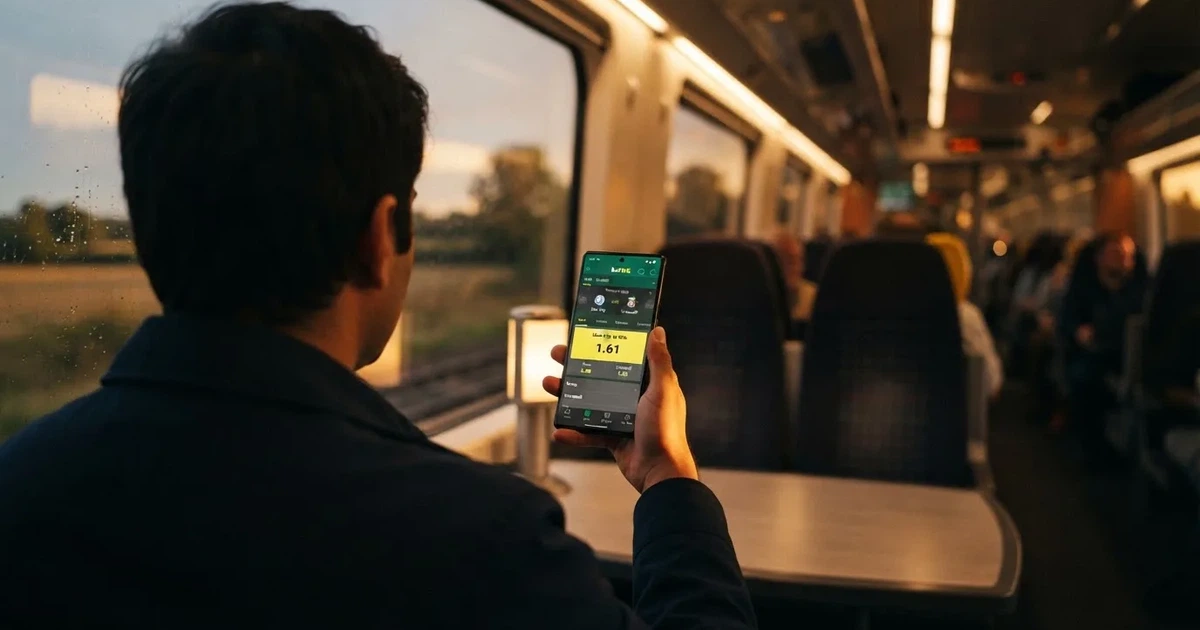
Ten operators hold a remote licence from the Gambling Commission and run a sports betting app aimed at the British customer. They are not interchangeable. Coral gates £40 of free bets behind a £20 qualifying bet at minimum odds of 2.0 (1/1). Bet600 wants five £10 qualifying singles at evens or greater in the first seven days before crediting a single £10 free bet. Spreadex, the only one in the set running spread betting alongside fixed odds, warns in the same screen that losses on the spread side can exceed the deposit. The trade-off a punter wants is the trade-off the licence also dictates, and neither is one the marketing copy explains.
Coverage current as of 30 October 2026; licence and operator-card details verified against the Gambling Commission’s public register.
What a UK sports betting app is, exactly
A sports betting app is a programme written for a phone operating system, distributed through Apple’s App Store or Google Play, published in the name of a company the Gambling Commission has licensed. The licence the app runs under is the same licence the website runs under; nothing in British law changes whether the customer uses a browser, a downloaded app or a mobile-optimised page. The Gambling Commission licenses remote general betting standard (real events), and the bet types, in-play panels and cash-out buttons a punter sees are the operator’s product, built on top of that licence.

The Commission does not test or rank apps. The register carries the licence number, the operating company and the categories a remote licence covers — that is the whole test of who is in. What the operator does with that licence, the size of the welcome offer, the markets it lists, the time it takes to pay out a withdrawal, is a product choice, and it is the part of the comparison this page is about.
A punters’ working vocabulary for the market is short. Stake is what is risked; return is stake plus winnings; profit is the difference. A single is one bet on one outcome; an accumulator (often shortened to *acca*) links several outcomes so the prices multiply, with the result that losing any leg loses the whole stake. A bet builder stitches several selections from one match into one price; a cash out settles a bet early at a price the operator sets; BOG (best odds guaranteed) pays the higher of the price taken and the starting price on horse racing.
Holding a licence and running an app are not the same thing
Three things have to be true before a customer can deposit on any of these apps.

The first is the licence. The Gambling Commission’s public register is the only place where a licence is verified. The register is searchable by company name, trading name, domain or account number; the entry that comes back gives the licence categories — remote general betting standard (real events) for the set in this comparison, and remote betting intermediary for exchanges — plus the licence holder and any operating names. A GB licence is compulsory at the point of consumption, so an operator whose servers sit in Curaçao, Malta or Gibraltar still needs the Commission licence if its product is used in Great Britain; a foreign licence is not a substitute.
The second is verification. Since 7 May 2019 the Commission has required licensed operators to confirm a customer’s name, address and date of birth before any deposit, including a deposit that funds only a free bet or bonus. A first-time punter has to upload an identity document; some apps ask for a driving-licence photo and a selfie; bet365, NetBet and Fafabet layer Face ID or Touch ID on top once the account is verified, so the second login onward is biometric.
The third is GAMSTOP. Since 31 March 2020 every online operator licensed by the Commission has been required to enroll in GAMSTOP, the national multi-operator online self-exclusion scheme. Exclusion periods run six months, one year or five years; after the chosen period the exclusion stays in place for a further seven years unless the customer asks GAMSTOP to remove it. The check happens at signup: a self-excluded customer fails verification on every licensed app in the country at once.
A read of these three together gives the rule a punter should hold in mind: a licensed app buys British consumer protection, dispute resolution, GAMSTOP coverage and the bonus cap that came in on 19 January 2026; it does not buy anonymity, and it does not buy the freedom to skip a source-of-funds question when the activity climbs through a band the operator has set.
The shape of a welcome offer
Two numbers define every welcome offer on the British licensed market. The first is the minimum qualifying bet — the bet a customer has to place, at or above a stated minimum price, before the offer becomes payable. The second is what the offer actually pays: a cash bonus, a free bet whose stake is usually not paid back on a win, a price boost, an accumulator insurance, a deposit match or, less commonly, free spins on a slot. Refunds as free bets are not refunds in cash, and a “risk-free” line that returns the stake as a free bet is, mechanically, a free bet, not a refund.
The promotion rules in force since 19 January 2026 cap wagering requirements on bonuses at 10x. A £10 bonus with a 50x playthrough that would have cost £500 of qualifying bets is now illegal under those rules; the same £10 bonus can no longer ask for more than £100 of betting turnover before the bonus and its winnings are withdrawable. Mixed-product promotions, where one offer requires gambling on two or more product types (“bet on football to get free spins”), are banned outright. What the rule does not pin is whether it applies to a free bet with no wagering condition, or set a ceiling on the money value of a bonus. Those two points are not settled.
What “free bet” really means
A free bet is credit the operator will not pay back. Place £10 as a free bet at odds of 4.00 and a winning return is £40, not £50; the operator has taken back the £10 stake in the moment it was credited. The bet’s value is the odds-1 component, scaled by the payout share of the market on which it is used; on a market with a 95% payout share a £10 free bet at decimal odds of 4.00 is worth roughly £7.13 on average, before the cost of any minimum-price rule attached to it. A free bet whose qualification demands a price of 2.00 or higher narrows the markets the punter can use it on; the narrower the menu of usable markets, the lower the realised value tends to be.
Cash bonuses behave differently. A £20 cash bonus is £20 added to the balance after the qualifying step; the turnover requirement (turnover = bonus base × wagering factor) is what stands between the bonus and a withdrawable balance, and the wagering cap is now the binding constraint. At a 10x cap a £20 cash bonus needs £200 of betting turnover, and only bets at or above any minimum price the offer sets count towards it; placing the qualifying turnover on short-priced favourites is the single fastest way to break that rule by accident.
Coral’s welcome offer, line by line
Coral’s current welcome offer, taken from the operator’s own homepage, is the cleanest example of the shape: “Get £40 in Free Bets when you bet £20”. The mechanics, in order: deposit and place a sports bet of £20 or more at minimum odds of 2.0 (1/1); the £40 of free bets is credited within seven days; each free bet expires seven days from issue; the offer is for new GB customers who opt in.
Worked through, a £20 qualifying bet at odds of 2.00 to anywhere returns £40 on a win; that is enough to qualify, and the qualifying bet is paid back if it wins. A £40 free bet at the same minimum-price ceiling (2.00), used on a market with a 95% payout share, carries a realisable value of about £30 of withdrawable cash if it wins — the £40 stake is not returned on a winning free bet, and the realised value swings with the market the free bet is spent on. The seven-day window on both the credit and the use of the free bets is the constraint that catches most customers.
How Coral, Bet600 and the other welcome offers line up
Three welcome offers in the set are visible from the operator pages or app listings on App Store. Coral’s £40-in-free-bets-for-£20 sits in the middle. Bet600 asks for five £10 qualifying singles at evens (2.0) or greater inside the first seven days; one £10 free bet follows. Lottoland UK’s app welcome offer is not a sportsbook welcome at all — it is a casino offer that earns 100 free spins on a named slot, no wagering, 30-day expiry, running until 14 February 2027. BetVictor’s offers are described as “regular price boosts, acca offers and free bets on selected events”, with the headline offer shown in the app and the rules attached to each.
The single biggest gap between an offer’s headline and its cost is in the headline offer that doesn’t exist for some operators: where the headline is a price boost or a small free-bet credit, the obligation is lower and so is the upside. Coral’s headline is the largest in the set; Lottoland’s is the widest of its kind and the most removed from the sportsbook product; Bet600’s is the most demanding in qualifying volume for the credit it returns.
Crypto, anonymity and where they meet the British licence
A punters’ question that does not have a British answer is whether a crypto sports betting app can be used from the UK without giving up the licence. It cannot, on three counts at once.
The first is the licence itself. The Gambling Commission requires identity verification before the first deposit, including with a free bet or bonus. A wallet address is not a verified identity, and no operator the Commission has licensed accepts an unverified punters’ deposit. An app built for crypto first, registered offshore and accepting wallet deposits without KYC is a different product, not licensed, not signed into GAMSTOP and not covered by the Commission’s complaints or alternative-dispute-resolution routes.
The second is payments. Credit cards have been banned for gambling in Great Britain since 14 April 2020, including credit-card-funded payments through e-wallets. Cryptocurrency does not fall under that ban’s text directly, but it has its own friction: an exchange that sells a cryptocurrency for sterling is, in the FCA’s sandbox regime, a supervised activity, and a bank that handles fiat on the way back in is constrained by anti-money-laundering rules. The practical effect is that crypto-funded deposits at unlicensed apps reach a British customer, but the trail back from a withdrawal is shorter than the trail in.
The third is protection. A British punter who bets through an unlicensed app does not get the 10x bonus cap, the £150 financial vulnerability check that operates a public-record lookup on deposits minus withdrawals (live since 28 February 2025), the source-of-funds conversation the operator’s licence conditions require at higher spend, or the consumer-protection route that goes with it. What the customer keeps is the offer and any winnings it pays; what the customer gives up is the backstop, and that is a fair description of how a serious regulator frames the bargain.
Bet365, Betfair, Coral and the rest of the licensed set do not run a crypto sportsbook product for British customers at all in this comparison. Where a punters’ question leads to “best crypto sports betting app”, the British answer is that this comparison does not have one, and the offshore route is a different market with different rules.
Paying in and getting paid out
Speed of payment is the second cost that doesn’t appear on a welcome-offer page. Two figures matter: how long it takes the operator to process a withdrawal once it has been requested, and how quickly the chosen method moves the money once it is processed. The two are independent: an operator that releases a withdrawal within an hour is still constrained by the bank rail (one to three working days, typically Faster Payments for sterling accounts) or by an e-wallet’s own settlement window.
The set is mixed. DAZN Bet accepts debit cards, Apple Pay, Paysafecard, Trustly and Skrill at a £5 floor, and PayPal at a £20 floor; no processing fee is stated. NetBet lists Instant Payments to bank, Apple Pay, PayPal and debit card, with biometric login layered on top. The Tote app’s strength is not withdrawal speed but the pool format, where Placepot, Jackpot, Scoop6 and Quadpot sit alongside World Pool and the international pools run from France, the United States and Hong Kong, and the payout cadence follows the pool settlement rather than a standard timetable.
bet365 funds accounts by debit card, PayPal and Apple Pay, supports Face ID on supported devices and is described in its App Store listing as the most downloaded sports betting app in the UK. The Midnite app is associated with “rapid payouts” in its publisher description; the underlying mechanism is not detailed, and the operative question for a punter is which method the withdrawal is sent to. The Skrill, Neteller and PayPal rails tend to settle in under twenty-four hours at operators that release promptly; Faster Payments to a UK bank account is comparable; a debit-card refund can sit on the issuer’s settlement window and is the slowest of the common routes.
Min deposits paint a second picture of how the operators expect punters to fund an account. DAZN Bet’s £5 floor via debit card is among the lowest; £20 via PayPal is the same operator’s higher tier. Lottoland UK’s stake ladder runs from £1 on a scratchcard-style line, with the welcome offer’s qualifying stake pinned at £20 on selected slots. The withdrawal floor is typically higher than the deposit floor and is worth checking before the first deposit lands.
Methods and what they actually settle
Three rules of thumb settle most of the choices a punters’ app makes on their behalf.
First, debit card and Faster Payments are the cheapest pair from the customer’s standpoint: no surcharge, no processing fee, no third party in the loop, and refund times constrained only by the bank rail. They are the two methods NetBet and DAZN Bet both support most completely.
Second, PayPal and Apple Pay sit one step out. PayPal’s own KYC attaches to the wallet, not the betting account, and a bettor already verified by PayPal moves quickly from deposit to bet. Apple Pay moves faster but is, at most licensed apps, a deposit rail only — withdrawal is usually to the linked debit card.
Third, e-wallets such as Skrill and Neteller are quick settlement once an operator releases the withdrawal, but the e-wallet itself becomes the point of friction if a complaint arises about a payout, because the wallet sits outside the Commission’s licensed perimeter.
What the verification step actually delays
Every operator in this comparison runs the same first-time flow: signup, document upload, name/address/date-of-birth check, often a driving-licence photo plus a selfie, sometimes a soft credit check. Once the check passes, the deposit rail is open and the first bet is free to land. The step that catches most punters is at higher spend: once a customer’s deposits minus withdrawals pass £150 in a rolling thirty days, the financial vulnerability check kicks in (live since 28 February 2025), it is a public-record check (bankruptcy, county court judgments) and is not a credit reference or income check. A bank statement or payslip is sometimes the next stop, depending on the operator.
What the verification step costs a punter is time, not money. The bigger cost is the source-of-funds question that can come later, when the operator’s anti-money-laundering process asks where the deposit came from. A licensed operator is required to ask; an offshore one is not.
What the app adds over the website
The browser version of a licensed sportsbook is a complete product. Punters who don’t want a downloaded app can run the whole account through the responsive website on a phone browser and reach every market the desktop customer sees; the Gambling Commission treats the two surfaces as one product, since the licence, identity checks and safer-gambling controls are the same.
The native app exists for three reasons. Speed on cold-start, biometric login on the second visit onwards, and notifications. The first means a punter placing a same-game acca on a four-minute over can stake it without waiting on a page render; the second replaces a password with a thumb; the third is what pushes odds and offers at the operator’s chosen times. The cost is the storage on the device, the version churn and the App Store or Play Store rating; the upside is concrete and registers as friction saved over months.
A handful of apps add features the website does not surface as a tab. Spreadex’s one-click, auto and partial cash out, Bet Builder across fixed odds or spreads and live streaming of UK and Irish horse racing, greyhounds, tennis, NFL and selected football all live in the app and not the desktop. Betfair’s free live streaming of UK and Irish horse racing and football is in-app. BetVictor’s sportsbook and casino share the same app, so roulette, blackjack, live casino and Mega Moolah jackpots are reachable from a sportsbook login. Smarkets layers two-factor authentication, live charts and an order book view on its exchange app, a feature of how an exchange prices that a fixed-odds bookmaker’s app simply has no need for.
Spreadex’s spread-bet product is a different sort of app entirely: it is the only one in the set that mixes financial-spread betting (regulated by the FCA, not the Commission) with fixed-odds betting in the same app. The screen reads as a sportsbook, but the same market can be taken as a spread bet on a price range with a per-point stake — and that is where the warning that spread-bet losses can exceed the deposit comes in.
Cross-platform touchstones
Three features are now table-stakes on a modern licensed app, and a punters’ app that does not run them already lags.
First, login. bet365, NetBet and Fafabet all publish Face ID or Touch ID support; the second signin onwards is a thumb on the home button, not a password. Where it is not available, a four-digit PIN at minimum is what the rest of the apps offer.
Second, cash out. Spreadex’s app runs one-click, auto and partial cash out across both fixed odds and spreads. Midnite runs an in-play build with cash out across the sports that move the most — football, basketball, tennis. Coral, Betfair and bet365 run their own implementations with the typical “cash out” and “partial cash out” buttons; the rule is the same across the set (the operator sets the cash-out price, the punter can accept or refuse), and a sport that is not in the cash-out menu is the same as one that the operator has priced too thinly to risk taking back.
Third, live streaming. Betfair runs free live streams of UK and Irish horse racing and football on the app. Spreadex runs live streams for UK and Irish racing, greyhounds, tennis, NFL and selected football. Bet365 publishes its own streaming catalogue and ties it to a funded account or a qualifying bet within the last 24 hours; that is a customer-side rule, not a licence-side one, and is the kind of detail a terms page checks against.
Markets the British apps actually price
Every licensed app in the set prices UK and Irish horse racing, the Premier League and the Championship, the Champions League and the major European leagues, and the four major US sports. Coverage thins below that, and the areas where it does are the areas a punters’ app uses to stand out from the field.
Spreadex runs spread bets on the same events it lists as fixed odds, which is its reason for being. The Tote app’s reason for being is pool betting: Placepot, Jackpot, Scoop6 and Quadpot on British and Irish racing and the World Pool and international pools that link the Tote to French PMU, US and Hong Kong fixtures. Betfair’s betting-exchange model is the third structural difference — laying and backing are both priced, the exchange takes a commission on net winnings rather than a margin inside every line, and that is why the market depth is the differentiator, not the welcome offer.
The Premier League clubs’ withdrawal of gambling sponsorship from the front of matchday shirts from the 2026/27 season is a voluntary industry code; it does not affect the markets and does not change the odds. The bet365 partnership with the UEFA Champions League is the only formal partnership in the set.
Who the ten operators are, and what each is worth
A read on the set below goes in the order research fixes, not as a ranking. Licence line, what the operator’s own page or app listing states on this page’s subject and a close. The close is different on every block: where one offer is harsher than another, the harshness is the point; where the offer is lighter, the lightness is the point; where the product is structurally different, that difference is the point.
Kwiff
Licence: Gambling Commission account 44448, remote general betting standard (real events); licence holder Eaton Gate Gaming Limited.
Kwiff’s app publishes a 17+ age rating on the App Store, surfaces deposits and withdrawals in the obvious places and runs the safer-gambling controls GAMSTOP requires. The brand’s positioning is “surprise” promotions that boost stake payouts by random multiples — a stake can be “supercharged” several times over — and that mechanic is what Kwiff rests against. For a punters’ customer who likes the regular kicker and finds the bonus-clearing treadmill dull, the positioning is a fit; for a customer who prizes raw odds, Kwiff runs a typical British remote bookmaker margin on its core lines. Worth installing if the surprise-multiple product is what draws the action; otherwise indistinguishable from the next name on the list.
Fitzwilliam Sports
Licence: Gambling Commission account 48760, remote general betting standard (real events); licence holder SBKI Limited.
Fitzwilliam Sports is a smaller name on the licensed register. The home page commits to instant deposits, fast withdrawals, timeouts and deposit limits and links out to GambleAware, GAMSTOP and Gamblers Anonymous — three of the four organisations a British punters’ app is meant to surface. The trade-off with a smaller operator is depth of market: British racing, Premier League and the major US sports are present, but the long tail of in-play events that bet365 and Betfair publish thins to the bone, and exotic markets and outrights may be absent at quiet times of the day. For the customer who wants a quieter app with the same safer-gambling toolbox as the larger names, this one earns a look.
DAZN Bet
Licence: Gambling Commission account 48756, remote general betting standard (real events); licence holder DZBT Limited.
DAZN Bet’s funding menu is what stands out: £5 by debit card, Apple Pay, Paysafecard, Trustly and Skrill, £20 by PayPal, no processing fees. The £5 floor is among the lowest in the comparison and is the line a small-budget punter reads first. The product on top is a standard licensed app — markets, in-play, cash out — with a few of the “bet builder” levers on the major leagues. Worth installing for the funding menu; less differentiated on the welcome offer than on the deposit floor.
Geoff Banks
Licence: Gambling Commission account 54095, remote general betting standard (real events); licence holder GB Sports Advisors Limited.
Geoff Banks’ app, published by GB Sports Advisors Limited, runs live in-play prices and ante-post prices on future events. The depth is moderate — enough to be useful on British racing and the major football leagues, sparse on the long tail — and the smaller operator scale means the customer-service window is shorter and the in-play cash-out list is narrower than at the larger brands. The fit is the customer who wants the ante-post catalogue and is comfortable with a quieter operator.
Tote
Licence: Gambling Commission account 54779, remote general betting standard (real events); licence holder TDCO Limited.
The Tote app is the only pool-betting product in the comparison. Placepot, Jackpot, Scoop6 and Quadpot are the British pool formats; the World Pool and the international pools out of French PMU, the United States and Hong Kong are the wider pool side. Pool betting pays a share of the pool (the operator’s take is small and typically published as a percentage), and the maths is different: each unit stake goes into a pot that gets divided by the number of winning units at the operator’s commission rate. For the customer who likes to bet into a pool rather than against a margin, this is the only British-licensed app that does it.
VBet
Licence: Gambling Commission account 44662, remote general betting standard (real events); licence holder SCGO Limited.
VBET’s app, published by SCGO Limited, lists Bet Builder, pre-match and in-play, live streaming and a live calendar with results and stats. That combination — bet builder, in-play, free live streams — is the core stack every larger operator runs; VBet runs it inside a smaller operator footprint, which means depth on the long tail is thinner than at the largest names. The fit is a customer who wants the standard feature stack without paying for bet365’s depth.
Unibet
Licence: Gambling Commission account 45322, remote general betting standard (real events); licence holder Platinum Gaming Limited.
Unibet has run since 1999 and the UK site is operated by Platinum Gaming Limited out of Gibraltar, licensed at the same Commission account number as the rest of Unibet’s UK-facing operations. The safer-gambling toolbox on the UK site is the deepest in the comparison: deposit limits, a Player Profile test, product restrictions and self-exclusion, with live-chat support and links to BeGambleAware, GamCare, GAMSTOP, Gambling Therapy and the BGC. That is eight safer-gambling channels on one site. The welcome offer is competitive without leading the set; the customer who reads the safer-gambling page first and the offer second is the customer Unibet has built the page for.
Coral
Licence: Gambling Commission account 54743, remote general betting standard (real events), remote betting intermediary; licence holder LC International Limited.
Coral sits under LC International Limited, which also operates Ladbrokes; the two brands are run by the same licensee but carry separate customer accounts and separate welcome offers, and that is the way the licence register reads them. The headline welcome offer — £40 in free bets for a £20 qualifying bet at minimum odds 2.0, free bets credited within seven days and expiring seven days after issue — is the most generous headline in the set. The realised value of a £40 free bet at the minimum odds ceiling, on a market with a 95% payout share, is around £30 of withdrawable cash on a winning bet; the seven-day window on use is the rule that catches most customers. Worth the install where a working operator app is wanted and the bonus terms match a customer’s typical stake size.
Midnite
Licence: Gambling Commission account 101839, remote general betting standard (real events); licence holder Midnite Limited.
Midnite’s app cites Commission account 101839 and the home page runs in-play events, an acca builder, popular accas and price boosts with maximum-stake limits. The publisher description adds weekly rewards clubs and rapid payouts. The product is built for the in-play customer, and the price boosts tend to attach to acca legs that the operator has priced in-house — meaning the boosted-leg price carries an operator-defined ceiling on stake, and the boost applies only up to that ceiling. The trade-off is a thinner ante-post book than the larger names. For a customer who bets in-play on football and basketball, Midnite earns a look.
BetMGM
Licence: Gambling Commission account 39198, remote general betting standard (real events); licence holder LeoVegas Gaming PLC.
BetMGM UK is the British face of the US BetMGM brand, run in Great Britain by LeoVegas Gaming PLC. The app sits between a sportsbook and a casino app, with slot, live dealer and table games inside the same login. The welcome offer runs as a sportsbook-vs-casino hybrid on the LeoVegas platform: a casino welcome is published, a sportsbook welcome toggles in and out around major events, and the rules behind each are operator-stated in the app. The fit is a customer who wants both products under one login and is comfortable with a single-licence brand that runs both.
Cost, cost, cost
Three headings do most of the work on what an app costs a British punters’ customer to operate, and they belong together.
Verification cost
The first is verification. Every operator in the comparison runs document upload, name/address/DOB check and the £150 financial vulnerability check on deposits minus withdrawals at thirty days. The cost is the time to upload a driving-licence photo and a selfie the first time, and the time for a response on the rare day the operator’s automated check can’t place the document. Two of the apps in the set (bet365, NetBet, Fafabet) layer biometrics on top of that pass; the others run a four-digit PIN. None of the apps lets the customer skip the first step.
Bonus cost
The second is bonus cost. Where the welcome offer is a free bet cluster (Coral’s £40 for £20) the realisable value is the free bet face value times the (odds − 1) component, divided by the odds — a £40 free bet at odds 4.00 on a 95% payout share market is worth roughly £28.50, less the £10 of turnover the customer has to put down at minimum odds 2.0 first. The realised value is asymmetric: a winning bet pays the full free-bet stake; a losing bet pays nothing. The £40 headline is the grossest number on the page; the £20 outlay is the part the customer pays first.
Where the offer is qualifying-volume-heavy (Bet600’s five £10 singles at 2.0 or greater in seven days) the bonus cost sits in the qualifying volume, not in the headline. Five £10 bets at 2.00 puts £50 of staking in motion to credit one £10 free bet. On a market with a 95% payout share the expected loss on that £50 is roughly £2.50, and the £10 free bet is worth around £7.13 if used at minimum odds. The arithmetic the customer has to run on the offer is “realised value of the free bet minus expected cost of the qualifying turnover”; everything else on the welcome-offer page is decoration.
Margin cost
The third is margin. The bookmaker’s margin sits inside every odds line on a fixed-odds bookmaker’s app. A market with a 95% payout share keeps 5% of every unit staked; a market with a 90% payout share keeps 10%. The number is the same as the bookmaker’s “overround” and the inverse of the book’s payout share; the trio of numbers (margin / overround / payout share) is the same market described three ways. Punters comparing apps can compare margins on the same market at the same event by reverse-pricing the decimal odds: payout share = 1 ÷ (1/odds₁ + 1/odds₂ + …) over all outcomes of a single market, and margin = 1 − payout share. A 1X2 market quoted at 2.10 / 3.40 / 3.60 carries a payout share of 94.03% and a margin of 5.97%; the same match quoted at 2.05 / 3.30 / 3.50 carries a payout share of 92.29% and a margin of 7.71%. The 1.7-point swing on the margin is the gap between the two apps.
The licence does not require an app to publish its margin. What the licence requires is fair and transparent terms, and that means the odds line has to be legible, the rules on voiding, dead-heats and Rule 4 deductions have to be in the terms page, and the customer-facing settlement rules have to follow the published ones. The margin is hidden in the line; the rest of the contract is not.
Withdrawal cost
The fourth, sitting underneath the others, is withdrawal cost. The settlement window is operator-set on the first leg (when the withdrawal is approved) and method-set on the second leg (when the funds move). A punter who funds by debit card and withdraws to the same card waits on the issuer’s settlement; a punter who funds by PayPal and withdraws to PayPal waits on PayPal; a punter who funds by bank transfer and withdraws by Faster Payments waits an hour or two and the funds land by the Faster Payments rail. Withdrawal fees are not commonly stated and not commonly charged; the absence of a published fee is the case the customer reads.
The British legal frame behind the licence
The frame is short and dense. The Gambling Act 2005 regulates commercial gambling in Great Britain (England, Scotland and Wales); Northern Ireland sits outside the Act under separate older law, so the correct framing of a Commission licence is “Great Britain licence”, not “UK licence”. The Gambling Commission licenses the commercial market; the Financial Conduct Authority regulates financial-spread betting. The Gambling (Licensing and Advertising) Act 2014 made the licence point-of-consumption, so an operator whose servers sit abroad still needs the Commission licence if its product is used in Great Britain.
The licence categories the Commission issues are remote general betting standard (real events), remote general betting standard (virtual events), remote general betting limited, remote pool betting and remote betting intermediary (the licence a betting exchange runs on). Spread betting that is not a financial product sits inside general betting duty. Pool betting on horse or dog racing off-course is its own licence and its own duty.
No statutory cap on stakes in sports betting exists. Operators set their own maximums and may restrict customers; the customer-facing rule is the one in each operator’s terms, not a regulated ceiling.
What may be bet on
No statutory list of permitted bets or markets exists. An operator holds a licence for a category and offers markets under its own rules and the Licence Conditions and Codes of Practice (LCCP). GB bookmakers offer in-play betting; the controls are the operator’s licence conditions and customer-protection duties, not a statutory restriction. Esports are treated like any other event; virtual events are a separate licence category. Bets on politics, TV shows and novelty markets are offered by some British bookmakers; no statutory prohibition was found. Spread betting, exchange betting and pool betting are each covered by their own categories and rules.
What may not
Two things are not allowed. Credit cards have been banned for gambling in Great Britain since 14 April 2020 (LCCP condition 6.1.2), and a credit-card-funded payment through an e-wallet is also caught. Anonymity at the deposit step is the second boundary: since 7 May 2019 the Commission has required identity verification before any deposit, including a deposit that funds only a free bet or bonus.
Marketing and bonuses under the new rules
The ASA enforces advertising rules under the CAP Code (non-broadcast) and BCAP Code (broadcast); the Commission’s marketing rules are set out in the LCCP. CAP Code section 16: marketing must be socially responsible, must not be of strong appeal to under-18s, and no one who is or seems to be under 25 may be featured gambling or play a significant role in a gambling advertisement (the rule covers who appears in the advertisement, not who may bet). Betting advertisements are not broadcast on TV from five minutes before a live sporting event until five minutes after it, before the 9pm watershed (horse and greyhound racing excluded); the rule is industry code and has stood since 1 August 2019.
Wagering requirements on bonuses are now capped at 10x (since 19 January 2026); mixed-product promotions are banned outright; whether the cap applies to free bets with no wagering condition and any cap on the money value of a bonus are not settled. Promotion codes are not published on the page the customer reads and never appear here.
Tax and duty
The customer pays no tax on betting winnings in Great Britain. General Betting Duty is the operator’s tax on gross profits, currently 15%; from 1 April 2027 a remote betting rate of 25% applies within it, while remote bets on UK horse racing, SSBTs, pool betting and in-person betting stay at 15%. Spread betting has its own rates (3% financial, 10% other). The Commission’s statutory levy is a separate charge, not a tax. A punter acting as a professional gambler has a different tax position; the rules are general information, not personal tax advice.
Offshore and the lost protection
A GB licence is compulsory at the point of consumption. Providing gambling facilities in Great Britain without the licence the Act requires is an offence (section 33 of the Gambling Act 2005; on summary conviction up to 51 weeks’ imprisonment, a fine up to level 5, or both; six months in Scotland), aimed at the operator. A customer who merely bets on an unlicensed site is not, on the published Commission materials, the target of an offence; what the customer gives up is the protection, not the legality.
The practical list of what an unlicensed customer loses is the British consumer-protection frame: no GAMSTOP coverage, no Commission complaints route, no approved alternative-dispute-resolution service, no British consumer redress if funds are withheld, no application of the 10x bonus cap, no application of the £150 financial vulnerability check. DNS blocking powers are described as court-ordered; that is not the same as saying ISP blocking is in operation.
Safer gambling and the controls that are now mandatory
GAMSTOP is the national multi-operator online self-exclusion scheme; every licensed online operator joins it. The customer’s exclusion is checked at the moment of signup; a self-excluded customer fails verification on every licensed app in the country at once.
Deposit limits are required, with the format fixed by the Commission’s Remote Technical Standards. The first changes took effect on 31 October 2025; a second phase was postponed to 30 September 2026; the live status of the second phase is not confirmed. The state of the rules is “first phase in force, second phase postponed”; customers can set their own deposit limits on top of the operator framework.
The financial vulnerability check operates a public-record lookup (bankruptcy, county court judgments) on deposits minus withdrawals above £150 in a rolling 30 days (live since 28 February 2025); it is not an income check and not a credit reference check. Financial risk assessments (the “affordability checks” of the press) are announced by the Commission in a staged plan (article of 7 July 2026); no start date is set; the correct framing is “announced, staged, no start date”.
The four organisations a British punters’ app is expected to surface are GamCare (with the National Gambling Helpline), GambleAware, the NHS gambling clinics and Gamblers Anonymous. Unibet’s UK page lists all four plus GAMSTOP, Gambling Therapy and the BGC; that is the deepest list in the comparison.
What each operator surfaces
Fitzwilliam Sports links to GambleAware, GAMSTOP and Gamblers Anonymous; Unibet layers BeGambleAware, GamCare, GAMSTOP, Gambling Therapy and the BGC on top of the deposit limits and product restrictions in the safer-gambling menu; William Hill runs 24/7 in-site messaging and adds time reminders, time-outs and deposit limits; Kwiff publishes a 17+ age rating at the App Store with the safer-gambling controls the Commission requires; Smarkets adds two-factor authentication; Star Sports publishes a Play Break facility, deposit limits and self-exclusion under My Account; Dabble publishes deposit limits and cooling-off periods.
The honest framing is that no app on the comparison is missing the four mandatory links; the difference is the depth of the safer-gambling menu beside them. Customers who use these controls find them at the account level; customers who don’t run into them when the £150 vulnerability check triggers.
Reading the licences, side by side
The table gathers what each operator states on the subject of this comparison: the Gambling Commission licence account number, the licence holder the register associates with that account, and a one-line read on what the operator’s own terms or app listing publishes on the point. The licence numbers are the values to check against the public register.
| Brand | Gambling Commission remote licence number and licence holder | What the operator’s own terms state on this page’s subject |
|---|---|---|
| Kwiff | Account 44448; licence holder Eaton Gate Gaming Limited | 17+ App Store age rating; surprise-multiple promotions on stake payouts; safer-gambling controls the Commission requires. |
| Fitzwilliam Sports | Account 48760; licence holder SBKI Limited | Instant deposits, fast withdrawals, timeouts and deposit limits; links to GambleAware, GAMSTOP and Gamblers Anonymous. |
| DAZN Bet | Account 48756; licence holder DZBT Limited | Deposits from £5 by debit card, Apple Pay, Paysafecard, Trustly and Skrill; £20 by PayPal; no processing fees. |
| Geoff Banks | Account 54095; licence holder GB Sports Advisors Limited | Live in-play prices and ante-post prices on future events; published by GB Sports Advisors Limited. |
| Tote | Account 54779; licence holder TDCO Limited | Placepot, Jackpot, Scoop6 and Quadpot; World Pool and international pools from French PMU, US and Hong Kong. |
| VBet | Account 44662; licence holder SCGO Limited | Bet Builder, pre-match and in-play betting, live streaming, live calendar with results and stats. |
| Unibet | Account 45322; licence holder Platinum Gaming Limited | Operating since 1999; UK site run by Platinum Gaming Limited (Gibraltar); deposit limits, Player Profile test, product restrictions, self-exclusion; BeGambleAware, GamCare, GAMSTOP, Gambling Therapy and the BGC. |
| Coral | Account 54743; licence holder LC International Limited | Welcome offer of £40 in free bets for a £20 qualifying bet at minimum odds 2.0; free bets credited within seven days, expiring seven days after issue. |
| Midnite | Account 101839; licence holder Midnite Limited | In-play events, acca builder, popular accas, price boosts with maximum-stake limits; weekly rewards clubs; rapid payouts described. |
| BetMGM | Account 39198; licence holder LeoVegas Gaming PLC | Casino and sportsbook under one licence; published by LeoVegas Gaming PLC. |
The row that lands first on the page is the one the customer will check first: a licence number to confirm against the Commission’s public register, and the licence holder to confirm against the operator’s own terms. Three things follow from that. Several brands can share one licensee (LC International runs both Coral and Ladbrokes); the account number is the test, not the trading name; the entry on the register must match the operator the customer is signing up with.
Picking an app from a cost angle
A short, opinionated read on how the cost framing sorts the set. Three rules, then a closing note on what makes an app worth keeping on the phone.
Lowest qualifying cost: DAZN Bet, with the £5 deposit floor across most rails. The customer who plans to stake small has more room on a £5 floor than a £20 one, and the time-to-stake is the same. The mobile-app experience is on a par with the rest of the licensed set; the headline offer is not where this operator’s edge lies.
Largest headline free-bet offer: Coral, with £40 of free bets on a £20 qualifying bet. The realised value is around £30 of withdrawable cash if the free bets win at minimum odds, on a market with a 95% payout share. The seven-day window on both credit and use is the constraint that catches most customers; the headline is largest, not the realised value.
Heaviest qualifying-volume obligation: Bet600, with five £10 singles at minimum odds 2.0 inside the first seven days. The realised value of the resulting £10 free bet is around £7.13, and the qualifying cost (turnover × margin) on a 95% payout share market is around £2.50 — the net expected value of the offer sits inside a tight band the customer should work out before opting in.
Pool-betting only: Tote. The Placepot, Jackpot, Scoop6 and Quadpot products, plus World Pool and the international pools, are the only pool formats on the licensed British market; the maths is a share of a pool, not a margin against a fixed-odds line. The customer who likes pools finds the only app.
Spread and fixed-odds combined: Spreadex. The only operator in the set running financial spread betting alongside fixed-odds sports betting; the warning on the same screen is that losses on the spread side can exceed the deposit, and that is the rule that is the cost.
In-play and price-boost heavy: Midnite. An in-play build with an acca builder, popular accas and price boosts with maximum-stake limits attached to each boosted leg. The customer who prices accas at the in-play stage finds the structure they’re after.
Safest safer-gambling build: Unibet. The deepest safer-gambling menu in the comparison; deposit limits, Player Profile test, product restrictions and self-exclusion, with the four mandatory organisations plus Gambling Therapy and the BGC. The customer who reads the safer-gambling page first is the customer Unibet has built the page for.
Exchange pricing: Betfair. Not in the top-ten set, but the structural alternative; commission on net winnings rather than margin inside the line, a deeper in-play book, free streaming of UK and Irish racing and football for funded accounts, and the 90 Minute Payout market on selected football. The licensing caveat is the same — Gambling Commission account — but the product is different.
What the gambler keeps
A licensed British sports betting app buys four things: GAMSTOP coverage, dispute resolution, the 10x bonus cap that came in on 19 January 2026 and the safer-gambling controls that are now licence conditions. A licensed app also costs verification, a margin inside every price and the rule that the customer cannot stay anonymous.
The trade-off is honest. The reader pays a slightly fatter margin on a familiar market and a slightly longer settlement on a familiar withdrawal, and gets back a backstop the offshore market does not provide. The clearest cost rule of the British licensed market is to keep two apps on the phone rather than one — one for the welcome offer and the larger welcome-product book, one for the funding-method or the safer-gambling toolbox that fits the customer — and use the comparison above to see, on the day, which one’s edge suits the stake being placed.
Frequently asked questions
What sports betting apps are legal in Texas?
Texas doesn’t have a licensed commercial or online sports betting market at the time of writing. None of the British apps listed here accepts registrations from Texas, and US sports betting apps licensed by US state regulators run a separate, US-only product. The British licensed comparison on this page covers Great Britain (England, Scotland and Wales); Northern Ireland has its own older law. Apps listed here do not provide access from Texas, and Texas does not provide the regulatory framework that the apps here do.
How do sports betting apps work?
A British licensed app is a programme linked to a Gambling Commission remote licence; the customer signs up, uploads an identity document, passes a name/address/date-of-birth check and deposits. Once verified, the customer can place bets, view markets, use cash out and request withdrawals. Apps layer biometric login, push notifications and live-streaming catalogues on top of the core product; the underlying licence is the same as the website, and the Commission treats the two surfaces as one product.
Are sports betting apps legal in California?
California doesn’t have a licensed commercial or online sports betting market either. None of the apps listed here serves California customers; US sportsbooks run under US state regulators and serve the states that have legalised. Each US state sets its own rules; the British apps are licensed for Great Britain only, and a British punter using a British licensed app does so in Great Britain, where the Gambling Act 2005 governs.
How can it be checked that a bookmaker holds a Gambling Commission licence?
The Gambling Commission publishes a public register searchable by business name, trading name, domain or account number. The register lists the licence holder, the licence categories and any action the Commission has published against the licensee. The test of a brand’s licence is the entry that comes back from that search; the licence number printed on the operator’s own page is not enough on its own, and the trading name on the app is not enough on its own.
How is the return on a bet worked out from the stake and the odds?
A winning single returns stake × odds, where decimal odds include the stake; a £10 single at 4.00 returns £40 if it wins. The profit is the difference, so £30 above stake. A combination bet multiplies the odds of the legs into one price; a £10 treble at 2.00, 3.00 and 4.00 sits on a combined price of 24.00 and returns £240 if all three legs win. The arithmetic is the same; the rule of the bet is that losing any leg loses the whole stake.
What is the bookmaker’s margin and how can it be seen in the odds?
The bookmaker’s margin is what the bookmaker keeps of every unit bet on the market; it is the same as the overround and the inverse of the payout share. For a single market payout share = 1 ÷ (1/odds₁ + 1/odds₂ + …) summed over all outcomes, and margin = 1 − payout share. A 1X2 market quoted at 2.10 / 3.40 / 3.60 carries a payout share of 94.03% and a margin of 5.97%. A bookmaker does not publish the margin, but a punters’ app can pick any two apps, pick the same match, convert the odds to decimal if they sit in fractional form, apply the formula and read the gap.
Payments & apps – signupbetsguide.com
Content created by the «signupbetsguide.com» team
