
The Real Cost of an Online Ice Hockey Wager
 Available in US
Current as of 30 October 2026 and checked against the Gambling Commission’s public register.

Tied ice hockey games go to overtime. That single rule explains more about ice hockey betting than any welcome offer does. A match listed at 1.90 / 1.90 in regular time is not the same market as a match listed at 1.90 / 1.90 including overtime and shootouts, and the price difference between the two is the book’s cut for absorbing the extra uncertainty. Most of what this page covers is the same idea applied to a wider set of choices: which market a price is sitting on, what the bookmaker keeps for arranging it, and what the reader pays for the bonus, the convenience of an app or the comfort of a cash-out button.
Bitcoin, Ethereum and Other Crypto Routes into a Hockey Bet
Crypto has a particular appeal in betting — speed of settlement, no card imprint, no bank statement — and it carries a particular cost. Licensed bookmakers serving Great Britain run identity checks before the first deposit, and a crypto wallet is checked against the customer’s name rather than treated as anonymous. The wallet address on the deposit ledger is permanent, which means the deposit is forever traceable, even when the credit-card line and the bank statement carry nothing. Anyone weighing ice hockey betting with bitcoin against a debit-card deposit at the same shop is trading the privacy of the bank statement for the traceability of the blockchain — the inverse of what the marketing suggests.

A second trade-off sits in settlement. Crypto settles in minutes when the network is quiet and in hours when it is not; a debit card refund sits inside the card scheme’s own clock. Where the difference matters is on a withdrawal after a winning bet, because the bookmaker still has to run source-of-funds checks on a first crypto deposit under money-laundering rules. None of that makes a crypto deposit a problem; it makes it a different workflow, with its own queue.
The bigger cost is regulatory. A bookmaker licensed by the Gambling Commission accepts what the operator’s payments page lists — typically debit card, bank transfer and selected e-wallets — and any crypto path is the operator’s commercial choice, not a right the customer can insist on. Where crypto is offered at a licensed site it is offered alongside the standard identity checks; where it is offered by an unlicensed site it is offered without them. The same wallet funds both, and the protection regime is not the same.
For the British bettor who wants the speed of crypto and the protection of a Commission licence, the route is the licensed operator’s own payments page, with the wallet verified against the customer’s name. For the bettor who wants no name on the transaction at all, the route is unlicensed — and the trade is the protection regime, not the speed. Both are described plainly; neither is recommended.
What an Ice Hockey Welcome Offer Actually Costs
“Free bet” is the marketing word. The terms page is the cost. A free bet whose stake is not returned with a win pays back only the winnings — so a £10 free bet at decimal odds of 3.00 returns £20 in profit, not £30. Compare that to a £10 cash stake at 3.00, which returns £30 total (£20 profit plus the £10 stake). The free bet looks identical on a marketing email and is £10 lighter at the end.
A 100% deposit bonus looks heavier still. Bet £10, get £10 in bonus funds, with a 6x wagering requirement at minimum odds of 1.50 (1/2): the bonus has to be bet through six times, so £60 of qualifying bets at 1.50 or higher. At a market margin of 5% the expected cost of those £60 of bets is £3, and the £10 bonus is now a £7 net gain before the time it takes to clear it. Stretch the wagering factor to 10x — the cap the Commission brought in on 19 January 2026 — and the cost becomes £5 against the £10 bonus, a halving of value. Push the wagering factor beyond 10x and the offer is no longer legal to advertise to a GB customer.
The dates matter as much as the percentages. A free bet credited at 09:00 on a Tuesday and expiring at 09:00 the following Tuesday is a seven-day offer only if the bettor is free at that time; a free bet credited on a Friday afternoon before a weekend’s fixtures and expiring on the following Friday is a one-weekend window. The free-bet token’s value is the same in both cases; the value the reader who actually claims it extracts is different.
Each of the offers on the comparison table below is described in the form its own terms state it. The welcome token is not reproduced; the description is. The expiry and minimum-odds rules sit next to the headline figure, not behind it.
The Hockey Betting App and the Mobile Browser
An app is software. A browser is a browser. The difference shows up in three places, and the cost sits in the same three.
First, push notifications. A bookmaker’s app sends a price-boost alert to the lock screen the moment it is published; a browser tab on a phone does not. For a bettor who follows in-play markets on a busy night, the alert is a few seconds’ advantage on a price that moves quickly. For a bettor who follows pre-match markets, the alert is noise.
Second, biometric login. Fingerprint and Face ID remove the password step between the lock screen and the betting slip, and on a phone that is locked half a dozen times a day, the seconds add up to a habit. A browser tab asks for the password each time.
Third, the live data feed. A native app streams the in-play odds and the match visualisations on the same connection; a browser tab loads the odds and then the visualisations separately, with a small lag. The lag is not a meaningful edge, but it is visible.
The cost of an app is the storage on the phone, the permission for push notifications and the periodic update. The cost of a browser is the typing. For most readers the comparison is close enough that habit, not principle, decides it.
Live Betting, Cash Out and the Bookmaker’s Edge in Play
In-play betting prices a market on a moving target, and the bookmaker’s margin does not pause while the puck moves. The price on a totals line at 1.85 when the period opens is the same 1.85 after a goal, only the inputs have changed: the same overround, applied to a fresh probability distribution. The reader who watches the live ticker and bets when the price looks wrong is betting against a margin that has not budged.
Cash out is the book’s second lever on the same market. A cash-out button offers the bettor a price to close the bet before the event has settled; that price is the bookmaker’s own valuation of the position, with the same overround applied. A bettor who cashes out at 1.50 on a back bet that is currently trading at 1.60 in-play has given back ten per cent of the live value for the certainty of the close. A bettor who lets the bet run to settlement keeps the full 1.60 if it wins and the full stake if it loses; the cash-out button exists because the book’s offer is worse than the worst case the bettor was already prepared to accept.
Both features are sold as flexibility, and both are priced inside the same margin that prices every other market on the slip. The reader who uses them is paying for the certainty in the same currency as the reader who does not.
Predictions, Tips and the Cost of Chasing Them
A tipster service is a sales business. Its income is the subscription; its outgoings are the marketing and the tips. The hit rate a service quotes is its own accounting, and the staking plan it recommends is the part of the model that converts a hit rate into a yield. Two services with identical tips can publish different yields by changing the staking plan, and the yield is the only number a prospective subscriber sees.
A betting system is the same idea in different clothes. A “system that wins” is a staking plan plus a selection rule; the selection rule can be a tip, a model, an algorithm or a gut feeling, and the staking plan is the multiplier on whatever the selection rule produces. The yield is what the staking plan extracts from the rule, not what the rule itself produces.
For the punter weighing whether to subscribe, the cost is the subscription against whatever the staking plan promises in its best-case example. For the punter weighing whether to follow a tip posted on a forum, the cost is the stake against the unknown tipster’s record. Neither is free, and neither has a published audit. The reader who keeps notes on what they bet, on what was tipped and on the result has, after a few hundred bets, the only tipster record that matters.
Markets, Odds and What a Price Actually Says
An ice hockey match is priced across three layers of market, and the layer a reader chooses sets the cost. The 1X2 at full time — home win, draw, away win — is the headline market, and the draw is the resolution that no other major team sport has. A draw in regular time is settled separately from the match winner including overtime, and the same two prices on the same fixture on the same book sit on different lines.
Below the 1X2 sits the totals line, usually 5.5 or 6.5 goals, and the puck handicap, a goal-and-a-half line that prices a strong favourite against a weak one. Both markets are two-way, with no draw in regulation, and the overround on each is the book’s cut for taking the bet on a market it knows the bettor is watching. The puck handicap in particular is sensitive to starting goaltenders: a market priced at 12:00 on Tuesday with one goaltender named is not the same market at 18:00 with a different one, and the price moves with the announcement.
Above the 1X2 sits the bet builder, which combines markets from one event — first-period winner, total goals, player shots on target — into a single price. The combined price is the legs multiplied, and the book’s margin is applied to each leg before the multiplication, so the overround compounds. A bet builder of three legs at a 5% margin on each leg carries a 14% wall on the combined price, and the reader who treats a bet builder as a parlay is paying for the compounding without being told.
The odds themselves are written two ways in British usage. Fractional (5/1, 11/10, evens) is the older form; decimal (6.00, 2.10, 2.00) is the arithmetically simpler one. A £10 stake at 5/1 returns £60 in profit plus the £10 stake, a total of £70; the same stake at decimal odds of 6.00 returns £60 total, the £10 stake included. Decimal odds are what the calculation in the next section uses, and the conversion from fractional is odds = a/b + 1.
Tournaments, Seasons and What Is on the Slip
The NHL is the largest professional league and the one most bookmakers price most deeply. The 2026–27 season opens on 29 September 2026 with 32 teams playing 84 games each, up from 82, and the regular season ends on 10 April 2027. The Carolina Hurricanes took the 2026 Stanley Cup, beating the Vegas Golden Knights in the final. Tied games go to overtime in the NHL regular season and finish on a penalty shootout; since 2019 the IIHF World Championships and the Olympic gold-medal game use 3-on-3 overtime, a longer overtime that shifts the price on the draw line at full time.
Below the NHL sit the domestic European leagues — the KHL in Russia, the SHL in Sweden, the Liiga in Finland, the DEL in Germany, the Czech Extraliga, the Swiss National League — and the Champions Hockey League at club level. The IIHF World Championship and the Winter Olympics are the international showcase; men’s ice hockey has been part of the Olympics since 1924 and women’s ice hockey since 1998. A bookmaker’s ice hockey page covers the NHL most completely, the European domestic leagues thinly and the international tournaments around the championships.
The depth of the market matters for the cost. A bookmaker that prices 200 NHL fixtures a week and 30 KHL fixtures a week has tighter NHL lines than KHL lines, because the betting volume pays for the modelling. A reader who follows the NHL gets the better prices; a reader who follows a European domestic league gets the same margin applied to a less-modelled line.
The Ten Licensed Bookmakers, Side by Side
Each brand below is listed on the Gambling Commission’s public register against a holder of a remote general betting standard licence for real events. Several licences can sit under one operating company, and the table reads the licence from the register, not from the brand’s marketing. Offers are described in the form the operator’s own terms state them; the welcome token itself is not reproduced.
| Bookmaker | Licence | Licence holder | What the operator’s terms say |
|---|---|---|---|
| Fitzdares | 000400-R-103839-030 (account 400) | Fitzdares Limited | App offers cash out, accumulators, Lucky 15s, specials and antepost markets on horse racing, football, tennis, rugby, cricket, golf and American football, with in-play live odds; ice hockey is listed on the broader sportsbook |
| BetUK | 039198-R-319450-029 (account 39198) | LeoVegas Gaming PLC | Sports welcome: deposit £10+ and place a sports bet within 7 days of registering to receive four £10 free bets (two football accas of 4+ selections, two multiples of 2+), valid for 7 days, opt-in required |
| Unibet | 045322-R-324275-019 (account 45322) | Platinum Gaming Limited | Operating since 1999; sports welcome “Get £40 in Free Bets when you bet £20” — deposit and £20 sports bet at minimum odds 2.0 (1/1), free bets expiring within 7 days, GB customers, debit card or instant bank transfer |
| BoyleSports | 039469-R-319383-025 (account 39469) | Boylesports Enterprise | Sports welcome for UK players: £20 in free bets on a £10 qualifying bet; the Irish equivalent is €30 in free bets on a €10 qualifying bet |
| Octobet | 062545-R-337248-006 (account 62545) | Octopus Game Limited | Sportsbook welcome: 50% back as a free bet up to £50, plus a £10 casino bonus for new customers |
| BetGoodwin | 002927-R-327985-008 (account 2927) | Goodwin Racing Limited | Sports welcome “Bet £10 & Get £15 in Free Bets”: a £5 sports bet, a £5 acca and a £5 Sub-Cover bet |
| London Bet | 066162-R-340278-004 (account 66162) | Thistle Bet Limited | App combines sports betting on football, tennis, horse racing, greyhounds, darts, golf, cricket, NFL, NBA, MLB and snooker with Pragmatic Play casino slots and live in-play |
| Fitzwilliam Sports | 048760-R-335434-009 (account 48760) | SBKI Limited | Self-described Dublin bookmaker with capped membership; “High Stakes Welcome” subject to compliance criteria; instant deposits, fast withdrawals, timeouts and deposit limits, with links to GambleAware, GamStop and Gamblers Anonymous |
| bet365 | 055148-R-331498-002 (account 55148) | Hillside (UK Sports) ENC | Official global betting partner of the UEFA Champions League; Bet Builder+ (pre-match and in-play), Super Boosts, Winnings Boosts on Bet Builders and selected singles, daily Bet Boosts; in-play betting and live streaming, Bet Track, Match Live and Live Golf Tracker |
| Kwiff | 044448-R-323408-017 (account 44448) | Eaton Gate Gaming Limited | UK Gambling Commission licensed; trademark operated by Spryme Ltd; app rated 17+ |
The table tells the reader who holds the licence and what the welcome offer looks like in plain terms. The next section tells the reader what each brand is actually worth choosing for.
Fitsdares, The Standards of a Premium Sportsbook
Fitzdares is the smallest operator in the table by player base and the most deliberate in its offering. The app combines a sportsbook across horse racing, football, tennis, rugby, cricket, golf and American football with the same betting features the larger shops use: cash out, accumulators, Lucky 15s, specials and antepost markets, plus in-play live odds. The ice hockey coverage sits inside that sportsbook rather than as a separate vertical, so the reader looking for NHL puck handicaps and totals lines finds them, and the reader looking for a deep player-prop feed does not.
The welcome offer is a route in for new customers; the day-to-day product is what keeps them. The cash-out button on the in-play slip is the same cash-out button the larger shops use, and the Lucky 15 line is the same structure a horse-racing punter knows from any high-street book. The licence is held by Fitzdares Limited itself, account 400, and the regulator is the same Commission that regulates every other brand on the table.
For the GB punter who wants a smaller house with a traditional product range and who is happy to find ice hockey inside a broader sportsbook, Fitzdares is a sensible choice. For the punter who follows the NHL nightly and wants the deepest player-prop feed on the league, the scale of the shop matters more than the standards of it.
BetUK, a LeoVegas Sportsbook with a Football-Shaped Welcome
BetUK sits under LeoVegas Gaming PLC’s Commission licence, account 39198, and the sportsbook is part of a wider casino operation. The welcome is football-shaped: deposit £10 or more, place a sports bet within 7 days of registering, and receive four £10 free bets made up of two football accumulators of 4+ selections and two multiples of 2+. The free bets are valid for 7 days from issue and require an opt-in.
The football shape is the cost. A punter whose primary interest is ice hockey gets two of the four free-bet tokens in a market they may not follow, and the 7-day expiry sits against a fixture list that does not run every day. The remaining two free bets are more flexible, and the £10 qualifying bet is the same deposit threshold the larger shops use.
The operator’s mark is that the welcome is generous on the headline and constrained on the legs. For the GB punter who bets on both football and ice hockey and who can clear the four tokens inside a week, BetUK is competitive. For the ice hockey-only punter, the football legs are tokens that decay against a fixture list the punter does not follow.
Unibet, a Mature Sportsbook at Scale
Unibet has operated since 1999 and the UK site runs under Platinum Gaming Limited, Gibraltar, account 45322. The sports welcome is “Get £40 in Free Bets when you bet £20”: deposit and place a sports bet of £20 or more at minimum odds of 2.0 (1/1), and £40 in free bets is credited. Free bets expire within 7 days of issue. The payment methods accepted for the offer are debit card and instant bank transfer, and the offer is restricted to new GB customers.
The headline ratio — £40 in free bets on a £20 qualifying bet — is generous, and the minimum odds of 2.0 (1/1) keep the qualifying bet on a real-priced selection rather than a no-brainer favourite. The expiry is the same 7 days the other shops use. The restriction on payment method is the book’s choice and excludes e-wallets and crypto from the qualifying deposit.
For the GB punter who pays by debit card or instant bank transfer and who can clear £40 of free bets inside a week, Unibet is the strongest headline on the table. For the punter who pays by e-wallet, the welcome is not available, and the day-to-day product — which is mature and deep — is the case for staying.
BoyleSports, the UK and Irish Pair of Welcomes
BoyleSports runs under Boylesports Enterprise’s Commission licence, account 39469. The sports welcome for UK players is £20 in free bets on a £10 qualifying bet; the Irish equivalent is €30 in free bets on a €10 qualifying bet. The doubling of the headline for the Irish customer against the UK customer reflects the dual-market structure the book has run for years, and the UK offer is the same £20 the rest of the GB market offers as a baseline.
The brand’s strength is its retail heritage, and its UK product follows that heritage: horse racing, football and the sports the high-street book has always carried, with ice hockey inside the broader sportsbook. The licence is Commission account 39469 and the offering is the same in shape as every other GB-licensed book on the table.
For the GB punter who wants a familiar product and a baseline welcome, BoyleSports is a sensible choice. The Irish welcome is not available to a UK customer, and the headline is the same as the rest of the table.
Octobet, the 50% Back-and-a-Bonus Welcome
Octobet runs under Octopus Game Limited’s licence, account 62545. The sportsbook welcome is 50% back as a free bet up to £50, plus a £10 casino bonus. The 50% structure is a partial refund rather than a fixed-token welcome, so the size of the free bet scales with the qualifying stake: a £20 qualifying bet returns £10 as a free bet, a £100 qualifying bet returns £50.
The £10 casino bonus is a second token in a different product, and the Commission cap on mixed-product promotions from 19 January 2026 means the casino side of a sports welcome is now a separate token rather than a single bundled offer. The free bet itself is a free bet, with the same stake-not-returned rule the rest of the table uses.
For the GB punter who wants the partial-refund shape and is happy to take a casino token alongside the sportsbook one, Octobet is competitive. For the punter who wants a sports-only welcome, the casino token is a small nuisance on a single-product book.
BetGoodwin, a Three-Part Welcome on a Smaller Book
BetGoodwin runs under Goodwin Racing Limited’s licence, account 2927. The sports welcome is “Bet £10 & Get £15 in Free Bets”, split into a £5 sports bet, a £5 acca and a £5 Sub-Cover bet. The Sub-Cover bet is the bookmaker’s own product name — it sits inside the racing-heavy heritage of the brand and refers to a coverage bet on the day’s racing card. The acca leg and the single-leg sports bet are the standard pair.
The three-part split is the book’s choice, and a punter who does not follow horse racing gets two of three tokens. The £10 qualifying bet is the same threshold the other GB books use, and the £15 return is a 50% bonus on the qualifying bet.
For the GB punter who follows horse racing and wants a smaller book with a racing heritage, BetGoodwin is well-suited. For the ice hockey-only punter, the Sub-Cover bet is a token the punter cannot use.
London Bet, a Slots-and-Slip Hybrid
London Bet runs under Thistle Bet Limited’s licence, account 66162. The app combines sports betting on football, tennis, horse racing, greyhounds, darts, golf, cricket, NFL, NBA, MLB and snooker with Pragmatic Play casino slots and live in-play. The vertical spread is wide and the depth on any single sport is shallower than the sports-only shops.
The welcome is a route into that hybrid, and the day-to-day product is the same combination: a sportsbook on the main sports, a casino in the same app, and a live in-play feed. The ice hockey coverage sits inside the sportsbook, and the depth reflects the broad vertical spread.
For the GB punter who wants sports and slots in one app and is happy with shallower depth on each, London Bet fits. For the punter who follows the NHL nightly, a sports-only shop is the better fit.
Fitzwilliam Sports, the Dublin Bookmaker with a Capped Membership
Fitzwilliam Sports describes itself as a Dublin bookmaker with capped membership, which means the shop limits its customer base rather than growing it indefinitely. The welcome is a “High Stakes Welcome” subject to compliance criteria, so the headline is not a fixed-token offer; the size of the welcome depends on the customer’s profile under the bookmaker’s own criteria. The licence is held by SBKI Limited, Commission account 48760, and the shop’s own page links to GambleAware, GamStop and Gamblers Anonymous alongside instant deposits, fast withdrawals, timeouts and deposit limits.
The capped membership is the differentiator. A punter who values a smaller, membership-based book over a mass-market one gets a different kind of account: fewer players on the same line, a customer base the book knows, and a welcome that is sized to the customer rather than the market average. The depth of the sportsbook is the trade, and ice hockey sits inside it.
For the GB punter who values a smaller house and is happy to be assessed under compliance criteria for the welcome, Fitzwilliam Sports is a real choice. For the punter who wants a fixed welcome and a mass-market product, the other names on the table are a better fit.
bet365, the Scale Leader with the Deepest In-Play Feed
bet365 runs under Hillside (UK Sports) ENC’s licence, account 55148, and is the official global betting partner of the UEFA Champions League. The app is the most-downloaded sports betting app in the UK. The product set is the deepest on the table: Bet Builder+ combines markets from one event into a single bet, available pre-match and in-play; Super Boosts and Winnings Boosts run on Bet Builders and selected singles; daily Bet Boosts price up across the sports; in-play betting and live streaming cover events worldwide; Bet Track, Match Live and a Live Golf Tracker follow bets in play.
For an ice hockey punter specifically, the depth on NHL puck handicaps, totals and player props is the deepest in the GB market, and the in-play feed updates fast enough that the cash-out price tracks the live market. The bet builder compounds the overround across the legs — three legs at 5% each is a 14% wall on the combined price — and the reader who treats a bet builder as a parlay pays for the compounding.
For the GB punter who follows the NHL nightly and wants the deepest product on the league, bet365 is the strongest fit on the table. The trade is the book’s own scale: the welcome is the marketing department’s job, and the day-to-day product is what keeps the punter.
Kwiff, a Commission-Licensed Brand on a Smaller Footprint
Kwiff runs under Eaton Gate Gaming Limited’s licence, account 44448. The brand describes itself as a trademark operated by Spryme Ltd, and the app carries a 17+ age rating on the App Store. The product is a sportsbook and casino combined, and the marketing emphasises the “supercharged” odds that are the brand’s headline: a bet placed on a market can have its odds increased at the book’s discretion, with the increase credited to the customer.
The “supercharged” odds are a marketing word for a price boost, and the cost is the same as every other price boost on the table: the boosted price is the book’s offer, and the unboosted price is the market. The punter who places the bet on the boosted price and lets it run gets the boost; the punter who cashes out at the boosted price pays the cash-out margin on the boost as well as on the original bet.
For the GB punter who wants a Commission-licensed brand with a price-boost mechanic and is happy with a smaller footprint, Kwiff fits. For the punter who follows the NHL nightly, the depth of the in-play feed is the trade.
The Ice Hockey Market at 1.90 / 1.90
A two-way market at decimal odds of 1.90 / 1.90 is the simplest case of a book’s margin. The payout share is 1 ÷ (1/1.90 + 1/1.90) = 1 ÷ 1.0526 ≈ 0.95, or 95% of every unit staked returned to winners on average; the margin is 1 minus 0.95, or about 5%. For every £100 staked across the two outcomes, the book keeps roughly £5 once the market settles.
The same 5% margin is what an ice hockey 1X2 at full time carries in most GB shops on a matched NHL fixture, with the draw priced tighter than the home-and-away pair. A puck handicap line at 1.90 / 1.90 carries a similar 5% margin in good shops and a higher margin in shops with less NHL volume. A bet builder compounds the per-leg margin across the legs, and three legs at 5% each is closer to a 14% wall on the combined price.
The figure is a band rather than a single number because the margin varies by shop, by market and by the moment in the betting cycle. A pre-match NHL 1X2 the morning of the game sits at 4-6% margin in most shops; an in-play total the period after a goal sits wider, because the book is repricing a market that just moved. The 5% in this section’s example is the midpoint of the band the table’s prices describe.
For the punter, the conclusion is that a 1.90 / 1.90 market returns about 95p in the pound to winners on average, and a bet builder of three legs at the same per-leg margin returns about 86p in the pound. The difference is the cost of bundling the legs, and it sits inside the price before the bet is placed.
The British Rule Book for an Ice Hockey Bet
The Gambling Commission is the regulator. The Gambling Act 2005 covers Great Britain — England, Scotland and Wales — and Northern Ireland sits outside the Act under its own older law. Since the Gambling (Licensing and Advertising) Act 2014 an operator whose remote facilities are used in Great Britain needs a Commission licence wherever it is based, and a Curaçao, Maltese or Gibraltar licence is not a substitute. A licence is for a category: remote general betting standard (real events), remote general betting standard (virtual events), remote general betting limited, remote pool betting and remote betting intermediary. The Commission’s public register can be searched by business name, trading name, domain or account number, and the register is the whole test of whether a brand holds a licence. The number on the register is what the table above quotes, not the marketing copy.
Identity checks run before the first deposit, and have done since 2019 — including with a free bet or bonus. A GB punter cannot deposit or gamble anonymously at a licensed site, and the credit-card ban since 14 April 2020 rules out credit cards and credit-card-funded e-wallet top-ups. Debit cards and bank-based payments are not covered by the ban. Minimum age is 18.
GAMSTOP is the national multi-operator online self-exclusion scheme and is mandatory for online operators. Periods are six months, one year, five years, or five years with auto-renewal; after the minimum period the exclusion stays in place for a further seven years unless the customer asks GAMSTOP to remove it. The scheme covers online sites and apps; betting shops use a separate service.
The bonus rules that matter for the welcome offers above are in force since 19 January 2026: wagering requirements are capped at 10x (a £10 bonus at 50x needed £500 of bets before the cap; under the cap no more than £100 is required), and mixed-product promotions are banned. A sports welcome that bundles a casino token into the same offer structure is now shaped differently: the casino side is a separate token rather than a single bundled offer. The Commission’s cap is on the wagering requirement, not on the money value of a bonus.
In-play betting is offered by GB bookmakers under their own licence conditions. There is no statutory list of permitted bets or markets, and the controls on in-play are the operator’s licence conditions and customer-protection duties. There is no state-set deposit or loss ceiling for betting: limits are the customer’s choice, and operators offer their own deposit-limit tooling.
General Betting Duty is the operator’s tax on gross profits, currently 15%. From 1 April 2027 a new remote betting rate of 25% applies within it, while remote bets on UK horse racing, self-service betting terminal bets in licensed premises, pool betting and in-person betting stay at 15%. The remote rate stays at 15% until 1 April 2027. Whether operators pass duty on through odds is not established in the cited materials, and the player is not charged duty in Great Britain.
Financial spread betting is regulated by the Financial Conduct Authority, not the Commission, and the FCA-regulated product can carry losses that exceed the deposit. Spreadex is regulated by the FCA for spread betting and by the Gambling Commission for fixed-odds betting, and its own site states that spread-betting losses can exceed the deposit.
Offshore, a GB licence is compulsory at the point of consumption. Providing gambling facilities in Great Britain without the licence the Act requires is an offence under section 33 of the Gambling Act 2005, aimed at the operator, with enforcement through cease-and-desist notices, search-engine referrals and work with registrars, hosts and payment providers. A customer who bets on an unlicensed site loses the GB protection regime — no GAMSTOP coverage, no Commission complaints route, no approved dispute-resolution body, no British consumer redress if funds are withheld, and none of the bonus or vulnerability-check rules. The reader who bets on an unlicensed site is not committing an offence; the reader is forfeiting the protection.
Safer Gambling in Great Britain
GAMSTOP is the self-exclusion scheme. The minimum period is six months; the maximum is five years with auto-renewal; after the minimum period the exclusion stays in place for a further seven years unless the customer asks GAMSTOP to remove it. GAMSTOP covers online sites and apps; betting shops run a separate scheme. A punter who has signed up to GAMSTOP cannot open an account at any GB-licensed online operator for the duration.
A financial vulnerability check applies to licensed remote betting when a customer’s deposits minus withdrawals exceed £150 in a rolling 30 days. The check is a public-record check (bankruptcy or county court judgments, for example), not an income check and not a credit reference check, and the threshold is the cumulative net deposit, not a single transaction. The check sits inside the licence conditions, not the marketing.
Deposit limits are the customer’s choice. Operators offer the tooling, and the customer sets the limit on a fixed time frame. There is no state-set deposit or loss ceiling.
Help is at GamCare, which runs the National Gambling Helpline; at GambleAware; at the NHS gambling clinics; and at Gamblers Anonymous. Fitzwilliam Sports’ own page links to GambleAware, GamStop and Gamblers Anonymous, and the same links appear across the licensed operators’ safer-gambling pages. A punter who has stopped gambling on credit, who is chasing losses, who is hiding the betting from family or colleagues, or who is betting money earmarked for rent or bills should treat the pattern as a problem and call one of the lines above. The Commission’s statutory levy funds research, education and treatment, and is separate from the duty.
Frequently Asked Questions
How does a punter bet on ice hockey?
An ice hockey bet is placed on a market at a bookmaker’s site or app: choose the fixture, choose the market (1X2, totals, puck handicap, player props), enter the stake and confirm. The bet settles when the match settles, and tied games go to overtime in the NHL regular season and finish on a penalty shootout.
How does hockey betting work?
Hockey betting prices the same markets as other team sports — match winner, totals, handicap — with the draw available on the 1X2 at full time. Three periods of twenty minutes make up regulation; the overtime and shootout outcomes sit on separate lines from the regulation 1X2.
How is a bet placed on hockey online?
Pick a licensed GB bookmaker from the comparison above, register an account, pass the identity check, deposit by debit card or bank transfer, browse to the ice hockey section and place the bet on the chosen market. The bet settles when the fixture settles and the return is credited to the balance.
How is a Gambling Commission licence checked?
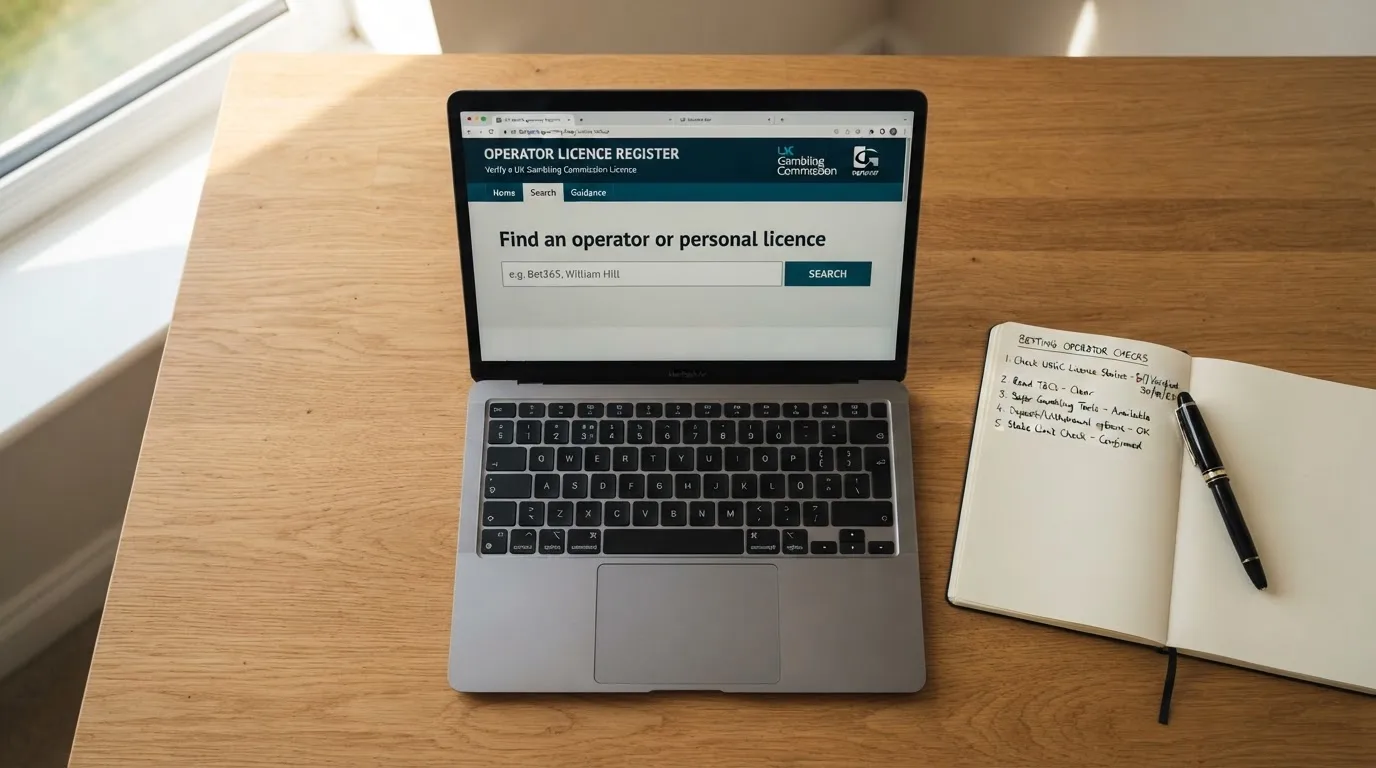
Open the Commission’s public register, search by business name, trading name, domain or account number, and read off the licence type, the licence holder and the categories on the register. The number on the table above is the account number that turns up the licence on the register, and the categories include remote general betting standard (real events).
How is the return on a bet worked out?
The return is stake × decimal odds. A £10 stake at 3.00 returns £30 in total (£20 in profit plus the £10 stake). A combination bet multiplies the odds of the legs, so two legs at 2.00 each price the combination at 4.00, and a £10 stake returns £40.
US & other team sports – signupbetsguide.com
Content created by the «signupbetsguide.com» team
