
Betting Sites with Bitcoin in Great Britain
 Available in US
Bitcoin has been around for seventeen years. Its genesis block was mined on 3 January 2009 by someone writing under the name Satoshi Nakamoto. White paper came out on 31 October 2008. The currency itself is well past the experimental stage. What matters for a punter in Great Britain is narrower and is settled by two different rules. The Gambling Commission decides who is allowed to take a bet online in this country, and the FCA decides who is allowed to handle Bitcoin in this country for money. Those two regulators do not speak to each other, and the corner where they meet — a Bitcoin-funded deposit at a Commission-licensed bookmaker — is the one this guide is built around.
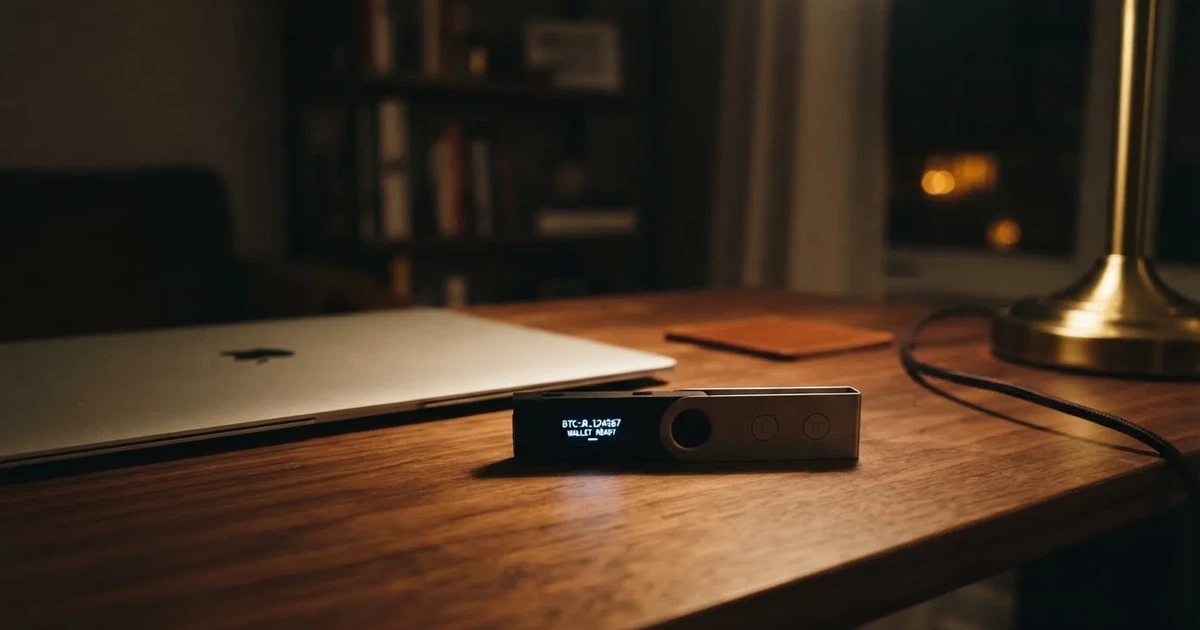
The subject of betting with Bitcoin splits cleanly in two. Some readers want a bookmaker that accepts Bitcoin. Others want a Bitcoin betting site with no identity check. These are different products, and in Great Britain only one of them is legal at scale. Licensed bookmakers verify a punter’s name, address and date of birth before the first deposit, every time, regardless of how that deposit is funded. That cuts against the concept of “anonymous Bitcoin sportsbook” marketing; it exists, just not in the licensed market. The page below sorts the two apart, names the licensed brands that accept Bitcoin under their own published terms, and lays out the actual cost of betting through them.
Current as of 30 October 2026 against the Gambling Commission’s public register.
How Bitcoin works, briefly
A punter does not need to mine or trade Bitcoin to use it as a payment method. But a working picture of what Bitcoin is makes the rest of the page easier to read.

Bitcoin is a digital asset running on a public ledger called the blockchain. New transactions are grouped into blocks, and a new block is added roughly every ten minutes on average. Mining is the process that adds them: computers compete to solve a SHA-256 cryptographic puzzle, the winner adds the block and receives freshly minted Bitcoin. The reward started at 50 BTC per block and halves every 210,000 blocks, an event the network calls a “halving”. Total supply is capped at 21 million, with full issuance expected around the year 2140.
The mechanics matter because they shape the user’s experience. There is no central ledger operator. Each transaction is broadcast to a peer-to-peer network and validated by the nodes running it. Nakamoto’s identity has never been verified. That is the source of two of Bitcoin’s most cited properties — its fixed monetary schedule and its pseudonymity — and both flow into how it is treated by British regulators.
Why Bitcoin is not anonymous
There is a popular reading that Bitcoin is untraceable, and a market reading that runs on that idea. Neither matches what the system actually does. Every Bitcoin transaction is permanently visible on the blockchain. There is no name attached, but every transaction carries the address that sent it and the address that received it. Once an address is linked to a person — which happens at any regulated exchange when identity is verified — every past and future transaction from that address can be reconstructed. Chainalysis and similar tracing firms are paid real money by real authorities to do exactly this.

The Gambling Commission treats cryptoassets, including Bitcoin, as a high-risk payment method. Operators it licenses must apply enhanced customer due diligence where crypto funds are involved. That is the opposite of an anonymous route. In a licensed context, paying by Bitcoin raises, rather than removes, the burden of proving where the money came from. A punter depositing £500 in BTC at a Commission-licensed bookmaker should expect source-of-funds questions sooner than a punter depositing the same amount by debit card.
This is also why “anonymous Bitcoin sportsbook” as a search concept points offshore. A licensed British brand cannot legally offer it. Offshore brands list themselves as anonymous because there is nobody telling them to check. They make their own rules. Some are honest operations, some are not, and a punter has no recourse to the Commission, to GAMSTOP or to any approved British dispute-resolution body if anything goes wrong. More on that below.
Bitcoin and the law in Great Britain
There is no British statute that bans betting with Bitcoin at a licensed bookmaker, and there is no statute that requires one to accept it either. The Gambling Act 2005 is the spine of the licensing regime, covering Great Britain — England, Scotland and Wales. Northern Ireland runs on its own, older gambling law, so “GB-licensed” is the right framing and “UK-licensed” is a wider, looser one.
What the Act does, decisively, is require any operator taking bets from customers in Great Britain to hold a Gambling Commission remote licence, regardless of where the operator is based. The Gambling (Licensing and Advertising) Act 2014 closed the loophole that had let offshore operators serve British customers from Curaçao, Malta or Gibraltar under their home licences. Since then, a Curaçao licence alone is not enough to serve GB customers. The Commission’s public register is the test. Brand names, trading names, domains and account numbers are all searchable on it.
Three things about Bitcoin sit outside the Commission. First, the FCA became the anti-money-laundering supervisor of UK cryptoasset businesses on 10 January 2020, under Regulation 8L and Regulation 9 of the Money Laundering Regulations. Any UK cryptoasset exchange provider or custodian wallet provider dealing in Bitcoin must register with the FCA before starting business. As of the latest published figures the FCA has received 417 cryptoasset registration applications, of which 68 — 17% of determined applications — have been registered and 263 — 67% — withdrawn. Most of the rest sit in the FCA’s pending pipeline, which is the way the FCA publishes the fact that a firm is not yet authorised but also not refused. Punters who trade on an unregistered exchange should assume that any protection they think they have may not be there.
Second, tax. HMRC treats cryptoassets held by individuals as subject to Capital Gains Tax on disposal — selling, swapping, spending or gifting. Receiving Bitcoin as income, including mining or staking rewards, attracts Income Tax and National Insurance. A punter who buys Bitcoin, deposits it at a bookmaker, wins, withdraws in Bitcoin and then sells the Bitcoin has, in HMRC’s view, made a capital disposal at the point of selling. This is general information, not tax advice, and a reader who bets at scale should talk to an accountant. The general betting rule is that the punter pays no UK tax on winnings themselves.
Third, the bonus rules. As of 19 January 2026 wagering requirements on bonuses at Commission-licensed operators are capped at 10x — a £10 bonus requiring £500 of bets is no longer compliant — and mixed-product promotions that require gambling on two or more product types are banned. Free bets without a wagering condition are not addressed by the cap directly. Promo codes are not printed on this page, by principle and by Advertising and CAP Code practice. A punter sees the offer in the app or on the operator’s own page; copying a code across sites is the operator’s job, not the punter’s.
What a licensed bookmaker must do, that an offshore one does not
A reader who already knows the licensed-versus-unlicensed split will want this briefly. A reader who does not needs it spelled out, because the difference in protection is large.
Identity verification happens before the first deposit at every licensed site. There is no anonymous play on the licensed market, full stop. From 7 May 2019 the Commission requires name, address and date-of-birth checks before a customer can deposit or gamble — including with a free bet or bonus. From 30 August 2024, with effect from 28 February 2025, a financial vulnerability check applies whenever deposits minus withdrawals exceed £150 in a rolling 30 days: it is a public-record check — bankruptcy, county court judgments — not an income or credit check. A wider staged financial-risk assessment framework has been announced but has no start date, so writing “in force” on this point would be wrong.
GAMSTOP is the multi-operator online self-exclusion scheme, and a mandatory licence condition for online operators since 31 March 2020. Punters can self-exclude for six months, one year, five years or five years auto-renewed, with a seven-year tail after the minimum period before removal is possible. It is the single most useful tool a punter who wants to stop has, and an offshore bookmaker does not honour it.
The credit-card ban is real and dates from 14 April 2020. A punter cannot use a credit card directly at a licensed bookmaker, and the ban extends to credit-card-funded e-wallet payments. Debit cards and bank-based payments are unaffected. Apple Pay funded from a credit card is treated as a credit-card payment by the licensed operators; funding it from a debit card is treated as a debit-card payment.
Marketing around a licensed operator is bound by the Commission’s LCCP and by the CAP Code (non-broadcast) and BCAP Code (broadcast). Both forbid marketing with strong appeal to under-18s, require the marketing to be socially responsible, and — under CAP Code section 16 — bar featuring anyone who is, or appears to be, under 25 in gambling marketing, with limited exceptions. This is not a guarantee that marketing is restrained, only that an additional set of rules is in play outside the operator’s marketing department.
What an offshore bookmaker does not have to do
Anything in the list above. No identity check, no GAMSTOP coverage, no Commission complaints route, no Commission-sanctioned alternative dispute resolution, and no recourse to British courts if funds are withheld. Punters who go this route also lose the 10x bonus cap, the £150 financial-vulnerability-check trigger and any spending limit connected to it. That is the trade-off an offshore site offers in return for taking Bitcoin without checking who is depositing.
It is also worth being specific about the law aimed at the operator, because it shapes what offshore brands actually do. Section 33 of the Gambling Act 2005 makes it an offence to provide gambling facilities in Great Britain without the licence the Act requires, punishable by up to 51 weeks’ imprisonment, a fine up to level 5, or both — six months in Scotland. The offence is aimed at the operator, not the punter. No offence aimed at a customer who simply bets on an unlicensed site was found in the statute. Punters do not get arrested for using an offshore brand; they lose the British protections, and that is the end of the legal story. Enforcement is disruption — cease-and-desist notices, search-engine referrals, registrar and host work, payment-provider pressure — not blanket blocking. ISP blocking powers have been granted or are about to be granted; writing them as in operation would be wrong.
The honest framing is the one the Commission’s own materials lean toward: licensed means checks, limits, GAMSTOP, a bonus cap, but also a mandatory identity check before the first bet. Unlicensed means none of those protections and the real risk of losing any funds held with the operator. Neither is “the safe choice” by default; each is the right choice for a different reader.
The cost of betting with Bitcoin, specifically
Bitcoin’s price in pounds moves. The market margin on a sporting event is fixed by the bookmaker, but the sterling value of a Bitcoin deposit does not stay fixed between deposit and withdrawal. This is the single most concrete way that paying in Bitcoin costs the punter differently from paying by debit card, and it is the angle this guide leads with.
Three examples, all on the same £100 deposit and the same 2.00 odds single, so the comparison is honest. Card punters pay no conversion fee at a Commission-licensed bookmaker. Bitcoin punters pay whatever their wallet charges them to convert pounds to Bitcoin and back, plus whatever the bookmaker’s deposit-and-withdrawal terms say about the rate they use. Spread on a round trip can be 1–3% at a typical retail exchange, and licensed bookmakers offering Bitcoin on their own terms set the rate they credit at whatever spread they apply. Neither is required to publish that spread in advance. A punter planning to bet and withdraw the same day has to treat that as a real cost, not a marketing footnote.
The second cost is the time value. Confirming a Bitcoin transaction is not instantaneous. The network targets about ten minutes per block, but a deposit does not credit after one confirmation — it credits after the operator’s chosen threshold, often three or six confirmations. That is thirty minutes to an hour between deposit and the bet being on, and the operator may hold Bitcoin deposits in pending until enough confirmations have stacked up. A punter betting in-play on a price that is moving cannot rely on a Bitcoin deposit landing in time.
The third cost is tax, which is not a fee but does affect realised return. A punter who buys £200 of Bitcoin, wins and withdraws £300 of Bitcoin, then sells the Bitcoin, has, in HMRC’s view, made a capital gain at the point of sale. The gain is the difference between the sterling value at acquisition and the sterling value at disposal. A punter using Bitcoin as a payment method for a year of small bets has to keep records of every acquisition and every disposal to calculate their CGT position at year-end. Card punters have no parallel obligation. None of this is the punter’s annual exempt amount — £3,000 at the time of writing — saving them; it is a parallel record-keeping burden that does not appear in the marketing.
Bitcoin versus e-wallets, versus the card ban
Card punters hit the debit-card floor quickly. Apple Pay, Google Pay, Revolut Pay, Pay by Bank, PayPal — the licensed market has settled into a long list of accepted methods, and most Commission-licensed bookmakers run several at once. Where Bitcoin finds a niche is at the edges of that list.
The first edge is the punter who prefers not to have gambling transactions on their main bank statement. A card or bank-based payment leaves the bookmaker’s name on the statement. Bitcoin routes through a separate wallet. That is legitimate, and it is the most common reason a punter looks for a Bitcoin option rather than the cryptocurrency itself.
The second edge is the punter whose bank declines gambling transactions. A handful of British banks do, and the punter can either move banks or route through a different payment method. Bitcoin is one such route, alongside Pay by Bank and a few e-wallets.
The third edge is a punter who already holds Bitcoin. Buying Bitcoin specifically to deposit at a bookmaker is the expensive way to top up — the spread on the GBP/BTC pair is rarely worth a £20 deposit — but a punter who already has a balance and a wallet has no marginal acquisition cost and may use it.
In all three edges the licensed bookmaker receives a Bitcoin deposit and treats it under its own terms. None of the major GB-licensed bookmakers’ high-street names publish Bitcoin as a headline deposit method. The seven operators below are a mix of those whose terms list Bitcoin alongside other methods and those whose terms do not. Where the terms name it, the page says so. Where they do not, the page says what they do list and leaves Bitcoin as a payment-method-by-payment-method check on the operator’s own page.
The seven reviewed bookmakers
Each of the seven below holds a Gambling Commission remote licence for general betting on real events, every one is searchable on the Commission’s public register, and each is taken on its own terms. None is recommended above the others; each is described as it is.
QuinnBet — what sets it apart is a tight free-bet clock paired with a wide market range
QuinnBet is operated under licence 061011-R-335683-004 by QuinnBet (Gibraltar) Limited and trades as QuinnBet. Its free-bet rules are crisp and worth knowing precisely because they are short. Free bets are valid for seven days from the moment they are credited, can be placed on any market at fractional odds of 1/2 — 1.5 decimal — or greater, are subject to a maximum odds cap of 50/1, and straight accumulators count but Trixies, Patents and Yankees do not. That is one of the more restrictive combinations a reader will meet across the seven, and it is set on top of a market offering broad enough that the restrictions are not a polite footnote.
Punters who like to leave free bets in the wallet for a week will find the seven-day clock takes the option away quickly. Punters who bet singles and small accas will hardly notice it. Punters who like a Trixie or a Yankee will find their seven-day window narrower than they expected, because those multi-leg combinations are excluded. The market breadth in football, racing and American sports is large enough that the cap is rarely the binding constraint; the time limit is.
Payment methods are published on QuinnBet’s own terms and operate at the minimum-deposit and minimum-stake limits the page would normally walk past, but the free-bet terms are the headline. QuinnBet reads cleanly enough that its seven-day clause is the feature, not the absence of one. The cost angle on this brand is the dead-week risk: a punter who does not log in for seven days turns a free bet into nothing.
Spreadex — what sets it apart is dual FCA and Gambling Commission regulation
Spreadex is one of the few brands a reader will meet with two statutory regulators on its back. Spread betting is regulated by the Financial Conduct Authority, fixed-odds betting by the Gambling Commission, both on the same operator. That is not the same product. Spread betting is leveraged, can cost more than the deposit and pays out differently from a fixed-odds single — the headline risk on Spreadex’s own homepage is that spread betting losses can exceed deposits. Fixed-odds betting on Spreadex’s sportsbook is the more familiar product and sits under the Gambling Commission’s general betting licence 008835-R-104580-022, with Spreadex Limited as the licence holder.
For a reader who already has a Spreadex account and uses the spread product, the sportsbook is an additional feature; for a reader who does not, the message is to read the difference between the two products carefully. They share a login but not a margin, not a payout structure and not a tax treatment. Spread betting profits are subject to capital gains, not to betting duty, and the FCA conduct rules apply, not the Commission’s LCCP. A punter who jumps from a fixed-odds single into a spread bet without noticing has made a different kind of trade.
This is the brand to choose by elimination, not by enthusiasm. Punters who know exactly what they want — a sportsbook to lay down a single — will find an established sportsbook; punters who want spread betting will find a long-established spread book. The cost angle on Spreadex is product confusion: the punter pays for whichever product they think they are using, and it is the punter’s job to know which one is which.
Geoff Banks — what sets it apart is a small-bookmaker product with ante-post depth
Geoff Banks runs under licence 054095-R-330366-010 with GB Sports Advisors Limited as the licence holder, and the brand’s iOS app offers live in-play prices and ante-post prices on future events. Ante-post is the term for betting on a race well in advance of the day, sometimes months, where the bet loses if the runner is withdrawn. That is a market segment the larger bookmakers cover thinly and the smaller ones treat as a point of pride. Geoff Banks does.
The product is aimed at racing punters more than at football punters. A reader who bets football will find something to back; a reader who bets racing, especially horse racing at the larger meetings, will find more ante-post markets than its size would suggest. App-only operation is the constraint — there is no desktop-first experience that matches what the brand sells — and the user numbers reflect that.
The cost angle is the trade-off in product mix. Geoff Banks offers ante-post depth that the larger books do not, and that depth comes with the non-runner rule that turns a winning ante-post bet into a loser if the horse comes out. Punters should expect that and price it in. Punters who want football, US sports and the bet-builder-led product running on the major sportsbooks will find less of it here.
DAZN Bet — what sets it apart is a low minimum deposit across many methods
DAZN Bet operates under licence 048756-R-327274-019 with DZBT Limited as the licence holder. The headline on its terms is the minimum-deposit schedule. Deposits start at £5 by debit card, Apple Pay, Paysafecard, Trustly and Skrill, and at £20 by PayPal, with no processing fees added on top. That £5 minimum across five mainstream methods is at the low end of the licensed market and matters to two kinds of punters.
The first is the small-stake punter who wants to spread money across several events rather than concentrate it on one. A £5 minimum per deposit turns the betting slip into a place where a tenner can sit on five different outcomes, which is what most punters actually want. The second is the punter who is testing a brand for the first time — they want to put £5 in, see whether the app behaves, withdraw the £5 and decide whether to fund a real account. DAZN Bet’s terms make both jobs easier.
Punters betting at scale will find the same £5 minimum a non-event. The cost angle on DAZN Bet is unfussy: low minimums, no processing fees on the methods it lists, and a brand built around letting a punter in cheaply. Punters who want a heavyweight welcome offer or a long-standing account history will find DAZN Bet newer than the established brands.
Fitzdares — what sets it apart is a small brand running a tight payment menu
Fitzdares runs under licence 000400-R-103839-030 with Fitzdares Limited as the licence holder. Its published payment methods are narrower than most of the brands above: Apple Pay, Mastercard and Visa. Visa withdrawals are usually same-day; Mastercard withdrawals can take up to 48 hours. That is not a full e-wallet offering, and it is the kind of menu a punter checks before committing a deposit.
The narrower menu is not a defect. It is what the brand offers, and a punter who pays by debit card or Apple Pay is well served. A punter who pays by PayPal, Skrill, Trustly or Paysafecard will not find those methods here. The trade-off is brand size against method breadth. The brand has a long history in racing markets and is not built to be every punter’s primary bookmaker.
The cost angle is the punters who find their preferred method missing and have to look elsewhere. Fitzdares is the right choice for a punter already on Visa or Mastercard and Apple Pay, and it is the wrong choice for someone whose wallet is Skrill or Neteller. Punters comparing on payment methods alone should keep that filter open.
LiveScore Bet — what sets it apart is coverage of mainstream payment methods
LiveScore Bet operates under licence 056859-R-332720-005 with LiveScore Betting and Gaming (Gibraltar) Limited as the licence holder. The payment menu is broader than most: debit cards (Visa and Mastercard), Apple Pay, PayPal, Pay by Bank (Open Banking) and Revolut Pay. That covers the everyday cases. Apple Pay and debit cards for the on-the-go punter, PayPal for the punter who keeps an e-wallet, Pay by Bank for the punter who prefers Open Banking, and Revolut Pay for the punter whose primary account is Revolut.
LiveScore Bet is the brand a small-stake punter with mainstream payment habits will find the easiest to use. There is no exotic method on the list and no unusual brand-name missing. Punters who already have accounts on Revolut, PayPal or Apple Pay can move money in and out without setting anything new up. Punters who want a niche method — Bitcoin among them — should look elsewhere on the list, since LiveScore Bet’s published methods do not include it.
The cost angle is the absence of friction rather than the presence of a feature. LiveScore Bet does what most punters want, in the methods most punters use, at minimum-deposit levels the licence does not require it to publish. Punters who want something more — a higher in-play cap, an exotic market, a niche payment method — should keep shopping.
Kwiff — what sets it apart is a brand built around surprise price boosts
Kwiff operates under licence 044448-R-323408-017 with Eaton Gate Gaming Limited as the licence holder, and identifies itself as a trademark of Spryme Ltd. The product emphasis is on price boosts that apply at unpredictable times to selected bets. That is a feature the larger brands also offer, but on Kwiff it is the headline rather than the side-feature, and the app is built to surface it.
Kwiff’s app carries a 17+ age rating, which sits on the higher end of the licensed market’s app store ratings and reflects the Commission’s content rules. The 17+ rating is informative, not a red flag; it tracks the same kind of gambling-content rating a punter meets on Ladbrokes, Betfair and the major brands. Kwiff is the brand for a punter who likes a boost surprise and tolerates a smaller market selection than the majors.
The cost angle is what boosts are worth. A boost is a marketing price, not a generosity credit, and Kwiff’s boosts sit alongside its standard market margin the way every other bookmaker’s do. A punter who chases boosts without checking the underlying market will be paying for the privilege. Punters who use Kwiff as a complement to a primary bookmaker and price-compare on every bet are the right audience; punters who treat Kwiff as a single-bookmaker primary will likely find the market selection thin elsewhere.
Side-by-side on the licence and payment-method question
The table below puts each reviewed bookmaker against the two questions that matter most for a Bitcoin-curious punter in Great Britain: which Commission licence applies, and what the operator’s own published terms say about cryptocurrency and mainstream methods. Licensee names are taken from the Commission’s public register; payment-method notes are taken from each operator’s own terms page or app listing.
| Brand | Gambling Commission licence and holder | What the operator’s own terms state on cryptocurrency and payments |
|---|---|---|
| QuinnBet | 061011-R-335683-004 — QuinnBet (Gibraltar) Limited | Own terms list mainstream payment methods; Bitcoin is not published as a first-tier method. Free bets are valid 7 days at minimum odds 1/2 (1.5), maximum odds 50/1. |
| Spreadex | 008835-R-104580-022 — Spreadex Limited | Own terms list mainstream payment methods. Spread betting losses can exceed the deposit; fixed-odds sportsbook is the more familiar product. |
| Geoff Banks | 054095-R-330366-010 — GB Sports Advisors Limited | iOS app offers live in-play and ante-post prices. Cryptocurrency and mainstream payment methods are stated by the brand on its own page. |
| DAZN Bet | 048756-R-327274-019 — DZBT Limited | £5 minimum by debit card, Apple Pay, Paysafecard, Trustly, Skrill; £20 minimum by PayPal; no processing fees. |
| Fitzdares | 000400-R-103839-030 — Fitzdares Limited | Apple Pay, Mastercard, Visa; Visa withdrawals usually same-day, Mastercard up to 48 hours. |
| LiveScore Bet | 056859-R-332720-005 — LiveScore Betting and Gaming (Gibraltar) Limited | Debit cards (Visa, Mastercard), Apple Pay, PayPal, Pay by Bank (Open Banking), Revolut Pay. |
| Kwiff | 044448-R-323408-017 — Eaton Gate Gaming Limited | Licensed under Kwiff trademark operated by Spryme Ltd; cryptocurrency and mainstream payment methods are stated by the brand on its own page. |
The pattern is consistent. None of the seven operators publishes Bitcoin as a top-line payment method on the search terms this page is built around. Each lists a mainstream set, with DAZN Bet, Fitzdares and LiveScore Bet publishing enough detail to be specific. QuinnBet, Spreadex, Geoff Banks and Kwiff publish enough to be honest about how they take money. A punter who sees a Bitcoin logo on one of these brands’ pages has not necessarily seen that brand’s own terms list Bitcoin — a banner on a partner site is not the operator’s own page. Checking the operator’s own payment-method terms is what this table exists to point punters toward.
On cost, more honestly
A reader who has read this far deserves a frank number. The most expensive part of betting with Bitcoin at a licensed British bookmaker, if Bitcoin is on the menu, is not the betting at all. It is the round-trip between pounds and Bitcoin. Even at a 1% spread — generous, on the retail side — a punter who deposits £100 of Bitcoin and withdraws £100 of Bitcoin has lost £1 before placing a single bet. That is a margin the bookmaker does not charge, and the punter pays it directly to whoever is on the other side of the conversion.
The bookmaker’s own margin sits on top of that. A typical football 1X2 market at a licensed bookmaker carries a margin of roughly 5–8% over true odds; smaller markets, in-play and exotic markets run higher. A punter paying the round-trip spread has to win more often than the break-even point set by the bookmaker’s margin, after the spread, to come out ahead in real money. Stacking the two costs means a punter needs a sustained edge in betting to make Bitcoin the right payment method for any length of time. A punter who bets for entertainment will pay for the privilege and never notice the size of what they paid.
That is the angle this page leads with, and it is the most useful finding in the data. Paying in Bitcoin at a licensed bookmaker does not save money; it adds a layer of conversion cost on top of the betting margin the bookmaker already charges. The bettor’s e-wallet or debit card, both of which the licensed bookmakers already accept broadly, do not carry that layer.
Help beyond the operators
The operators above carry their own safer-gambling tools — deposit limits, time-outs, reality checks, product blocks — and a punter who wants to set a deposit cap can do so in the operator’s account page, on the spot, without contacting anyone. The pages below summarise the national-level routes available to a punter who feels the betting is becoming a problem.
GAMSTOP is the national multi-operator online self-exclusion scheme. A punter who registers for six months, one year, five years or five years auto-renewed is excluded from every online operator licensed in Great Britain at the same time. The exclusion covers online sites and apps; betting shops operate under a separate in-shop self-exclusion scheme.
GamCare runs the National Gambling Helpline, open every day, free, and confidential. It is the first port of call for a punter who wants to talk to a human about a gambling problem they have identified themselves, or a family member who has identified one on a punter’s behalf.
GambleAware funds treatment, research and the public-facing information campaign around safer gambling. Its site is the place to find local treatment providers and to read up on the indicators of harmful play.
NHS gambling clinics offer specialist treatment for harmful gambling, including cognitive behavioural therapy. They are free at the point of use, run on the NHS and are not subject to the same waiting list as some other NHS services, though waiting lists vary by clinic.
Gamblers Anonymous runs peer-support meetings modelled on the Alcoholics Anonymous twelve-step programme. Local meetings are searchable on its site and run in person across Great Britain.
None of these routes depend on the punter betting with a specific brand. Each is available whether the brand is licensed in Great Britain or not; offshore brands are not bound to honour GAMSTOP, but a punter can register with GAMSTOP regardless of which site they have been using and exclude themselves from every licensed operator at once.
The honest bottom line
This page is based on the published terms of the operators reviewed. No Commission-licensed bookmaker names Bitcoin as a first-tier payment method on its published terms page in the way some marketing claims assume. Each of the seven holds a Commission licence, each operates within the LCCP, and each takes mainstream payment methods that work for almost any British punter. A punter who already holds Bitcoin and wants to use it can check the operator’s own help pages directly; the information there is the final word.
A punter searching for “anonymous Bitcoin sportsbook” will not find it on the licensed market. The licensed market cannot legally offer it. Offshore brands list themselves as anonymous because they are not licensed in Great Britain. The trade a punter is making with an offshore brand is giving up GAMSTOP, the Commission’s complaints route, ADR and British consumer protection in exchange for not having to verify their identity. Some readers make that trade knowingly. Most should not.
Bitcoin itself is a working asset, a real network, and a payment method that the licensed market treats as high-risk, not as banned. The treatment is consistent with what Bitcoin actually is: a public ledger that gives pseudonymity at the protocol layer and full traceability once any on-ramp or off-ramp checks identity. The honest summary is the one this page has led with throughout: paying in Bitcoin at a licensed bookmaker adds a layer of cost to every transaction, and a reader’s first decision is whether that layer is worth the convenience of using an asset they already hold.
Frequently asked questions
Can you bet against bitcoin?
Yes — laying a selection on a betting exchange, or trading a spread position — is available on betting exchanges that the Commission licenses as betting intermediaries and on spread betting brands such as Spreadex under the FCA’s rules. The licensed operators on this page are general betting standard licences, not betting-intermediary licences, so laying is not a feature of the seven compared here.
Can you lose on bitcoin betting?
Yes, in exactly the same way as any other sports bet. A losing Bitcoin-funded bet loses the stake in sterling terms at the rate the operator credits at deposit; the BTC value of the loss moves with the BTC/GBP rate between deposit and withdrawal. Spread betting losses can exceed the deposit, which is a different and more serious risk attached to Spreadex’s FCA-regulated product.
Can you use bitcoin in betting shops?
The licensed retail betting shops in Great Britain are the same operators that run online sites — Ladbrokes, Coral, William Hill, Betfred — and they are cash-and-debit businesses at the counter. None of them publishes Bitcoin as an over-the-counter payment method, and the chip-and-PIN terminals in those shops run on the standard UK card rails, not on a crypto network. Bitcoin is not a way to bet at a physical counter in this country.
What does a player lose by betting on a site without a Gambling Commission licence?
The list is concrete: no GAMSTOP coverage, no Commission complaints route, no approved alternative dispute resolution, no British consumer redress if funds are withheld, and not bound by the 10x bonus wagering cap or the £150 financial-vulnerability-check trigger. There is also no statutory protection under section 33 of the Gambling Act 2005 aimed at the punter — the offence is on the operator only.
How can it be checked that a bookmaker holds a Gambling Commission licence?
By searching the Commission’s public register by business name, trading name, domain or account number. The register is the sole test of whether a brand holds a licence and is the source of the licences quoted throughout this page. Any brand a punter is considering should be searchable on it before a deposit is made.
Which payment methods do GB-licensed bookmakers accept, and are credit cards allowed?
The mainstream set across the reviewed operators is debit cards (Visa and Mastercard), Apple Pay, PayPal, Paysafecard, Trustly, Skrill, Pay by Bank (Open Banking) and Revolut Pay. The seven above vary in which they publish. Credit cards have been banned for gambling in Great Britain since 14 April 2020 under LCCP condition 6.1.2, and the ban extends to credit-card-funded e-wallet payments; debit cards and bank-based payments are not covered by that ban.
Payments & apps – signupbetsguide.com
Content created by the «signupbetsguide.com» team
