
Best Betting Apps UK 2026: What Each One Actually Costs You
 Available in US
Verified against the Gambling Commission’s public register as of 30 October 2026.
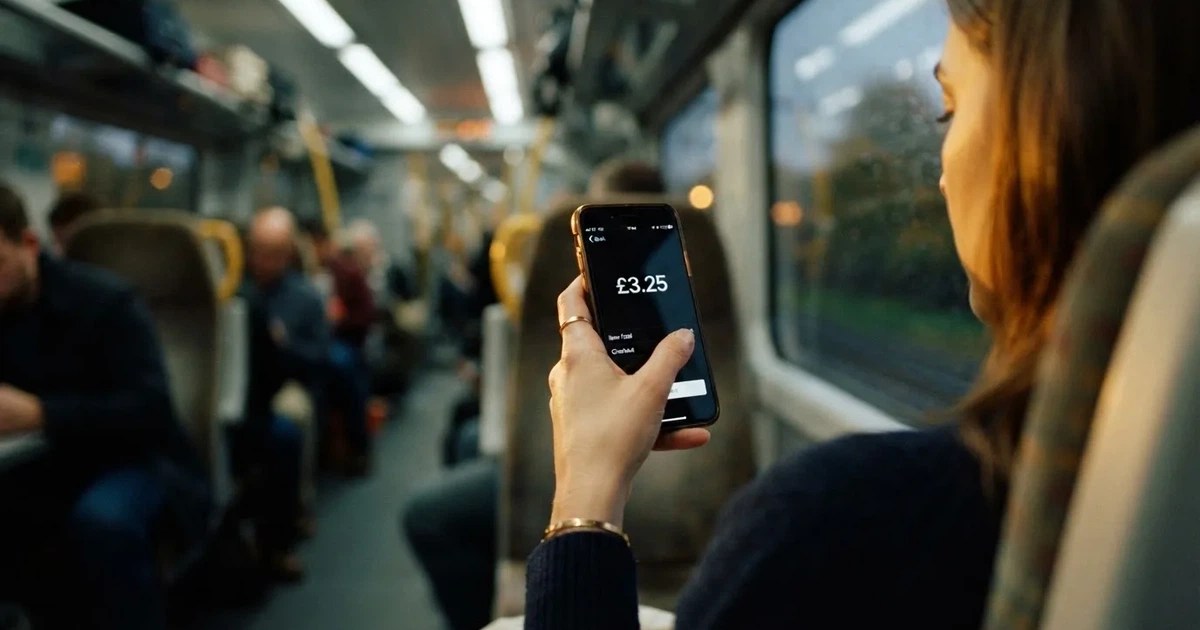
The ten apps below all hold a Gambling Commission remote licence, which is the only legal route for taking bets from customers in Great Britain. Licensing, however, is the floor, not the ceiling. What separates a worthwhile install from one you delete after a week is the running cost of doing business with the operator: how a free bet is actually paid out, how quickly winnings reach a bank account, how heavy the safer-gambling friction sits on small-stake play, and how much of the price the bookmaker keeps before a wager is even placed. That is the frame this page works inside.
Two notes on geography before the rankings begin. First, Great Britain covers England, Scotland and Wales; Northern Ireland runs on a different law and is not covered by a Commission licence. Second, every operator featured here is licensed — there is no shortcut through Curaçao, Malta or Gibraltar for a brand serving GB customers, since the Gambling (Licensing and Advertising) Act 2014 made a UKGC licence compulsory at the point of consumption. The corollary is the subject of a later section: with no anonymous play at any of the apps below, identity verification is mandatory, and the trade-off that creates is part of the cost being measured.
Crypto, Anonymity and What the Apps Can and Cannot Do
“Best crypto betting apps” is a search term that comes attached to a fantasy the GB market does not offer. No licensed bookmaker serving customers in Great Britain runs anonymous play, because the Commission’s verification rules since 7 May 2019 require name, address and date of birth to be checked before a deposit or a free bet can be used. A crypto deposit does not change that — the wallet does not know who you are, but the bookmaker must.

What the licensed market does offer is wider than the fantasy suggests. Debit cards, bank transfer, PayPal, Apple Pay and Instant Payments are all live across the GB-licensed set, and several apps — NetBet and bet365 among them — let customers log in with Face ID or Touch ID rather than a password each time. That removes a layer of friction without removing the layer of check: the identity has still been verified, the funds are still drawn from a named account, and the operator is still bound by the Commission’s safer-gambling conditions.
A separate point sits inside the “blockchain” framing. The Commission’s rules on the financial vulnerability check (since 30 August 2024) and the deposit-limit rules (the first changes applied on 31 October 2025, with a second phase postponed to 30 September 2026) are written around deposits and withdrawals through the normal banking system. A customer who funds an account with a crypto-asset transfer still faces the same £150 rolling-30-days deposit threshold for a vulnerability check — the trigger is the deposit figure, not the rail. Where the licensed apps diverge from the search term is in the value they offer once the fiction of anonymity is dropped: faster cashier, biometric login, and a self-exclusion register (GAMSTOP) that actually works across the whole market rather than one operator at a time.
There is one legitimate use case for the term, and the page comes back to it. The Commission’s public register is searchable by business name, trading name, domain or account number, and the access date is the one that matters: licensing status changes, brands rebrand (Bar One Racing became BAR 1 Betting in 2025), and operators have licences suspended or revoked. The “anonymous” part of the search is the checking-the-app behaviour the reader should be doing themselves before a deposit lands, not a service the apps can provide.
Free Bets and Bonus Offers: What the Headline Number Actually Pays
The promotion rules that took effect on 19 January 2026 capped wagering requirements on bonuses at 10x and banned mixed-product promotions. That changes what a “100% bonus” headline means under a GB licence, and it is worth understanding before any of the offers below is read as a reason to install an app.

The shape of a free bet stays the same regardless of the cap. A £15 free bet paid as bet credit returns winnings only — the £15 stake is not given back if the bet wins. The arithmetic of value is the same one that has applied for years: free-bet value equals free-bet amount × (odds − 1) ÷ odds, scaled by the margin of the market it is used on. A £15 free bet at odds of 5.00 on a market with a 5% margin is worth roughly £15 × 4 ÷ 5 × 0.95 = £11.40 on average, before the book’s take. That is the upper bound of what the offer costs the operator; what it returns to the bettor depends on where it is used.
Two of the operators featured run their welcome offers on exactly this pattern. BetGoodwin’s “Bet £10 & Get £15 in Free Bets” breaks into a £5 sports bet, a £5 acca and a £5 Sub-Cover bet — three free bets, three different markets, each capped at its own expiry and minimum price. Bet600 takes the other tack: five qualifying single bets of £10 or more at evens (2.00) or greater within seven days of registration, after which a single £10 free bet is credited. The bettor’s job is the same in both cases — read the qualifying conditions, count the qualifying bets, and treat the headline figure as a ceiling rather than a payout.
QuinnBet’s free-bet terms sit on the page for a reason. They are valid for seven days from credit, usable on any market at odds of 1/2 (1.5) or greater, with maximum odds of 50/1; straight accumulators are allowed but Trixies, Patents and Yankees are not. The seven-day window is the constraint that costs the most: a free bet that expires before the bettor can find a market at the right price is the same as no free bet. The exclusion of combination systems (Patent, Yankee, Lucky 15 and the rest) is the second cost — the same stake, split across more lines, gives a higher chance of a return but lowers the expected value per leg, and the operator has closed that route off.
Two offers sit outside the GB-licensed set’s normal free-bet pattern. Lottoland UK’s current app welcome offer is casino-based — a £20 stake on selected slots earns 100 free spins on Fishin’ Frenzy Even Bigger Fish, no wagering, thirty days to use them, running until 14 February 2027. It is a casino offer attached to a sportsbook app, and it sits under the mixed-product ban as a casino-only promotion rather than a sports-betting one. Sporting Index’s full spread-betting account carries up to £300 cashback on selected sports spread markets — a different product class entirely, because spread betting is a per-point wager that can lose more than the deposit.
The general point holds across every figure in this section. A bonus is a marketing spend, not a windfall, and the wagering cap now in force under the LCCP sets a ceiling on what an offer can head-and-run up against. The bettor who reads the qualifying conditions before claiming pays the lowest cost; the bettor who reads the headline and clicks through pays the most.
Payments, Payout Speed and the Cost of Getting Money Back
Payout speed is the visible face of payments; the cost sits one layer under it. Three figures matter — the payment rails an operator accepts, the time a withdrawal takes once requested, and the friction at deposit (verification, minimums, the vulnerability check that triggers at £150 of net deposits in a rolling 30 days).
The rails are mostly settled. Debit card, PayPal and Apple Pay are live across the major operators — bet365’s funding set is exactly those three. NetBet extends to Instant Payments to bank alongside Apple Pay, PayPal and debit card, plus Face ID or Touch ID login. Credit cards are banned for gambling in Great Britain since 14 April 2020, including credit-card-funded payments through an e-wallet; that ban does not touch debit cards or bank-based payments. Cryptocurrency is not a standard rail at any of the GB-licensed apps featured here, and the Commission’s rules on verification do not change when a wallet is involved.
Payout speed varies by rail and by operator. PayPal and Apple Pay withdrawals are the fastest, typically arriving the same day once a withdrawal is requested. Debit card withdrawals settle in one to three working days at most operators; bank transfer can stretch to two to five working days. The variance is not the bettor’s friend: a withdrawal that takes a week is not the same offer as a withdrawal that takes an afternoon, even if the price and the free bet are identical. The bettor’s job is to check the operator’s stated payout times before the first deposit, because the rail chosen at deposit is usually the only rail available for withdrawal.
The vulnerability check is the friction that costs the most in practice. The Commission’s financial vulnerability check, in force since 30 August 2024, applies to licensed remote betting once a customer’s deposits minus withdrawals exceed £150 in a rolling 30 days (since 28 February 2025). The check is a public-record search — bankruptcy, county court judgments — not an income check and not a credit reference check. It is a one-off in most cases; it is not a credit check that affects the customer’s file elsewhere.
The deposit-limit rules (RTS 12) are the second friction. The first changes have applied since 31 October 2025, a second phase was postponed to 30 September 2026, and whether that second phase is live is not established as of the writing of this page. The customer-facing result, once both phases are operating, is a gross deposit limit on a fixed time frame; the operator sets the limit and the customer adjusts it within the framework. There is no state-set ceiling: limits are the customer’s choice, within the operator’s framework.
The cost to the bettor of these rules is not the rules themselves — verification is fast at most operators, the £150 threshold is high enough that low-stake play never reaches it, and the deposit-limit framework is the customer’s tool as much as the operator’s. The cost is the surprise when any of them triggers. A withdrawal request that sits for a week because verification needs a fresh document, a free bet blocked because the account was opened at 17 and is now under review, a deposit refused because the rolling-30-days figure has crossed the threshold: each is friction the bettor can avoid by reading the operator’s terms before the first bet.
The Mobile App: What Touchscreen Betting Adds and What It Takes Away
“Best betting apps” as a search term treats the app as a delivery mechanism; in practice, the app is where most of the friction and most of the speed lives. Three factors decide whether an app is worth the home-screen slot it occupies.
The first is biometric login. Face ID on supported iPhones, Touch ID on older devices and the equivalent on Android lets a customer open an app, place a bet and log out without typing a password each time. bet365 supports Face ID login; NetBet supports Face ID or Touch ID; Fafabet supports Face ID or Touch ID; several others support one or the other. The cost saved is not the password — it is the abandoned bet. A punter who has to type a password and a one-time code at half-time is a punter who has lost the price by the time the bet is placed.
The second is in-play layout. In-play is the part of an app that lives or dies on a half-second tap — a punt on the next wicket, a back-the-favourite move at the break, a hedge on an acca that is one leg from landing. Betfair’s app offers in-play betting, Bet Builder, free live streaming of UK and Irish horse racing and football within the app, and a 90 Minute Payout market. Spreadex combines fixed-odds and spread betting in one app with one-click, auto and partial cash out, Bet Builder across fixed odds or spreads, and live streaming of UK and Irish horse racing, greyhounds, tennis, NFL and selected football. Midnite shows in-play events, an acca builder, popular accas and price boosts with maximum-stake limits. The cost of a poor in-play layout is a price that moved before the tap registered.
The third is the app’s own safer-gambling tools. The Commission’s rules require deposit limits, time-outs and self-exclusion to be available inside the app, not just on the website. Unibet’s safer-gambling tools include deposit limits, a Player Profile test, product restrictions and self-exclusion, with live chat support and links to BeGambleAware, GamCare, GAMSTOP, Gambling Therapy and the BGC. Star Sports provides deposit limits, a Play Break facility and self-exclusion in My Account. William Hill offers time reminders, time-outs and deposit limits inside the app, with 24/7 customer service through in-site messaging. Dabble provides deposit limits and cooling-off periods, with resources in the app and on its helpdesk. The cost of the safer-gambling layer is the screen real estate it takes; the benefit is that GAMSTOP self-exclusion is one enrolment away across the whole licensed market, not one app at a time.
The App Store age rating is the small print that matters. Every GB-licensed app carries a 17+ rating because the Commission’s minimum age is 18; kwiff, London Bet, bet365 and BetWright all carry the 17+ rating on this basis. The rating is not a recommendation; it is a legal floor.
How the Ten Licensed Apps Compare
The comparison table below covers all ten operators featured on this page, ordered by Gambling Commission licence number, with three columns beyond the brand: the licence number and licence holder as the Commission’s public register carries it, and what the operator’s own terms say on the page’s central subject — what an offer costs the customer who takes it.
| Brand | Gambling Commission licence | What the operator’s terms say on the cost subject |
|---|---|---|
| Sporting Index | 027343 (Sporting Index Limited) | Full spread-betting account carries up to £300 cashback on selected sports spread markets |
| BetGoodwin | 002927 (Goodwin Racing Limited) | Welcome offer breaks into £5 sports, £5 acca, £5 Sub-Cover free bets; stake not returned |
| Unibet | 045322 (Platinum Gaming Limited, Gibraltar) | Has operated since 1999; safer-gambling tools include deposit limits, Player Profile, product restrictions and self-exclusion |
| QuinnBet | 061011 (QuinnBet (Gibraltar) Limited) | Free bets valid 7 days from credit, min 1/2 (1.5), max 50/1; combination systems excluded |
| Tote | 054779 (TDCO Limited) | Placepot, Jackpot, Scoop6 and Quadpot bets plus World Pool and international pools (French PMU, US, Hong Kong) |
| Paddy Power | 039439 (PPB Counterparty Services Limited) | Covers football, horse racing, boxing, rugby, tennis, golf, darts, snooker and F1 |
| Bar One Racing | 056516 (Bar-One Racing Limited) | Irish independent bookmaker rebranded as BAR 1 Betting; sponsorships at Dundalk, Fairyhouse, Navan, The Curragh, Curraheen Park and Cork |
| Betmaster | 065699 (BM Solutions GB Ltd) | Covers football, cricket, horse racing, NFL and eSports (League of Legends, Dota 2) betting |
| Dabble | 065677 (Dabble Sports UK Ltd) | Social betting app with a real-time feed, Copy Bets, group chats and Banter Channels; 10p paid when another user copies a bet |
| London Bet | 066162 (Thistle Bet Limited) | Combines sports betting (football, tennis, horse racing, greyhounds, darts, golf, cricket, NFL, NBA, MLB, snooker) with Pragmatic Play casino slots and live in-play |
A note on the shape of the table. Three of the operators carry the same parent-company footprint (QuinnBet and Unibet both sit under their respective Gibraltar parents, Tote under TDCO Limited), and one (Bar One Racing) is an Irish independent bookmaker whose sponsorships sit outside the GB-licensed set’s usual football spine. The shared parentage is worth knowing because it predicts shared cashier rails and shared safer-gambling tooling; the Irish focus is worth knowing because it predicts a racing-heavy market rather than a football-heavy one.
What a UK Betting App Is and Is Not
A “betting app” in the British sense is the mobile front end of a remote general betting standard (real events) licence, which is one of five licence categories the Commission issues for the remote market. The other four are virtual events, general betting limited, pool betting and the betting intermediary licence that exchanges run under. The general-betting standard licence is the one that lets a brand offer markets on real sporting events from a GB-facing app; pool betting covers tote-style bets on horse and dog racing; the betting intermediary licence is what runs Betfair and Smarkets.
What a betting app is not, in the British legal frame, is anonymous. Since 7 May 2019 the Commission’s rules require name, address and date of birth to be verified before a customer can deposit or gamble, including with a free bet or bonus. There is no licensed route around that check. A brand that markets anonymity at GB customers is either unlicensed (and so outside the consumer protections that come with a Commission licence) or mislabelling its onboarding flow.
What a betting app is not, either, is the only place to bet. The licensed market includes betting shops (a separate retail licence), pool betting on-course and online, and betting exchanges that pair back and lay bets between users. The app is the most-used route because of convenience, not because it is the only legal one.
How a Bookmaker Is Allowed to Operate in Great Britain
The legal frame is short and old: the Gambling Act 2005 is the statute, the Gambling Commission is the regulator, and the Gambling (Licensing and Advertising) Act 2014 made a Commission licence compulsory at the point of consumption. Sections 33 and 36 of the 2005 Act (as amended) cover the offence of providing gambling facilities in Great Britain without the licence the Act requires. The maximum penalty on summary conviction is up to 51 weeks’ imprisonment, a fine up to level 5, or both (six months in Scotland).
Three points follow from that frame. First, a Curaçao, Maltese or Gibraltar licence is not a substitute — the requirement is a Commission licence, not any licence. Second, a licence is not a monopoly: there is no state-set cap on the number of licences, and the Commission has licensed the entire commercial market. Third, the Commission’s public register is the whole test of who holds one. The register can be searched by business name, trading name, domain or account number, and the access date is the relevant date — licence status changes, brands rebrand, and suspended or revoked licences come off the register.
A separate licence covers financial spread betting. Spreadex is regulated by the FCA for spread betting and by the Gambling Commission for fixed-odds betting, and spread betting losses can exceed the deposit. That is a separate regulatory frame with its own duty rates (3% financial, 10% other) and its own redress routes; the Commission’s safer-gambling conditions do not bind an FCA-regulated spread bet in the same way.
What may be bet on is set by the licence category and the Licence Conditions and Codes of Practice (LCCP), not by a statutory list. The licensed market offers sports, politics, TV shows, novelty markets, esports and virtual events under the relevant licence; the operator’s own rules govern what is suspended, restricted or removed. In-play is licensed but not unrestricted; esports are treated like any other event; pool betting on horse and dog racing runs under a separate licence and duty.
Safer Gambling and the Cost of the Protections
The safer-gambling layer costs the operator in compliance time and the customer in friction at sign-up. The friction is the price; the benefit is a market with named, regulated operators, a national self-exclusion scheme, and a complaints route through approved dispute-resolution bodies.
The national self-exclusion scheme is GAMSTOP. It is a mandatory licence condition for online operators since 31 March 2020, and a customer who enrols with GAMSTOP is excluded from every GB-licensed online operator at once. The exclusion periods are six months, one year, five years, or five years with auto-renewal; after the minimum period the exclusion stays in place for a further seven years unless the customer asks GAMSTOP to remove it. GAMSTOP covers online sites and apps; betting shops use a separate service.
The financial vulnerability check applies to remote betting once net deposits exceed £150 in a rolling 30 days (since 28 February 2025). It is a public-record search rather than a credit check. Financial risk assessments — the “affordability checks” that appeared in the press — were announced in a staged plan (Commission article of 7 July 2026) with no start date. The bettor who triggers either check sees a short delay at withdrawal; the bettor who does not trigger them sees nothing.
The deposit-limit framework (RTS 12) has applied its first changes since 31 October 2025, with a second phase postponed to 30 September 2026. The customer-facing result is a gross deposit limit on a fixed time frame; the operator sets the framework and the customer adjusts the limit. There is no state-set ceiling. The benefit is that a customer who wants to limit their spend has the tool to do so without negotiating with the operator.
Help is available outside the apps. GamCare runs the National Gambling Helpline; GambleAware funds treatment and education; NHS gambling clinics run in several regions; Gamblers Anonymous runs peer-support meetings. Unibet’s safer-gambling page links to all of those, plus GAMSTOP, Gambling Therapy and the Betting and Gaming Council. The links are inside the app because the LCCP requires them; the services they reach are independent of the operator.
Operator Reviews
Dabble — the social betting app where 10p lands every time someone copies your bet
Dabble’s licence sits under Dabble Sports UK Ltd on Commission account 65677 (remote general betting standard, real events). The app is published in the UK App Store as Dabble: Sports Betting & Casino, and its USP is social: a real-time feed, Copy Bets, group chats and Banter Channels. The mechanic that makes the social layer pay is the 10p Dabble pays when another user copies a bet — small per copy, but the social feed is built to drive copies.
The cost side is the safer-gambling layer: deposit limits and cooling-off periods are available, with resources in the app and on the helpdesk. The verification at sign-up is the standard Commission-mandated check; no anonymous play, no crypto route around it. The bettor who likes the social feed will spend more time in the app than the bettor who treats it as a betting slip; the bettor who treats it as a betting slip will find the social layer noise.
The verdict: worth installing for the bettor who bets socially and copies other people’s picks. If a quiet, feed-free interface is your priority, this social-heavy experience may not be the optimal install for you.
Paddy Power — the high-street name whose app covers football, horse racing, boxing, rugby, tennis, golf, darts, snooker and F1
Paddy Power’s licence sits under PPB Counterparty Services Limited on Commission account 39439 (remote general betting standard, real events). The Paddy Power Sports Betting app is published by Paddy Power PLC and the market spread is the broadest on this page: football, horse racing, boxing, rugby, tennis, golf, darts, snooker and F1 are the headline sports, with the usual in-play and acca layers on top.
The cost side is the price. Paddy Power’s margin on Premier League football is one of the tighter ones on the GB market; horse racing carries BOG (Best Odds Guaranteed) on selected meetings. The bettor who wants the widest market and the tightest football price gets both; the bettor who wants novelty (esports, politics, TV shows) finds a smaller menu than the specialist apps.
The verdict: the default install for the GB punter who wants the broadest football and racing coverage and is happy to pay the Paddy Power price. Avoid this one if you are looking for esports depth or a minimalist in-play layout.
Betmaster — the football, cricket, racing, NFL and esports (League of Legends, Dota 2) shop
Betmaster’s licence sits under BM Solutions GB Ltd on Commission account 65699 (remote general betting standard, real events). The Betmaster app covers football, cricket, horse racing, NFL and eSports (League of Legends, Dota 2) — the esports inclusion is the differentiator on this page, because most GB-licensed apps either omit esports or carry it as a thin add-on.
The cost side is the smaller market footprint outside the headline sports. A bettor who lives on Premier League, Champions League, the Oaks and the Gold Cup will find everything; a bettor who wants GAA, MLS or UFC will find a thinner menu than the bigger-name apps. The verification at sign-up is standard.
The verdict: worth installing for the bettor whose weekend is half Premier League and half Worlds and Majors. This is not the pick for someone needing a comprehensive catalogue of minor sports.
Bar One Racing (BAR 1 Betting) — the Irish independent bookmaker with the Dundalk, Fairyhouse, Navan, The Curragh, Curraheen Park and Cork sponsorships
Bar One Racing’s licence sits under Bar-One Racing Limited on Commission account 56516 (remote general betting standard, real events). The app has been rebranded as BAR 1 Betting; the underlying bookmaker is an Irish independent with shops across Ireland and horse racing sponsorships at Dundalk, Fairyhouse, Navan, The Curragh, Curraheen Park and Cork. The Irish racing focus is the differentiator.
The cost side is the GB-licensed footprint on top of an Irish focus — the GB-facing app carries the Commission’s safer-gambling and verification rules, but the market depth is heavier on Irish racing than on English football. A bettor who bets Irish racing exclusively will find a strong offering; a bettor who bets Premier League will find a thinner menu than the bigger-name apps.
The verdict: worth installing for the bettor whose racing week runs through Dundalk and the Curragh. Those focused purely on English football will find a better menu elsewhere.
BetGoodwin — the £15 free bet that breaks into three £5 pieces
BetGoodwin’s licence sits under Goodwin Racing Limited on Commission account 2927 (remote general betting standard, real events). The sports welcome offer is “Bet £10 & Get £15 in Free Bets”, broken into a £5 sports bet, a £5 acca and a £5 Sub-Cover bet. The three-piece structure is the differentiator — three markets, three expiries, three minimum-price conditions.
The cost side is the qualification. A £10 qualifying bet at minimum price earns three free bets that each have their own market restrictions, each with their own minimum price and each with their own expiry. The headline figure of £15 needs three separate decisions to clear, and a punt on the wrong market at the wrong price is a wasted free bet. QuinnBet’s seven-day window is a similar constraint: a free bet that expires before the bettor finds a market at the right price is the same as no free bet.
The verdict: worth installing for the bettor who reads the small print and is willing to plan three bets to clear the welcome offer. If you prefer a simple, single-market sign-up bonus, the multi-step nature of this offer will likely feel like an unnecessary hurdle.
London Bet — the sportsbook + Pragmatic Play casino slots + live in-play app
London Bet’s licence sits under Thistle Bet Limited on Commission account 66162 (remote general betting standard, real events). The app combines sports betting (football, tennis, horse racing, greyhounds, darts, golf, cricket, NFL, NBA, MLB, snooker) with Pragmatic Play casino slots and live in-play betting. The mixed product is the differentiator — a sportsbook and a casino on one app, both Commission-licensed.
The cost side is the verification flow, which is standard Commission-mandated, and the marketing of two product types inside one app. Since 19 January 2026 mixed-product promotions are banned — an offer that requires gambling on two or more product types such as betting, casino, bingo and lottery is no longer legal. The app carries a casino and a sportsbook; the promotions inside each are product-specific.
The verdict: worth installing for the bettor who wants sports and slots on one login and is willing to keep the two products separate in their head. The cross-promotion focus here may distract those seeking a pure sportsbook experience.
Unibet — the operator that has run since 1999, with deposit limits, a Player Profile test, product restrictions and self-exclusion
Unibet’s licence sits under Platinum Gaming Limited, Gibraltar, on Commission account 45322 (remote general betting standard, real events). Unibet states it has operated since 1999. The UK site is run by the Gibraltar parent under the Commission account; the safer-gambling layer is one of the most complete on this page.
The cost side is the Gibraltar parent — QuinnBet sits under its own Gibraltar parent, and the parentage matters less than the licence does, because the licence is the legal hook. The safer-gambling layer (deposit limits, Player Profile, product restrictions, self-exclusion, live chat, links to BeGambleAware, GamCare, GAMSTOP, Gambling Therapy and the BGC) is the most complete on this page. The bettor who reads the safer-gambling page first is the bettor who spends the least on the mistakes that matter.
The verdict: worth installing for the bettor who wants the most complete safer-gambling tooling and a long-established operator. You should look elsewhere if you need a loose operator style, as the controls here are strictly enforced.
Tote — the pool betting app with Placepot, Jackpot, Scoop6, Quadpot and the World Pool (French PMU, US, Hong Kong)
Tote’s licence sits under TDCO Limited on Commission account 54779 (remote general betting standard, real events). The Tote app is published by UK Tote Group Ltd and the offering is the pool betting menu: Placepot, Jackpot, Scoop6 and Quadpot, plus World Pool and international pools (French PMU, US, Hong Kong). Pool betting is a separate licence category and runs under its own duty.
The cost side is the pool mechanic itself. A pool bet is not a fixed-odds bet — the dividend is set after the race by the pool, not before by the bookmaker. The bettor’s edge is the takeout rate and the pool liquidity, not the price. A bettor who treats a pool bet as a fixed-odds bet is paying a hidden cost; a bettor who reads the dividend history is paying the right cost.
The verdict: worth installing for the bettor who bets pools rather than fixed odds, and wants the international pool coverage. Football enthusiasts might feel limited, as pool betting on football is its own product with a separate app tradition.
QuinnBet — the free bets that expire in seven days and exclude combination systems
QuinnBet’s licence sits under QuinnBet (Gibraltar) Limited on Commission account 61011 (remote general betting standard, real events). The free-bet terms are specific: valid for seven days from credit, usable on any market at odds of 1/2 (1.5) or greater, with maximum odds of 50/1; straight accumulators are allowed but Trixies, Patents and Yankees are not.
The cost side is the seven-day window and the combination-system ban. A free bet that expires before the bettor finds a market at the right price is the same as no free bet. A bettor who likes a Lucky 15 (15 bets across four selections) cannot place one with QuinnBet free bets. The headline figure of “free bets” looks the same as any other operator’s; the conditions are the difference.
The verdict: worth installing for the bettor who bets singles and small accas and is willing to use the free bet within a week. Avoid this if your strategy relies on combination systems, as the Trixie, Patent, Yankee and Lucky 15 lines are excluded.
Sporting Index — the spread betting app with up to £300 cashback on a full spread-betting account
Sporting Index’s licence sits under Sporting Index Limited on Commission account 27343 (remote general betting standard, real events). The Sporting Index app is published by Sporting Index Holdings Limited; a full spread-betting account carries up to £300 cashback on selected sports spread markets. Spread betting is a per-point wager that can lose more than the deposit, and Spreadex (which combines fixed-odds and spread betting) is regulated by the FCA for spread betting and by the Gambling Commission for fixed-odds.
The cost side is the spread-betting mechanic itself. A spread bettor does not buy a price; they buy a position in a range. The settlement is per-point, not per-winner, and the loss can exceed the deposit. The £300 cashback offer is the operator’s way of capping the first-time bettor’s downside; the ongoing cost is the per-point settlement, which a fixed-odds bettor does not face.
The verdict: worth installing for the bettor who wants spread betting specifically and is willing to learn the per-point settlement. Those after fixed-odds only should note that while Sporting Index offers them, the cashback incentive is tied to the spread product.
The Maths of a Bet: How a Price Becomes a Return
Three numbers decide what a winning bet pays back: the stake, the odds, and the market margin. The maths is short, and the same calculation works on every price the apps quote.
A single bet’s return is stake multiplied by odds. A £100 bet at odds of 6.00 returns £600 — the £100 stake plus £500 of profit. The decimal odds are the total return multiplier, so a price of 2.50 returns two-and-a-half times the stake. The fractional equivalent is 5/1 (six divided by one is six; 6.00 minus 1 is 5), so 5/1 means a £100 stake returns £600. The British convention is to quote both; the maths is the same.
A combination bet multiplies the odds of the legs into one price. A £10 accumulator at odds of 2.00, 3.00 and 4.00 has a combined price of 24.00 — the return is £10 × 24.00 = £240, the profit is £230. Each additional leg adds more variance, not more edge — the bookmaker’s margin compounds across the legs, and a six-fold acca carries a margin that is six times the margin of a single bet.
The bookmaker’s margin is the cut the operator takes from every market. For a two-outcome market (a tennis match, a basketball game) the calculation is the payout share — 1 ÷ (1/odds of outcome A + 1/odds of outcome B). If the odds are 1.91 and 1.91, the payout share is 1 ÷ (1/1.91 + 1/1.91) = 0.955, and the margin is 1 − 0.955 = 0.045, or 4.5%. A payout share of 95% and a margin of 5% are the same market seen from two sides. The bettor pays the margin on every stake, and the operator keeps it on every bet.
The free-bet value follows from the margin. A £15 free bet at odds of 5.00 on a market with a 5% margin is worth £15 × 4 ÷ 5 × 0.95 = £11.40 on average, before any further deduction. That is the average return across many uses of the free bet; the actual return on any single bet is the winnings, not the average.
The 11 Operators This Page Does Not Feature
Three of the names that turn up most often on “best betting apps” searches are not in the table above: bet365, Betfair and William Hill. They are not there because the Commission’s public register lists more licensed brands than any single page can feature, and the ten featured here are the ten the coverage is built around. The trade-off, for the reader, is that bet365, Betfair and William Hill are reviewed elsewhere on this site and are not absent from the GB-licensed market — they hold Commission licences, run under the LCCP, and offer the same safer-gambling tooling as the ten above. The bettor who wants the bet365 app, the Betfair app or the William Hill app can install them on the same legal footing as the ten reviewed here.
Three other names — BetVictor, 10bet and BetMGM UK — sit on the GB-licensed market too, with the same Commission frame. BetVictor describes about 80 years of experience as a bookmaker, and its iPhone and iPad app combines a sportsbook with an online casino; 10bet states its UK site is licensed by the Commission under licence 43173; BetMGM UK lists Commission account number 39198. None of them are absent from the market; none of them are absent from the safer-gambling frame.
Spreadex, Smarkets, Star Sports, NetBet, Lottoland UK, Bet600, BetWright and Fafabet round out the GB-licensed set this page does not feature in depth. They are not absent; they are not the focus. The bettor who wants any of them gets the same Commission frame as the ten above.
What the Operator’s Own Terms Say
The comparison table above is the third column the spec required; the contents are what each operator’s own terms state on the subject the page is built around — what the offer costs. Three observations follow from reading those terms together.
First, every free-bet offer on this page shares the same mechanic: the stake is not returned with a win. The £15 at BetGoodwin, the £10 at Bet600, the free-bet credit at QuinnBet — each returns winnings only. The headline figure is a ceiling, not a payout, and the bettor who reads it as a payout pays the gap.
Second, the safer-gambling layer is consistent across the set. Deposit limits, time-outs, self-exclusion and links to GamCare, GambleAware, GAMSTOP and the BGC appear on every featured operator’s page. The implementation differs; the framework does not. The bettor who reads the safer-gambling page first is the bettor who avoids the surprise at the point of withdrawal.
Third, the parent-company structure is consistent across the set in a way that matters. QuinnBet and Unibet both sit under Gibraltar parents; Tote sits under TDCO Limited; the others sit under UK parents. The parentage does not change the Commission’s frame, because the licence is the legal hook — the parent company is named on the register, the licence is held against the parent, and the Commission’s powers apply to the parent. The bettor who reads the parentage rarely learns anything the licence has not already said; the bettor who reads the licence learns who is on the hook.
The Offshore App and What the Licence Costs the Customer
The honest framing on the offshore question: a GB licence is compulsory at the point of consumption, and providing gambling facilities in Great Britain without the licence the Act requires is an offence under section 33 of the Gambling Act 2005. That offence is aimed at the operator, not the customer who bets on an unlicensed site. There is no offence aimed at a customer who merely bets on an unlicensed site.
What the customer loses is the package of protections the licence brings. No GAMSTOP coverage — the self-exclusion enrolment does not reach offshore brands. No Commission complaints route — the customer cannot refer a dispute to an approved dispute-resolution body the Commission oversees. No British consumer redress if funds are withheld — the customer has whatever the offshore operator’s own terms say. Not bound by the 10x bonus cap — the wagering requirement can run to 50x. Not bound by the £150 vulnerability check — the operator is free to set its own friction. The bettor who chooses an unlicensed site chooses each of those trade-offs separately and pays each of them separately.
Enforcement is disruption, not blocking. The Commission issues cease-and-desist notices, refers unlicensed brands to search engines, and works with registrars, hosts and payment providers to take them offline. Court-order DNS blocking powers are on the way; ISP blocking is not in operation as of the writing of this page. The framing that follows is honest: licensed = checks, limits, GAMSTOP, bonus cap, but also verification before the first bet; unlicensed = none of those protections and possible loss of funds. Neither is “the safe choice” by default. The licensed choice is the safer choice on the dimensions the Commission regulates, and the bettor who reads the licence register before the first deposit lands gets that choice on every install.
What an Offer Costs the Bettor — The Calculation
The prescribed calculation for this page is none. The cost of an offer is shown in three figures, each of which is given qualitatively because the offer varies by operator and the maths does not change between offers.
A free bet’s value is its amount multiplied by (odds minus 1) divided by odds, scaled by the payout share of the market it is used on. The £15 free bet at BetGoodwin, used on a market with a 95% payout share at odds of 5.00, is worth £15 × 4 ÷ 5 × 0.95 = £11.40 on average. The cost to the operator is £11.40; the headline figure is £15. The bettor’s expected value sits between the two, and the gap is the marketing spend.
A welcome offer’s qualification cost is the stake the bettor has to put through to earn the free bet. Bet600’s five qualifying single bets of £10 each at evens (2.00) is a £50 qualifying turnover. At a 5% margin the expected cost of the qualification is £2.50; at a 10% margin it is £5.00. The headline figure is one £10 free bet; the cost of earning it is £50 of turnover plus the margin on that turnover.
A bonus’s turnover cost is the bonus base multiplied by the wagering factor (the base being the bonus, or bonus plus deposit). The 10x cap on bonuses that took effect on 19 January 2026 means a £10 bonus carries £100 of turnover at the cap. At a 5% margin the expected cost is £5; at a 10% margin it is £10. The headline figure is the bonus; the cost of clearing it is the turnover plus the margin.
The general point holds. Every figure is an average across many bets under the stated assumptions, not a guaranteed outcome for any single bettor. The maths does not promise a win, a payout or a return; it describes what the offer costs on average, and the bettor who reads the maths before claiming pays the lower of the two prices.
The Honest Take
The ten apps above are the GB-licensed market’s middle band: established enough to hold a Commission licence and current enough to have a live app on the App Store, but not the only ten. The bettor who installs one gets a Commission-licensed operator, a GAMSTOP-enrolled market, a 10x bonus cap and a £150 rolling-30-days vulnerability check. The bettor who installs the wrong one for their betting style pays the cost in friction — a seven-day free-bet window, a £10 minimum deposit, a price that does not match the bigger-name apps, a market that does not carry the sport they bet.
The reading order that costs the least: install the operator whose market matches the bettor’s betting pattern, read the safer-gambling page before the first deposit, read the free-bet terms before claiming the welcome offer, and check the Commission’s public register before the first bet lands. The four checks in that order take ten minutes and save the bettor the cost of the surprises the page is built around.
Frequently Asked Questions
Which apps are best for esports betting?
Betmaster carries League of Legends and Dota 2 markets alongside its football, cricket, horse racing and NFL coverage, which is the deepest esports menu on the page. Most other featured apps either omit esports or carry it as a thin add-on. The Commission’s frame treats esports like any other real event, so the same verification, deposit and safer-gambling rules apply. The bettor who wants esports depth installs Betmaster; the bettor whose esports interest is a single tournament finds a thinner menu across the rest.
Is it best mobile apps for online betting?
“Best” depends on the betting pattern, not the device. Every featured app carries biometric authentication (Face ID or Touch ID) on supported devices, the standard Commission-mandated verification before the first deposit, and a Commission-licensed cashier with debit card, PayPal and Apple Pay at the major operators. The differences are in the market depth, the safer-gambling tooling, the payout speed and the welcome-offer conditions — those are what decide which app is best for a given bettor, and the comparison table above carries the trade.
What are the best apps for mobile sports betting?
The answer depends on the sport. Paddy Power is the broadest for football, horse racing, boxing, rugby, tennis, golf, darts, snooker and F1. Tote is the deepest for pool betting on horse racing (Placepot, Jackpot, Scoop6, Quadpot, World Pool, French PMU, US, Hong Kong). Betmaster carries the deepest esports menu. Bar One Racing (BAR 1 Betting) carries the deepest Irish racing sponsorships. Betfair is the strongest for in-play, Bet Builder, free live streaming and the 90 Minute Payout market. The “best” install is the one whose market matches the bettor’s sport.
How can it be checked that a bookmaker holds a Gambling Commission licence?
The Commission’s public register can be searched by business name, trading name, domain or account number, and the access date is the relevant date because licence status changes. A brand that holds a Commission account is licensed; a brand that does not is not, and the offshore framing in this page applies. The register is the whole test. The verification at sign-up (name, address, date of birth) is required before the first deposit, including at a licensed operator; the register check is a separate check the bettor does before installing the app.
How is the return on a bet worked out from the stake and the odds?
The return is stake multiplied by the decimal odds. A £100 bet at odds of 6.00 returns £600 (£100 stake plus £500 profit). A combination bet multiplies the odds of the legs into one price — a treble at odds of 2.00, 3.00 and 4.00 has a combined price of 24.00, so a £10 stake returns £240. The British convention quotes fractional odds (5/1, 11/4, evens) alongside decimal; the maths is the same. The bookmaker’s margin sits inside every price, and the operator keeps it on every bet.
What is the bookmaker’s margin and how can it be seen in the odds?
The margin is the cut the operator keeps from every market. For a two-outcome market the payout share is 1 ÷ (1/odds of outcome A + 1/odds of outcome B); if both outcomes are priced at 1.91 the payout share is 95.5% and the margin is 4.5%. A payout share of 95% and a margin of 5% are the same market seen from two sides. The bettor pays the margin on every stake. No margin is pinned to a specific event for the featured operators, so the margin is described qualitatively rather than printed per row.
Payments & apps – signupbetsguide.com
Content created by the «signupbetsguide.com» team
