
Accumulators, Ranked by What They Actually Cost You
 Available in US
An accumulator is the bet that pays the most per pound staked, and the one that loses the most per pound staked. The same multiplication that produces the headline price — three legs at 2.00, 1.50 and 2.50 multiply into 7.50 — also multiplies the bookmaker’s margin across every leg, which is why long-shot accumulators carry a wider built-in take than short-priced singles. This page is a cost-first guide to licensed UK bookmakers that build accumulators well, ranked on what the bet actually does to the bankroll rather than on what its welcome promotion advertises. The current snapshot of each operator’s licence, offer terms and acca mechanics is set out below, and so is what the marketing word “free” means in pounds and pence once a wagering requirement lands on top of it.
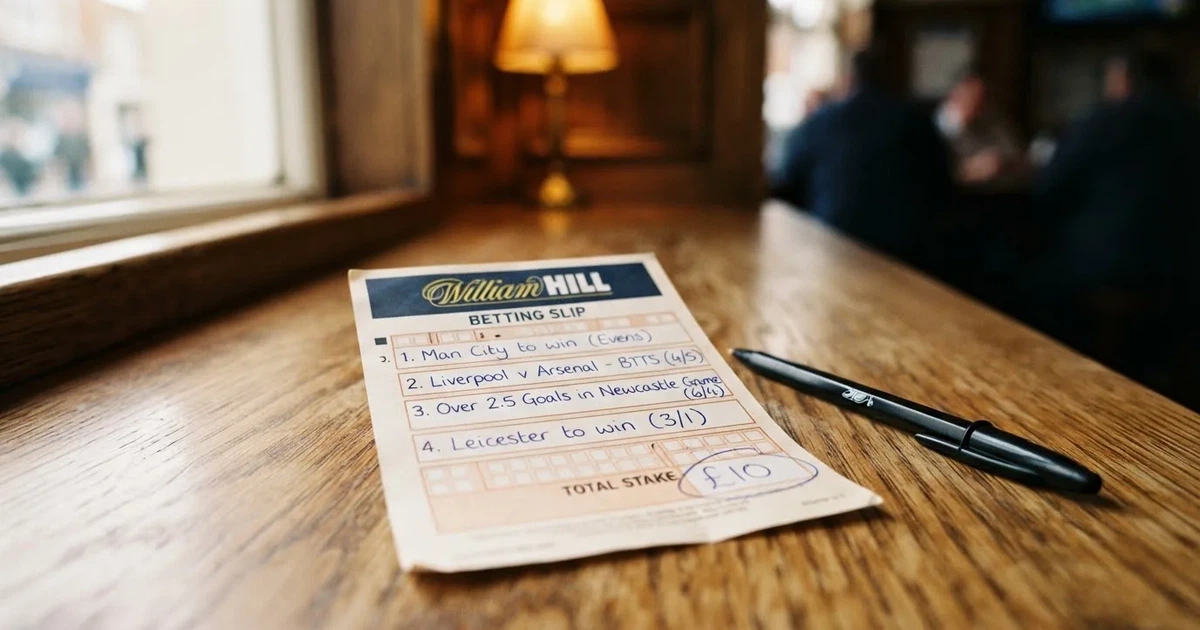
Current as of 30 October 2026 against the Gambling Commission’s public register and each operator’s own stated terms.
How accumulators are priced, settled, and capped
An accumulator links two or more selections into one stake. Every selection must win for the bet to win, because a push on a single leg removes that leg and reduces the price, a dead-heat reduces it further, and a loser kills the whole stake outright. The decimal-odds rule is what makes the math clean: at fixed-odds bookmakers the payout odds of the bet equal the product of the decimal odds on each leg, so an accumulator priced in fractions converts the same way a single does (a/b becomes a ÷ b + 1) and the running total compounds leg by leg. At standard —110 moneyline pricing a $100 stake returns $210 on one event, and the same $100 rolled into a four-leg parlay pays back $100 × (210/110)⁴ by the time the last leg settles.

Accumulators and full-cover bets sit on different stake arithmetic
There is a distinction worth knowing before a stake button is pressed. An accumulator pays off once, on a single stake. A full-cover bet — Trixie, Yankee, Heinz, Super Heinz — splits the stake across many bets and pays some of them even when one leg fails, and a bettor wins nothing outright from a Trixie unless at least two of its three selections win. The unit cost is the difference: a Trixie costs four times the stake (three doubles plus a treble), a Yankee costs eleven times, a Heinz fifty-seven, a Super Heinz one hundred and twenty, and a Lucky 15 four times for fifteen bets on four selections. The winnings ledger rewards surviving legs rather than refusing to settle the bet at all, which is why a Heinz at £2 per line costs £114 even when the four-fold alone costs only £2.
The payout is settled on the product of decimal odds
For the worked examples this article carries, three selections at decimal odds of 1.50, 2.00 and 2.50 give a price of 7.50. Staking £10 returns £75 gross, of which £65 is profit — the £10 stake is refunded on top of the odds but never returned a second time. The same legs on a Trixie, at £2 per line for four bets totalling £8, covers three doubles and the treble, and any double that survives a single loser pays back at the product of its two surviving prices; only the four-fold hit returns the headline figure. A Lucky 15 on those same four legs, at £2 per line for thirty pounds total, adds singles, which means even a single winner returns something the Trixie cannot.

Acca insurance and acca boosts are not the same thing
A price boost raises one leg, the trebles, or the whole ticket before the bet is placed and stacks on top of the bookmaker’s price. Acca insurance refunds the stake as a free bet or bonus when exactly one leg loses on a card of a stated minimum size, and the refund is capped and conditional — usually at a stake ceiling below the headline offer, sometimes restricted by sport, never guaranteed beyond a single one-leg losing day. A “Risk-Free” same-game acca carries a different mechanic again: a losing leg returns the stake of that single selection as a free bet, capped, while the rest of the slip is settled normally. The marketing umbrella “acca promo” covers all three, and the price distinction is on the terms page rather than the homepage.
Cash Out settles an accumulator at its running price, not its final one
A bookmaker’s Cash Out button takes the running price of the slip after four of five legs have won and pays a fraction of the implied full-ticket return. The implied price is the product of the surviving legs, less a margin set by the bookmaker, and a partial Cash Out skims half the bet and leaves the rest to settle at the price of the last leg. The feature is not free of charge — there is an automatic haircut on every quote — and a Cash Out near the closing price is normally a worse deal than letting the bet ride, because the bookmaker is offering to take the volatility off the table at a price set against the bettor by the same trading desk that priced the bet in the first place.
What the bookmaker’s margin looks like inside an accumulator
A margin is the share of every pound staked that the bookmaker keeps on average across a market, expressed as a percentage of the handle. A two-way market priced at decimal odds of 2.00 on both sides pays back 100p for every £1 staked exactly — a margin of zero — but a real bookmaker’s two-way line carries prices such as 1.91 / 1.91, which returns 1.95p for every £1 staked and so a margin of about 5.26%. The same margin sits on every leg of an accumulator because each leg is its own market: a four-fold acca at 5.26% per leg compounds to roughly 19.6% overall — a bettor loses, on average, 19.6p of every £1 staked to the bookmaker’s take before price boosts, insurance or free bets adjust the picture. The point of compounding is the point — accas price in their margin at every step.
Why short-priced favourites compound margin less painfully
A leg at 1.20 carries a margin half the size of a leg at 2.00 because the implied probability is closer to 100% and there is less headroom for the bookmaker to overround. A four-fold of 1.20 legs prices at 2.07 with a margin closer to 6% than 20%; a four-fold at 2.50 each prices at 39.06 with a margin closer to 23%. Both share the same math, but the first costs the bookmaker less to insure and so charges the bettor less to play. There is no free lunch in the structure: an accumulator is the bookmaker’s most profitable bet type precisely because casual bettors price it by multiplying attractive numbers together, and each attractive number carries its own margin.
Where Cash Out and partial Cash Out quote margin in real time
Every quote on a running accumulator is a one-sided line, which is to say a price only the bookmaker offers — there is no lay bet to compare it to unless the bettor also has an exchange account. A £100 stake at the final price of 200.00 has a headline payout of £20,000; a Cash Out four selections in offers the bettor, say, £9,000 — and that quote reflects the bookmaker’s estimate of the surviving leg’s expected value after the bookmaker’s own margin, plus a discount for the volatility left. Letting the bet ride against that quote recovers only the last leg’s expected return, never the headline price; Cash Out is, in effect, the bookmaker buying back its own liability at a haircut of its own choosing. Whether to take it depends on what the bettor believes the final leg’s true price to be.
Margin and price are not the same thing
The bookmaker’s margin is the average take. A single bet on a 2.00 outcome pays even money on average, but the variance is wide: a winning bet pays double, a losing one pays nothing, so the expected return over many bets converges to the payout share rather than to the headline price. An accumulator compounds both the variance and the margin, and a price boost that adds ten per cent to one leg is, after margin, roughly 4.5 per cent of the headline price on a four-fold — the bookmaker keeps the difference between the boosted price and its fair value, and that difference is margin dressed as generosity.
The promotion landscape for UK accumulators
UK betting promotions are now subject to a hard cap on wagering requirements: since 19 January 2026 no licensed promotion may require more than ten times the bonus in qualifying stakes, and a mixed-product offer — “bet on football to get free spins” — is prohibited outright. The cap does not restrict the size of a free-bet payout relative to the bonus received; it restricts the volume of roll-through required to release any winnings from a bonus into cash. A bookmaker offering £30 in free bets for a £10 qualifying bet therefore sits inside the new rule as long as the free-bet stakes carry no further turnover requirement once they convert. Most acca-specific offers at UK bookmakers split into three patterns: a free bet on placement of a qualifying accumulator, enhanced odds on selected legs, and acca insurance that refunds a one-leg loss as a free bet.
Welcome accumulators and the wagering arithmetic
A welcome offer structured as “Bet £10, Get £30 in Free Bets” requires a £10 stake at a stated minimum price (commonly evens, 2.00, or higher) within a window of seven to thirty days. The £30 of free bets is the headline figure, but the £10 stake is gone if the qualifying bet loses. Three £10 free bets, each usable on a separate accumulator of any size within seven days, are worth approximately £10 × (price − 1) ÷ price × market payout share on average — a free bet at decimal odds of 5.00 on a market with a 95% payout share is worth £7.60, not £10, because the £10 stake is not returned with the winnings. The “free” word covers the bet, not the stake; the wagering requirement has already been lifted (the cap is ten times, and zero is below ten), and what remains is the price-and-margin arithmetic above.
Accumulator insurance patterns on a regulated market
Acca insurance refunds the stake as a free bet when exactly one leg of a named-size accumulator loses. The common cut-off is a stake cap of around £10 to £20 per qualifying slip, the refund is itself a free bet (the stake not returned), and the insurance usually excludes enhanced-odds legs, virtual sports, certain horse-racing markets and any leg settled as a dead heat or a void. The headline is “money back if one leg lets you down”; the small print is a stake ceiling, an excluded-markets list and a one-free-bet cap. Whether the offer is worth taking depends on the bettor’s typical acca price and stake pattern: a £20 player on five-folds wins nothing from insurance on a winning ticket, and is refunded less than the cost of staking on a one-leg-loser ticket.
“Enhanced odds” and price boosts: the small print on eligibility
Daily price boosts are promotions, not odds changes: they raise one leg, one multiple or one accumulator on a chosen market and they carry a stake cap, usually a maximum stake of £10 or £20 per customer. Enhanced odds welcome offers, in which a marquee market is offered at a much higher price for new customers only, also carry a stake cap and a payout cap on the free-bet element. The bookmaker keeps the difference between the boosted price and its true line as margin; the offer is a discount on the first bet, not an ongoing price improvement, and the second bet reverts to the same margin as everyone else’s.
Mobile accumulator builders and bet-slip mechanics
The acca builder is the screen that turns several selections across a matchday into one slip, with both pre-match and live selections available on the same ticket at licensed bookmakers. A bettor on Bet Builder markets on a single game can fold same-game legs into a same-game multi, and a multi-game accumulators can stack pre-match and in-play legs as long as the bookmaker allows it — most do, although horse racing remains a by-event market where in-play racing is rare under the licence. The mobile bet slip is also where Cash Out appears: a running quote once the bet has been struck, refreshed when a leg settles and refreshed again when the next leg kicks off. A partial Cash Out splits the stake; a full Cash Out settles the slip at the quoted price.
App-level differences that change the cost of staking
Bet slips differ across apps in two cost-bearing ways. First, a Same Game Multi that exempts certain leg combinations — a “Boost if you win” tied to specific named-player markets — adds a margin the bettor does not see on the price because the boosted price is compared to the unboosted line. Second, automatic Cash Out offers appear at the bottom of the in-play tab and refresh on a timer; a stale quote is a worse deal than a fresh one, and a betting app that updates the quote on every goal, every booking and every odds drift prices its runs tighter. These are not the headline features a marketing page names, but they govern what a bettor keeps and what the bookmaker skims.
Authentication and verification cost money, not pounds
Identity verification on first deposit is now a licence condition in Great Britain, and every bookmaker named below checks name, address and date of birth before a customer can deposit or stake. The check is at the bookmaker’s expense, but it can slow a withdrawal on a freshly opened account by a few hours while a manual review runs. A new customer claiming a welcome offer has, in practice, twenty minutes of form-filling and a proof-of-address upload ahead of them; that’s a one-off cost, but it bears noting because it governs whether the first deposit can be turned into a first bet within the offer’s qualifying window.
How licensed UK accumulators sit on the gambling market
A Great Britain betting licence is not optional for a brand that takes remote bets from customers in England, Scotland or Wales. The Gambling (Licensing and Advertising) Act 2014 brought every remote operator into the Commission’s regime, so a Curaçao or Malta licence does not legalise remote British custom and a brand that holds one without a GB licence is breaking section 33 of the Gambling Act 2005 — an offence aimed at the operator, not the customer. The Commission’s public register is the whole test of who holds a licence, and it can be searched by business name, trading name, domain or account number. The licensed brands below are the operators searched and confirmed against that register, and no offshore brand is included.
What the GB licence buys the customer
A GB-licensed bookmaker is bound by the LCCP — the Licence Conditions and Codes of Practice — and the Remote Technical Standards. The customer has a route to a Commission complaint if the bookmaker mishandles a dispute, the operator must participate in GAMSTOP (national multi-operator self-exclusion), and the bonus cap of 10x turnover applies to every promotion. A financial vulnerability check, not an affordability check, runs from £150 net deposits in a rolling 30-day window and looks at public-record information such as county court judgments and bankruptcy — not the customer’s salary. A deposit limit is mandatory, and the first changes have applied since 31 October 2025; further adjustments were postponed to 30 September 2026, and the live status of the next phase is not established.
What the GB licence costs the customer
Identity verification before the first deposit means no anonymous play, source-of-funds questions on bigger balances are normal, and a minimum age of 18 is enforced on sign-up. The bookmaker will not take a credit card for gambling (the ban covers credit-card-funded e-wallet deposits too), and bank-based payments are the usual alternative. A bonus cap is a ceiling on the bookmaker, not a floor on the customer; the wagering requirement is what most promotions would offer anyway, and tightening it does not change the bettor’s typical cost. The check that hits the bettor’s wallet is the one that taxes an offer: the welcome promotion is paid in free bets whose stake is not returned, the roll-through is nominal, but the unused free bets carry a known expected loss to the bookmaker’s margin.
What an unlicensed brand cannot guarantee
A non-GB-licensed brand cannot offer GAMSTOP, cannot enter the Commission’s dispute-resolution route, and is not bound by the 10x cap or the financial-vulnerability check. The customer also has no British consumer-redress path if funds are withheld, and the operator’s own terms apply instead. The Commission’s enforcement is disruption rather than blocking — cease-and-desist notices, work with registrars and hosts, search-engine referrals and the imminent DNS-blocking powers — and a customer of an unlicensed brand is, in practical terms, betting on an operator whose goodwill is the only safety net. The honest framing is licensed-versus-unlicensed, not licensed-versus-unsafe.
Responsible gambling tools at every acca-friendly bookmaker
GAMSTOP is the national scheme and is mandatory at every GB-licensed site. Self-exclusion periods are six months, one year, five years or five years with auto-renewal, and once a minimum period ends a further seven years is added unless the customer asks GAMSTOP to remove it. BETUK, Midnite, Bet Ahoy, Smarkets, BetGoodwin, Kalooki Sportsbook, 888sport, Swifty Sports, Spreadex and Betfair are all GAMSTOP members — a mandatory condition of a remote licence, not a marketing claim. A bettor who is self-excluded cannot open an account and cannot deposit at any of them while the registration is live, and any attempt to bypass GAMSTOP is a breach of the operator’s licence conditions.
Deposit limits, time-outs and reality checks
A licensed operator offers time-out (a shorter pause, usually twenty-four hours to six weeks), reality checks at intervals of an hour or so (a pop-up that summarises stake and time on the app), product-specific blocks (a setting that hides casino or exchange on a sportsbook-heavy account) and self-exclusion at the operator level in addition to GAMSTOP. The deposit-limit rule mandates that operators offer gross deposit ceilings on a fixed time frame; the first phase of caps has applied since 31 October 2025 and the second is currently scheduled for 30 September 2026. A deposit limit is the bettor’s setting, not the state’s — no state-set ceiling is in force — and the operator must honour the limit even if the customer tries to raise it during a session.
Help and further reading
GamCare runs the National Gambling Helpline. GambleAware funds treatment and research. The NHS runs gambling-clinics in several regions. Gamblers Anonymous runs peer-support groups. None of these is an operator, and none will share information with a customer’s bookmaker. A bettor worried about the size of their acca-stake should set a deposit limit, take a time-out or register with GAMSTOP before placing the next bet.
How the ten licensed UK operators stack up for accumulators
The headline matters here are the licence number, the licence holder and the acca-relevant terms as each operator states them. Offers are described qualitatively because the marketing word “free” means different things at different brands, and a sidebar on a single offer page is not what this one is. Each row below is what the operator’s own stated terms and the Commission’s public register together record.
| Brand | Gambling Commission licence (account · holder) | Acca-relevant terms |
|---|---|---|
| BetUK | 39198 · LeoVegas Gaming PLC | Free-bet exclusions listed in its offer terms; minimum-odds rule on qualifying and bonus stakes |
| Midnite | 101839 · Midnite Limited | Acca builder, popular accas, price boosts with max-stake limits; in-play shown on its home page |
| Bet Ahoy | 100094 · Bet Ahoy Ltd | Welcome offer is paid partly as a £5 acca free bet alongside a £5 sports free bet |
| Smarkets | 39173 · Smarkets (Malta) Limited | Exchange; commission and free-bet-window terms stated on its offer page |
| BetGoodwin | 2927 · Goodwin Racing Limited | Welcome offer paid as a £5 sports, £5 acca and £5 Sub-Cover free bet |
| Kalooki Sportsbook | 57730 · Kalooki Sportsbook Limited | GAMSTOP member as a condition of licence; operator’s stated terms apply |
| 888sport | 39028 · 888 UK Limited | Bet Builder, Cash Out, racing streams, daily boosted odds on its app listing |
| Swifty Sports | 58957 · Swifty Global (UK) Ltd | Best Odds Guaranteed, Cash Out, price boosts; Bet Builder listed as coming soon on its app listing |
| Spreadex | 8835 · Spreadex Limited | Combined fixed-odds and spread book; free-bet usability and a 28-day qualifying window |
| Betfair | 39439 · PPB Counterparty Services Limited | Bet Builder, in-play, free live streaming and a 90-Minute Payout market on its app listing |
BetUK
BetUK runs on LeoVegas Gaming PLC’s remote general betting licence, account 39198 on the Commission’s register, and the brand’s acca-relevant terms exclude virtual sports, esports and non-UK/Ireland horse racing from its free-bet stakes. A minimum-odds rule applies to both the qualifying stake and the free-bet stake. The exclusion list matters more than the headline here: the brand covers most of the Premier League and European fixtures a casual acca punter would want, but virtual games and the bulk of overseas horse racing are filtered out of any bonus play — a terms-page question before the first bet is placed, and a quiet cost the brand does not flag in its marketing.
Midnite
Midnite Limited holds account 101839 against a remote general betting standard (real events) licence, and the brand’s home page shows an acca builder, popular accas and price boosts with maximum-stake limits. The £5-qualifying, £25-free-bets welcome offer is a price-and-margin product described in the Free Bets section above: even on a 2.00 minimum, the £5 stake is exposed if it loses, and £25 in free bets has an expected value of approximately £19 against a 95%-payout-share market at odds of 5.00 — the headline £25 reflects the stake, not the take-home. The brand cuts a focused middle: esports, mainstream sports and a strong in-play schedule, with operator-set stake ceilings.
Bet Ahoy
Bet Ahoy Limited holds account 100094, and the brand’s welcome offer splits £20 (£10 stake at the floor) into a £5 sports free bet and a £5 acca free bet. The split is meaningful: a £5 acca free bet can land at any size of slip, where a £5 sports free bet cannot, and the £5 stake acts as a qualifying bet on the £5 free bets even if it loses. The brand’s acca terms page is short on exclusions compared to some peers, and the welcome structure suits a bettor who plans to stake three or four accas in the first week rather than one long shot.
Smarkets
Smarkets (Malta) Limited holds account 39173 against a remote betting intermediary licence, which is the licence for an exchange rather than a conventional bookmaker. A 2% commission on eligible exchange bets is the headline figure; new-customer terms have included a 60-day zero-commission window on a £10 minimum first deposit. The acca-product here is the exchange’s back-and-lay structure, which is to say a bettor prices his own accumulator against other customers rather than against the bookmaker’s margin — and lay bets on one leg act as a partial Cash Out without the bookmaker-side haircut. Spreadex above combines fixed odds with spread betting; Smarkets is a pure exchange alongside that.
BetGoodwin
Goodwin Racing Limited holds account 2927 against a remote general betting licence, and the brand’s £15 welcome offer splits into a £5 sports, £5 acca and £5 Sub-Cover free bet. The split matters: Sub-Cover is the brand’s name for a structure that protects combinations, and three free bets at £5 each is a £30 welcome-stake replacement spread across three products. A Sub-Cover bet that is not the same as a Trixie or a Yankee; Goodwin’s terms page should be checked for the placement pattern, because the offer’s value is in the slip structure rather than in the £10-qualifying stake.
Kalooki Sportsbook
Kalooki Sportsbook Limited holds account 57730 against a remote general betting licence, and the brand is a GAMSTOP member as a mandatory condition rather than as a marketing claim. Its acca coverage is slimmer than Betfair’s or 888sport’s — peer listings suggest a more focused sport-by-sport programme — but the licence itself clears the same regulatory floor as every other brand on the table. The bettor comparing Kalooki against the field should look at acca insurance and Cash Out on the brand’s own terms page rather than at the headline promotional offer.
888sport
888 UK Limited holds account 39028, and the brand’s app listings show pre-match and in-play betting, Cash Out, a Bet Builder, racing streams, daily boosted odds and a live bet feed. The Casino side of 888 is a separate licence and is filtered out by the LCCP’s mixed-product rules where promo codes are concerned — but on the sportsbook side, the acca insurance and Cash Out function as a complete set, and the daily boosts offer a small per-leg price improvement rather than a one-off welcome offer.
Swifty Sports
Swifty Global (UK) Ltd holds account 58957 against a remote general betting standard licence, and the brand’s app listing shows Best Odds Guaranteed on horse racing, Cash Out on selected markets including horse racing and football, daily price boosts, live streaming and in-play betting. Bet Builder is listed as coming soon on the app listing — the acca builder is the gap, and a Same-Game Multi cannot be constructed in-app until that lands. Best Odds Guaranteed and live streaming together are a different kind of value: a punt on a horse whose SP drifts pays at the higher price, and a stream on a midweek fixture removes the cost of a subscription to a racing channel.
Spreadex
Spreadex Limited holds account 8835 against a remote general betting standard licence, and the brand is dual-regulated: the FCA regulates the spread-betting side and the Gambling Commission regulates the fixed-odds side. The combined book means a fixed-odds accumulator can sit alongside a spread position, but the spread book carries a different cost structure — losses on a spread bet can exceed deposits. The fixed-odds welcome offer is £60 in free bets for a £10 qualifying stake, with a 28-day window, and the offer’s value against the Commission’s 10x cap is what the math above describes.
Betfair
PPB Counterparty Services Limited holds account 39439 against a remote general betting standard licence, and the brand’s app listing shows in-play betting, Bet Builder, free live streaming on UK and Irish horse racing and football, and a 90-Minute Payout market. The 90-Minute Payout market settles bets when a football match finishes at the end of normal time, regardless of added-time goals and extra time — a niche but useful feature for acca-punters who want certainty rather than a late twist. The Betfair Sportsbook sits alongside the Betfair Exchange, and a bettor comparing the two pays a different kind of cost on each — the sportsbook’s margin versus the exchange’s commission.
The cost arithmetic, worked through
A bettor who stakes £10 on a three-leg accumulator at decimal odds of 1.50, 2.00 and 2.50 receives 7.50 × £10 = £75 gross if every leg wins. Of that, £65 is profit and £10 is the stake being returned. The headline “7.50” is the price the slip is struck at, but the cost of running the bet is the margin compounded across each leg. Assume each leg carries an overround that returns roughly 95p on the pound to bettors — a margin of about 5%. The expected cost of the bet, before any price boost or acca insurance, is 10 × (1 − 0.95 × 0.95 × 0.95) ≈ £1.40 of expected loss on average. The bettor pays £1.40 in expected value for a one-in-seven-point-five chance to win £75 — a stake-weighted expected return of £8.60 against the £10 risked, which sits inside the same profit-and-loss picture as any other bet on the same margin.
The same £10 stake as a Trixie line — £2 per line, four lines, total cost £8 — returns the four-fold profit of (£10 × 7.50 − £8) = £67 on a winning treble only, plus the doubles that survive each single-leg loss. A one-leg-losing Trixie returns only the doubles that survive, not the four-fold. The Heinz at £2 per line, with 57 lines on six selections, costs £114 and pays back at £2 × (P₁P₂ + … + P₅P₆ + P₁P₂P₃ + …) on the combinations whose legs all win; a Super Heinz at £2 per line on seven selections costs £240 in total, and at least two of seven must win for the bettor to be ahead on the doubles alone.
The free-bet cost arithmetic follows the same shape. A £30 free bet at 5.00, on a 95%-payout-share market, returns £30 × (5 − 1) ÷ 5 × 0.95 ≈ £22.80 on average — £7.20 less than the £30 nominal value, because the £30 stake is not returned with the winnings. A welcome offer of £60 in free bets for a £10 qualifying stake splits the £60 across multiple stakes whose effective value depends on the price the bettor uses each one at, and at odds of 5.00 across six free bets the expected return is £45.60 minus the £10 qualifying stake — a £1.40 net cost on average, plus the time spent satisfying any further conditions.
What the figures look like when a price boost lands
A 10% price boost on the four-fold above raises the headline from 7.50 to 8.25. The bet’s gross payout becomes £82.50 from £10, of which £72.50 is profit, and the expected return against the same margin rises to £10.20 — the bettor now breaks even on average across many identical bets, where the unboosted price loses 14p on the pound. A price boost is, in effect, a partial refund of the margin, paid on the boosted leg rather than across the slip, and the bookmaker gives back roughly the difference between the boosted price and the unboosted line as a discount. A bettor who has both a price boost and an acca insurance can use both on the same slip in some bookmakers, but the insurance usually excludes boosted-odds legs — a small print check that turns a 5%-of-stake refund into a zero refund on the very slip it was meant to cover.
What the regulated UK market costs in taxes and payments
Betting winnings in Great Britain are tax-free for the customer — that is the headline, and it is general information rather than tax advice. The cost to the operator is General Betting Duty, currently 15% on gross profits, with a remote rate that moves to 25% on 1 April 2027 for online bets outside a defined core (UK horse racing, self-service betting terminals, pool betting, in-person betting), and the duty is not passed through to the customer in any predictable way. The customer pays no commission to the operator on a fixed-odds bet (a 2% figure at Smarkets applies to the betting exchange, where the customer pays commission on net winnings rather than on stake), and the customer pays the standard debit-card or bank-transaction fees of their own bank. Credit cards are banned for gambling in Great Britain since 14 April 2020, including credit-card-funded e-wallet deposits, and a bettor who tries to fund an account from a credit card is filtered at the deposit step rather than at the bet step.
Payments, deposits and withdrawals
Deposits at licensed UK bookmakers run through debit cards, bank transfers and a handful of e-wallets and instant-bank-payment services. Withdrawal times are set by the operator’s terms page and run from a few hours for e-wallets and instant bank payments to a few working days for debit-card and bank-transfer returns. Identity verification on the first withdrawal is a hard step: a customer who has not uploaded a proof of address and a photo ID sees their withdrawal paused, not the deposit, and the verification cost is the customer’s time rather than any fee. There is no state-set deposit ceiling; the ceiling is the customer’s chosen deposit limit, and any operator-imposed stake ceiling is on the operator’s terms page — not in legislation.
What the bettor looks for on the licence page
A licensed UK bookmaker’s account page names its licence holder, its Commission account number and the licence category. The Commission’s public register can be searched by that account number, and a search either confirms the licence against the named holder or it does not — there is no middle result. The bettor who wants certainty about a brand does the search; the brand’s own “we are licensed” claim is a starting point rather than a confirmation.
How to read an accumulator’s price
A slip at 7.50 looks like value at first glance: it pays 7.5-to-1, which is far better than the 6-to-1 that converts a 7.50 price against a 1/1 (evens) opening offer. The cost is in the third decimal place and the long-tail margin: a bookmaker’s 2.00 leg carries about 5% margin, a 1.50 leg about 8%, and a 2.50 leg about 6%, and the compounding of those margins across the slip is what the bettor pays for the headline price. The expected return on a £10 stake at those three prices, averaged across many identical bets, is roughly £8.60 — the bettor walks away ahead on one in seven-point-five slips on average if the prices were “true”, and ahead on a smaller share at the bookmaker’s overround.
What to check on the bet slip before stake
Three checks are worth running before a stake is placed. First, each leg’s status: any leg not set as “win” — a player rested, a match postponed, a market suspended — voids on that leg rather than loses, which removes the leg and reduces the price. Second, any rule-4 deduction if a horse withdraws from a race, which trims the SP-based price and the BOG-advertised price back to a Rule-4 figure. Third, whether the legs of a Same Game Multi are eligible for a price boost or acca insurance on this specific ticket — these are usually per-ticket rather than per-leg, and a slip that mixes a boosted leg with an insurance-protected ticket is excluded from one or the other.
Cash Out, partial Cash Out and what each costs
Cash Out is paid at a running price the bookmaker quotes, and a partial Cash Out divides the slip into a settled portion and a running portion. The cost is in the wider margin on the running portion: the price is a one-sided quote, which is to say only the bookmaker is offering it, and the bookmaker’s margin on Cash Out is set against a customer who does not have a lay price to compare it to. A bettor who can also place a lay bet on the same leg at an exchange sees two prices — the bookmaker’s Cash Out and the exchange’s lay — and a comparison is the test of whether the Cash Out is fair. Where only one side exists, the price is what the bookmaker is willing to pay, and that is the only price the bettor gets.
The runners and riders, in plain English
BetUK and Betfair are the two largest brands on the list and the two with the deepest fixture coverage. Midnite and 888sport are close behind, with strong in-play and a same-game multi builder. Smarkets is the only pure exchange, and its value is in commission-free windows and in back-and-lay combinations a fixed-odds bookmaker cannot quote. Spreadex combines a fixed-odds book with a spread book and is the only brand whose slip carries a credit line — a financial spread position is possible alongside an accumulator. Swifty Sports, BetGoodwin and Kalooki Sportsbook are smaller operations with focused programmes rather than comprehensive coverage, and their acca product is more limited but the welcome offers can be sharper.
Bet Ahoy’s £10-for-£20 split is unusually generous on a per-stake basis. Spreadex’s £60-for-£10 spread-betting offer is the largest by nominal value, but its free bets span fixed odds and spread betting, and the dual product is not for everyone — a spread-bet novice should think twice. Betfair’s 90-Minute Payout market is the only specific football market in the table, and it suits acca-punters who want certainty at the end of normal time. 888sport’s daily price boosts and Bet Builder is the closest analogue to a marketing-driven multi product.
The narrow-margin brands
Smarkets is the exchange with a stated 2% commission on eligible bets and a 60-day zero-commission window for new customers. The exchange’s cost is the commission on net winnings rather than a margin across the book, and the bettor whose strategy is back-and-lay combinations pays the commission on the profit side. Midnite and 888sport, both with strong in-play coverage, pay the standard 5% margin across most football markets and are roughly comparable. Spreadex’s fixed-odds book prices at a similar margin to the mainstream brands; the spread book is a different cost structure entirely.
The wider-product brands
BetGoodwin pairs the £5 acca free bet with a £5 Sub-Cover free bet, where Sub-Cover is its term for a combination-bet protection product. The structure is uncommon and worth understanding before claiming the offer. Kalooki is the leanest of the group on acca features; the operator’s compliance is the headline rather than its product range. Swifty Sports’ Bet Builder is listed as coming soon, which is a caveat for acca-punters who want same-game legs.
The bookmaker with the deepest cost floor
Spreadex carries a wider cost floor than the other operators on the list because of the spread-betting side: losses on a spread position can exceed the deposit, and the FCA’s spread-betting regime is the regulatory frame for that product. A bettor using only Spreadex’s fixed-odds book pays no more than at any other fixed-odds brand, but the brand’s offer structure means a careful eye on what product the welcome £60 applies to is worth the time.
What the regulator’s announced affordability plan means in practice
The Commission’s plan for staged affordability checks has no start date, and the Government has published a policy paper that signals staged introduction rather than immediate implementation. A bettor comparing two operators today sees the same financial-vulnerability check at both — the public-record check at £150 net deposits over a rolling 30 days — and there is no affordability check in force at the time of writing. A deposit limit is mandatory, and the bettor’s chosen limit governs the bets at both brands. The plan to move toward richer financial risk assessments is signposted rather than active.
Choosing an accumulator bookmaker
A punter who wants the deepest fixture coverage picks Betfair or BetUK. A punter who wants the lowest headline margin picks Smarkets’s exchange and pays 2% commission on net winnings, or a back-and-lay combination. A punter who wants a Same-Game Multi and a daily price boost picks 888sport. A punter who wants a small-stakes welcome with a sharp qualifying structure picks Bet Ahoy or BetGoodwin. A punter who wants Best Odds Guaranteed and live streaming picks Swifty Sports. A punter who wants a financial spread position alongside an accumulator picks Spreadex, accepting that the dual product carries an FCA-regulated spread book alongside the fixed-odds book. A punter who wants acca insurance with a wide market picks 888sport. A puntor who wants the leanest approach to regulated accumulator betting picks Kalooki, whose product range is more focused and whose welcome terms are the operator’s own.
What to do before placing the first bet
First, search the Commission’s public register for the brand by name or account number. Confirm the licence category (remote general betting standard (real events), remote betting intermediary, etc.) and the licence holder. Second, read the welcome offer’s small print: stake cap, minimum odds, qualifying-window length, list of excluded markets and free-bet expiry. Third, set a deposit limit before the first deposit — the operator’s setting, not the regulator’s. Fourth, register with GAMSTOP if gambling is a concern. Fifth, place the first bet at the bookmaker’s stated minimum-odds figure if claiming a welcome offer, and confirm the offer’s terms are met. Sixth, withdraw any unused bonus balance after the qualifying period ends; the operator typically treats unused free bets as forfeit, but a partial Cash Out is usually available until the slip settles.
Frequently asked questions
What is an accumulator bet?
An accumulator is a single bet that links two or more selections, paying only if every one of them wins. The decimal-odds price of the bet is the product of the prices on each leg, which is why fractional prices convert to decimal on every leg first. A push on a leg removes that leg and reduces the price; a losing leg loses the whole stake.
How do football accumulator bets work?
A football accumulator stacks match-by-match selections (win/draw/lose, both teams to score, over/under, a player to score) into one slip. The price is the product of each leg, and the bet is settled after the last leg is played. Cash Out can settle the slip earlier at a bookmaker-quoted running price. Live legs are added to the slip while in-play at most licensed UK bookmakers, although the rules around voided selections apply as for any other leg.
What is “accumulator” in betting terminology?
“Accumulator” and “acca” are the same bet — a multi-leg wager whose price is the product of each leg’s decimal odds. “Parlay” and “combo bet” are American terms for the same product, and “multi” is a colloquial British term that covers both accumulators and Same-Game Multis. Whether the wording on the bet slip says “acca”, “accumulator” or “parlay”, the math is the same: each leg’s price multiplied into a single ticket price.
How can a customer check whether a bookmaker holds a Gambling Commission licence?
The Gambling Commission’s public register lists every licensed operator in Great Britain, searchable by business name, trading name, domain or account number. Each entry names the licence holder, the licence categories held and the operating licence number. A bookmaker’s own “we are licensed” claim is a starting point; the register is the test. The register can be reached through the Commission’s home page and confirms the status of every brand named on this page.
How is the return on a bet worked out from the stake and the odds?
For decimal odds, the gross return is stake × decimal odds, of which (stake × odds) − stake = stake × (odds − 1) is the net profit and the stake is refunded on top. So a £10 stake at 7.50 returns £75 gross, of which £65 is profit and £10 is the returned stake. For a multiple bet, the price is the product of the decimal odds of each leg, and the gross return is the same stake × product.
What is the bookmaker’s margin and how is it visible in the odds?
A bookmaker’s margin is the share of every pound staked that the bookmaker keeps on average across a market, expressed as a percentage. For a two-way market with decimal prices of 1.91 / 1.91, the payout share per pound staked is 1 ÷ (1/1.91 + 1/1.91) = 1.95 ÷ 2 ≈ 0.976, so the margin is roughly 5.3%. Each accumulator leg carries its own margin, and the compounded cost over a four-fold is higher than the single-bet figure because every leg adds its own take.
Bet types & in-play – signupbetsguide.com
Content created by the «signupbetsguide.com» team
