
Best betting sites with bet builder 2026
 Available in US
A bet builder is the wager the modern punter builds themselves: several picks from one football match, or one horse race, bundled into a single bet. Sky Bet brands it BuildABet; bet365 calls the same thing Bet Builder+; most other shops call it the bet builder, the same-name multi, or the same-game multi. The mechanic is identical across the board. What is not identical is what the bookmaker does to the price — and whether the offer wrapped around the bet is anything close to what the landing page promises.
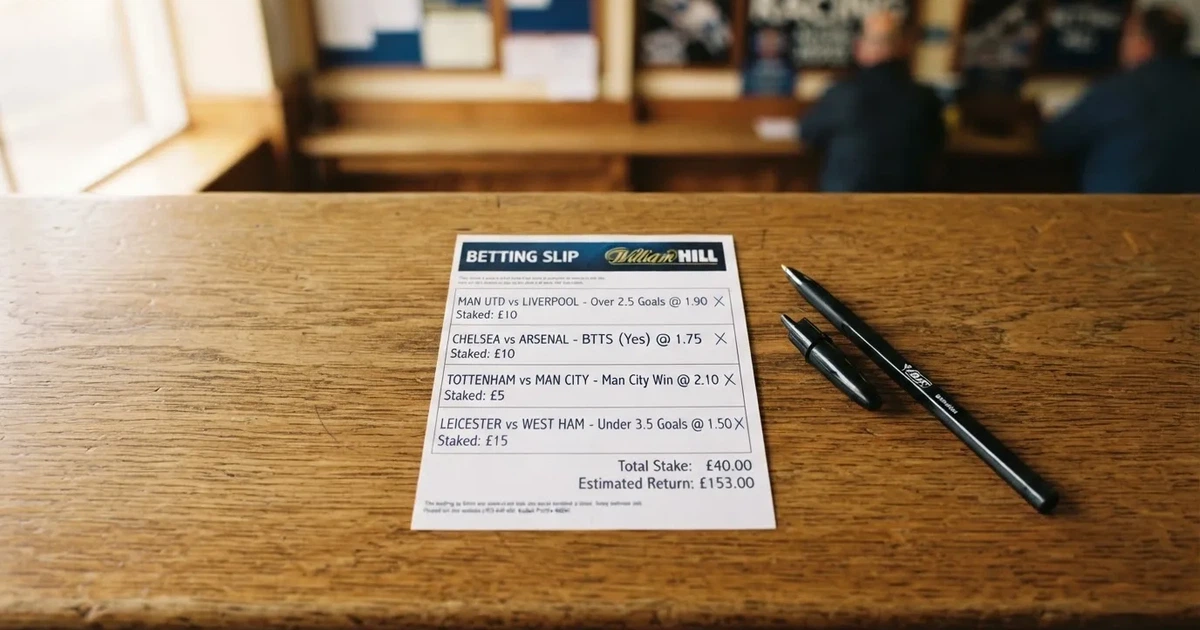
Currency and odds on this page are pounds sterling and decimal odds, the form British bookmakers publish on their sites. A guide to working return from stake and odds sits in the close. Data and licence checks stood as of 30 October 2026 and were verified against the Gambling Commission’s public register; re-check on the day you bet.
What a Bet Builder Actually Is
A bet builder takes two or more selections from one event and prices them together as a single wager. The result is odds higher than any leg on its own, because the bookmaker multiplies the prices through. A four-fold from one match at decimal prices of 1.80, 2.10, 1.95 and 2.40 returns roughly 16.8 to 1 — the sort of price a single shot never reaches.

The mechanic is the easy half. The harder half is the constraint: every leg has to come from the same event. Cross-event accumulators are different products, settled separately and almost always carrying their own promotional treatment. A bet builder locks the punter into one match, one race, one fight. The pick set is also narrower than a puntershop’s full card: only certain markets are eligible, and the build tool itself decides which. Add a player market and the match-result market in some shops, and the build will refuse to price it. Sky Bet publishes the rule plainly: contradictory selections inside one BuildABet cannot be priced, with the worked example of a team winning 2-0 alongside over 2.5 goals.
How the legs combine
Each leg carries its own price. The combined price the bettor sees on the slip is the product of the legs. Decimal odds make the maths portable: 2.00 × 3.50 × 1.90 = 13.30, the combined price for a three-leg same-event bet, before the bookmaker trims it. That trimming is where the bookmaker earns its margin on the multi — built into every leg individually, then compounded across the whole wager.

What the bookmaker’s margin does to a multi
A bookmaker’s margin is the slice of every pound staked that the firm keeps on average, regardless of who wins. Two decimal prices of 1.90 on each side of a coin-toss market produce a payout share of about 95.0%, which leaves a margin close to 5.0%. Each leg of a multi carries its own margin; multiplication pushes them together. The same calculation works in reverse: a multi built from clean prices returns the punter slightly more than a chain of singles, because the single-bet margin only ever applies once per leg, while the multi leg already has its own margin baked in. What the punter pays for the convenience of one stake and one payout is the absence of any leg-level cash-out and the way bookmakers haircut void legs when only partial results have come in.
The cap on selections and the cap on the slip
Sky Bet publishes two concrete limits worth knowing across the trade: a single BuildABet carries up to ten selections, and a whole betslip can hold up to twenty selections split across several same-event bet builders. Other shops publish different ceilings. The slip-level cap is rarely the constraint for a single punter; the per-event cap is, because long-shot builds lose most of their real price by the eighth or ninth leg — marginal price gained against the compounding risk of one void.
What happens when a leg is void
If one leg is void, the rest keep running. A four-leg bet builder with one void selection settles on the remaining three at the price of those three legs alone. The stake does not return. That rule sits in the small print of most shops and is the difference between a small win and a frustrated punt on a player pulled from the starting eleven twenty minutes before kick-off.
Bonuses And Free Bets Wrapped Around The Builder
The incentive side of this market is loud and the substance behind it is thin. Operators push the bet builder by name on their free-bet and odds-boost pages: “use your free bet on a bet builder” is the canonical line. The actual terms are where the value lives or dies, and on this market the terms are usually a wrapper around a wagering requirement that has to be cleared before any winnings come out.
Free bets on the builder
A free bet credited as a stake-not-returned token is the standard packaging. The token goes onto the builder slip, the bet is struck, and if it wins the punter receives only the profit above the token. A £10 free bet at a combined price of 10.00 returns £90 in profit if it wins and £0 if it does not. Punters who treat the free bet as cash and stake it at 1.20 are paying for the privilege of losing it. The reasonable use is exactly the inverse: long enough shots that the odds-on-leg dilution does not flatten the token.
The wagering multiplier the rule introduces
A £10 bonus carries a turnover requirement, expressed as a multiple of the bonus amount. The cap in force in Great Britain since 19 January 2026 is 10x — a £10 bonus asks for £100 of qualifying bets before the winnings become withdrawable. That ceiling was the rule that ended forty-times-and-fifty-times bonus structures on the licensed side, and any bonus material still quoting such multiples dates from before the cap or refers to a non-GB offer. A 10x cap is the most the market legally shows.
What “boosted” really means
“Boosted odds” on a bet builder leg is a marketing line for a price the shop has decided to lift. The boost applies to the displayed price at the moment the boost is claimed; the boosted settlement does not extend to any other combination, including other builder legs added later in the same slip. A 20% odds boost on a player-to-score leg runs only on that single leg, and only at the boosted price the slip recorded. Read it as a one-shot sweetener, not as a permission to construct anything with it.
Mixed-product offers and why they vanished
Free spins attached to a £10 football bet — the kind of bundle that used to be the standard welcome offer — is now a banned construction under the rules that took effect on 19 January 2026. A promotion asking the punter to gamble across two or more product types, such as betting and slots, is no longer offerable by a GB-licensed shop. The bonus that survives is single-product: a betting bonus for betting, a casino bonus for casino, never a stitched-together bundle.
Mobile Apps And The Touchscreen Build
A bet builder is a touchscreen product. Most punters build them on a phone rather than in a desktop browser, because the build flow is a tap-tap-confirm affair that benefits from a larger slip area and a real-time combined price. The trade-off shows up in the apps themselves: each house app handles the build flow slightly differently, and the differences matter for a punter who builds multi-leg wagers often.
Where the apps diverge
bet365 sits at the centre of the in-play builder experience: Bet Builder+ covers markets from one event into a single bet, both pre-match and in-play, with the leg-discovery built into a single carousel rather than a nested menu. William Hill’s app offers the standard football builder across most top-flight matches, with cash out attached to most builder slips. Betway’s app merges the builder into its main coupon; the build happens inside the match page rather than via a dedicated tab. 10bet, Spreadex, Betboro, Octobet, BetTom, Fitzwilliam Sports and Lottoland round out the comparison set with their own build-flow quirks, mostly differing in which markets they surface first and how the live price recalculates between legs.
When the browser is the better tool
Apps are not the only building surface. Browser-based bet builders sit on most of the featured operators’ desktop sites and offer the same markets in a wider view. The trade-off the punter accepts is friction: most browser flows ask for a login before the builder is saved, whereas apps hold credentials and pull the slip straight to the betting screen. The punter building one builder a week is fine on a browser; the punter building several slips an hour is faster on an app.
Push notifications and price movements
Apps push. Each push is a price alert or an offer alert, and the offer alerts are the part the punter should read carefully — a boosted price advertised as a push is often restricted to a small stake, a short window or a single sport. Betway’s £40 in free bet tokens, credited as four £10 tokens on settlement of a first qualifying bet of at least £10 at minimum odds of 2.0 with a seven-day expiry, is the kind of welcome offer where the small print reads as a checklist.
Live Betting And Cash Out On The Builder Slip
In-play betting and bet builder used to be separate products. They are no longer: most of the featured shops now offer a bet builder that can be struck mid-match, with cash out attached to the builder slip in many cases. That combination is the one punters actually used to ask for, and it is now the standard.
Building in-play
In-play bet builder pricing recalculates with the match state. A 1-0 lead shrinks the price on the favourite winning, widens the price on the draw, and reshapes the player markets depending on minutes played. The build slip recomputes the combined price every time the state changes, which means a single leg added late in the match can move the overall price by several ticks before the punter confirms. That is part of why experienced in-play builders keep their slips short — three or four legs at most — and avoid the temptation to chase a drifting combined price by adding another leg to compensate.
Cash out the builder
Cash out on a builder settles the bet before the final whistle, at a price the shop itself quotes. The price reflects the current leg-level state, the bookmaker’s live margin and a haircut the shop applies for taking the bet back early. A four-leg builder with one leg already settled as a winner and three legs still running will show a cash-out value lower than the expected remaining fair value, because the shop is pricing in its own uncertainty about the rest of the bet. bet365 describes its in-play builder along these lines; William Hill and Betway publish cash-out values that follow the same mechanic without rebranding it.
Where the punter gets burned
The cash-out value is a take-it-or-leave-it figure, and the figure the shop shows is the figure that pays. There is no negotiation. The point at which cash out begins to cost the punter rather than save them is roughly the one-third mark of the cash-out-able period — after that, the haircut is bigger than the leg-level variance the cash-out is supposed to cover. The reasonable use is to take cash-out values when one leg is at genuine risk and let the rest run.
Tips, Predictions And The Trouble With Both
The clusters around bet builder search terms include “tips” and “predictions” with surprising density. The honest reading is that there is no tips market specific to the bet builder — every tipster who recommends a same-event multi is recommending a set of single selections and bundling them. The bundling adds nothing analytical; the picks are the work.
Where a tip adds value
A tip adds value when the individual selections are well-priced on their own legs. A “bet builder tip” at combined odds of 25.0 is uninteresting if each leg is already at its maximum price. The reasonable interpretation of a bet builder tip is three or four single bets at fair prices, bundled into one wager because the punter wants one stake and one payout.
What the punter builds when there is no tip
Reasonable builders work from a small card of markets they read themselves: a match result, a total-goals line, a player-to-score and a corners handicap. Each leg is priced at a level the punter can defend from the form book. The combined price is then what it is. The bonus from bundling is the single-slip convenience; the risk is the all-or-nothing outcome that no individual leg carries.
Strategy is book selection, not bet selection
Most of the strategic work on a bet builder happens before the match. The punter picks a shop whose builder prices are clean, whose void rules are fair and whose cash out does not haircut too steeply. The same four legs at the same combined price cost different amounts across the shops in this comparison, depending on how each bookmaker trims the build. Reading the small print is half the work.
Bet Types, Odds And The Anatomy Of The Slip
The bet builder sits inside a wider family of same-event multiples. BTTS — both teams to score — is the canonical simplest case: a single yes/no market on whether each side scores. Same-game multis extend that idea to four, six or ten legs in one wager. Horse racing’s version is racing bet builder, with selections from one race combined into a single bet the same way.
The maths of payout and margin
A winning single at decimal odds of 2.50 with a £10 stake returns £25. The punter’s net profit is the £15 above the stake. The same arithmetic on a builder with combined odds of 12.00 returns £120 on a £10 stake, of which £110 is profit. The calculation is the same: stake × odds for the return, stake × (odds − 1) for the profit.
A bookmaker’s margin is what the firm keeps on every unit staked, on average. On a clean market with decimal prices of 1.90 and 1.90 on each side, the implied probabilities sum to 105.26%; the overround is 5.26% and the margin is about 5.0%. Working the payout share as 1 ÷ (1 ÷ 1.90 + 1 ÷ 1.90) gives about 95.0%, leaving a margin of around 5.0% on a market built this cleanly. Real markets on football are not built this cleanly: each leg carries a different margin, totals and handicaps carry wider margins than match results, and a builder built from typical match-result and totals legs ends up with an overall take somewhere in the band of roughly 7% to 12% depending on how each shop trims each leg. The exact figure depends on the shop, the event and the leg set; the band is what a punter should treat as a fair working estimate.
What that margin looks like on a builder
A four-leg builder built from clean individual margins carries those margins compounded through. Each leg’s margin is small on its own — single-digit percentage points on a typical match-result line — but the product of four such legs pushes the overall take higher. The punter accepts the compounding because bundling carries the convenience of one stake and the option of cash-out. The cost of that convenience, in margin terms, is real and should be priced in. On an illustrative two-way market at decimal odds of 1.90 and 1.90 the payout share is about 95.0% and the margin sits around 5.0%, and on a four-leg builder built from typical match-result and totals legs the overall take stretches into a band roughly between 7% and 12% — a range, not one figure, because each bookmaker trims its legs differently.
Odds format and how to read each
British punters see fractional odds by default — 5/1, 11/4, evens — with odds-on prices shown as shorter fractions. Decimal odds show the full unit return including stake, so 5/1 converts to 6.00, 11/4 to 3.75 and evens to 2.00. This page uses decimal odds throughout, because the multiplication logic of a builder is cleaner in decimals and the small-tick prices on each leg are easier to read.
What each-way means on a builder
Each-way bets split into two equal stakes: one for the win, one for a place. The stake doubles. Each-way is most useful on horse racing, where place terms vary by race type and number of runners; on a football builder the each-way structure is irrelevant because the markets are settled on a single binary outcome. Punters who add each-way on a builder slip do so out of habit rather than logic, and the doubled stake is a real cost the leg pricing does not absorb.
Ten Bet Builder Sites, Ranked And Judged
| Brand | Licence & Holder | Key Features |
|---|---|---|
| 10bet | 043173 (Blue Star Planet) | Cash out, live streaming |
| BetTom | 064959 (Bet Tom Limited) | Builder integrated in match page |
| bet365 | 055148 (Hillside (UK Sports)) | Bet Builder+, Super Boosts |
| Spreadex | 008835 (Spreadex Limited) | Fixed-odds and spread betting |
| Betway | 039372 (Betway Limited) | Integrated builder coupon |
| Betboro | 044181 (Webmedia Development) | In-play, cash-out |
| Octobet | 062545 (Octopus Game) | BOG on racing |
| William Hill | 039225 (WHG (International)) | Cash-out, BOG |
| Fitzwilliam | 048760 (SBKI Limited) | Average market pricing |
| Lottoland | 038991 (EU Lotto Limited) | Multi-product builder |
Ten bookmakers run a Gambling Commission remote licence for Great Britain and offer a bet builder or a same-event multi on their sportsbook. They are not the only licensed shops with the product — the Commission’s register is much longer — but they are the set this comparison is built around. The order below is editorial and weighted towards clarity of pricing, fairness of void rules and breadth of eligible markets, then to the welcome offer and the in-play build.
10bet
10bet runs a Gambling Commission remote licence under account 43173 through Blue Star Planet Limited. The sportsbook covers football, tennis and horse racing, with cash out, bet builder and live streaming all listed as features on the GB App Store listing. The welcome offer mirrors the bet-builder product line itself: a football-heavy book with a builder that pulls from the standard match, totals and player markets. Eligibility on cross-market picks — combining a result with a player prop — is the natural fit of the product; the gaps are the smaller leagues, where eligible legs are thinner than the bigger ones.
The judgement: a clean mid-market book for a punter who wants a builder with cash out and live streaming and does not need the deepest niche pricing. The mid-tier offer covers the majority case; the long tail of the betting card is where 10bet thins out.
BetTom
BetTom is operated by Bet Tom Limited under Commission account 64959. The sports welcome offer is 50% back as a free bet up to £50, with a matching 50% back up to £50 as free slot funds for casino play. The split shape is unusual among the set: a percentage-back offer on the betting side rather than the matched-deposit structure most shops default to. The builder sits behind the same login, so a punter who backs football and plays slots gets the bundle — which is also the structure that the 19 January 2026 rules increasingly squeeze.
The judgement: a punt on BetTom makes sense when the punter wants both the betting and the casino sides covered by one welcome. For a builder-only punter, the betting half is the relevant figure and the slot funds are dead weight.
bet365
bet365 runs under Hillside (UK Sports) ENC, Commission account 55148. Bet Builder+ is the product: same-event markets from one match into a single bet, available pre-match and in-play, with Super Boosts and Winnings Boosts applied to bet builders and selected singles alongside daily Bet Boosts. The build flow is the most polished of the set, because the longer bet365 has been refining the product than most of its rivals.
The judgement: the highest-priority book for a punt on a bet builder, both pre-match and in-play, with the cleanest combined-price recalculation and the broadest eligible-market coverage on the major sports. Cost: the welcome offer is modest against the headline prices; the volume of legs the publisher holds is the real prize, not the bonus.
Spreadex
Spreadex runs under Commission account 8835 through Spreadex Limited and is the only operator on the set that is also regulated by the Financial Conduct Authority for spread betting. The fixed-odds side carries its own remote general betting standard licence, and the spread-betting side sits under FCA rules. The new-customer offer is £60 in free bets for a £10 fixed-odds bet, with the free bets usable across fixed odds and spread betting, and the qualifying bet must be struck within 28 days of opening the account. The product risk extends beyond ordinary betting — fixed-odds losses are capped at stake, spread-betting losses can exceed the deposit — so the platform only suits a punter who reads both sides carefully.
The judgement: useful if the punter wants spread-betting access under FCA oversight in addition to fixed-odds betting. Less useful as a builder-only shop, and the dual-regulator structure makes the terms page worth a slower read than average.
Betway
Betway runs under Commission account 39372 through Betway Limited. The welcome offer is £40 in free bet tokens, four £10 instalments, credited on settlement of a first bet of at least £10 at minimum odds of 2.0, with a seven-day token expiry and debit-card deposits only. The builder is integrated into the match page rather than sitting on a dedicated tab, which suits the punter who builds one slip per fixture and less so the punter who builds several across an afternoon.
The judgement: a competent mid-tier book with a builder that does what the marketing says. The qualifying-bet minimum price and the seven-day expiry are the operational parameters the punter has to clear before any of the £40 in tokens converts to withdrawable cash.
Betboro
Betboro runs under Commission account 44181 through Webmedia Development N.V. The sportsbook carries in-play markets, cash-out on football, racing and tennis, boosted odds on selected singles from £10 stakes and standard safer-gambling tooling — deposit limits, reality checks and self-exclusion. The builder sits on the main coupon rather than a standalone tab. Eligible markets on smaller leagues are narrower than the bigger shops.
The judgement: a fair option for the punter who wants both pre-match and in-play on a smaller-card sportsbook, with the builder useful for the headline leagues and less rich elsewhere.
Octobet
Octobet runs under Commission account 62545 through Octopus Game Limited. Best Odds Guaranteed applies on UK and Irish horse racing, up to £150 per customer per race — a tighter cap than William Hill’s open-ended BOG, but predictable for the punter who plans single-race staking around the cap. The builder side covers football primarily, with the racing builder offered as a separate product tied to single-race BOG.
The judgement: a sound racing-focused book with a narrower BOG cap that may bite on bigger-stake punters. Football builder is functional but not the focal point.
William Hill
William Hill runs under WHG (International) Limited, Commission account 39225. Best Odds Guaranteed applies on UK and Irish horse racing from 8 AM on the day of the race, on single and multiple bets, but not on ante-post, tote or pari-mutuel wagers. The football bet builder is mature, with cash-out on most builder slips and void rules published openly. The bonus side has shifted towards low-wagering welcome structures under the 19 January 2026 cap.
The judgement: a long-established book with clean BOG and a builder that does what the marketing says. The shop is the safer choice for a punter who wants stability over the long term rather than headline-price freshness.
Fitzwilliam Sports
Fitzwilliam Sports runs under SBKI Limited, Commission account 48760. Prices are based on Oddschecker’s average price for each selection, and Apple and Google mobile apps are available. The pricing policy is the published point of difference: averaging the market rather than pricing up against it. Builder eligibility follows the average-priced feed, which means the leg set is broader than a typical small-shop builder because the publisher is leaning on the wider market rather than its own traders.
The judgement: a useful fit for a punter who wants legs at average market price rather than sharper or softer, and who is comfortable with the smaller-shop feel. The wider average-pricing policy trades a slice of edge for a wider eligible set.
Lottoland
Lottoland runs under EU Lotto Limited, Commission account 38991. The platform combines casino, lottery betting, sports betting and scratchcards. The builder is part of the sportsbook, with legs drawn from the standard match and totals markets on football. The wider product mix raises the offer-bundle question the 19 January 2026 rules now outlaw: bundles are gone, so any bundled welcome is structured as separate single-product bonuses.
The judgement: sensible for a punter who already plays lottery and slots and wants a builder added without opening a separate sports account. Less compelling as a builder-only destination.
How Licensing And Oversight Work In Great Britain
The Gambling Commission licenses the entire online commercial betting market in Great Britain under the Gambling Act 2005. Northern Ireland sits outside the Act under its own older law — so a GB licence does not extend there. The licence categories the Commission issues are remote general betting standard (real events), remote general betting standard (virtual events), remote general betting limited, remote pool betting and remote betting intermediary (the last one is the betting-exchange licence). Every brand reviewed above holds a remote general betting standard (real events) licence.
Why the licence register is the test
The Commission’s public register, searchable by business name, trading name, domain or account number, is the only authoritative check on whether a brand holds a licence. The set above has each brand registered against the named licensee — sometimes several brands under one licensee — and a punter can repeat the check on the register before depositing. The register is a live document and the day a punter bets is the right day to re-check.
What a GB licence requires of an operator
Identity is verified before the first deposit — name, address and date of birth, including for free-bet and bonus use — so anonymous play is not available at a licensed shop. A financial vulnerability check fires when a customer’s net deposits cross £150 in a rolling 30 days; it is a public-record check rather than an income check, and the result shapes the operator’s view of the customer’s position. GAMSTOP is a mandatory licence condition: a self-excluded punter cannot bet online at a licensed shop, with exclusion periods of six months, one year, five years or five years with auto-renewal — and after the minimum period the exclusion holds for a further seven years unless the punter asks GAMSTOP to remove it.
Advertising and promotional rules
Bonus wagering requirements are capped at 10x since 19 January 2026 — so a £10 bonus asks for no more than £100 of qualifying bets before the winnings are withdrawable. Mixed-product offers are banned in the same rule cycle, so an offer asking the punter to gamble on football to claim free spins is no longer offerable by a GB-licensed shop. TV advertising for betting is constrained around live sport, and CAP/BCAP codes govern who may appear in marketing.
The offshore alternative
A GB licence is compulsory for operators serving customers in Great Britain; an offshore operator runs on its own house rules and on its own jurisdiction’s regulator. The honest read on an offshore site is that the consumer protections laid out in this section — identity checks, deposit limits, GAMSTOP coverage, the 10x bonus cap, the £150 vulnerability check, an approved dispute-resolution route — do not apply. A punter who chooses an offshore shop accepts the absence as part of the choice, not as an oversight.
Safer Gambling And The Tools Available
The safer-gambling architecture in Great Britain is layered: national self-exclusion, mandated financial-vulnerability screening, mandatory deposit-limit tooling, the Commission’s enforcement on misleading marketing and a network of help services. None of these layers replaces the punter’s own judgment; they all reduce the harm when judgment slips.
Self-exclusion
GAMSTOP excludes the punter from every GB-licensed online operator at once, with one registration. The exclusion period starts at six months and runs to five years; the five-year option can be set to renew automatically. After the minimum period, the exclusion holds for a further seven years unless the punter removes it through GAMSTOP. A bettor excluded through GAMSTOP cannot open a new account at any licensed online shop during the exclusion period, including by way of a side door.
Deposit limits and reality checks
Deposit limits are operator-side tools every licensed shop has to make available. The customer sets a gross deposit ceiling — daily, weekly or monthly — and the operator enforces it. Reality checks are pop-up reminders at intervals the customer sets: an hour, two hours, three. Both are intended as friction the customer can dial up at will.
Help and advice
GamCare runs the National Gambling Helpline; GambleAware funds treatment and education; the NHS runs gambling clinics in most major cities; Gamblers Anonymous runs peer-led meetings. The reasonable action when a punter notices the build is already happening is to call the helpline before opening another account.
When to step away
The clearest signal is the one the punter notices late: the bet is being chased, not struck; the deposit limit is being raised, not held; the self-exclusion is being reconsidered, not respected. The reasonable action is to use GAMSTOP rather than to white-knuckle through another week, and to call the helpline on the same day.
Working The Numbers: Return, Margin And What The Punter Actually Takes Home
The arithmetic behind this market has three pieces, and the punter benefits from knowing all three.
The single-bet return
A winning single at decimal odds of 2.50 with a £10 stake returns £25, of which £15 is profit above the stake. The same arithmetic on a four-leg builder with combined odds of 12.0 returns £120 on a £10 stake — £110 in profit. The math scales linearly: stake × odds is the return, stake × (odds − 1) is the profit. A combination bet’s odds are the product of the leg prices, so a four-leg builder at 2.00, 3.50, 1.90 and 1.70 lands at a combined 22.61 to 1, the figure the slip shows before confirmation.
The bookmaker’s margin
The bookmaker’s margin is the slice of every pound staked that the firm keeps on average. A clean market priced at 1.90 and 1.90 carries implied probabilities of 52.63% on each side, summing to 105.26%; the overround is 5.26% and the margin is about 5.0%. Working the payout share as 1 ÷ (1 ÷ 1.90 + 1 ÷ 1.90) gives about 95.0%, leaving a margin of around 5.0% on a market built this cleanly. Real markets on football are not built this cleanly: each leg carries a different margin, totals and handicaps carry wider margins than match results, and a builder built from typical match-result and totals legs ends up with an overall take somewhere in the band of roughly 7% to 12% depending on how each shop trims each leg. The exact figure depends on the shop, the event and the leg set; the band is what a punter should treat as a fair working estimate.
What “free” really costs
A free bet token carries stake-not-returned treatment unless the operator publishes otherwise. A £10 free bet at combined odds of 10.0 returns £90 in profit if it wins. The expected value of the free bet, accounting for the bookmaker’s margin on the betting market and the probability of winning, depends on the leg prices and is lower than the headline number. The cleared-bonus value once the wagering requirement is met depends on the same arithmetic. A punter who treats the free bet as cash and stakes it short is paying for the privilege of losing it; a punter who stakes the token at the longest reasonable combined price extracts the value.
Verdict On The Ten
The set is broader than the headline. bet365 is the natural pick for a punter who wants the most polished build flow and the deepest in-play coverage. William Hill is the safer pick for a punter who wants a long-established book with mature terms. 10bet fits the punter who wants cash out and live streaming across a typical football slate. Betway is the balanced mid-tier option. Spreadex is the right pick for a punter who also wants FCA-regulated spread betting under the same roof. Betboro, Octobet, BetTom, Fitzwilliam Sports and Lottoland each fit a narrower corner of the market.
What unifies the set is the licence: every brand above holds a Gambling Commission remote licence and is registered on the public register. The punter can re-check that day, before depositing, in under a minute. What separates them is the build experience, the eligible-market range, the welcome offer and how aggressively each shop trims the combined price. The price is the real arbiter: a 5.26% margin on a clean two-way market is the theoretical floor, and every percentage point above it is what the shop keeps of the punter’s stake, on average, over many bets.
The honest summary is that bet builder products on this set look similar on a landing page and feel different in use. The punter’s job is to pick one and learn its small print, then to read the relevant section of the help centre before betting. A wager built on a market the punter understands, at prices the punter can defend from the form book, costs the bookmaker margin the punter can never eliminate and avoids the bonus structures the punter cannot clear. Every other variable — combined price, void rule, cash-out haircut — is the small print worth a slow read.
Frequently Asked Questions
What is a bet builder?
A bet builder combines several selections from the same event — usually a single football match — into one wager. The combined price is the product of the leg prices, the stake is struck once and the bet settles on every leg. A four-leg builder with one void leg settles on the other three legs at the price of those three alone.
What is the difference between a bet builder and an accumulator?
An accumulator combines selections from different events into one wager. A bet builder combines selections from one event. Single builders carry fewer price legs because the eligible markets are narrower, but each leg is from one match and the slip is settled by one event rather than several.
What is a horse racing bet builder?
A horse racing bet builder combines several picks from one race — typically a horse to win, a horse to place and a horse-to-beat-head match-up — into a single wager. The same-event rule applies: every leg has to come from the same race, and the combined price is the product of the leg prices.
How can a punter check that a bookmaker holds a Gambling Commission licence?
The Commission’s public register is searchable by business name, trading name, domain or account number. The ten brands above have each been cross-checked, and the registration appears against the named licensee. The register is a live document and the day a punter bets is the right day to look again.
How is the return on a bet worked out from the stake and odds?
A decimal price multiplied by the stake gives the full return including stake. Decimal odds of 2.50 on a £10 stake return £25, of which £15 is profit. A combination bet’s odds are the product of the leg prices, so a three-leg builder at 2.00, 3.50 and 1.90 lands at a combined 13.30 to 1 — £133 returned on a £10 stake, of which £123 is profit.
What is the bookmaker’s margin and how can it be seen in the odds?
A bookmaker’s margin is the share of every pound staked that the firm keeps on average. On a market priced at 1.90 and 1.90 on each side, the implied probabilities sum to 105.26%, leaving a margin of about 5.0%. The punter pays the margin on every bet struck, regardless of who wins, and the margin compounds across the legs of a same-event multi.
Bet types & in-play – signupbetsguide.com
Content created by the «signupbetsguide.com» team
