
Curling Betting Tips, Markets and the Value Question
 Available in US
The price the bookmaker publishes is not the price of the event. It is the price of the event minus a margin the bookmaker keeps on every market, every selection, every combination. A bettor who reads prices as forecasts loses to that margin over time. A bettor who reads prices as forecasts adjusted for the margin sometimes finds a number large enough to bet on. That second activity — pricing the price — is what curling betting tips really ask for under the hood, and it is what this guide is built around.

Curling sits in an unusual spot in the betting calendar. A four-player team (two in doubles) throws eight stones per end, and each team plays a long sequence of ends before the match ends. Most games run eight or ten ends, international contests ten. After all 16 stones of an end are thrown, the team whose stone sits closest to the button scores one for every stone it has placed closer than the opposition’s nearest. Tied games go to extra ends. Tied extra ends keep going until somebody scores. That structure shapes the markets bookmakers offer and the prices they put on them. The same bookkeeping also explains why a curling match is rarely priced the way a Premier League fixture is — there are fewer games per week, fewer comparable opponents, and fewer data points a model can lean on. Each of those points widens the margin.
This guide covers the structure and cost of curling betting in Great Britain. It runs through how a curling match works on the sheet, the tournaments the markets turn on, the kinds of bets a bookmaker offers on a curling event, the legal frame inside which any licensed offer sits, the responsible-gambling framework that frame sets up, the ten operators reviewed in this guide, and the small arithmetic of price and margin that decides whether a price is worth taking.
A snapshot note. The data on this page was checked on 30 October 2026 against the Gambling Commission’s public register and the operators’ own terms. Bonus and offer figures are stated from the operators’ own app store listings and terms pages; licence numbers are stated from the register. Curling is a niche in the betting calendar and many bookmakers list only the season’s bigger events, so several markets researched for other sports are not carried here.
The sport on the sheet: how a curling match decides the markets
Curling is built from small repeated units. An end lasts roughly fifteen minutes of play and a full international game runs ten ends, with each team throwing eight stones over the course of an end. Stones weigh between 17.24 and 19.96 kilograms under World Curling Federation rules. Curling became an Olympic medal sport at the 1998 Winter Olympics, and mixed doubles joined the Olympic programme in 2018 — the same two-decade window during which online sports betting moved from niche to mainstream. Olympic gold, world championship gold and the Grand Slam of Curling tour give bookmakers their season’s recurring fixtures. Outside those landmarks, market depth thins quickly.

A few mechanics matter for betting.
The hammer is the last stone of an end, and it usually decides the end. The team that did not score in the previous end takes the hammer; if an end is blanked — nobody scores because every stone was knocked out of the house — the hammer carries over to the same team next end. A team with the hammer in the last end, level on the scoreboard, has an open path to winning by one or stealing a single by a clever draw. Bookmakers price that advantage into their match odds. A bettor who takes a side without checking which team holds the hammer in the final end reads the price upside down.
Scoring is unit, not aggregate. Only the team with the closest stone scores, and only its stones inside the house count. A 5–3 end is possible, but it has to be earned by clearing the house and counting carefully. The implication for in-play betting: a curling match can swing on a single stone, and the margin on a live market tends to be wider than the margin on the same fixture priced pre-game. The same gap between market efficiency and bookmaker margin that haunts pre-game pricing widens substantially once play starts.
Extra ends are the overtime. Tied games go to extra ends until somebody scores. A draw where pre-match odds go 1.80 / 1.80 over a level match have already priced overtime: a tied regulation is more likely than the prices suggest, because the bookmaker has to keep its margin steady when regulation ends level. Reading that means reading the price, not the headline.
Curling markets lag behind football markets in data coverage. Live statistics feeds, shot-tracking overlays and model-driven projections are common for football and tennis. They are scarce for curling. The result is that pre-game curling markets behave more like outright markets on smaller sports: a price can hold for hours because a sharper bet has not come in to move it. That does not mean the price is “wrong” in an absolute sense. It means the price is inefficient in the technical sense, and the gap between a researcher’s price and the bookmaker’s price may sit on either side of zero.
These four points explain how a curling match works and what a curling market is asked to predict. The next section covers the season’s recurring tournaments.
Tournaments, fixtures and where the calendar turns
The curling calendar has three kinds of event, and each one feeds a different corner of the market.
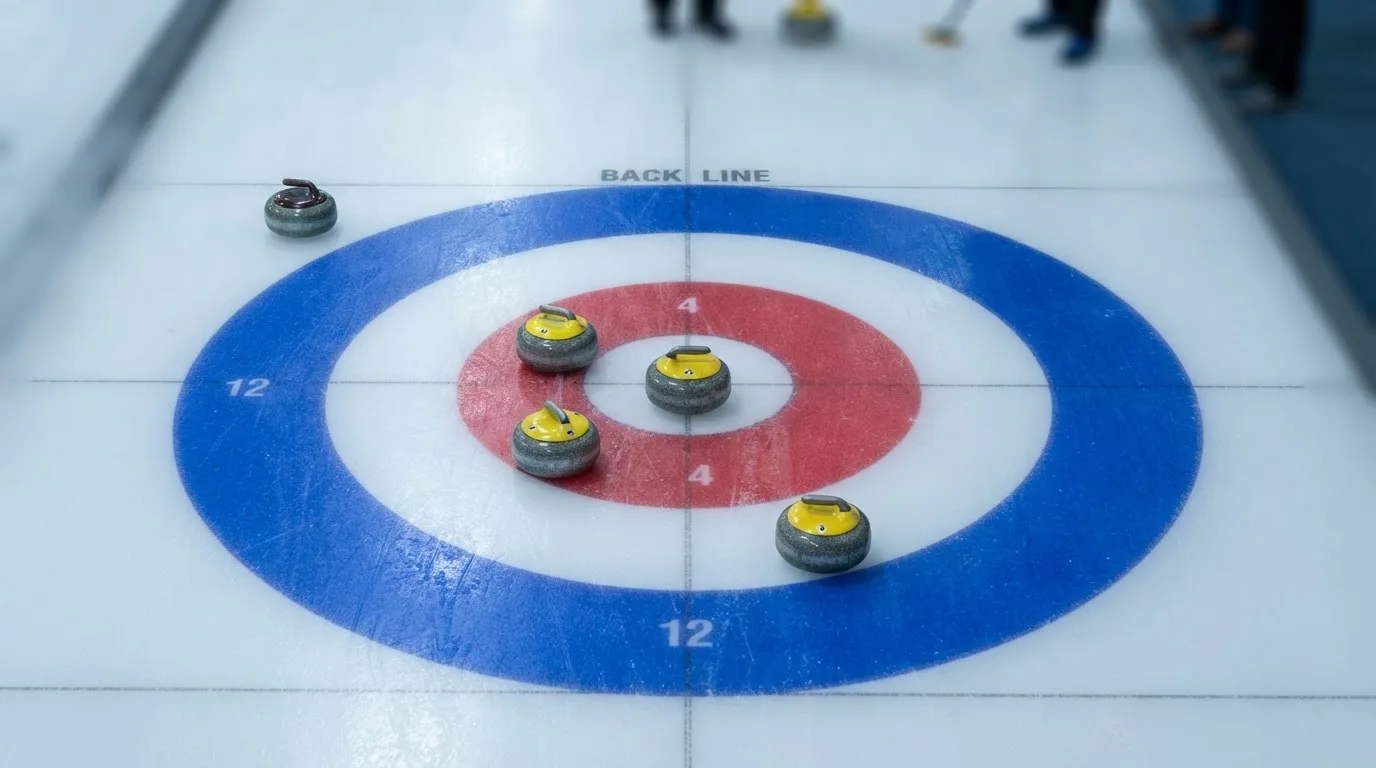
Olympic Games, Olympic qualifiers and Olympic Trials. Curling is an official Olympic medal sport, and the Winter Olympics pull the largest viewership of the season. The men’s, women’s and mixed doubles tournaments together cover a fortnight of play. Qualifying events (the Olympic Qualification tournaments, the World Qualification path) take place in the run-up and pull smaller fields. National Trials decide which team represents a country; GB-licensed bookmakers price these as outright markets and rarely as match markets.
World Curling Championships. Held annually in both the men’s and women’s disciplines, with mixed doubles contested in its own World Championship from 2008 onwards. These are the year-on-year measure of team strength and the data source on which most models price the Olympic cycle.
Continental and Grand Slam events. The Grand Slam of Curling tour runs four events a year (the Tour Championship, the National, the Masters and the Elite 10, alongside the more recent Princess Auto Players’ Championship). They are invite-only, and the entry list means a small number of teams dominate the odds. Continental championships (European, Pan-Continental, Asia-Pacific) round out the calendar.
Domestic and club curling. A much wider net of leagues and weekend bonspiels. Outside North America, these markets are thinly offered online because turnover is small and bookmakers cannot reliably balance the books across both sides of a price. Where they do offer, the price is wide. A bettor who only ever plays domestic curling at a small bookmaker is paying an inflated margin and should know it.
The point of this calendar is not to suggest a fixture. The point is that the in-season months (October to March roughly, with Olympic year playing through February) give the bookmaker a handful of fixtures worth offering; the off-season months force the price below a level where most bettors find it worth the friction. If the calendar reads empty, prices are an unreliable signal.
The next two layers come off the calendar: how a bookmaker actually puts a price on a curling match, and what the typical curling betting markets look like in practice.
Curling markets: what a bookmaker offers and how a price is built
Curling bookmakers offer a narrower menu than they offer on football or tennis, and that narrowness is itself information. A bookmaker who runs a curling event typically offers the following market types.
Match winner (moneyline). A two-way market picking which team wins the match. For a curling match under regular rules with no handicap, that is one of two outcomes. Some books go to a three-way market — regulation winner, regulation loser, draw (regulation ends tied) — but the draw rarely trades independently because extra ends are not part of regulation; the bookmaker in effect offers three prices on a two-event future. The prices are not independent and one is often a clear error.
Outright winner. A futures market on a tournament, selecting the team that lifts the trophy at the end. Prices run to four or five figures, with the favourites tightly grouped and the long tail priced in even heavier marks. Outright markets carry a margin that is typically larger than the margin on a single match — books do not balance books on these and instead charge a premium.
Handicap and spread. A bookmaker applies a stone-and-a-half or two-stone advantage to one side, lines that look more exotic than they are. The advantage maps loosely onto “the team with the hammer should win by X”, but the bookmaker’s margin still sits underneath.
Over/under on total ends played. Curling games usually run eight or ten ends; international competitive games are generally ten. Over/under on the number of ends played is offered where sufficient interest exists, typically with lines at 8.5 or 9.5 ends. Heavy hammer end with most stones cleared tends to force play towards 10; blanked ends early shorten games.
Correct score after regulation. What is the score at the end of ten ends if the game ends there, before extras? Offered only on the bigger fixtures, and the price carries margin rather than informational content.
Player markets. A small set of markets: leading scorer, stone accuracy, draw shot success rate. These are marginal and rarely priced tightly. Their value comes from the bookmaker offering them at all and pricing them less efficiently than the match odds.
In-play on the marker end by end. Where offered, live pricing reflects who holds the hammer and how many stones sit inside the house. The bookmaker’s live margin widens because the live data feed is thin.
What a bettor should look for is a price that reflects the probability of an outcome plus the book’s margin. The price is the sum, not the probability. The next section does the small arithmetic that lets you pull the probability out of the price.
Price, margin and the value of a price
A bookmaker’s price on each outcome has two parts: the true probability the outcome happens, and the margin the bookmaker keeps. The probability is what the bettor is trying to estimate; the margin is what the bookmaker charges for the service. A bet only has positive expected value if the bettor’s probability is more accurate than the bookmaker’s probability after the margin is removed.
The margin is calculated across all outcomes of one market and is typically small on mainstream markets (two to five per cent on football match odds, more on smaller markets) and large on niche markets (eight to fifteen per cent on curling outrights, less aggressively on match markets). To see why the size of the margin matters, take an illustrative two-way market priced at 1.90 and 1.90 in decimal — fractions would read 9/10 on each side. The implied probability of each outcome is 1 ÷ 1.90, which is roughly 52.6 per cent. With two outcomes each priced at 1.90, the implied probabilities sum to 105.3 per cent. The sum is what is called the overround, and the margin is the part above 100 per cent. So a 5.0 per cent margin is the gap, and the probability the bookmaker assigns to each outcome is in the neighbourhood of 50 per cent, not 52.6 per cent.
Mathematically: payout share = 1 ÷ (1/odds₁ + … + 1/oddsₙ), and margin = 1 − payout share. For a market priced exactly at 1.90 / 1.90, the payout share is 0.949 and the margin is 0.051, or around 5.0 per cent. If the same market is priced at 1.85 / 1.85, the implied probabilities sum to about 108.1 per cent and the margin is around 7.5 per cent. If priced 2.00 / 2.00, the margin falls towards 0 per cent and the price is unusually fair (and usually short-lived). The figure a bettor should look for is the margin, not the price in isolation.
That comparison is the point of the exercise. A bookmaker quoting the same match odds at 1.90 / 1.90 takes a 5.0 per cent margin; the same match at 2.00 / 2.00 takes no margin and may sit on the page for a few minutes until it is balanced. A bookmaker quoting the match at 1.85 / 1.85 takes 7.5 per cent. Each of these prices represents the same underlying match; the difference between them is what the bettor pays. Price shopping on curling matters far more than price shopping on football because curling markets are priced with thinner turnover, and the range between best and worst on the same fixture is wider than the range on a Premier League match.
A worked example shows why. If a bettor believes a team’s true chance of winning is 60 per cent, the bet is positive at any decimal odds above 1 ÷ 0.60, which is 1.67. At 1.90 the implied probability (52.6 per cent) is below the bettor’s own estimate (60 per cent), and the edge after margin removal is positive — the bet is “value”. At 1.55 the implied probability (64.5 per cent) exceeds the estimate, and the bet is negative after margin removal — there is no value to take. The 5.0 per cent margin of the 1.90 / 1.90 line versus the 3.0 per cent margin of an alternative bookmaker offering the same outcome at 1.95 changes the equation by 0.05 in payout share, which is a meaningful chunk of a single bet’s edge.
Curling markets in practice usually sit at margins between 5 and 10 per cent on the bigger match markets. Outrights sit higher, often well into double digits. A bettor’s edge has to clear the margin before the bettor wins anything; that is harder on curling than on football, and harder still on a curling outright than on a curling match. The “value bet” question becomes the margin question before it becomes the probability question.
This arithmetic is universal across bookmakers and exchanges. Where it gets a price of its own is in the offer made to a new customer, and the next section looks at what those offers tend to cost.
Offers, free bets and what they cost in real money
Licensed bookmakers in Great Britain offer a thick layer of welcome promotions, free bet clubs, acca insurance and similar. Each carries a wagering requirement or a condition on what can be won from the bonus balance. The Gambling Commission’s promotion rules in force since 19 January 2026 cap wagering requirements on bonuses at 10x — a £10 bonus at 50x wagering, which the rule prohibits, would have needed £500 of qualifying bets and is now off the table. Mixed-product promotions, offers that require gambling on two or more product types (betting, casino, bingo, lottery) in combination, are banned outright.
Most welcome offers on the operators reviewed here are stated from their terms as a free-bet bundle. A simple “bet £X, get £Y in free bets” offer pays £Y in free bets whose stake is not returned with a win. The free bet’s value on any one bet is its amount multiplied by (odds − 1) ÷ odds, then further multiplied by the payout share of the market the bettor places the free bet on. A £10 free bet placed at decimal odds of 3.00 on a market with a 95 per cent payout share is worth 10 × (2/3) × 0.95 = £6.33 in real expected money. Compare that with a cash bonus where the stake itself is returned: the £10 cash bonus at 3.00 on the same market is worth the full £20 stake × 0.95 = £19, less a 10x turnover requirement, and the comparison is between £10 of bonus and £6.33 of free bet.
Wagering is what determines whether any of this is reclaimable. An offer’s wagering requirement times the bonus amount is the required turnover. A £20 bonus with a 5x wagering requirement is £100 in qualifying bets. The number of bets depends on the stake per bet: £100 at £5 each is twenty bets; £100 at £10 each is ten. Only bets at or above the minimum price the offer names count towards turnover, and that minimum price is usually a fraction close to evens (1.50 in decimal; 1/2 in fractions).
The expected cost of clearing the offer is the required turnover times the margin of the market on which the qualifying bets are placed. At 5.0 per cent margin on a typical pre-match curling market, a £100 turnover costs the bettor an expected £5. That £5 is what the offer is paying for, and it is roughly the same as the free bet’s expected value once wagering is included. Offers whose expected value is comfortably above the expected cost are rare in curling because turnover is small; offers whose expected cost is comfortably above the expected value are common in any welcome bundle, and that is the shape of the deal bettors actually take.
It is also the reason the bonus cap was set where it was. A £10 bonus at 50x wagering (the kind of bundle the new 10x cap blocks) turns the cost back onto the bettor; under the cap, the most a £10 bonus can ask for in qualifying bets is £100, with the cost bounded accordingly. A bettor who reads the promotion as “free money” leaves out the margin. A bettor who reads it as “qualifying turnover times margin” sees the same offer for what it is.
Legal frame: Great Britain’s licensing regime for online betting
A bookmaker taking bets from customers in Great Britain — England, Scotland and Wales — needs a Gambling Commission licence irrespective of where it is based. The Gambling Act 2005 governs the licensing of the whole commercial market in Great Britain; Northern Ireland runs on older legislation and is not part of the 2005 Act. The Commission is a non-departmental public body sponsored by the Department for Culture, Media and Sport. Since the Gambling (Licensing and Advertising) Act 2014, an operator whose remote facilities are used in Great Britain must hold a Commission licence at the point of consumption. A Gibraltar, Curaçao or Maltese licence is not a substitute.
The Commission’s public register is the only test of who holds a licence. It can be searched by business name, trading name, domain or account number, and it lists the licence categories an operator holds under. The relevant category for sports betting is *remote general betting standard (real events)*, sometimes alongside *remote betting intermediary* for exchanges, *remote general betting standard (virtual events)* for virtual sports, *remote pool betting* for pool products, and *remote general betting limited* for limited-stake offers. Each category is a different licence, and a brand offering both sports betting and casino requires the relevant remote licences under the same licensee. Several brands can run under one licensee: Ladbrokes and Coral run under the same Entain group structure, Paddy Power and Betfair the same Flutter structure, and so on.
The licensing regime sets the framework for everything that follows. Identity verification before the first deposit is mandatory for online operators: name, address and date of birth are checked against public records, since 7 May 2019, before any deposit or bonus can be used. The minimum age is 18 and is enforced through that verification. No anonymous play is possible at a licensed site. Credit cards have been banned for gambling in Great Britain since 14 April 2020 (LCCP condition 6.1.2); debit cards and bank-based payments are not covered by that ban.
A separate safeguard is the financial vulnerability check, in force since 30 August 2024. When a customer’s deposits minus withdrawals exceed £150 in any rolling 30 days (since 28 February 2025), the operator must run a public-record check for markers of financial vulnerability (bankruptcy, county court judgments, similar). The check is not an income check and not a credit reference check. A second safeguard — financial risk assessments, sometimes called “affordability checks” in the press — is announced in a staged plan, with no start date established at the time of writing. Where an operator sets its own deposit limit (under RTS 12 of the Remote Technical Standards), it must offer a gross deposit limit on a fixed time frame; the first changes have applied since 31 October 2025, with a second phase postponed to 30 September 2026 and whether it is live not yet established.
Bonus terms sit under the Commission’s promotion rules. The wagering cap of 10x took effect on 19 January 2026 and the ban on mixed-product promotions took effect on the same date. Both are conditions of holding an operating licence, not separate statutes. The Commission does not licence advertising; marketing is run through the CAP Code (non-broadcast, enforced by the ASA) and the BCAP Code (broadcast, enforced by the ASA) alongside the LCCP. CAP Code section 16 sets the social-responsibility rules and limits who may appear in gambling advertising; “whistle-to-whistle” is an industry code rather than law, and restricts pre-9pm watershed TV advertising around live sporting events from five minutes before to five minutes after.
The only tax the player encounters on sports betting in Great Britain is none at the player level. Betting winnings are not taxed in the player’s hands (this is general information, not tax advice; a professional gambler should ask HMRC or an adviser). General Betting Duty is paid by the operator on gross profits, currently 15%. From 1 April 2027 a new remote betting rate of 25% applies within General Betting Duty for remote bets, with remote bets on UK horse racing, bets on self-service betting terminals in licensed premises, pool betting and in-person betting staying at 15%, per the Government’s 26 November 2025 policy paper. Until 1 April 2027 the remote rate stays at 15%, and whether operators pass duty on through odds is not established.
Offshore operators without a GB licence are a separate matter. Providing gambling facilities in Great Britain without the licence the Act requires is an offence under section 33 of the Gambling Act 2005, on summary conviction punishable by up to 51 weeks’ imprisonment, a fine up to level 5, or both (six months in Scotland). The offence is aimed at the operator, not the customer. The customer who plays at an unlicensed site loses the protections of the regime — no GAMSTOP coverage, no Commission complaints route, no approved dispute-resolution body, no British consumer redress if funds are withheld — and is not bound by the 10x bonus cap or by the £150 vulnerability check. That loss of protection is the meaningful difference, and any framing of offshore betting that calls it “still legal to use” misses the point.
The Commission’s enforcement tools are disruption, not blocking: cease-and-desist notices, search-engine referrals, registrar and host work, payment-provider referrals. Court-order DNS blocking powers have been given to, or are about to be given to, the Commission; whether they are currently in operation across UK ISPs is not established. None of this changes what a licensed operator is to a customer: a place where the terms are public, the licence number is on the register, the identity check has been run and the dispute routes are real.
Responsible gambling: the safeguards inside the regime
GAMSTOP is the national multi-operator online self-exclusion scheme in Great Britain and a mandatory licence condition for online operators since 31 March 2020. A bettor who registers with GAMSTOP cannot open a new account at any GB-licensed online operator while the exclusion is in place. The exclusion periods are six months, one year, five years, or five years with auto-renewal; after the minimum period the exclusion stays in place for a further seven years unless the customer asks GAMSTOP to remove it. GAMSTOP covers online sites and apps; betting shops use a separate service and are not in GAMSTOP.
Help is available outside the licensing regime. GamCare runs the National Gambling Helpline; GambleAware funds research, education and treatment; the NHS runs gambling clinics in several regions; Gamblers Anonymous runs peer-support meetings. These services are independent of any operator and any customer can contact them directly.
A few practical points. A bettor who feels they are chasing losses at a curling bookmaker has the same protections and the same risks as a bettor on any other sport — the safeguards do not differentiate by sport. A bettor who has registered with GAMSTOP and is still receiving marketing should escalate to the operator and to GAMSTOP because the licensing regime treats that as a compliance failure. A bettor whose deposit limit has not been set high enough should revisit it; a state-set default deposit ceiling is not established in the regime.
The responsible-gambling frame closes the legal section and sets up the operator review. Operators whose terms and practices sit inside this frame are the ones reviewed next.
Top 10 bookmakers reviewed for curling
The ten operators reviewed here all hold a current remote general betting standard (real events) licence, or a remote betting intermediary licence, with the Gambling Commission, and are listed on the Commission’s public register. The set is not a ranking and not a recommendation; each is described on its own terms, with the curling-relevant specifics stated from public sources. Where two brands run under the same licensee, only one is featured.
| Bookmaker | Licence number and licensee | What the operator’s own terms state on curling-relevant points |
|---|---|---|
| Kalooki Sportsbook | Gambling Commission account 57730 (licence 057730-R-333396-005); licensee Kalooki Sportsbook Limited | New-customer identification is run on first deposit; listed as a GAMSTOP member; primary markets are real-event sports |
| Octobet | Gambling Commission account 62545 (licence 062545-R-337248-006); licensee Octopus Game Limited | Sportsbook welcome offer states a free-bet bundle and an opt-in casino element for new customers |
| William Hill | Gambling Commission account 39225 (licence 039225-R-319373-015); licensee WHG (International) Limited | Best Odds Guaranteed applies to UK and Irish horse racing from 8 AM on race day, on singles and multiples; curling and other sports not included in that rule |
| Bet Ahoy | Gambling Commission account 100094 (licence 100094-R-341742-003); licensee Bet Ahoy Ltd | Welcome offer structure (free-bet bundle, split across bet types) stated from the operator’s app store listing |
| Betfred | Gambling Commission account 39544 (licence 039544-R-319290-010); licensee Petfre (Gibraltar) Limited | App publisher Done Brothers (Cash Betting) Ltd; sports catalogue covers a long list of sports; product mix is sports, casino and games |
| Matchbook | Gambling Commission account 39504 (licence 039504-R-319407-024); licensee Triplebet Limited | Betting exchange; bet builder, multiples, in-play and live streaming of horse racing and greyhounds are listed; market-by-market terms apply |
| Star Sports | Gambling Commission account 9177 (licence 009177-R-104555-019); licensee Star Racing Limited | Phone-led account opening is offered (a trader number is published); e-mail support listed alongside; in-app terms cited from the operator’s app store listing |
| BetUK | Gambling Commission account 39198 (licence 039198-R-319450-029); licensee LeoVegas Gaming PLC | Welcome offer states four £10 free bets split across football accumulators and multiples, valid for 7 days with opt-in |
| Tote | Gambling Commission account 54779 (licence 054779-R-331321-008); licensee TDCO Limited | Pool-betting heritage; in-app terms cited from the operator’s own channels |
| Midnite | Gambling Commission account 101839 (licence 101839-R-342850-001); licensee Midnite Limited | Welcome offer states a free-bet bundle plus free spins on sports sign-up; acca builder, in-play events, popular accas and price boosts are listed on the sportsbook |
Licence numbers are taken from the Gambling Commission’s public register. The pull-quote column carries what each operator’s own terms or app store listing states about the specific items relevant to this review — no extra is layered on. Where research did not return a value for a brand-and-subject pair, the cell carries the no-data marker and the row stands on its other evidence.
Kalooki Sportsbook — small operator, niche focus, GAMSTOP member
Kalooki Sportsbook is operated by Kalooki Sports Book Ltd, company number 12938274, under Gambling Commission account 57730, and lists itself as a GAMSTOP member. Identification is run on first deposit under the Commission’s LCCP, so an account can be opened only after name, address and date of birth have been checked against public records. The licence category is remote general betting standard (real events), so any curling market offered sits under real-event rules.
The narrower licence footprint and the GAMSTOP listing are the points that matter. A smaller operator with the same verification and self-exclusion standards as a larger one is legally the same kind of business; the practical differences come from catalogue depth, market coverage on niche events and the speed with which the betting line moves. Curling events are a useful test of that coverage because few bookmakers commit a daily line. Whether the operator prices a curling event on a Tuesday in November is a question for the operator’s own page, not for this guide.
Worth it for bettors who want a smaller licensed alternative with the same protections as a tier-one brand, and who verify curling coverage before staking. Whether this operator prices a curling event on a given Tuesday is a question for the operator’s own page, not for this guide.
Octobet — sportsbook with a free-bet welcome bundle and a casino arm
Octobet runs under Gambling Commission account 62545, with Octopus Game Limited as the licensee. The sportsbook welcome offer, as the operator states it from its own app store listing, is a 50 per cent back-as-free-bet bundle up to £50 plus a £10 casino bonus for new customers. That structure sits inside the 19 January 2026 promotion rules: the offer is one product (sports) for the cash-free-bet portion, and a small casino add-on that is conditional but not binding the customer to a mixed-product condition.
A 50 per cent back-as-free-bet terms state the customer receives the bonus only when the first bet loses; it is a refund on loss, paid in free bets, and the customer wins the stake back with a qualifying win. A £50 stake on a 2.00 outcome that wins returns £100 minus the stake; a £50 stake that loses returns £25 in free bets. The free bet’s expected value at 1.95 odds on a market with 95 per cent payout share is £25 × (0.95 / 1.95) × 0.95 = £11.57. The customer has paid £50 in real money for an expected return of about £11.57 in real money; the gap is the cost of the offer and is the same gap most free-bet bundles carry.
Worth it on its own terms where the bundle suits the customer’s plan. The casino side introduces a casino product whose rules are separate; the bettor who reads the bundle as “a free bet plus a casino sample” gets the offer for what it is. The terms are typical of a combined sports-and-casino bundle, and the value is what the customer makes of the combined terms.
William Hill — long-established brand, Best Odds Guaranteed on racing only
William Hill runs under Gambling Commission account 39225, with WHG (International) Limited as the licensee, and has operated at scale since 2008 under that license structure (the brand is much older). The Best Odds Guaranteed promotion applies to UK and Irish horse racing from 8 AM on the day of the race, on single and multiple bets; it does not apply to ante-post, tote or pari-mutuel bets. The rule is racing-only and does not extend to curling.
The reason this matters for curling bettors is straightforward. William Hill’s product depth on curling is greater than most smaller operators and its pricing on Premier League football sets the standard for the British market, but its curling lines carry a margin that is determined by the usual match-market dynamics — five to ten per cent on a curling match. Best Odds Guaranteed is irrelevant to a curling bettor because it covers a different sport.
Worth it where William Hill’s market coverage on curling lines up with the tournament calendar, and where the bettor accepts the standard margin. The brand’s licence is in scope, its identification process is in line with the LCCP, and it sits in GAMSTOP coverage.
Bet Ahoy — new-customer free bet, with a two-bet construction
Bet Ahoy runs under Gambling Commission account 100094, with Bet Ahoy Ltd as the licensee. The welcome offer, as the operator states from its app store listing, is structured as a £5 sports bet and a £5 acca for a £10 qualifying bet from the customer. The structure is a single qualifying stake split across two free bets at the end.
The shape of the offer is unusual in that the two free bets are tied to two bet types (a single-style sports bet and an accumulator), which constrains how the customer can use them. A £5 acca priced at 5.00 in decimal has an expected value of £5 × (4/5) × 0.95 = £3.80. The total expected value of the bundle before any wagering requirement is therefore about £5 × (4/5) × 0.95 (on a 5.00 acca, the £5 win + £5 stake − £5 stake = £5 profit) plus £5 × (4/5) × 0.95 on a single at the same odds, which is around £7.60 in expected real money. That is a tight offer in expected-value terms; it earns the customer the standard welcome price.
Worth it for the bettor who plans to place an accumulator and a single as their opening bets, where the structure matches how they would bet anyway. The terms are stated, and the offer’s value is what its components say it is, which for a curling bettor hinges on how useful that specific bundle is for their usual betting routine.
Betfred — broad sports and games catalogue under Done Brothers
Betfred’s sports, casino and games app is published by Done Brothers (Cash Betting) Ltd, and runs under Gambling Commission account 39544 with Petfre (Gibraltar) Limited as the licensee. The app covers 21 sports and over 2,000 casino-style games. Catalogue depth at that scale is Betfred’s distinguishing feature on the British market.
For a curling bettor, that depth translates into a curling section populated for the season’s bigger events rather than a year-round daily line. The catalogue reaches curling; the depth on a given match depends on the operator’s bookmaking team. Wider product catalogue also widens the budget available for in-house trading, which is usually what produces tighter prices on niche markets.
Worth it where catalogue breadth is the deciding factor and the bettor expects a curling line on the bigger fixtures. This is a licensed operator with a wide sports menu, and for curling specifically, the coverage is a question of whether the bookmaking team has priced that event for the day.
Matchbook — betting exchange with bet builder and live streaming
Matchbook is a betting exchange licensed under Gambling Commission account 39504 with Triplebet Limited as the licensee; the licence category is remote betting intermediary (alongside remote general betting standard). On an exchange the customer bets against other users rather than against the bookmaker; the margin is replaced by the commission the exchange charges on net winnings. Bet builder, multiples, in-play and live streaming of horse racing and greyhounds are listed as features on the operator’s app store listing. Live streaming is horse-racing and greyhound-focused rather than curling-focused.
The exchange structure changes the cost calculation. The bookmaker’s margin is replaced by commission, and the implied margin on a market is what the prices reveal about the bets placed — typically a smaller margin than on a traditional sportsbook on popular events, sometimes a larger margin on rare events. A curling match that draws a small number of bets will have a wide spread on the exchange because there is little money on each side. A curling outright will trade thin on the exchange for the same reason.
Worth it where the customer prefers exchange mechanics and is comfortable with the wide spread on thinly-traded events. This brand is a licensed exchange, and the structure of betting against other users is what distinguishes this experience from the traditional sportsbook model.
Star Sports — phone-led account opening alongside the app
Star Sports runs under Gambling Commission account 9177 with Star Racing Limited as the licensee. The operator publishes a trader number (08000 521 321) for customers to open an account, place bets or ask customer queries, alongside an e-mail support address. The offer of a telephone-led path alongside the app is unusual among the operators reviewed.
For a curling bettor the practical implication is service reach. A bettor who wants to discuss a bet with a trader can do so; the price line at the higher-end of the spread can sometimes be negotiated slightly where a customer asks for a small concession. That is a different dynamic from the standard sportsbook where the price is published and not negotiable. How this translates to curling depends on the operator’s bookmaking desk.
Worth it for the bettor who values personal contact and a phone path. The brand holds a current licence and its support model is the primary factor that sets Star Sports apart.
BetUK — LeoVegas subsidiary with a free-bet welcome bundle
BetUK runs under Gambling Commission account 39198 with LeoVegas Gaming PLC as the licensee. The sports welcome offer, as the operator states from its app store listing, gives new customers who deposit £10 or more and place a sports bet within 7 days of registering four £10 free bets (two football accumulators of four or more selections and two multiples of two or more), valid for 7 days, with opt-in required.
The structure is unusual in two ways. First, the seven-day validity is short: a bettor who places the qualifying bet on day five has only two days to use four free bets. Second, the four free bets are pre-allocated to specific bet types rather than being four generic free bets; the customer has limited choice of where to deploy them. The expected-value calculation depends on which markets are available at the relevant time; on football accumulator markets the expected value is broadly in line with the industry standard for acca free bets.
Worth it where the bettor actively bets football and plans a short betting burst around the qualifying deposit. For a curling-only bettor the free bets are awkward because curling accas are not standard fixtures.
Tote — pool-betting heritage under TDCO Limited
Tote runs under Gambling Commission account 54779 with TDCO Limited as the licensee. The Tote brand carries pool-betting heritage from its pre-state-privatisation days, and the operator’s app carries that pool-betting focus forward alongside fixed-odds markets. Pool betting is a separate licence category in the Commission’s framework, and the pool markets are run on a pari-mutuel basis: the operator’s take is a percentage of the pool, and payouts are calculated from the pool after the take is removed.
For a curling bettor, the pari-mutuel format changes the risk profile of the bet. A bettor who backs a curling team in a Tote pool receives a dividend determined by the pool size and the bets placed against it; the dividend is not the same as the fixed-odds price. Pool markets can deliver better payouts when a long shot wins and shorter payouts when a favourite is backed; there is no overround in the same way as a fixed-odds market.
Worth it for the bettor who actively prefers pool dynamics and is comfortable with the dividend format. This is a licensed operator, and its pool-based structure means the payouts are managed through the pool itself rather than through fixed-odds prices.
Midnite — newer brand with acca builder, in-play and price boosts
Midnite runs under Gambling Commission account 101839 with Midnite Limited as the licensee. The operator’s site lists in-play events, an acca builder, popular accas and price boosts with maximum-stake limits. The sports welcome offer, as the operator states from its app store listing, gives new customers who bet £5 or more on pre-match odds of EVS (2.0) or greater within 14 days of sign-up £25 in free bets and 50 free spins, valid for 7 days.
The shape of the offer is interesting. £25 in free bets on a £5 qualifying bet is a multiplier of five, which is high in real-money terms; the expected value depends on which markets the customer can place the free bets on. Where the customer can place them on markets with 95 per cent payout share, the expected value of a £25 free bet placed at the minimum 2.0 odds is £25 × (1/2) × 0.95 = £11.88. The casino free spins add a small additional amount whose expected value is set by the slot’s payout share.
Worth it where the bettor can place qualifying and free bets on markets they would bet on anyway, and where the 14-day qualifying window aligns with the customer’s timeline. The licence is current, the categories are in scope and the operator is in GAMSTOP coverage through the mandatory licence condition.
Reading the table: what the spread looks like and what it costs
Each of the ten licences listed is current on the Commission’s public register; each licensee runs a separate brand or brands under that licence. The brands differ in catalogue breadth (Betfred at the wide end, Kalooki Sportsbook at the narrower end), in product type (Matchbook as an exchange, Tote as a pool operator, the rest as fixed-odds sportsbooks), in welcome offer structure (Bet Ahoy and Octobet with stated free-bet bundles, Midnite with a stated free-bet-plus-spins bundle, William Hill without a stated free-bet welcome for the curling-specific note), and in service reach (Star Sports with phone-led support, the rest with online-only or app-led channels).
What the table does not capture is the live margin a customer encounters on a curling match. That lives in the line itself, not in the licence file, and is part of what the price-comparison exercise measures. The way to read it: a curling fixture priced at 1.90 / 1.90 across the ten operators will see margins ranging from around 5 per cent to around 7.5 per cent, with the wider margins at the smaller operators. The same fixture on the betting exchange at 1.95 / 1.95 carries a smaller margin on the bookmaker’s side and a commission on the exchange’s side, with a net cost that depends on whether the customer’s bet wins.
What the index leaves out, and where to check
A few items do not appear in the index because research did not return them for every brand-and-subject pair. The payment methods accepted, the stake limits, the customer-service channels and the speed of withdrawals vary across the set and are listed from each operator’s own terms page at the time of betting. The frequency of curling markets (whether the operator prices a daily line or only the season’s bigger events) is not stated in research and should be checked on the operator’s own site. Any current promotion’s terms are stated on the operator’s own page at the time the bettor considers it; numbers and conditions change.
None of these gaps is a defect of the index; each is a question for the betting decision itself. A bookmaker’s terms are public and verifiable; the bettor who checks them before staking is the one who avoids the most common surprise.
Closing note on cost
Across the ten operators, the cost of a curling bet has three layers: the bookmaker’s margin on the price, the wagering requirement on any bonus or free bet, and the friction of any product-type restrictions. The margin is the single biggest component and is the one a bettor can move by shopping the line. The wagering requirement is fixed by the offer and is bounded under the Commission’s 10x cap. The friction is fixed by the operator’s product set.
A bettor who treats the price as a forecast and the offer as “free money” pays all three layers and comes out behind on average. A bettor who treats the price as a forecast minus the margin, the offer as a turnover-and-margin calculation, and the friction as a constraint on the bettor’s own plan may still come out behind on any single bet but will, over time, leave the cost layer on the floor where it belongs.
Frequently asked questions about curling betting
How does curling betting work and what markets does it offer?
Curling betting works the way any other sports betting works: pick an outcome the bookmaker is pricing, stake a sum of money, and the bookmaker pays the stake plus winnings at the listed decimal odds if the outcome lands. The market menu on curling is narrower than on football or tennis, and typically includes match winner, outright winner, handicap (a stone-and-a-half advantage to one team), over/under on total ends played, correct score after regulation and a small set of player markets. In-play on curling is offered at larger operators but priced with a wider margin than pre-game because live data feeds for curling are thin. Each market carries the bookmaker’s margin, which is usually between five and ten per cent on curling match markets.
Can I bet on curling online, and is there a list of curling betting sites?
Yes, online curling betting is offered at licensed bookmakers in Great Britain during the curling season, generally for the bigger events on the calendar: the Olympic Games, the World Championships, the Grand Slam tour and selected continental championships. Outside that calendar, daily curling markets are not standard fixtures. There is no industry-published list of curling betting sites; the relevant list is the Gambling Commission’s public register, which lists every operator licensed to take bets from customers in Great Britain and which is searchable by name, trading name or domain. Every operator on that register is part of the licensed curling-betting market for the fixtures they price.
What is a value bet and why is no tip ever certain?
A value bet is a bet priced above the bettor’s own estimate of the true probability, adjusted for the bookmaker’s margin. The bet is value because the price returned by the bookmaker is more than the bet is worth, which leaves a positive expected return for the bettor over a large number of similar bets. No tip is ever certain because no estimate of a future event is ever certain: a curling match contains a hammer-stealing final end, a draw that runs a millimetre short, a take-out that leaves stones in the wrong place; any of these can swing a price on its head. Even a tip that is correct on average will be wrong in roughly half of individual cases. A tip is a probability, not a guarantee, and treating it as a guarantee is what makes a bettor lose money on the page’s word.
What is the bookmaker’s margin and how is it visible in the odds?
The bookmaker’s margin is the share of every unit staked that the bookmaker keeps on a market across all outcomes. It is visible in the odds because every price carries an implied probability, and the implied probabilities of all outcomes sum to more than 100 per cent. The amount above 100 per cent is the margin. For a market priced at 1.90 / 1.90 in decimal odds, the implied probabilities are 1 ÷ 1.90 each, which is roughly 52.6 per cent; the sum is 105.3 per cent and the margin is 5.0 per cent. The same market priced at 1.85 / 1.85 carries a margin of 7.5 per cent; the same market at 2.00 / 2.00 carries 0 per cent and is unusually fair. A bettor who compares margins across bookmakers before staking leaves money on the floor of the difference.
How is the return on a bet worked out from the stake and the odds?
For a single bet at decimal odds o with stake s, the return on a win is s × o. The net profit is s × (o − 1). For example, a £10 stake at decimal odds 3.50 returns £35 on a win and produces a £25 net profit. For an accumulator, the odds multiply: a four-leg acca with each leg at 2.00 carries combined odds of 16.00, and a £10 stake returns £160 on a win. A “1/1” fractional price corresponds to 2.00 decimal; “5/1” corresponds to 6.00 decimal. Return calculations assume the bet wins; the stake is not returned on a free bet that wins, only the profit is.
How do I check that a bookmaker holds a Gambling Commission licence?
The Gambling Commission maintains a public register at the regulator’s site, searchable by business name, trading name, domain or account number. The relevant licence category for online sports betting is *remote general betting standard (real events)*, alongside *remote betting intermediary* for exchanges and *remote pool betting* for pool products. Each operator appears on the register with its licensee (which may be a parent company distinct from the brand name) and its licence number. The register is the only test of whether an operator holds a GB licence. A licensed operator will display the licence number on its own site; comparing the number on the site with the number on the register is the practical one-step check.
Tennis, darts & cue sports – signupbetsguide.com
Content created by the «signupbetsguide.com» team
