
Cycling betting tips 2026: a guide to markets, value and the cost
 Available in US
Data current as of 30 October 2026 · Licence and operating-company claims verified against the Gambling Commission’s public register
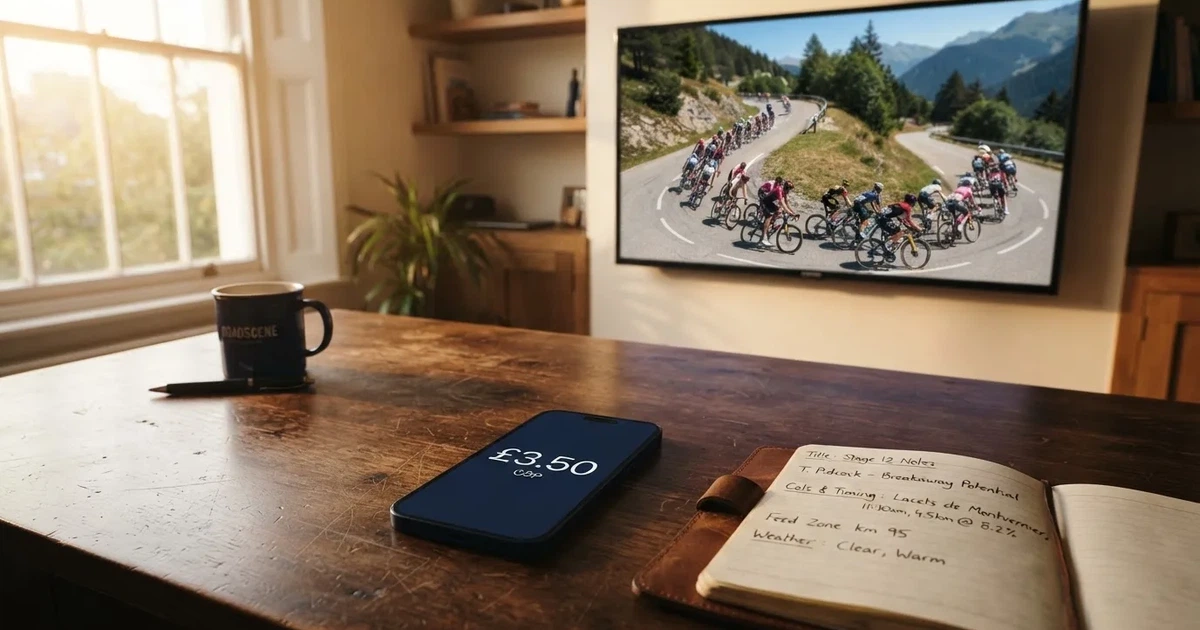
Searchers land on “cycling betting tips” looking for picks. A genuine tip is a price on a single rider in a single race. This page is not a list of those. It is the scaffolding around them: how a cycling market is built, what the bookmaker’s margin does to a price, how a value bet is identified once that margin is stripped away, and what the offer that drew the reader in actually costs to clear. Racing is won on climbs, sprint finishes and time trials, and the markets for each look different — a stage-winner field, a general classification outright, a head-to-head on a particular day, a live in-play price that moves as a breakaway forms. Each of these has its own margin, its own minimum stake and its own house rules. A reader who understands that difference before placing a bet pays less for the privilege of guessing wrong.
Cycling is also a thin sport on most sportsbooks. The Grand Tours dominate, the WorldTour stage races fill the spring and late-summer calendar, and one-day Classics run in between. Outside the Tour de France, a typical race-day card may carry twenty to forty pre-match markets per event — a respectable spread, but small against a Premier League Saturday. That thinness has a consequence for the punter: prices on smaller races are softer, the form-book matters more, and a single bookmaker may be the only one offering a price on a given rider to win a particular stage. The cost of getting the line wrong is the same as it is on football, but the odds of finding a competing quote to compare are lower.
This guide covers the structure first — how the sport is organised, which races draw the deepest markets, what kinds of bets a bookmaker offers on a Grand Tour — then the arithmetic (margins, value, payout, free-bet worth), then the regulatory frame for Great Britain (who is licensed, what checks a customer faces, what GAMSTOP does), then responsible gambling, and closes with a shortlist of ten licensed operators and a worked margin calculation.
How the cycling calendar shapes the betting calendar
Cycling is not one sport. It is several disciplines run on a single annual calendar, and the markets that bookmakers offer change with the season. The discipline that dominates the betting landscape is road racing, and within road racing the Grand Tours — three-week stage races held in May–June, July and August–September — account for the majority of handle and the widest range of pre-match and in-play markets.

The Union Cycliste Internationale (UCI), based in Switzerland, has governed road cycling since 1900. The UCI WorldTour, created in 2005 as the ProTour and renamed the WorldTour in 2011, is the top tier of the professional road calendar and includes the three Grand Tours and the most prestigious one-week and shorter stage races. Below the WorldTour sit the ProSeries (second tier) and continental circuits, where the betting market is thinner and bookmaker coverage sporadic.
The three Grand Tours are the Giro d’Italia (first held 1909), the Tour de France (1903) and the Vuelta a España (1935). UCI rules allow each to run 15 to 23 days of racing. The leader of each wears a distinctive jersey — pink (Giro), yellow (Tour), red (Vuelta) — and races usually include two rest days within that window. A Grand Tour is therefore not a single event for betting purposes. It is roughly twenty race days, each of which carries its own stage-winner, head-to-head, and general-classification markets, alongside the outrights that run from the prologue to Paris.
The 2026 Tour de France ran from 4 to 26 July 2026, starting in Barcelona with a team time trial and finishing on the Champs-Élysées in Paris — 21 stages, 3,245 km, 23 teams. Tadej Pogačar (UAE Team Emirates, Slovenia) won the race for a fifth time. The Giro and Vuelta carry their own market profiles; for 2026 the Giro was won in May, the Vuelta runs through August and September, and the Worlds follow in late September. A reader looking for cycling markets on any given day in 2026 is therefore looking at one of three states: between Grand Tours (Classics, WorldTour stage races, ProSeries), the opening days of a Grand Tour (shorter outright prices, the prologue or time trial is priced, sprint stages ahead), or the final week of a Grand Tour (general classification largely settled, stage markets more competitive).
The Classics — Milan–San Remo in March, the Tour of Flanders in April, Paris–Roubaix the day after — sit in the same window as the Giro and draw outright and match-bet markets. One-day races are short enough that pre-match prices are sharp, in-play liquidity is limited, and the margin the bookmaker takes is a meaningful slice of any edge the punter has. Stage races outside the Grand Tours — the Critérium du Dauphiné, the Tour de Suisse, the Tour of Britain — are mid-summer and late-summer fixtures that draw full-card coverage from the larger bookmakers and limited coverage from the rest.
Markets on a Grand Tour stage
A single Grand Tour stage carries a recognisable set of markets, and the punter who knows which is which pays less for the same bet. The headline market on every stage is the stage-winner outright — the field of 150 to 180 riders priced down to a favourite and a long tail. A typical flat stage might list ten to twenty named riders; a mountaintop finish might list five to ten, with favourites priced between 3.00 and 6.00 in decimal terms (2/1 to 5/1 fractional) and the field at 501.00 or longer. Outright markets are settled on the rider who crosses the line first, with no dead-heat rule for ties.

The general classification (GC) outright runs the length of the race. The favourite for the Tour de France outright is typically priced between 2.50 and 4.00 on the eve of the race; on the morning of stage one the price has tightened or drifted depending on the team time trial composition. The GC market is settled on cumulative time, not stage placings, so a rider who loses twenty seconds on a flat stage but gains two minutes on a mountaintop finish moves sharply in the market even if the stage result went to a breakaway rider.
Head-to-head (match-bet) markets pair two named riders for a stage: “Pogačar vs Vingegaard to win the stage”, settled on whichever rider finishes higher. A head-to-head is a narrower bet than an outright, the field is exactly two, and the margin the bookmaker takes is therefore lower than on a stage-winner field of 150. The same pairing is also available on general classification finish position (“Pogačar to finish above Vingegaard”) at lower liquidity and a wider margin.
Stage classification markets — points (green jersey), mountains (polka-dot), young rider (white) — are settled on cumulative results over the whole race. The bookmaker frames each as an outright; the margin and the number of runners depend on how the form-book is read. The young-rider market on a Grand Tour is usually a three- to six-runner field and the prices are tight. The points classification is wider and softer.
In-play markets on a Grand Tour are dominated by stage-winner prices. Once the flag drops the bookmaker prices the stage as it unfolds, with the field updated on each significant move — a breakaway forms, a crash takes out the favourite, the peloton splits on a climb. The margin in-play is higher than pre-match because the bookmaker is pricing uncertainty; the value, when it appears, comes from a punter who has watched the breakaway riders and can read which one has the legs to stay away.
Combination bets (accumulators) on cycling are less popular than on football but available: a four-fold on four stage winners in a single Tour, a Tour-and-Giro GC double, a season-long bet on the WorldTour rankings. The odds of the legs multiply into one price; the margin of the combination is the multiplied margin of each leg and is therefore wider than any single leg. A cycling acca of four stage winners at 4.00 each pays 256.00 for a £1 stake; the bookmaker’s combined margin on those four legs is wider than on any one of them.
What a value bet actually is
A value bet is a price the bookmaker offers that is higher than the true probability of the outcome, once the bookmaker’s margin is removed. It is the only kind of bet that is, on average, profitable — and even then only over many bets, because short-term variance dominates long-term averages in cycling where one crash, one mechanical, one illness can take a favourite out of contention.
The true probability of a rider winning a stage is not a number a punter knows. It is an estimate built from form, course profile, weather, team orders and the starting field. A punter who estimates Pogačar’s chance of winning a flat stage at 25% (decimal odds 4.00, fair) and the bookmaker offers 5.00 (an implied 20% chance) has found a value bet — the price is higher than the estimate warrants. The same punter estimating Vingegaard’s chance of a mountain stage at 15% and finding a bookmaker offering 6.00 (an implied 16.7% chance) is on the other side of the same bet: a price shorter than the estimate, no value.
No tip is ever certain. Even a 1.50 favourite (an implied 66.7% chance) loses one stage in three. The bookmaker’s margin is inside that 1.50, so the punter’s edge is smaller than the apparent price suggests. A punter who chases short-priced favourites collects small wins and absorbs large losses; a punter who chases value accepts that most bets lose and makes the rare wins count.
This is why no tipster can guarantee a profit. A tip is one person’s estimate of true probability; the price is the bookmaker’s estimate. The gap between them, when it favours the punter, is value, and the punter who finds it consistently beats the margin. The punter who does not, does not. There is no system, no model, no algorithm that converts certainty into income — only the discipline of betting when the price is wrong and walking away when it is not.
Staking and bankroll discipline
The arithmetic of a cycling betting bank is the same as for any other sport. The bankroll is the amount the punter has set aside for betting, separate from rent, food and savings. The unit stake is a fixed percentage of the bankroll — typically 1% to 3% — and every bet, win or lose, is placed at the same unit. A punter with a £500 bank and a 2% unit stakes £10 per bet, regardless of how confident they are in the price. The unit goes up only when the bank grows, and down when the bank shrinks.
This is the staking plan that survives variance. A punter who raises the stake after a win (chasing the form book) and trims it after a loss (protecting the bank) is staking from emotion rather than edge, and the long-term result is the same as staking randomly. Cycling is high-variance: one bad day in the mountains and an entire position is gone. A unit of 2% is large enough to make a winning month meaningful and small enough that three or four consecutive bad bets do not empty the bank.
The bankroll also sets the floor on what markets the punter can play. A £5 minimum stake on a Grand Tour outright is within reach of almost any bank; a £10 minimum on a same-day in-play stage bet is at the edge of a £500 bank; a £50 minimum on a combination bet is outside the bank entirely. The punter who recognises the floor and bets only at the markets they can afford does not lose their bank to a stake minimum they did not read.
What the bookmaker’s margin does to a price
Every decimal price carries a margin. The margin is the slice of every pound bet that the bookmaker keeps, on average, over the long run. It is calculated from the prices on all outcomes of a single market: the payout share is the sum of 1 ÷ (odds) for each outcome, and the margin is 1 minus that sum. A two-way market priced at 1.90 and 1.90 has a payout share of 1 ÷ 1.90 + 1 ÷ 1.90 = 0.5263 + 0.5263 = 1.0526, which is more than 1.0 because the two prices are not fair — the bookmaker has built a margin in. The margin is 1 − (1 ÷ 1.0526) = 4.97%, roughly 5%.
The worked example below uses 1.90 / 1.90 as an illustration of how a margin is read from a two-way market; it is not a quoted price for any particular race. A realistic cycling two-way — a head-to-head on a stage — carries a margin of around 5% to 8% depending on the bookmaker and the liquidity. A wide-field outright on a Grand Tour stage can carry a margin of 12% to 25% because the bookmaker is pricing 150 outcomes and rounding each to the nearest tick. A pre-match favourite-outright on a sprint stage is sharper, typically 6% to 10%. In-play prices are wider still because the bookmaker is pricing under uncertainty and the margin reflects the unknown.
The practical consequence: a punter who bets on a 25% chance at decimal odds 5.00 (a value bet by 5.00 × 0.25 = 1.25, returning 25p of expected value per £1) is earning less than the apparent price suggests, because the bookmaker’s margin is inside the 5.00. A punter who bets on the same outcome at 4.20 (no value at 4.20 × 0.25 = 1.05, just over fair) is closer to the bone. The margin is the tax on every bet, and the punter who knows it is ahead of the punter who does not.
The margin is also a number the punter can compare across bookmakers. Two operators offering the same head-to-head at 1.85 / 1.95 versus 1.90 / 1.90 are not offering the same price. The first pair has a payout share of 1 ÷ 1.85 + 1 ÷ 1.95 = 0.5405 + 0.5128 = 1.0533 and a margin of 5.05%; the second is the example above at 4.97%. The difference is small in any single bet, but a punter who places fifty bets a season at the sharper bookmaker keeps two to three per cent more of their bankroll. The comparison costs nothing — it is the same form a punter fills in once and reuses all year.
The arithmetic of a winning bet
A winning bet returns the stake plus the winnings. The return is stake × decimal odds; the profit (the winnings alone, ignoring the stake) is stake × (decimal odds − 1). A £10 bet at 4.00 returns £40 — a £10 stake and £30 of profit. A £10 accumulator of four legs at 3.00 each is one bet at 81.00; a £10 stake returns £810 if all four legs win, a £800 profit. A £5 each-way bet on a stage is two bets of £5: a £5 win stake and a £5 place stake, so a total of £10 at risk; the place terms (a quarter or a fifth of the win odds, depending on the field size) settle separately.
The arithmetic is mechanical, but the punter who runs it before placing the bet does not mistake a long-priced outsider for value. A 51.00 outsider on a sprint stage, at an implied 1.96% chance, returns £510 on a £10 stake — a £500 profit, but a bet that wins one time in fifty. The same £10 at 4.00 returns £40, a £30 profit, and a bet that wins one time in four. The expected value of each bet, before the margin, is the same: £10 × 0.02 × 50 = £10 and £10 × 0.25 × 4 = £10. After the margin, the long shot carries more of the bookmaker’s tax and the expected value is lower.
The same arithmetic applies to free bets. A free bet is a stake the bookmaker gives the punter; the stake is usually not returned with a win. A £25 free bet at 4.00 returns £100 in profit — not £125, because the £25 stake is the bookmaker’s. The punter’s expected value of the free bet is £25 × (4.00 − 1) ÷ 4.00 × the payout share of the market. On a market with a 95% payout share (a 5% margin), a £25 free bet at 4.00 is worth £25 × 0.75 × 0.95 = £17.81 in expected profit. The free bet is not £25 of value — it is closer to £18, and that is before any restriction the bookmaker puts on the eligible markets.
How a Grand Tour in-play price moves
In-play on a Grand Tour is dominated by stage-winner markets. Once the flag drops, the bookmaker re-prices the field as the race unfolds. A breakaway of six riders forms in the first hour, and the bookmaker prices each of the six alongside the peloton favourites. A crash takes out the GC leader, and the GC outright moves immediately, sometimes within seconds. A puncture at the foot of the final climb, and the favourite’s price blows out from 3.00 to 13.00 in a single tick.
The margin in-play is wider than pre-match. The bookmaker is pricing uncertainty and the punter is reading live action; the bookmaker’s edge is the uncertainty. The punter’s edge, when it appears, is a price that has not yet caught up with the road. A breakaway rider who has been away for two hours and built a four-minute lead is not 51.00 — the price should be 4.00, and the bookmaker is lagging. The punter who has watched the gap and the route to the line is the one who spots it.
Cash out is the bookmaker’s offer to settle a bet before the race is over, at a price derived from the current state of the race and the original odds. A pre-match bet on the GC at 6.00 that has drifted to 3.50 in-play can be cashed out for a profit; a pre-match bet at 4.00 that is now 8.00 in-play will be cashed out at a loss. The cash-out price carries a margin wider than the original, sometimes 10% to 15%, because the bookmaker is offering certainty and charging for the privilege.
Legality and regulation in Great Britain
A bookmaker that takes bets from customers in Great Britain needs a Gambling Commission licence, regardless of where the operator is based. The Gambling Act 2005 covers England, Scotland and Wales; Northern Ireland sits outside the Act and runs under its own older law, so a “GB-licensed” operator is licensed for Great Britain and not for Northern Ireland. Since the Gambling (Licensing and Advertising) Act 2014, an operator whose remote facilities are used in Great Britain must hold a Commission licence wherever the company is incorporated. A Curaçao, Maltese or Gibraltar licence is not a substitute, although several of those jurisdictions are common places of incorporation for operators who also hold a GB licence.
The Commission’s public register can be searched by business name, trading name, domain or account number. The register is the whole test of whether a brand holds a licence; a brand’s own claim to be licensed is not. Operators use both .com and .co.uk domains, so the domain itself proves nothing. The licence categories a remote betting operator can hold are: remote general betting standard (real events), remote general betting standard (virtual events), remote general betting limited, remote pool betting, and remote betting intermediary (the category for betting exchanges). A spread-betting firm whose product is a financial contract is regulated by the Financial Conduct Authority, not the Commission; a firm that combines financial spread betting with sports fixed-odds betting holds both, and the same brand carries two regulators.
Identity verification is required before a first deposit or first bet, including with a free bet or bonus. The minimum age is 18. The checks have applied since 7 May 2019: a customer submits name, address and date of birth, and the operator verifies them against public records before any gambling is permitted. A licensed site cannot offer anonymous play.
The credit-card ban, in force since 14 April 2020, prohibits the use of credit cards for gambling in Great Britain, including credit-card-funded payments through an e-wallet. Debit cards and bank-based payments are not covered by the ban. The rule is a licence condition (LCCP 6.1.2), enforced by the Commission and not by the card issuer.
There is no statutory cap on stakes in sports betting. Operators set their own maximum stakes and may restrict individual customers, particularly winners. The Commission’s rules on bonus wagering — capped at 10x the bonus since 19 January 2026 — apply to all licensed operators; a £10 bonus at 50x wagering was legal before the cap and is not legal now. A £10 bonus at 10x wagering requires £100 of qualifying bets before withdrawal; a £10 bonus at 5x requires £50. The cap on the money value of a bonus is not established.
Player protection, GAMSTOP and financial checks
GAMSTOP is the national multi-operator online self-exclusion scheme, mandatory for online operators since 31 March 2020. A customer who registers with GAMSTOP chooses an exclusion period of six months, one year, five years, or five years with auto-renewal. After the minimum period the exclusion stays in place for a further seven years unless the customer asks GAMSTOP to remove it. GAMSTOP covers online sites and apps; high-street betting shops use a separate self-exclusion scheme.
A financial vulnerability check applies to licensed remote betting when a customer’s deposits minus withdrawals exceed £150 in a rolling 30 days. The check is a public-record search — for example, bankruptcy or county court judgments — and is not an income check and not a credit reference check. The trigger applies since 28 February 2025; the underlying licence condition (LCCP 3.4.4) has been in force since 30 August 2024. The check is silent on gambling behaviour and is one of several safer-gambling controls operators run.
Financial risk assessments, sometimes called affordability checks in the press, are at a different stage: announced in a Commission article of 7 July 2026, with a staged plan and no start date. The current state is “announced, staged, no start date”, and that is what should be written about the rule. A reader who sees a reference to “affordability checks” applied today is being told something that is not yet in force.
Deposit limits are a customer-set control; the operator must offer a gross deposit limit on a fixed time frame (RTS 12), and the first changes have applied since 31 October 2025. A second phase of the technical standards was postponed to 30 September 2026, and whether that phase is now live is not established. The point for the reader is straightforward: every licensed operator offers a deposit limit, the limit is the customer’s choice, and the operator cannot raise it without the customer’s agreement.
Help lines and clinics are listed in the safer-gambling section of every licensed operator and at GamCare, which runs the National Gambling Helpline. GambleAware funds treatment and research. The NHS runs gambling clinics in several regions. Gamblers Anonymous runs peer-support meetings.
The cost of an offer, in plain numbers
A welcome offer is a marketing tool. It is also a small contract: the bookmaker gives the punter a free bet, a bonus or a price boost, and the punter accepts a set of conditions — a minimum deposit, a minimum stake, a minimum odds, a wagering requirement, an expiry, sometimes a cap on winnings. The conditions are the price of the offer, and the punter who reads them pays less for the same benefit.
A free bet whose stake is not returned is worth less than its face value. A £25 free bet at minimum odds 1.50 (1/2) on a market with a 5% margin is worth £25 × (1.50 − 1) ÷ 1.50 × 0.95 = £7.92 in expected profit — not £25, and not even the £12.50 a punter might assume from the apparent odds. The stake is the bookmaker’s, and the punter keeps the winnings only. A free bet at 4.00 on the same market is worth £25 × 0.75 × 0.95 = £17.81 — closer to face value but still a discount.
A matched-deposit bonus carries a wagering requirement. A £10 bonus at 10x wagering (the current cap) requires £100 of qualifying bets at minimum odds before withdrawal. The punter who places twenty £5 bets at 1.80 clears the requirement and pays 5% × £100 = £5 of margin to the bookmaker in the process; the £10 bonus has cost £5 of expected value and returned £5 of net benefit, before the time and the variance. The same £10 bonus at 50x (the pre-cap norm) required £500 of qualifying bets and cost £25 of margin — a net loss of £15 on a “free” £10. The cap is the reason the difference matters.
A price boost, where the bookmaker raises the odds of a particular outcome, is paid for in two ways: a cap on the stake, and a one-off application to a single bet. A boosted price from 4.00 to 6.00 on a maximum £10 stake is worth £10 × (6.00 − 4.00) = £20 of additional profit if the bet wins, at zero additional cost if it loses. The value of the boost is the difference in expected value at the two prices, which is small on a single bet but adds up over a season.
The “free” framing is the marketing word that needs puncturing. A free bet is not free; the bookmaker has priced the conditions and built a margin into the qualifying bet. A risk-free bet is not risk-free; a stake is at risk to qualify, and the refund is usually paid as a free bet whose stake is not returned. A 100% bonus is not £100 of value; the wagering requirement reduces it. The arithmetic is the same on every offer, and the punter who runs it before accepting pays the real price and not the headline.
Ten licensed operators, what each costs and who it suits
The set below is drawn from the Gambling Commission’s public register. Each brand is licensed for remote general betting standard (real events), and each has been verified against the register as a holder of a current licence. A place in this list is not a ranking and not a recommendation. The list is in the order research sets; the wording is the page’s own.
Spreadex — fixed odds and spread betting in one app
Spreadex runs on Gambling Commission account 8835, held by Spreadex Limited. The brand is unusual in the British market because it combines sports fixed-odds betting with financial spread betting under one app. The fixed-odds book is regulated by the Commission; the spread-betting product is regulated by the Financial Conduct Authority. Spread-betting losses can exceed the deposit, which is the standard risk warning on the FCA-regulated product, and is the reason the firm is two regulators rather than one. Spreadex offers one-click, auto and partial cash out, a Bet Builder that works across fixed odds or spreads, and live streaming of UK and Irish horse racing, greyhounds, tennis, NFL and selected football. The firm is the smallest of the ten by market share, and the dual offering means the punter choosing Spreadex is choosing a particular product mix, not the deepest sportsbook. The cost of the choice is the thinner sports-only catalogue; the benefit is a single wallet across both products.
Bar One Racing — Irish independent, racing-led
Bar One Racing holds Gambling Commission account 56516 through Bar-One Racing Limited. The brand has rebranded to BAR 1 Betting and is an Irish independent bookmaker with shops across Ireland and horse racing sponsorships at Dundalk, Fairyhouse, Navan, The Curragh, Curraheen Park and Cork. The GB-licensed site carries the Commission’s general betting licence; the racing focus is a consequence of the sponsorship portfolio. A punter looking for a daily racing service on British and Irish meetings will find one here; a punter looking for Grand Tour outrights will find a smaller catalogue than the larger firms. The brand’s standing is established on racing, and the cycling offering reflects the racing-led book rather than a full-card sportsbook.
Smarkets — betting exchange with sharp prices
Smarkets is licensed as a remote betting intermediary on Commission account 39173, held by Smarkets (Malta) Limited. An exchange is a different product from a sportsbook: punters back and lay outcomes against each other, and the operator takes a commission on net winnings rather than building a margin into the price. Smarkets charges 2% on net winnings on its standard plan, and the resulting prices are sharper than a sportsbook’s because the operator is not pricing a margin. UK open-bank-transfer deposits are instant from £10 to £10,000, and withdrawals are processed within six hours from £10 to £100,000 — a fast payout window for a licensed operator. UK debit-card deposits are instant from £10 to £15,000. The cost of the exchange model is liquidity: a thin race may have only a few hundred pounds matched on the stage-winner market, and a punter looking to place a large back bet may not get the price they want. The benefit, when liquidity is there, is the sharpest price in the market.
William Hill — Best Odds Guaranteed on racing
William Hill is licensed on Commission account 39225, held by WHG (International) Limited. The brand pays Best Odds Guaranteed (BOG) on UK and Irish horse racing from 8 AM on the day of the race, on both single and multiple bets. BOG means the punter gets the higher of the price they took and the starting price; if the SP is bigger, the bet is settled at the SP. The offer does not apply to ante-post bets, tote bets or pari-mutuel bets. The racing product is the most generous of the ten on this specific rule, and a punter who takes early prices on racing cards is the one who benefits. The cycling product is a full sportsbook, not racing-led, and the Grand Tour outrights sit at competitive prices through the race. The cost of William Hill is the standard licensed-operator overhead: identity verification on first deposit, GAMSTOP coverage, and a margin on every market.
BetMGM — four £10 free bets on a £10 first bet
BetMGM UK is licensed on Commission account 39198, held by LeoVegas Gaming PLC. The sports welcome offer for new UK customers is four £10 free bets, made up of two football accumulators of four or more selections and two sports multiples of two or more, valid for seven days. The qualifying bet is a sports bet of any stake at any odds, placed within seven days of depositing £10 or more, and the punter must opt in. The free bets are paid as stake-not-returned, so a winning £10 free bet accumulator at 10.00 returns £100 in profit, not £110. The minimum-odds rule on each leg is set in the offer terms and is the kind of condition a punter reads before claiming. The brand is a recent UK entrant and is the smallest of the larger sportsbooks in this list by British market share; the cost of choosing BetMGM is the smaller catalogue and the seven-day window on the free bets. The benefit is a clean offer with a low qualifying threshold.
Midnite — £5 qualifying bet, £25 in free bets and 50 free spins
Midnite is licensed on Commission account 101839, held by Midnite Limited. The sports welcome offer for new customers is £25 in free bets plus 50 free spins, triggered by a first sports bet of £5 or more at minimum odds of evens (2.0) within 14 days of sign-up. The free bets are valid for seven days. The site carries an acca builder, popular accas and price boosts with maximum-stake limits, and the in-play section lists events as they go live. The qualifying threshold is the lowest of the ten, and the offer is the kind a small-stake punter clears in a single bet. The cost is the same stake-not-returned rule as elsewhere: the free bet is worth its face value multiplied by (odds − 1) ÷ odds, not face value. The brand is a UK-facing sportsbook with a casino tab; the catalogue on cycling is full for the Grand Tours and thinner for the WorldTour one-day races.
Paddy Power — full sportsbook, racing-led promotions
Paddy Power is licensed on Commission account 39439, held by PPB Counterparty Services Limited. The Paddy Power Sports Betting app covers football, horse racing, boxing, rugby, tennis, golf, darts, snooker and F1, and the brand’s catalogue is among the widest of the ten. The racing-led promotions are the firm’s signature: money-back specials on losing racing bets, enhanced odds on big-race days, and a daily each-way offering on the major meetings. The cycling product is full-card through the Grand Tours and selective on the WorldTour stage races. The cost of choosing Paddy Power is the marketing density — the in-app promotional surface is heavier than a quieter brand — and the benefit is a single book that covers racing, football and the rest of the calendar at competitive prices.
Betboro — 100% matched free bet up to £25
Betboro UK is licensed on Commission account 44181, held by Webmedia Development N.V. The sports welcome offer is a 100% matched free bet of up to £25 on the first qualifying wager, requiring a debit card deposit of at least £10 and a first bet of £5 to £25 with at least three selections, each at minimum odds of 3/5 (1.60) or higher. The free bet is stake-not-returned. The qualifying bet is a small accumulator rather than a single, and the minimum-odds rule on each leg is a real constraint — three legs at 1.60 each is a 4.10 accumulator, and a punter who cannot find three confident selections at 1.60 does not qualify. The cost of the offer is the leg requirement and the minimum odds on each; the benefit is the matched structure and the £25 cap, which is at the higher end of the ten.
Octobet — 50% back as a free bet up to £50
Octobet is licensed on Commission account 62545, held by Octopus Game Limited. The sports welcome offer is 50% back as a free bet up to £50, plus a £10 casino bonus. The “back” framing is the cost: a free bet awarded only if the first bet loses, and the free bet is stake-not-returned. A punter who places a £100 first bet and wins has no free bet at all; a punter who places a £100 bet and loses receives £50 as a free bet, which is then worth £50 × (odds − 1) ÷ odds × payout share of the chosen market. The structure is closer to an insurance policy than a bonus, and a punter who reads it that way is not surprised by the result. The catalogue on cycling is mid-sized; the Grand Tour outrights are present and the one-day race coverage is selective.
BetVictor — Best Odds Guaranteed and BetFinder
BetVictor is licensed on Commission account 39576, held by BV Gaming Limited. The brand offers Best Odds Guaranteed on UK and Irish horse racing, enhanced live race streaming and a BetFinder feature for finding racing bets, alongside Smart Stats. The racing product is the deepest of the ten outside the dedicated racing firms, and the in-house Smart Stats is a differentiator on form-study for a punter who bets from data rather than from the eye. The cycling catalogue is full-card on the Grand Tours and competitive on the WorldTour stage races. The cost of choosing BetVictor is the smaller promotional surface; the benefit is the racing product and the data tools on a single app.
Comparison table — licence and headline offer
| Brand | Gambling Commission account | Licence holder | Offer as stated in the operator’s own terms |
|---|---|---|---|
| Spreadex | 8835 | Spreadex Limited | Fixed-odds and spread-betting combined product; spread losses can exceed deposit |
| Bar One Racing | 56516 | Bar-One Racing Limited | Irish racing-led bookmaker, racing sponsorships at six Irish tracks |
| Smarkets | 39173 | Smarkets (Malta) Limited | Betting exchange with 2% commission on net winnings |
| William Hill | 39225 | WHG (International) Limited | Best Odds Guaranteed on UK and Irish racing from 8 AM on race day |
| BetMGM | 39198 | LeoVegas Gaming PLC | Four £10 free bets on a £10+ first sports bet, 7-day expiry |
| Midnite | 101839 | Midnite Limited | £25 in free bets plus 50 free spins on a £5+ first bet at evens or higher |
| Paddy Power | 39439 | PPB Counterparty Services Limited | Full sportsbook with racing-led promotions across the calendar |
| Betboro | 44181 | Webmedia Development N.V. | 100% matched free bet up to £25 on first qualifying wager |
| Octobet | 62545 | Octopus Game Limited | 50% back as a free bet up to £50 plus £10 casino bonus |
| BetVictor | 39576 | BV Gaming Limited | Best Odds Guaranteed and BetFinder for racing, Smart Stats in-app |
A row in the table above is the headline term; the small print on minimum odds, wagering and expiry is set out in each operator’s own promotional terms and is the part the punter reads before claiming. A column of offer mechanics is not a column of value — two operators offering a £25 free bet with different wagering requirements are offering different products at the same headline price.
Responsible gambling — the part the offer does not cover
A licensed operator is required to offer GAMSTOP, deposit limits, timeouts, reality checks and links to GamCare, the National Gambling Helpline, GambleAware and the NHS gambling clinics. The controls are a customer-set ceiling: the punter chooses the limit, the operator enforces it, and the punter can lower the limit immediately but cannot raise it without a cool-off.
GAMSTOP is the single most consequential control for a punter who has decided to stop. The exclusion applies across every licensed online operator at once, and a punter who registers cannot reverse the decision during the minimum period. The further seven-year tail is the Commission’s safety margin: the punter is excluded for at least six months and as much as twelve years, depending on the chosen period. A punter who has not registered with GAMSTOP and is still betting can register at any time, free of charge, and the exclusion takes effect across every licensed site within twenty-four hours.
The financial vulnerability check is a softer control. It applies when deposits minus withdrawals cross £150 in a rolling thirty days, and it is a public-record check rather than an income check. The check does not stop a bet; it adds a layer of monitoring and may trigger a conversation with the operator’s safer-gambling team. The financial risk assessments announced for 2026 are a further layer; their start date is not established, and the rule today is the vulnerability check.
Deposit limits are the punter’s own. The licensed operator must offer a daily, weekly or monthly limit and cannot raise it without the punter’s agreement and a cool-off. A punter who sets a £100 weekly limit and hits it does not bet further that week, regardless of what the offer on screen says. A punter who sets no limit is the one the marketing reaches.
Help lines are free and confidential. GamCare runs the National Gambling Helpline on 0808 8020 133, twenty-four hours a day. The NHS runs gambling clinics in several regions for face-to-face support. Gamblers Anonymous runs peer meetings. The punter who is spending more than they planned, chasing losses or betting to escape is the punter for whom these lines exist; the punter who calls early is the one for whom they work.
What the sport and the calendar mean for the bet
A punter who reads cycling as a betting sport begins with the calendar. Grand Tours are the peaks: three races a year, three weeks each, the deepest markets of the calendar and the most competitive outrights. WorldTour stage races and one-day Classics fill the spring and late summer; the Giro runs alongside the spring Classics, the Tour alongside the early-summer stage races, the Vuelta against the late-summer calendar. Outside the peaks, the WorldTour one-day races draw selective coverage and the ProSeries draws a single bookmaker at most.
A punter who reads the markets begins with the margin. A two-way head-to-head on a stage is sharper than a wide-field stage-winner outright. A pre-match outright is sharper than an in-play outright. A pre-race favourite at 3.00 to 6.00 is a sharper bet than a long shot at 51.00, because the bookmaker has priced more information into the favourite. The punter who knows the margin is the punter who knows where the value lives.
A punter who reads the offer begins with the small print. A £25 free bet at 4.00 is worth £17.81 in expected profit on a 5% margin. A £10 bonus at 10x wagering is worth £5 of net benefit, after £5 of margin on the qualifying bets. A boosted price from 4.00 to 6.00 on a £10 stake is worth £20 of additional profit if it wins, at zero cost if it loses. The punter who runs the arithmetic is the punter who knows the real price.
A punter who reads the licence begins with the register. The Gambling Commission’s public register is the whole test of who holds a licence, and a brand’s own claim is not. The ten brands in this guide have been verified against the register; a brand that is not on it is offering its product without the protections this page has described, and the punter who chooses it does so without GAMSTOP coverage, without the 10x bonus cap, without the £150 vulnerability check, and without the Commission’s complaints route. The choice is the punter’s; the cost is what the cost is.
A worked margin calculation
A two-way market priced at 1.90 and 1.90 in decimal (9/10 in fractional terms) is the cleanest illustration of how a margin is read from a price. The two prices imply probabilities of 1 ÷ 1.90 = 52.63% each, summing to 105.26% — five points and a fraction over 100%. The five-and-change percentage points above 100 are the bookmaker’s margin, the slice of every pound bet on this market that the bookmaker keeps on average over the long run. Stated differently, the payout share is 1 ÷ 1.0526 = 95.0%, and the margin is 5.0%.
The figure is an illustration rather than a quoted price. A real cycling two-way — a head-to-head on a stage, a match-bet on a Classics one-day race — typically carries a margin in the 5% to 8% band at the sharper end of the market, and a wider margin on a less liquid pairing. A pre-match favourite-outright on a Grand Tour stage at a major bookmaker might be priced in the 6% to 10% range; a long tail in the same field adds several more points. The 1.90 / 1.90 illustration is the case where the margin sits at the cleanest, most legible end of the band.
The result the calculation produces is a margin, and the margin answers only one question: what the bookmaker keeps of every unit bet on this market, on average, over many bets. It does not say what a particular bet returns, whether a particular bet wins, or whether the punter’s edge is positive. A 5% margin is the same on a £5 bet and a £500 bet, and it is the same on a winning bet and a losing one. The punter who places a hundred £10 bets on a 5%-margin market loses, on average, £50 of stake over the run. A punter who finds value — prices higher than the true probability — keeps the difference, and that difference is what a cycling punter is in business to find.
Cycling markets: what to look for, what to skip
The markets a punter prioritises depend on the calendar and on the punter’s appetite for variance. A Grand Tour stage is the deepest market of the season: outright winner, head-to-head, top three, top six, top ten, jersey classifications, combination bets across stages. A one-day Classic carries outright and head-to-head. A WorldTour stage race outside the Grand Tours carries outright and a thin head-to-head market. The punter who picks the market first and the bet second is the punter who pays less for the same information.
The markets to skip are the long tail of an outright field. A 151.00 outsider on a sprint stage is not a value bet; it is a long shot priced for the entertainment of the wager, and the margin the bookmaker has built into the tail is the widest on the card. The punter who skips the tail and concentrates on the front of the market pays a lower margin and reads the form book in fewer names.
Combination bets on cycling are an open question. A four-fold on four stage winners at 4.00 each pays 256.00 for a £1 stake; the combined margin is the product of each leg’s margin and is wider than any single leg. A punter who plays the combination for the ride rather than the edge is paying for entertainment; a punter who plays it for value has a thin case to make. The same arithmetic applies to a season-long bet on the WorldTour rankings: a wide field, a soft price on the favourite, and a margin that reflects the long odds.
In-play on a Grand Tour is the market where the bookmaker is at its thinnest and the punter at their most alert. A breakaway of six riders, four minutes clear with twenty kilometres to race, is not priced at 51.00 each. A punter who has watched the gap and the route to the line is the one who spots the price; a punter who bets the screen is the one who pays the in-play margin.
Worked example: a Grand Tour head-to-head
A pre-match head-to-head on stage 14 of the 2026 Tour de France pairs two named riders — Pogačar and Vingegaard, to take the example from the race research cites — for the stage win. The market is two outcomes, and the prices are, say, 1.85 and 2.00. The payout share is 1 ÷ 1.85 + 1 ÷ 2.00 = 0.5405 + 0.5000 = 1.0405, and the margin is 3.9%. A £10 bet on the favourite at 1.85 returns £18.50 if the bet wins — a £10 stake and £8.50 of profit. A £10 bet on the outsider at 2.00 returns £20 — a £10 stake and £10 of profit. A punter who estimates the favourite’s true chance of winning the stage at 60% (decimal fair odds 1.67) is looking at a 1.85 price and a value question: 1.85 × 0.60 = 1.11, returning 11p of expected value per £1; the bet has 11% edge, and the punter who places it at a £10 unit is collecting, on average, £1.10 per bet over the long run. A punter who estimates the same favourite at 50% (decimal fair odds 2.00) faces a 7.5% shortfall at the 1.85 price, and the bet is a negative-value bet at any unit.
The example is illustrative, not a quote. The prices 1.85 and 2.00 are placeholders for the kind of pairing a Grand Tour head-to-head carries, not a price taken from any particular bookmaker on any particular day. A real head-to-head on a Grand Tour stage will be priced differently, often wider, and the punter who reads the price as it sits on the screen is the punter who knows what the margin is and what the edge is on offer.
Cycling betting, in summary
Cycling is a thin sport on most sportsbooks, with three Grand Tours a year dominating the calendar and the rest of the season filled by WorldTour stage races and one-day Classics. The markets are deep on the Grand Tours, thinner elsewhere, and the margin the bookmaker takes is widest on the long tail of an outright field and on in-play prices under uncertainty. A value bet is a price higher than the punter’s estimate of true probability, once the margin is removed; a punter who finds it consistently beats the margin over many bets, and a punter who does not, does not. No tip is certain, no tipster is reliable, and no model converts cycling’s variance into income. The arithmetic — stake × odds, stake × (odds − 1), the 10x bonus cap, the free-bet value at face × (odds − 1) ÷ odds × payout share — is mechanical and is the part the marketing does not say. The licence is the test: a brand on the Commission’s register is bound by the rules this page has set out, and a brand that is not is offering its product without them. The reader who understands that difference before placing a bet pays less for the privilege of guessing wrong.
Frequently asked questions
How does cycling betting work?
Cycling betting works by the punter choosing an outcome — a rider to win a stage, a head-to-head, an outright on the general classification — at a price the bookmaker has set, and placing a stake on it. A winning bet returns the stake plus the winnings (stake × decimal odds), and a losing bet returns nothing. The bookmaker’s margin is built into every price; the payout share is the inverse of the sum of 1/odds across all outcomes, and the margin is 1 minus the payout share. Markets on a Grand Tour include stage winner, head-to-head, general classification outright, jersey classifications and combination bets across stages. Markets outside the Grand Tours are thinner and the prices are wider.
Can you bet on cycling in the UK?
Yes. Several bookmakers licensed by the Gambling Commission offer cycling markets, and a punter in Great Britain can place bets on the Grand Tours, the WorldTour stage races and the major one-day Classics. Identity verification is required before a first deposit or first bet at a licensed site, and a punter who has registered with GAMSTOP is excluded from placing bets until the chosen exclusion period ends. A punter who bets on an unlicensed site does so without the Commission’s protections, without GAMSTOP coverage, and without the complaints route, and the winnings may be harder to recover if the operator withholds funds.
What is a value bet, and why is no tip ever certain?
A value bet is a price the bookmaker offers that is higher than the punter’s estimate of the true probability of the outcome, once the bookmaker’s margin is removed. The punter who estimates Pogačar’s chance of a flat stage at 25% (fair odds 4.00) and finds a bookmaker offering 5.00 has found a value bet; the price is higher than the estimate warrants. A tip is one person’s estimate of true probability, and the price is the bookmaker’s. The gap between them, when it favours the punter, is value; the gap, when it does not, is not. No tip is certain because the outcome is determined on the road — by a crash, a mechanical, a tactical call from the team car — and a tipster who claims certainty is selling certainty they do not have.
What is the bookmaker’s margin, and how can it be seen in the odds?
The bookmaker’s margin is the slice of every pound bet on a market that the bookmaker keeps, on average, over the long run. It is calculated from the prices on all outcomes of a single market: the payout share is the sum of 1 ÷ (decimal odds) for each outcome, and the margin is 1 minus the payout share. A two-way market priced at 1.90 and 1.90 has a payout share of 1.0526 and a margin of 4.97%, roughly 5%. A wide-field outright on a Grand Tour stage has a higher margin, sometimes 12% to 25%, because the bookmaker is pricing many outcomes and rounding each. The margin is the tax on every bet, and the punter who compares margins across bookmakers keeps more of the bankroll.
How is the return on a bet worked out from the stake and the odds?
The return on a winning bet is stake × decimal odds. A £10 bet at decimal odds 4.00 returns £40 — a £10 stake plus £30 of winnings. A combination bet multiplies the odds of the legs into a single price: a four-fold of four legs at 3.00 each is a single bet at 81.00, and a £10 stake returns £810 if all four legs win. A free bet is different: the stake is not returned with a win, so a £25 free bet at 4.00 returns £100 in profit, not £125, and the value of the free bet at any market is £25 × (4.00 − 1) ÷ 4.00 × the payout share of the market, which on a 5% margin is £17.81 in expected profit.
How can it be checked that a bookmaker holds a Gambling Commission licence?
The Gambling Commission’s public register can be searched by business name, trading name, domain or account number, and the register is the whole test of whether a brand holds a licence. A brand’s own claim to be licensed is not, on its own, evidence; the register is. The ten brands in this guide have been verified against the register, and each holds a remote general betting standard (real events) licence or, in Smarkets’ case, a remote betting intermediary licence. A brand that is not on the register is offering its product without the protections the Act requires, and a punter who bets with it does so without GAMSTOP, without the 10x bonus cap, and without the complaints route. The register is at gamblingcommission.gov.uk, and the search takes a few minutes.
Combat & motorsport – signupbetsguide.com
Content created by the «signupbetsguide.com» team
