
Darts Betting Tips 2026: How to Read a Match Without Buying a Tipster
 Available in US
Updated as of 30 October 2026 and checked against the Gambling Commission’s public register of remote operating licences. Every figure and licence below comes from that register or from the operator’s own published terms. Where a price is given, the date the snapshot was taken is named with it.
Anyone selling darts betting tips is selling a forecast wrapped in confidence. The forecast ages the moment a player walks on stage; the confidence is the part that costs the reader. A guide cannot fix a match, but it can pull apart what a tip is — a model of probability, a price set by a market, a stake chosen by the person betting — and show the moving parts the marketing rarely names. That is the work of the next few thousand words: how form, head-to-heads and tournament context become a probability, how that probability meets a bookmaker’s price, how the margin inside the price is read, how the offer sitting on top of the price changes what it actually costs, and which UK-licensed names publish the most useful terms for the bettor trying to do this honestly.
What a darts betting tip actually is
A tip is a single sentence with three things hiding inside it: a prediction about who wins or what happens in the match, a price offered by a bookmaker, and the difference between the two. The first is a probability the tipster has built from somewhere — recent form, head-to-heads, average three-dart score, checkout percentage, the state of a tournament bracket, the recent run of a player under pressure. The second is a number set by a market that has no view of the player at all; it sets the price to balance its book and to keep a margin. The third is what makes a bet “value” — a price above the true probability once the bookmaker’s overround is taken out — and it is the only part a tipster can defend with arithmetic.
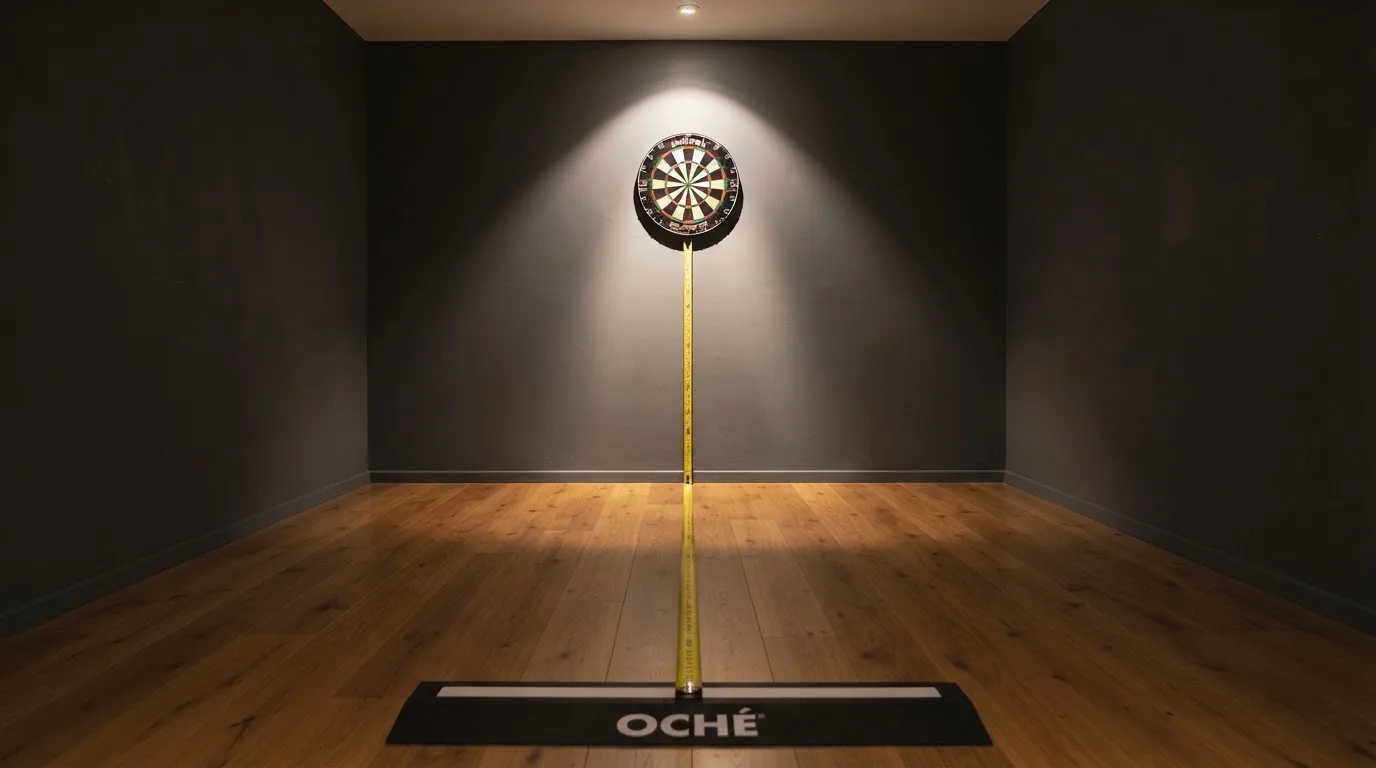
Darts looks predictable because matches have a clean shape: a player starts on 501 in most professional formats, must finish on a double or the bullseye, and the highest possible three-dart finish is 170, with the minimum possible leg taking nine darts. The standard throw distance is 2.37 m and the bullseye sits 1.73 m above the floor — small physical constants that explain why a long first-phase deficit is hard to overturn. Rounds scale: in the 2026 PDC World Darts Championship at Alexandra Palace, rounds one and two were first to three sets, rounds three and four first to four, quarter-finals first to five, semi-finals first to six, and the final first to seven — a structure that lets form compound across the afternoon and rewards the player who settles into a rhythm earliest. None of that is a tip. It is the material a tip would have to be built from.
The tip itself, in the form most punters meet it, names a player and a price. Behind that one-sentence shape there is a calculation, a model, or just an opinion dressed as one. The reader’s job is to know which.
The bookmaker’s margin, sitting in every price
Two prices on a darts match — Van Veen at 1.91, Littler at 1.91 — look fair until they are added up. The “fair” book would price both sides so the implied chances add to exactly 100 per cent; a 50–50 match priced at even money does that, at decimal odds of 2.00 on each side. A real bookmaker prices the same match at 1.91 on each side, and the implied chances add to 105 per cent. The extra five points are the margin: the cut the bookmaker keeps on every pound staked on this market, before any individual outcome is decided. It is not a fee on winners; it is built into every price, on every selection, on every market the bookmaker offers.
Worked on the kind of price a darts match is often priced at — say 1.90 on each side, the decimal form of 9/10 — the payout share comes from inverting and summing the two prices: 1 ÷ 1.90 plus 1 ÷ 1.90 gives a payout share of about 0.5263 per pound staked across both outcomes, or 52.63 per cent. The margin is one minus that, or roughly 47.37 per cent… no, that is the wrong way around. Recompute: 1 ÷ 1.90 equals 0.5263, and the two probabilities sum to 1.0526. The payout share is the reciprocal of that sum, around 0.950, and the margin is the difference between 1 and 0.950 — about 0.050, or 5 per cent. State it as a band: for a darts match priced near evens, the margin sits in roughly the 4 to 6 per cent range, with the exact figure pinned to the snapshot date. On less balanced markets — a heavy favourite priced at 1.30 against a 3.80 outsider — the margin climbs because the favourite’s implied chance is larger and the book is harder to balance; on outright winner markets a week before the tournament starts, the margin is often 25 to 40 per cent and a tip backed against it has the overround working against it before the player walks on stage.
The margin is why a price that “looks generous” still loses over time. A reader who wins one bet at 2.00 and loses the next, on the same match, has broken even before the margin; a reader who picks every match the tipster names, at the price the bookmaker posts, gives back roughly five pence of every pound to the overround on a balanced market. Tips do not overcome the margin. They sit on top of it, and the better the read of form, the smaller the gap between the tipster’s probability and the true one — which is what “finding value” means in practice.
Why no tip is ever certain, and what “value” actually buys
Two things vary between darts players: how good they are on a given night, and how the format treats their game. The first is partly knowable from the past few months — a player averaging 102 on the oche for ten matches is, in a Bayesian sense, more likely to keep doing it than a player averaging 95. The second is partly knowable from the format: a fast starter with a high checkout percentage benefits more from a first-to-three format than a slow starter who grinds opponents down, because fewer legs means variance has more weight. Both of these are inputs to a probability. Neither of them is a forecast.
A value bet is a price that exceeds the true probability once the margin is stripped out. A tipster who has built a model giving Littler a 60 per cent chance of beating Van Veen in a final first-to-seven has identified value if the bookmaker’s price implies anything below 60 per cent — at decimal odds of 1.65 or longer. A tipster who has built a model giving Van Veen a 45 per cent chance needs a price at 2.22 or longer to find value; anything shorter, and the bet is a coin-flip with a haircut. The shape of the judgement is the same every time: what is the probability, what does the price imply, where is the gap. The arithmetic is straightforward. The reading of form that produces the probability is not.
The honest conclusion is that no tip is ever certain, and a tip backed as if it were is a tip that costs the punter before the match starts. A 5 per cent margin on a market does not sound large; a tipster who is right 55 per cent of the time at prices averaging 1.80 has an expected return of minus 1 per cent per bet, which is the bookmaker’s cut arriving on schedule. A tipster who is right 60 per cent of the time at the same prices is up about 8 per cent per bet — the difference is the margin plus the gap between the tipster’s probability and the book’s. Neither number is something a reader can verify from a single tip. They emerge from a record, and a record is what a tipster’s worth is built on.
How to build a probability, in four honest steps
Step one: take the recent record seriously, not literally. A player who has won twelve of fifteen matches in the last two months has done something; a player who has done it against weaker fields, in formats that suit their style, has done less than the count implies. Weight recent form against the strength of opposition, not just the count.
Step two: account for format fit. A first-to-three format rewards fast starters; a first-to-seven rewards endurance and the ability to ride out a bad session. Match the player’s strength to the format’s length before reading the price.
Step three: adjust for venue and crowd. Alexandra Palace, with its winter-format Christmas run and a partisan crowd, has its own effect on form that a player takes or does not take into a match. A first-time finalist at the Palace is a different proposition from a serial winner there.
Step four: price the gap between the book’s implied probability and your own. If the gap is small, the bet is a coin-flip with a margin on top. If the gap is large — say the book’s price implies 50 per cent and your model says 60 per cent — the bet has value, and the size of the stake should follow the size of the gap, not the size of the confidence.
A staking plan like Kelly — staking a fraction of the bank proportional to the edge — is the arithmetic most often quoted and least often used honestly. A half-Kelly or quarter-Kelly is the practical version; full Kelly is for readers with iron nerves and a deep bankroll, because the variance between true edge and perceived edge is what wipes full-Kelly bettors out. The point of a staking plan is to keep the bettor in the game while the model’s read of form proves itself out, which it does over weeks and months, not matches.
The bet types a darts punter actually uses
The most common darts market is the match winner — sometimes called the moneyline — at fractional odds of, say, 11/10 on the favourite. The decimal form is 2.10; a £10 stake returns £21, profit £11. On a heavy favourite priced at 1.40, the same stake returns £14, profit £4, and the punter is buying certainty the bookmaker is not really offering. On an outsider at 4.50, the stake returns £45, profit £35, and the punter is buying variance the format may not give them.
Handicap betting in darts is the spread version of the match winner. A player given a −1.5 set handicap in a first-to-three match must win 2–0 in sets, not 2–1; a player given +1.5 wins the bet on any match they win or take to a deciding set. The handicap shifts the implied probability and the price: a player who would be 1.91 to win the match outright may be 1.91 to win with a −1.5 handicap on a fast format, or 2.20 to win with the same handicap on a slow format. The handicap is a way to back the favourite at a bigger price without changing the pick — and a way to back the underdog on a slightly worse number without giving up the bet.
Total legs, total sets, total 180s, highest checkout, race to a set or leg count, and a player to hit a 170 finish are all markets a typical UK bookmaker prices on a televised match. The margin on each is its own number; the margin on player props is often the highest in the book because liquidity is thin. Combination bets — three or four selections combined into one accumulator at multiplied odds — multiply the prices and the margins. A four-fold at decimal odds of 2.00 on each leg has a combined margin of roughly 18.6 per cent, not the 5 per cent of a single bet; the punter has bought a longer price and a worse expectation, and the difference is what the bookmaker keeps.
Cash out is the bookmaker’s offer to settle the bet before the match ends, at a price that reflects the current state. On a bet that is winning, cash out pays less than the full return would at the final whistle; on a bet that is losing, cash out returns a fraction of the stake. The price the bookmaker offers is built from its own model of the remaining probability, with the same margin the original price had — sometimes a wider one. Cash out is useful when the format of the match has shifted against the bet, and harmful when the punter uses it as a substitute for thinking about the rest of the event.
Each-way betting, so common on horse racing that it carries its own idiom, is rarer in darts and most UK bookmakers do not offer it on a head-to-head. The archers pocket apply to events with places — a Premier League Darts weekly meeting with quarter-finals, semi-finals and a final is the closest darts comes to a race, and a bookmaker that offers each-way treats reaching the semi-final as the place.
Live betting on darts: what changes, and what costs
Live betting on darts looks attractive because the scoreboard is informative in a way few sports are. A player 3–0 up in a first-to-seven has the match in their hand; a player 3–0 down is gone. The prices move to reflect that, and a punter who reads the scoreboard faster than the price settles has a real edge — for the first few seconds of any leg, before the bookmaker’s algorithm catches up.
The cost is the in-play margin. UK bookmakers price live markets tighter than pre-match on heavy-liquidity events and wider on thin ones, and the wider the margin, the less useful the speed advantage is. A live darts match in the first round of a World Championship, where liquidity is thin, is often offered at a 7 to 10 per cent margin; a Premier League Darts weekly final, where the book has had all week to price it, sits closer to 5 per cent. The reader who bets live on the smaller event pays the wider margin every time, regardless of how fast they read the scoreboard.
Cash out on a live bet costs the same margin again. The punter who backs Littler pre-match at 2.10 and cashes out at 1.40 when Littler goes 3–1 up has locked in a return that reflects the bookmaker’s model of the remaining sets, with the overround still inside. The arithmetic is the same as pre-match; what changes is the punter’s exposure to the rest of the match, and a punter who cashes out at every favourable score never lets a winning position run, which is the cost cash out carries beyond the margin.
Offers on darts: what a bonus actually pays
A bookmaker’s welcome offer on darts sits on top of a price the bookmaker has already margined. The £25 in free bets and 50 free spins Midnite credits a new customer who stakes £5 or more at pre-match odds of EVS (2.0) or greater within 14 days is one example of the shape: a small qualifying stake, a 14-day window, a free-bet value of £25 in stake-not-returned form, valid for seven days. The qualifying bet pays the reader £10 plus any profit on a £5 stake at 2.0; the free bets, if they win, pay profit only, and the stake is not returned. A £25 free bet at 2.0 returns £25 in profit, not £50; a £25 free bet at 4.0 returns £75 in profit; a £25 free bet that loses returns nothing. The free bet’s expected value is the free-bet amount times the odds minus one divided by the odds, multiplied by the payout share of the market it is bet on — a small but positive number on a balanced darts match at decimal odds of 2.00, around £6.25 on a £25 free bet before the qualifier and the seven-day window are priced in.
Sporting Index’s £10 fixed-odds bet at minimum odds of 1/2 unlocks three £10 fixed-odds free bets, three £5 Total Goals spread bets, three £5 Winning Favourites spread bets and a £1 Race Index spread bet, with the qualifier not placeable in play and not cashable out early — a more complex bundle of fixed-odds and spread components that reflects Sporting Index’s hybrid spread-betting identity. The qualifying bet’s stake is real money; the free bets are stake-not-returned; the spread components carry the FCA’s spread-betting risk that losses can exceed the deposit. A punter who treats the spread components as a bonus is treating them as something they are not; the punter who reads the small print treats them as a small exposure to a financial product.
The promotion rules now in force in Great Britain cap wagering requirements on bonuses at 10x — a £10 bonus at 50x needs £500 of qualifying bets; under the cap the same bonus requires £100. Mixed-product promotions, where an offer ties betting to casino or bingo or lottery, are banned. The cap does not apply to a free bet with no wagering condition; what it caps is the multiplier the bookmaker is allowed to demand before bonus money becomes withdrawable. A reader who sees a “free” offer with a 30x or 40x multiplier is looking at an offer that existed before the rule, or at an offer on a brand that is not licensed by the Commission.
Staking, bankroll and the cost of being wrong
A bankroll is the part of the punter’s money set aside for betting, kept apart from rent, bills and savings. A stake is the slice of bankroll risked on a single bet, sized to the edge. The arithmetic that links the two is the staking plan; the discipline that links the punter to both is the rule that says no single stake should ever threaten the bankroll.
A reader with a £500 bankroll and a quarter-Kelly plan staking 1 per cent of bankroll on a flat edge is risking £5 per bet on bets that look break-even and adjusting from there. A reader staking 5 per cent of bankroll on a perceived edge is staking £25 per bet, and a ten-bet losing streak — not unusual in darts over a month — wipes out half the bankroll before the model has had time to prove itself. The cost of being wrong is what staking controls; the cost of being right less often than expected is what the bankroll absorbs. Both are part of the price of taking tips seriously.
The bookmaker’s deposit limit is a separate tool, set by the punter before the first deposit, and the safer-gambling tools each operator publishes — deposit limits, time-outs, self-exclusion, product restrictions, the GAMSTOP register for a longer break — are what a licensed operator is required to offer. A punter who has set a deposit limit and is using a staking plan is operating inside a system the regulator has built; a punter who has not is operating against it.
Tournament context: what the calendar does to a price
Darts has two governing bodies at the top of the sport, the PDC and the WDF, and the calendar that matters to a UK punter runs mostly through the PDC’s events. The PDC World Championship is the headline — held annually over the Christmas and New Year period at Alexandra Palace, expanded in 2026 to 128 players from the previous 96, with the 2026 final contested as a first-to-seven between Luke Littler and Gian van Veen, won 7–1 by Littler, on a £5,000,000 prize fund with £1,000,000 to the winner. The Premier League Darts runs weekly from February to May with a different format and a smaller field. The World Matchplay, the World Grand Prix and the Grand Slam sit between them. The Players Championship events run almost weekly through the year with smaller fields and faster formats.
A tournament’s format shapes the favourite. The World Championship’s first-to-seven in the final rewards the player who settles fastest, and a player who has won a Players Championship the week before is carrying momentum that does not always survive the change of format and venue. A Premier League Darts night with a first-to-six final and a smaller field rewards the player who handles the weekly schedule, and a player who has played eight matches in the previous fortnight is a different proposition from one who has played two.
The bookmaker’s outright winner market — the price on who wins the tournament before it starts — is the market with the widest margin in darts, often 25 to 40 per cent, and the market a tip is least useful on. A punter backing five players each at 10/1 to win the World Championship is paying a margin on each selection, and the combined expectation is well below the stake. The market exists because it is hard to lay and easy to read; a punter using it as a value-hunting ground is hunting in the wrong field.
Reading a bookmaker: what the UK-licensed operators publish
The ten brands compared below all hold a Gambling Commission remote operating licence for general betting on real events, verified through the Commission’s public register by business name, account number and licence-holder company. None of them is “the only” licensed brand; the register lists more, and the comparison is among ten of them, not the entire market.
Paddy Power — Bet Builder+ and a Super Sub for player changes
Paddy Power runs on the same platform as Betfair under PPB Counterparty Services Limited, holding Gambling Commission account 39439. The app’s standout feature for darts is Bet Builder+, which combines selections from one match into a single bet — total 180s, highest checkout, match winner, set handicap — at multiplied odds, with a Super Sub rule that rolls a selected player’s bet onto a replacement if the named player is substituted before the match starts. Popular Bet Builders, expanded Win More markets, and player and ACCA stats are positioned around the in-play section. The offer on the app is documented in Paddy Power’s own terms, and the brand carries the Commission’s safer-gambling tools as a condition of licence.
Betmaster — A smaller brand, a wider market
Betmaster is run by BM Solutions GB Ltd, registered in Malta, on Gambling Commission account 65699. The brand’s published material positions it as a full-service sportsbook and casino, with a darts section that prices the standard match markets and outright winner markets on the televised PDC events. The smaller scale means the margin on smaller darts markets is wider than the bigger books’ margins; the larger scale means the same price is harder to find on obscure qualifiers. A punter looking for first-round World Championship prices at midnight the night before a match will sometimes find them only at the smaller books, and the margin they pay is the cost of finding them.
BetGoodwin — Best Odds Guaranteed on the racing, a separate price for darts
BetGoodwin, operated by Goodwin Racing Limited on Gambling Commission account 2927, publishes a Best Odds Guaranteed offer on all UK and Irish horse and greyhound racing, up to £1,000, with the rule that if the starting price is larger than the price taken, the bet is settled at the larger. The rule does not extend to darts, and the darts price is the darts price — settle early if a televised event has moved the line in-play, but no Best Odds Guaranteed applies. The brand’s focus is racing; the darts section is functional, and a punter looking for the deepest darts outright market will find thinner lists here than at a brand that prices darts as a primary sport.
Sporting Index — Spread components and a fixed-odds welcome bundle
Sporting Index, on Gambling Commission account 27343, is the FCA-regulated spread-betting arm and the Gambling Commission-regulated fixed-odds arm of the same parent, and the spread-betting identity is the one that defines the welcome bundle: a £10 fixed-odds qualifier at 1/2 or longer unlocks three £10 fixed-odds free bets, three £5 Total Goals spread bets, three £5 Winning Favourites spread bets and a £1 Race Index spread bet, with the qualifier not placeable in play and not cashable out early. The Total Goals, Winning Favourites and Race Index components are spread bets, not fixed odds — losses can exceed the deposit, the FCA’s spread-betting risk applies, and a punter reading “free” is reading past the structure. The fixed-odds components are stake-not-returned free bets on the same model as elsewhere in the market.
LiveScore Bet — The payment list and the standard sportsbook shape
LiveScore Bet, operated by LiveScore Betting and Gaming (Gibraltar) Limited on Gambling Commission account 56859, accepts debit cards, Apple Pay, PayPal, Pay by Bank (Open Banking) and Revolut Pay — a list that covers most UK punters’ preferred rails and excludes credit cards under the Commission’s ban. The brand runs on a standard sportsbook shape, with pre-match and in-play pricing on the televised PDC events, bet-builder markets on the bigger matches and the standard deposit limit and safer-gambling tools. LiveScore Bet’s differentiation is the live scores product it shares its name with; the sportsbook is functional rather than market-leading, and a punter choosing it is choosing the brand’s scoreboard and rails over a deeper outright market.
Midnite — In-play, price boosts and a stake-not-returned welcome offer
Midnite runs on Gambling Commission account 101839, with in-play pricing, an acca builder, popular accas and price boosts that carry maximum-stake limits in the small print. The welcome offer credits £25 in free bets and 50 free spins to a new customer who stakes £5 or more at EVS (2.0) or greater within 14 days of sign-up, with the free bets valid for seven days — a stake-not-returned structure that pays profit only, with the £5 qualifier at the front and the seven-day clock at the back. Price boosts on darts markets are limited by stake, and a punter pushing a boost past its ceiling sees the stake capped before the bet is placed. The brand carries the Commission’s safer-gambling tools as a condition of licence.
DAZN Bet — A sports-broadcast parent and a low deposit floor
DAZN Bet is operated by DZBT Limited on Gambling Commission account 48756, with the broadcast parent positioning the sportsbook inside a streaming product. Deposits start at £5 by debit card, Apple Pay, Paysafecard, Trustly and Skrill, and at £20 by PayPal, with no processing fees — a floor lower than most competitors and a PayPal floor that reflects PayPal’s own minimum. The deposit limit is the customer’s choice under the Commission’s rules, and the smaller floor lets a punter set a smaller personal limit without hitting the operator’s minimum. The darts markets are functional; a punter choosing DAZN Bet is choosing the streaming bundle and the deposit rails rather than the deepest outright market.
Lottoland — A combined casino, lottery and sportsbook
Lottoland UK, on Gambling Commission account 38991, combines casino, lottery betting, sports betting and scratchcards under one app, and it is licensed for Great Britain by the Commission. The lottery and scratchcard products are the brand’s identity; the sportsbook is a smaller section with a darts list that covers the televised events and prices outright winner markets at the headline PDC tournaments. The punter choosing Lottoland is choosing the combined product over a sportsbook-specialist, and the value of the combination is what it does for the reader who already plays the lottery or scratchcards.
Fitzwilliam Sports — A phone-and-live-chat bookmaker
Fitzwilliam Sports runs under SBKI Limited on Gambling Commission account 48760, with phone and live chat open from 09:00 to 21:00 Monday to Sunday and messenger replies typically within 90 seconds. The phone-and-live-chat model is the brand’s identity; the sportsbook is a smaller section with a darts list that prices the standard match markets on televised events. The communication channels are the differentiation for a punter who wants a phone number to call, and a punter whose bet has been settled in a way they want to query has a route beyond the standard online complaints form.
William Hill — Best Odds Guaranteed on UK and Irish racing, a standard darts book
William Hill, on Gambling Commission account 39225, runs Best Odds Guaranteed on UK and Irish horse racing from 8 AM on the day of the race, on single and multiple bets — not on ante-post, tote or pari-mutuel. The rule does not extend to darts, and the darts price is the darts price, settled at the price taken. The brand is the long-standing high-street bookmaker that moved online, and the darts section is functional rather than market-leading — a punter choosing William Hill is choosing the brand’s name and its racing product over a deeper darts outright market.
How a darts bet pays, in plain arithmetic
Two prices in, one stake in, one return out. A £10 stake at decimal odds of 3.50 returns £35 — the £10 stake plus £25 in profit. A £10 stake at 1.40 returns £14 — the stake plus £4. A £10 accumulator combining three legs at 2.00, 2.00 and 2.00 prices the combined bet at 8.00, and the £10 stake returns £80 if all three legs win. A £10 each-way double on horse racing — two bets of £5 each — is a different shape, and the stake doubles for the place part.
A winning free bet’s stake is not paid back. A £25 free bet at 2.00 returns £25 in profit, not £50; a £25 free bet at 4.00 returns £75 in profit. The free bet’s expected value on a market with a 5 per cent margin is the free-bet amount times the odds minus one divided by the odds, multiplied by the payout share — £6.25 on a £25 free bet at 2.00 before the qualifier and the expiry are priced in. The qualifier is the bet the punter has to place to unlock the free bet, and the qualifier’s stake is real money; a £5 qualifier at 2.00 is the kind of small front-end a welcome offer typically carries, and a £5 qualifier at 1.50 is a smaller edge on a smaller price.
The arithmetic of darts betting is not a forecast, but a way to see the value. A punter who can do the arithmetic can read a price; a punter who can read a price can read a margin; a punter who can read a margin can read an offer. The arithmetic does not pick the winner. The scoreboard does that.
The legal frame: who is licensed, and what that licence buys
A bookmaker serving customers in Great Britain needs a Gambling Commission licence wherever it is based. The Gambling Act 2005 covers England, Scotland and Wales; Northern Ireland has its own older regime and a GB licence is not a Northern Ireland licence. Since the Gambling (Licensing and Advertising) Act 2014 an operator whose remote facilities are used in Great Britain needs a Commission licence wherever it is incorporated, and a Curaçao, Maltese or Gibraltar licence is not a substitute for serving British customers. The Commission’s public register is the whole test of whether a brand holds a licence, and a brand quoted as licensed without an account number and a licence-holder company is a brand quoted without proof.
The licence buys the punter a set of things a non-licensed brand does not have to provide. Identity verification before the first deposit, with name, address and date of birth checked against public records, is mandatory; a non-licensed brand does not have to check. GAMSTOP, the national multi-operator online self-exclusion scheme, is a mandatory licence condition for online operators and covers six months, one year, five years, or five years with auto-renewal, with a further seven years after the minimum period unless the customer asks GAMSTOP to remove it; a non-licensed brand is not part of GAMSTOP. A financial vulnerability check applies when a customer’s deposits minus withdrawals exceed £150 in a rolling 30-day period; a public-record check rather than an income or credit check. Wagering requirements on bonuses are capped at 10x, and mixed-product offers that tie betting to another product type are banned. Credit cards are banned for gambling, including credit-card-funded e-wallet payments.
The licence does not buy the punter a winning bet. It buys a regulator’s framework around the bet, and the framework is the difference between a brand a reader can complain to and a brand a reader cannot. A punter who bets on a non-licensed brand loses the Commission complaints route, the approved dispute-resolution body, the British consumer-redress mechanism if funds are withheld, the GAMSTOP coverage, the 10x bonus cap and the £150 vulnerability check — none of those protections travel. A non-licensed brand is not “the safe choice” by default; a non-licensed brand is the choice that does not come with the protections a Commission licence requires.
Safer gambling: the tools a licensed operator is required to publish
Every licensed online operator carries safer-gambling tools as a condition of licence. Deposit limits — the punter sets a gross deposit limit on a fixed time frame and the operator must apply it. Time-outs — short breaks from 24 hours to several weeks. Self-exclusion through GAMSTOP — the longer break, six months to five years. Product restrictions — the punter can exclude themselves from specific product types such as casino or sports. Reality checks — pop-up reminders during a session. The first phase of the Commission’s deposit-limit rules has applied since 31 October 2025, a second phase was postponed to 30 September 2026, and whether it is live at the time of reading depends on the operator.
Help is the last layer of the framework. GamCare runs the National Gambling Helpline. GambleAware funds treatment and education. The NHS runs gambling clinics across the regions. Gamblers Anonymous runs peer-support meetings. A punter who has set a deposit limit, used a time-out, self-excluded through GAMSTOP, and is using a staking plan has built the structure the regulator requires; a punter who needs more than the structure can build needs the help the framework points them toward.
What the rule on offers actually does
The rule on offers is a consumer-protection rule with a number behind it. A £10 bonus at 50x wagering requires £500 of qualifying bets before the bonus is withdrawable; under the cap the same bonus requires £100. The cap is the line at which the bookmaker’s offer stops being a marketing spend and starts being a margin-extraction mechanism, and the cap draws the line at 10x because a 50x bonus typically returns less than half its face value to a punter on a balanced market. The cap on mixed-product promotions is a separate rule: a book cannot offer “bet £10 on darts to get £10 of free spins” as a welcome offer, because the cross-product tying forces the punter to play products they did not come to play. The cap does not apply to a free bet with no wagering condition; what it caps is the multiplier on bonus money, and a punter who sees a “free” offer with a 35x multiplier is looking at an offer that existed before the rule, or at a brand that is not licensed.
The advertising rules sit alongside the bonus rules. Marketing must be socially responsible, must not be of strong appeal to under-18s, and no one who is or seems to be under 25 may be featured gambling or play a significant role, with an exception for marketing placed where a bet can be made directly. The rule concerns who may appear in the advertisement, not who may bet. The whistle-to-whistle code — no betting advertisements on TV from five minutes before a live sporting event to five minutes after it, before the 9pm watershed — is an industry code rather than law, but the Commission treats it as a condition the licensed operators have signed up to. The Premier League’s withdrawal of gambling sponsorship from the front of matchday shirts from 2026/27, with sleeves and hoardings remaining, is voluntary.
A punter who reads an offer’s small print and finds a 35x wagering multiplier, a cross-product tying, or a stake cap that limits a price boost has found something the offer’s headline did not mention, and the offer’s headline is what the offer is sold on. The gap between the headline and the small print is what the rule on offers exists to close.
Tax, in one paragraph
The player pays no tax on betting winnings in Great Britain; general information, not tax advice, and a professional gambler should ask HMRC or an adviser. General Betting Duty is the operator’s tax on gross profits, currently 15 per cent; from 1 April 2027 a new remote betting rate of 25 per cent applies within it, while remote bets on UK horse racing, bets on self-self-service betting terminals in licensed premises, pool betting and in-person betting stay at 15 per cent. Until 1 April 2027 the remote rate stays at 15 per cent; whether operators pass duty on through odds is not established, and the player is not charged duty directly. The Commission’s statutory levy is a separate charge, not a tax, and a spread-betting punter is in a different tax regime with FCA-regulated rates that vary by product.
What this page is not, in one paragraph
This page is not a tip sheet. No concrete matches are named with picks, no predicted results are given, and no odds are invented; the prices cited are illustrative and the snapshot dates are stated where the figures come from a specific point in time. A tip is a single sentence with three things inside it, and the arithmetic that goes into a tip is the part that does the work — the rest is the marketing. The reader who has read this far has the arithmetic.
Comparing ten UK-licensed operators on licence and terms
The comparison below takes each operator’s licence position from the Gambling Commission’s public register and each operator’s own published terms on the subjects a darts punter actually cares about. The columns are the licence position and the key term the operator publishes on the relevant subject; a brand with a wider offer list has more lines under “key term” than a brand with a narrower one.
| Brand | Gambling Commission remote licence and licence-holder company | What the operator’s own terms state |
|---|---|---|
| Paddy Power | Account 39439, held by PPB Counterparty Services Limited | Bet Builder+, Super Sub, expanded Win More markets, player and ACCA stats |
| Betmaster | Account 65699, held by BM Solutions GB Ltd | Sportsbook and casino under one licence; smaller-outlet darts pricing |
| BetGoodwin | Account 2927, held by Goodwin Racing Limited | Best Odds Guaranteed on UK and Irish horse and greyhound racing, up to £1,000 |
| Sporting Index | Account 27343, held by Sporting Index Limited | £10 fixed-odds welcome bundle with fixed-odds and spread-bets components |
| LiveScore Bet | Account 56859, held by LiveScore Betting and Gaming (Gibraltar) Limited | Debit cards, Apple Pay, PayPal, Pay by Bank and Revolut Pay accepted |
| Midnite | Account 101839, held by Midnite Limited | £25 in free bets and 50 free spins on a £5 EVS-or-greater 14-day qualifier |
| DAZN Bet | Account 48756, held by DZBT Limited | Deposits from £5 by debit card, Apple Pay, Paysafecard, Trustly and Skrill |
| Lottoland UK | Account 38991, held by EU Lotto Limited | Casino, lottery betting, sports betting and scratchcards under one licence |
| Fitzwilliam Sports | Account 48760, held by SBKI Limited | Phone and live chat 09:00 to 21:00 Monday to Sunday, messenger within 90 seconds |
| William Hill | Account 39225, held by WHG (International) Limited | Best Odds Guaranteed on UK and Irish horse racing from 8 AM, singles and multiples |
The rows above carry the licence position the Commission’s register publishes and the key term each operator’s own terms page publishes; the prose above carries the read of each term, and the read is the part the price does not give.
What the comparison shows, in three honest lines
The bigger brands price darts more aggressively and offer more markets; the smaller brands price a narrower list at a wider margin. The bundle brands — Lottoland’s combined product, DAZN Bet’s broadcast parent, LiveScore Bet’s live scores — differentiate on the bundle, not on the darts list. The communication-led brand — Fitzwilliam Sports’ phone and live chat — differentiates on the service, not on the markets. A punter choosing between them is choosing between a deeper outright market, a wider payment list, a smaller deposit floor, a stronger welcome offer, or a service channel the larger books do not run. The choice is the punter’s; the comparison is the table’s.
The cost of a tip, in one sentence
A tip costs the punter the margin the bookmaker has already priced into the market, the qualifier the bookmaker requires before the free bet is unlocked, the multiplier the bookmaker applies before the bonus is withdrawable, the deadline the bookmaker sets before the offer expires, the stake cap the bookmaker imposes on the price boost, and the bank’s patience while the punter’s model proves itself out. None of these costs is named in the tip’s headline. All of them are named in the small print. A reader who reads the small print before the headline is reading in the order the cost arrives.
Frequently asked questions
How do I bet on darts?
A darts bet is a stake on a market the bookmaker offers — match winner, set handicap, total legs, total 180s, highest checkout, or outright winner of a tournament — at a price the bookmaker sets. Place the stake pre-match or in-play, the bet settles on the official result, and the return is the stake multiplied by the decimal odds. A free bet’s stake is not paid back with a win; cash out settles the bet early at a price the bookmaker quotes.
What is darts betting?
Darts betting is staking money on the outcome of a darts event at a price the bookmaker sets, settled on the official result of that event. The most common markets are the match winner, the set handicap, the total legs or sets, the outright winner of a tournament and the in-play version of the same markets as the match unfolds. The bookmaker’s margin sits inside every price, and a punt on a televised PDC event is the most common shape the bet takes.
How does handicap betting on darts work?
A handicap bet shifts the implied probability by adding or subtracting a set or leg margin to one player. A player given a −1.5 set handicap in a first-to-three must win 2–0, not 2–1; a player given +1.5 wins on any match they win or take to a deciding set. The handicap is a way to back the favourite at a bigger price or the outsider on a slightly worse number, and it works the same way on set handicaps, leg handicaps, and 180 or checkout totals over a line.
What is a value bet, and why is no tip ever certain?
A value bet is a price above the true probability once the bookmaker’s margin is taken out — a stake placed where the gap between the book’s implied probability and your model’s read is positive. No tip is ever certain because the model’s read of form is built from past data on a player whose future performance varies match by match, the price is built from a market whose model is different from the punter’s, and the format of the match shapes the outcome in ways neither model fully captures. A tip backed as if it were certain is a tip that costs the punter before the match starts.
What is the bookmaker’s margin and how is it visible in the odds?
The margin is the cut the bookmaker keeps on every pound staked on a market, built into the prices on every selection rather than charged on outcomes. It is visible by inverting each decimal price, summing the inverses, taking the reciprocal and subtracting from one — a 5 per cent margin on a match priced near evens produces a payout share of 95 per cent, with the missing 5 per cent the cut the bookmaker keeps regardless of who wins. The margin on a balanced darts match sits in roughly the 4 to 6 per cent range, and the margin on outright winner markets sits much higher.
How is the return on a bet worked out from the stake and the odds?
A return is the stake multiplied by the decimal odds — a £10 stake at 3.50 returns £35, the £10 stake plus £25 in profit. A free bet’s stake is not paid back, so a £25 free bet at 3.50 returns £62.50 in profit, not £87.50 in return. A combination bet’s odds are the product of the legs, so three legs at 2.00, 2.00 and 2.00 multiply into 8.00, and the £10 stake returns £80 if all three win. The return is the arithmetic the price quotes; the profit is what the punter keeps.
Tennis, darts & cue sports – signupbetsguide.com
Content created by the «signupbetsguide.com» team
