
Hurling Betting Tips - How a Priced-Up Prediction Actually Gets Built
 Available in US
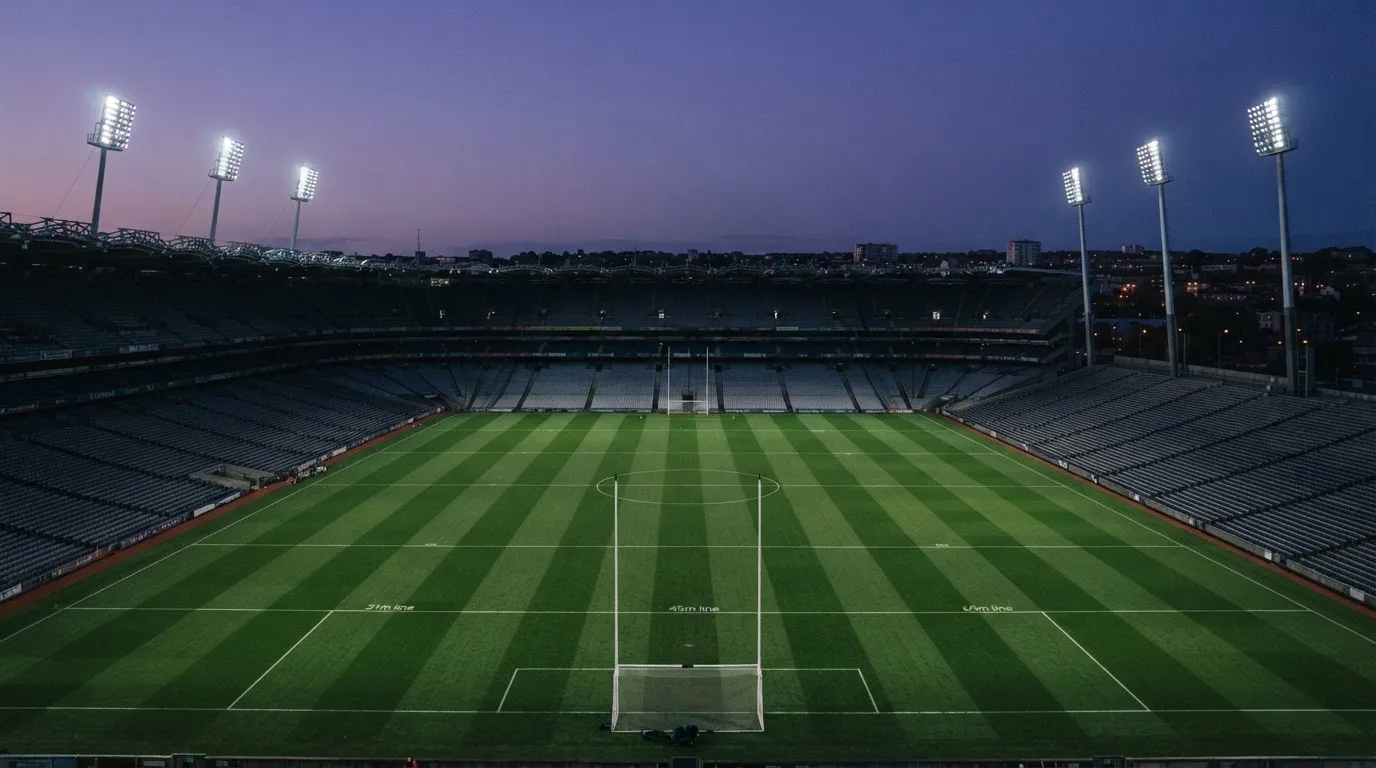
Hurling is fast, low-scoring in goals and high-scoring in points, and the betting market treats it differently from football. Limerick beat Galway in the 2026 All-Ireland Senior Hurling Championship final at Croke Park, Dublin; the championship ended on 19 July 2026, and that fixture book — the one priced all year — is now closed. The next one opens soon. Before any of it turns into a bet, the work is research.

Currency, current as of 30 October 2026, verified against the Gambling Commission’s public register.
Bonuses and Free Bets on Hurling – What the Marketing Words Actually Cost
A hurling welcome offer is the cheapest free lesson the market gives a new account. The lesson is that the words do not mean what they sound like.
The Three Shapes an Offer Takes on Hurling
Three shapes cover almost every hurling promotion. A free bet is stake-not-returned: the bookmaker pays the winnings only, so a £10 free bet at 3/1 (decimal 4.00) returns £30 profit, not £40. A price boost raises the odds on a single named selection – usually a headline player to score first, or a pre-built All-Ireland outright – and pays at the new price with the stake returned. A money back as a free bet is the third shape: a refund, when it triggers, is paid as free-bet credit, not as cash, and is itself subject to whatever rollover sits behind the next promotion.
A welcome offer in the round is almost always the first shape, paired with a minimum odds condition. “£20 in free bets when a £10 bet is placed” – the BoyleSports headline – reads as 2:1 cash on cash. Read the small print. The qualifying £10 is paid in money and the £20 comes back as four £5 free bets. The £20 is not £20 of withdrawable cash.

Wagering Requirements – the Hidden Turnover
A bonus carries turnover when it is paid back as withdrawable cash. Since 19 January 2026 the cap is 10x: a £10 bonus may ask for no more than £100 of qualifying bets before the winnings are withdrawable, and a £50 bonus stops at £500. The cap is the bright line. Beyond it, the wording is where the cost lives.
The cost is the turnover times the margin of the markets used to clear it. A reader who works through £500 of bets on hurling match odds at a 5% margin has paid, on average, £25 of that turnover to the bookmaker’s house edge. That £25 is what the bonus cost before any fee or condition was applied to it. A wagering requirement above 10× would reflect a rule the industry agreed to withdraw.
A bonus with no wagering requirement – the rarer shape – has no turnover cost, and what it caps is the upside. A £10 free bet with no rollover still pays winnings only, and a £100 ceiling on free-bet winnings turns a 50/1 selection into a capped return. The marketing word for that ceiling is usually “max win”; it is the line at which the offer stops paying.
Best Odds Guaranteed – the One Hurling Promotion That Rarely Fires
Best Odds Guaranteed sits on UK and Irish horse racing, not on hurling. William Hill pays BOG from 8 AM on the day of the race on UK and Irish racing, single and multiple, no ante-post. Fafabet pays BOG from 9 AM. Bet600 pays BOG if the starting price beats the price taken. QuinnBet pays BOG from 10:00 with a £150-per-race cap per customer. None of this fires on a hurling match. A hurling reader using BOG as the reason to open an account is using a paper midget as the load-bearing pillar.
The hurling equivalent, where it exists, is the price boost on an All-Ireland outright or on a named match selection, paid at the new price with the stake returned. The wagering requirement is the same as any other price boost: zero, on the boost itself. The cap is what bites.
What the Hurling Welcome Is Worth Against the Margin
A free bet is worth its face value times the edge the price represents, less the margin of the market it is placed in. The plain-English version: the value is roughly the free bet size, scaled by how good the price is, scaled again by how thin the bookmaker’s margin is on that market. The free bet is the asset; the price and the margin decide what the asset is worth.
For the free bet to be worth more than its face value, the price on the selection has to beat the market’s own margin. That is rarer than the marketing copy lets on. A reader who sizes the bet to the offer and finds a price that does not beat the margin has paid the bookmaker twice: once through the offer’s terms, once through the odds.
Pacing the Offers – Sequence and Bankroll
The practical order runs: open the account, verify the password on the first deposit (since 7 May 2019 name, address and date of birth are checked before the first deposit, including with a free bet), place the qualifying bet, claim the free-bet credit, use the credit before it expires. The expiry is the line a reader misses. BoyleSports’ £20 in four £5 free bets expires a week after issue. A reader who treats it as a £20 single bet has spent £15 in a window the marketing did not name.
Two offers, opened and worked through, do not compound. The rollover of one is the rollover of one. A reader who opens three accounts to harvest three welcome offers spends three qualifying deposits; the offers do not stack against the same stake. The compounding is in the bankroll discipline, not in the bonus balance.
Live Betting and Cash Out on Hurling – What the In-Play Slip Actually Delivers
A hurling match turns fast. The bookmaker’s in-play slip turns with it.
What Live Hurling Markets Show
Live GAA markets show what an exchange would show: match odds, the next point, total points, handicaps, sometimes a next-scorer market on a named forward. The price moves on every score. The reader who wants to back Galway at 2.20 after a Limerick point has a window that closes as the next puck-out lands.
In-play on a 70-minute match – two halves of 35 minutes – is shorter than in-play on football. The window a reader wants on the next Limerick goal is roughly 60 seconds; the window on the next point is shorter, and the price on either resets before the sliot is.
Cash Out – the Tool That Pays Less Than It Looks
A cash out is the bookmaker buying a reader’s bet back at a price the bookmaker sets. The price is the live margin plus a spread. The spread is wider at the start of an exchange on a small market – hurling at 0-0 with one televised fixture is small – and tightens as the event matures.
The honest way to read a cash-out figure: if the bet would win £100 at full time and the cash-out offer is £85, the £15 is the bookmaker’s charge for the certainty. On a heavily overround market that charge is what the price was going to cost a reader over time anyway. On a thin market with one outcome likely, it is a free option against the loss.
The reader who cashes out every winning bet ends the season with the bookmaker’s spread as their only fee. That is the trade.
Live Streaming on Hurling – Who Streams, Who Doesn’t
Live streaming on hurling is rare on UK-licensed sites. The broadcast rights sit with RTÉ and GAAGO, and a UK bookmaker is licensed to show a small set of fixtures, not a full league. Where a stream exists it is gated by a positive account balance or a bet in the last 24 hours. bet365 streams a long list of events worldwide, and GAA fixtures sit on the list in patches; 888sport lists racing streams as a core feature and GAA streams as they arise.
Where the stream is not available, the in-play slip still updates on the bookmaker’s own data feed. The reader betting blind on football and reading the slip is reading a feed that is, by rule, two ticks behind the live one. The price a reader takes is the price the bookmaker is willing to publish at the speed of the slip.
Reading Momentum Without Watching the Stream
Momentum in hurling is a run of points and a goal that is not yet scored. The bookmaker’s price drops before a kick is visible on the feed; the reader who reads the price has read the market, not the pitch. The reader who reads the pitch has watched the game; the reader who reads the price has read the bookmaker’s reaction to the game.
Two readers, one game, two different views of what is happening. The price is the slower of the two.
Bet Types and Odds on Hurling – Single, Acca, Each-Way and What Hurling Settles On
A bet is a contract. The contract names what happens if the selection wins, and the rules name what counts as a win.
Single Bets and the Settling Rule
A single bet on the All-Ireland outright pays when the team selected lifts the cup. A single bet on a group match pays when the final whistle of normal time blows, including injury time, but not extra time – the rule is on the operator’s Gaelic games page and the rule states that bets settle on the official result at the end of normal time including injury time, and that extra time does not count unless stated otherwise. A reader who bets the draw and goes to extra time has lost the draw, and the rule is the rule before the bet is placed.
A bet on the outright is a futures market: the bet is held until the championship is decided, the team pulls out, or the rules say the bet is void. A withdrawal at the group stage usually voids outright bets at most shops; a withdrawal between the All-Ireland semi-final and the final is treated differently. The rule is on the operator’s page, not on this one.
Accumulators on Hurling – What the Bookmaker Calls an Acca
An accumulator (“acca”) is a single bet whose price is the product of the prices on its legs. Four legs at 1.50, 2.00, 1.80 and 2.20 is a single price of 11.88. The bet wins if all four legs win; one losing leg voids the whole bet. The bookmaker’s margin compounds across the legs. Where a single bet is priced at a 5% margin, an accumulator across four such markets is priced at a margin of roughly 19% – the margin is additive across independent markets.
A bet builder on a single GAA fixture does not compound the margin across separate events; it builds a price from markets on one match. bet365 offers Bet Builder+ as a named feature, combining markets from one event into a single bet pre-match and in-play; Super Boosts and Winnings Boosts on Bet Builders run alongside. A Bet Builder’s price is the product of the component prices on one match, with the bookmaker’s own margin layered on top.
A double is two legs; a treble is three. A Trixie is four; a Patent is seven; a Yankee is eleven; a Lucky 15 is fifteen; a Super Yankee (also called a Canadian) is twenty-six; a Heinz is fifty-seven; a Goliath is two hundred and forty-seven. The total stake on a Trixie is the unit stake times four; a Lucky 15 costs fifteen unit stakes, not one. A reader who treats a Lucky 15 as a £1 bet has staked £15, not £1. The unit stake is the lever that quietly moves the bankroll.
Each-Way Bets – Two Bets, Double the Stake
An each-way bet is two bets of equal stakes – one on the win, one on the place. The stake doubles. Each-way bets run on horse racing with place terms of a quarter or a fifth of the win price, and on outright tournaments where the place terms are set by the operator (usually a quarter of the win price on the first four in an All-Ireland). A £10 each-way bet on Tipperary at 6/1 (decimal 7.00) costs £20 – £10 on the win, £10 on the place.
On a tournament outright, place terms of a quarter of the win odds on the first four places mean the place part pays if Tipperary finish in the top four. The win part pays only if they lift the cup.
Fractional and Decimal Odds – The Same Price, Two Grammars
Fractional odds such as 5/1 mean a £1 stake returns £5 profit plus the £1 stake; the decimal equivalent is 6.00. Fractional odds of 5/2 mean a £1 stake returns £5/2 = £2.50 profit; the decimal is 3.50. Fractional odds of evens – 1/1 – mean a £1 stake returns £1 profit; the decimal is 2.00. The conversion is a ÷ b + 1. A reader used to one grammar pays the same price as a reader used to the other; the page that prints 5/1 and the page that prints 6.00 are pricing the same bet.
A price shorter than evens – “odds-on” – is a price a reader pays more to win less. 4/6 (decimal 1.67) on a hot favourite is the grammar for a price below 2.00.
The Bookmaker’s Margin – How It Lives in the Odds
The margin is what the bookmaker keeps of every unit staked on a market. For a two-way market at 1.90 / 1.90, the payout share is 1 / (1/1.90 + 1/1.90) = 0.95, and the margin is 1 – 0.95 = 0.05, or 5%. For a three-way 1X2 at 2.20 / 3.40 / 3.00, the payout share is 1 / (1/2.20 + 1/3.40 + 1/3.00) = 0.894, so the margin is about 10.6%. The margin is the cost of being allowed to play, paid through the odds on every bet. A market at 5% is a tight market; a market at 10% is the kind of price a reader notices; a market at 15% is a market a reader should not be on.
The result, stated as a band with its condition: an evenly priced two-way market at 1.90 / 1.90 carries a margin of around 5%, so the bookmaker keeps about £5 of every £100 staked on the market. An unevenly priced two-way market carries a margin of 2% to 6% depending on the spread; a 1X2 at 2.20 / 3.40 / 3.00 carries roughly 10% to 11%, and that band is what a reader is paying for the third outcome.
A reader who knows the margin sees the price. A reader who sees only the price does not see the margin.
Hurling Tournaments, Markets and Where the Form Sits
Hurling has a calendar; the betting calendar sits on top of it.
The All-Ireland Senior Hurling Championship – The Headline Market
The All-Ireland Senior Hurling Championship is the GAA’s premier inter-county competition. The provincial championships – Munster and Leinster – feed into the All-Ireland. In the 2026 All-Ireland Senior Hurling Championship Leinster has six teams and Munster has five, each in a round-robin group; the top two meet in the provincial final, and the third-placed team goes to the All-Ireland quarter-finals. The championship ends at Croke Park; Limerick beat Galway in the 2026 final on 19 July 2026.
The All-Ireland outright is a futures bet that runs from the league stage of the prior year through the final. The price drops as the championship narrows. A back-to-back favourite is rarely at its best price at the All-Ireland semi-final.
Provincial and Club Championships – Smaller Markets, Thinner Prices
Munster and Leinster run their own championship: a round-robin and a provincial final, with the top three going to the All-Ireland series. The provincial final is a smaller market than the All-Ireland final, with fewer bookmakers pricing it and a wider margin. The same applies to the All-Ireland Senior Club Hurling Championship, which runs on a separate calendar and on BallyCon. BallyCon is to the club game what BallyCon is to the senior game: a separate competition, a separate market, a thinner book.
The club championship is the betting market a reader ends up on when the senior championship closes. BallyCon and BallyHurling are not the same competition; the page that prices them as one market is mispricing two.
League and Pre-Season – Where the Form Sits
The Allianz Hurling League runs from February to April, before the championship. Form built in the league carries into the championship. A reader pricing the All-Ireland outright before the league is pricing momentum that has not yet settled; a reader pricing the All-Ireland outright after the league is pricing form that has had a few months to ripen. The form is in the league results; the price is in the bookmaker’s reaction to the league results.
Pre-season friendlies are not form. They are matches played under conditions that do not repeat in May.
Team Form, Statistics and Line-Ups – The Three Inputs to a Prediction
A tip built from the league table alone is a tip built from one input. A tip built from the league table, the team’s scoring rate, and the named starting fifteen is built from three. The bookmaker’s price is the fourth input – the market’s own estimate of the probability of each outcome, less the margin. A tip that beats the price is a tip that beats the market; a tip that does not beat the price is a tip the bookmaker has already priced.
Statistics on hurling are thinner than on football. Bookmakers publish expected goals and shot data for the bigger fixtures; a reader looking for an expected-points model is largely on their own.
Market Lines and Settlement Edges
The settlement line on hurling match odds is the result at the end of normal time including injury time. Extra time does not count unless the rules say so. A reader betting the draw that goes to extra time has lost the bet; the rule is the rule.
Handicaps on hurling are settled on the score at full time: a -2 handicap on Limerick means Limerick win by three points or more for the bet to win. A +3 handicap on Galway means Galway lose by two or fewer, or win. Hurling scores are close – a five-point margin is a hammering, a one-point margin is the norm – and the handicap line is narrower than on football.
Top 10 Reviewed Bookmakers for Hurling
The ten operators below hold a Gambling Commission remote licence for Great Britain and have been checked on the Commission’s public register. The list is a comparison of what each offers on GAA and hurling specifically, not a ranking by quality: a brand sitting at number one is a brand whose offer suits the reader of the next paragraph, not the reader of every paragraph on this site.
The Gambling Commission remote licence number and licence holder are stated from the register; the hurling-market detail is from each operator’s own terms and from a public-facing app listing, as cited.
| Brand | Gambling Commission licence holder and account number | What the operator’s own terms state on the key |
|---|---|---|
| Kalooki Sportsbook | Kalooki Sportsbook Limited, account 57730 | Operated by Kalooki Sports Book Ltd (company number 12938274); GAMSTOP member; identity verification before the first deposit |
| William Hill | WHG (International) Limited, account 39225 | Best Odds Guaranteed on UK and Irish racing from 8 AM on the day of the race, single and multiple, no ante-post; Football Acca Boost on accas of 2+ legs at 1/5 or bigger, boost from 3% on a double to 200% on 20+ legs, max boost £10,000 per online bet, runs until 30 May 2027 |
| Fafabet | Taichi Tech Limited, account 57385 | Best Odds Guaranteed on UK and Irish racing win and each-way bets from 9 AM on race days; bigger of original price or SP paid |
| Bet600 | Tyche Tech Limited, account 44731 | Best Odds Guaranteed on horse racing; SP paid when starting price beats the price taken |
| Swifty Sports | Swifty Global (UK) Ltd, account 58957 | Best Odds Guaranteed, Cash Out on markets including horse racing and football, daily price boosts, live streaming, in-play betting; Bet Builder listed as coming soon |
| bet365 | Hillside (UK Sports) ENC, account 55148 | Bet Builder+ (combining markets from one event, pre-match and in-play), Super Boosts, Winnings Boosts on Bet Builders and selected singles, daily Bet Boosts; in-play betting and live streaming of events worldwide, Bet Track, Match Live, Live Golf Tracker |
| Paddy Power | PPB Counterparty Services Limited, account 39439 | Sports app covers football, horse racing, boxing, rugby, tennis, golf, darts, snooker and F1 |
| BoyleSports | Boylesports Enterprise, account 39469 | Sports welcome offer for UK players: £20 in free bets when a £10 bet is placed; €30 in free bets for a €10 bet for Irish players |
| 888sport | 888 UK Limited, account 39028 | Pre-match and in-play betting, Cash Out, Bet Builder, racing streams, BetFinder form tools, live bet feed, daily boosted odds |
| QuinnBet | QuinnBet (Gibraltar) Limited, account 61011 | Best Odds Guaranteed on Irish and UK horse racing bets from 10:00 daily on singles, multiples and system bets, with a maximum benefit of £150 per customer per race |
Kalooki Sportsbook – the New-Account Layer on the Form
Kalooki Sportsbook is the bookmaker a reader opens to read the league form, not the outright market. The GAA market on Kalooki is a working market on the bigger fixtures and a thin market on the rest of the calendar; the welcome offer is the reason the bookmaker is on this list, not the depth of the book. A reader who opens the account to read the league table and use the welcome offer on the All-Ireland semi-final has used the brand for what it does best.
Identity verification before the first deposit is the first step on Kalooki, as it is on every UK-licensed site. A reader who has not verified the password cannot place a bet, and the welcome offer is paid in free-bet credit after the qualifying bet settles.
William Hill – the Racing-Led Book with a Hurling Window
William Hill is the long-standing high-street name, and the GB site is run by WHG (International) Limited. The brand pays Best Odds Guaranteed on UK and Irish racing from 8 AM on race days, single and multiple bets, no ante-post, tote or pari-mutuel. The Football Acca Boost covers accas of 2+ legs at 1/5 or bigger, with a boost from 3% on a double up to 200% on 20+ legs and a £10,000 max boost per online bet; the offer runs until 30 May 2027.
The hurling window on William Hill is the All-Ireland outright and the bigger group fixtures. A reader pricing a five-leg accumulator across GAA, football and racing is using the Football Acca Boost for what it covers and ignoring what it does not cover.
Fafabet – the Racing Promo with a GAA Trade
Fafabet pays Best Odds Guaranteed on UK and Irish racing win and each-way bets from 9 AM on race days; the bigger of the original price and the SP is paid. The GAA offering on Fafabet is a working market on the bigger fixtures and a thinner market on the rest. A reader using Fafabet for hurling is using the welcome offer to fund a first bet on a GAA outright, not the racing book.
Bet600 – the Thin-Bet Racing-Anchored Brand
Bet600 pays Best Odds Guaranteed on horse racing: where the SP beats the early or show price taken, the bet is paid at the SP. The GAA market on Bet600 is a working market on the bigger fixtures. A reader opening Bet600 for hurling is opening a brand whose racing trade is the long suit and whose GAA trade is the side bet.
Swifty Sports – the In-Play-Led Brand with a Hurling Question
Swifty Sports offers Best Odds Guaranteed, Cash Out on markets including horse racing and football, daily price boosts, live streaming and in-play betting. Bet Builder is listed as coming soon, which is the price a reader pays for opening the brand before the feature ships: a market structure that does not yet combine selections on a single GAA fixture. A reader who wants a Bet Builder on a GAA match is reading the wrong terms.
bet365 – the Depth Book
bet365 is the depth book on GAA. The brand offers Bet Builder+ (combining markets from one event pre-match and in-play), Super Boosts, Winnings Boosts on Bet Builders and selected singles, and daily Bet Boosts. Live streaming covers events worldwide; Bet Track and Match Live follow bets in play, and a Live Golf Tracker runs alongside. The bet365 app is the most-downloaded sports betting app in the UK, and the brand is the official global betting partner of the UEFA Champions League – which is a football fact, but the operational lesson is that a brand running Champions League logistics is running GAA logistics too.
A reader pricing a GAA outright, a Bet Builder on the All-Ireland semi-final, and an in-play bet on a league match is reading three sections of the bet365 site in one sitting.
Paddy Power – the Brand with the Racing Layer
Paddy Power covers football, horse racing, boxing, rugby, tennis, golf, darts, snooker and F1 on its sports app. The GAA layer on Paddy Power is a working market on the bigger fixtures and the All-Ireland outright. A reader using Paddy Power for hurling is using the brand’s racing and football trade to fund a GAA bet, not the other way round.
BoyleSports – the Welcome-Offer-Anchored Brand
BoyleSports’ sports welcome offer for UK players is £20 in free bets when a £10 bet is placed (€30 in free bets for a €10 bet for Irish players). The four £5 free bets carry the expiry the marketing does not name. The GAA layer on BoyleSports is a working market on the bigger fixtures.
888sport – the In-Play, Bet-Builder and Form Tool
888sport offers pre-match and in-play betting, Cash Out, Bet Builder, racing streams, BetFinder form tools, a live bet feed and daily boosted odds. The combination on 888sport is the combination a reader wants on a GAA match weekend: a pre-match form tool, a Bet Builder for the named fixtures, an in-play slip and a stream where one exists.
QuinnBet – the Capped BOG with a Hurling Trade
QuinnBet pays Best Odds Guaranteed on Irish and UK horse racing from 10:00 daily on singles, multiples and system bets, with a £150-per-race cap per customer. The GAA market on QuinnBet is a working market on the bigger fixtures. A reader using QuinnBet for hurling is opening an account whose racing trade is the long suit and whose GAA trade is the side bet, and whose BOG cap is the part of the offer that bites a reader who backs a long-priced winner.
How Hurling Betting Works – The Mechanics Under the Slip
The betting market on hurling runs on the same mechanics as any other sport. The reader enters the mechanics, and the mechanics settle the bet.
What Counts as a Win
A single bet on the match winner pays when the match is over and the result is in. A single bet on the outright pays when the championship is over and the team selected has lifted the cup. A single bet on a handicap pays on the score at full time including injury time. A single bet on a player market pays on the player’s recorded statistics, as the operator’s rules define them.
The rule is the rule before the bet is placed, not after. A reader who places the bet and reads the rule is reading the rule on the operator’s page, not on this one.
Reading the Price Before the Bet
A reader who reads the price reads the margin. A two-way market at 1.90 / 1.90 carries a 5% margin; a 1X2 at 2.20 / 3.40 / 3.00 carries roughly 10.6%. A reader betting on the tighter market is paying less per unit staked, all else equal; a reader betting on the wider market is paying the bookmaker’s wider fee for the third outcome or the wider spread.
What a Tip Actually Is
A tip is a claim that the price on a selection is bigger than the probability of the selection winning, after the margin is taken out. A reader who places the tip as a bet is betting that the price exceeds the probability the tip is built on. A tip built on the league table alone is built on one input; a tip built on the league table, the team’s scoring rate, and the named starting fifteen is built on three. A tip built on three inputs that the bookmaker has not priced beats the price; a tip built on one input that the bookmaker has priced does not beat the price.
A tip is not a promise. A tip is a price, and a price is a margin, and a margin is what the reader pays in real money.
What a Value Bet Is, and Why It Beats the Price
A value bet is a price that exceeds the probability of the selection winning. A reader who prices a team at 3.00 (implied probability 1/3.00 = 33.3%) and the bookmaker prices the team at 2.50 (implied 40%) has a value bet only if the reader’s probability exceeds the bookmaker’s. The bookmaker has already taken the margin out of 2.50; the reader’s price is what the reader’s own model says the probability is.
The model that beats the price is the model that beats the market. The model that does not beat the price is the model the bookmaker has already priced.
What Bankroll Discipline Is, and Why It Beats the Welcome Offer
Bankroll discipline is a stake size, fixed as a percentage of the bank, that the reader does not vary on a hunch. A reader who stakes 5% of a £200 bank on every bet stakes £10; a reader who varies the stake on a hunch stakes what the hunch says, which is rarely 5%. The reader who varies the stake is the reader who loses the whole stack on a hunch that did not work.
A welcome offer compounds bankroll discipline: a reader who stakes the welcome offer at 5% of the bank has staked a free bet at a unit the reader can afford to lose. A reader who stakes the welcome offer at 50% of the bank has staked a free bet on a unit that turns a bad day into an empty account.
Legality and Regulation in Great Britain
A bookmaker serving customers in Great Britain needs a Gambling Commission licence. The Commission’s register is the whole test of who holds one.
Who Regulates What
The Gambling Commission (UKGC) is the regulator. It licenses the whole commercial market under the Gambling Act 2005, which covers Great Britain (England, Scotland and Wales); Northern Ireland is outside the Act and has its own older law. A GB licence regulates Great Britain only; a Northern Irish customer is not regulated by the GB regime. The Commission is a non-departmental public body sponsored by the Department for Culture, Media and Sport.
Since the Gambling (Licensing and Advertising) Act 2014 an operator whose remote facilities are used in Great Britain needs a Commission licence wherever it is based (sections 33 and 36 of the 2005 Act as amended). A Curaçao, Maltese or Gibraltar licence is not a substitute. Spreadex is regulated by the FCA for spread betting and by the Gambling Commission for fixed-odds betting; spread betting losses can exceed the deposit, and the FCA is the regulator of the spread-betting product, not the Commission.
The Public Register – the Whole Test
The Commission’s public register can be searched by business name, trading name, domain or account number. A brand is licensed if it appears on the register against a licence category that covers the product the reader is buying. The register is the test of whether a brand holds a licence; a brand’s marketing copy is not. A reader who bets on a brand not on the register is betting on a brand whose protection regime is whatever the brand says it is.
The licences relevant to a remote sportsbook are remote general betting standard (real events), remote general betting standard (virtual events), remote general betting limited, remote pool betting and remote betting intermediary (the licence for betting exchanges). The featured operators on this page hold remote general betting standard (real events).
Identity Verification and the First Deposit
Since 7 May 2019 name, address and date of birth are verified before a customer can deposit or gamble, including with a free bet or bonus. The verification is the first step on every UK-licensed site; a reader who has not verified the password cannot place a bet. Anonymous play is not a feature of a licensed site. The 18+ minimum age is enforced on the same check.
What May Be Bet On
No statutory list of permitted bets or markets exists. An operator holds a licence for a category and offers markets under its own rules and the Licence Conditions and Codes of Practice (LCCP). In-play betting is offered by GB bookmakers; the controls are the operator’s licence conditions and customer-protection duties. Esports are treated like any other event; virtual events are a separate licence category; bets on politics, TV shows and novelty markets are offered by GB bookmakers. Spread betting that is not a financial product is inside General Betting Duty.
Advertising and the Marketing Rule
Advertising is not licensed by the Commission; it runs through the CAP Code (non-broadcast) and BCAP Code (broadcast), enforced by the ASA. CAP Code section 16: marketing must be socially responsible, must not be of strong appeal to under-18s, and no one who is or seems to be under 25 may be featured gambling or play a significant role; the rule concerns who may appear in the advertisement, not who may bet. Promotion rules in force since 19 January 2026: wagering requirements on bonuses are capped at 10x, and mixed-product promotions are banned.
The “whistle-to-whistle” industry code: since 1 August 2019 betting advertisements are not shown on TV from five minutes before a live sporting event to five minutes after it, before the 9 PM watershed (horse and greyhound racing excluded).
Tax – What the Bettor Pays and What the Bookmaker Pays
The bettor pays no tax on betting winnings in Great Britain (general information, not tax advice; a professional gambler should ask HMRC or an adviser). General Betting Duty is the operator’s tax on gross profits, currently 15%; from 1 April 2027 a new remote betting rate of 25% applies within it, while remote bets on UK horse racing, bets on self-service betting terminals in licensed premises, pool betting and in-person betting stay at 15% (HM Government policy paper of 26 November 2025). Until 1 April 2027 the remote rate stays at 15%; whether operators pass duty on through odds is not established.
Credit Cards and Payments
Credit cards are banned for gambling in Great Britain since 14 April 2020 (LCCP condition 6.1.2), including credit-card-funded payments through an e-wallet. Debit cards and bank-based payments are not covered. A state list of permitted payment methods is not established; describe payments from each operator’s terms.
Offshore vs Licensed
A GB licence is compulsory at the point of consumption. Providing gambling facilities in Great Britain without the licence the Act requires is an offence under section 33 of the Gambling Act 2005 – aimed at the operator. No offence aimed at a customer who merely bets on an unlicensed site was found. The cost of an unlicensed site is the cost of losing the protections: no GAMSTOP coverage, no Commission complaints route, no approved dispute-resolution body, no British consumer redress if funds are withheld, no 10x bonus cap, no £150 vulnerability check. Enforcement is disruption, not blocking.
Responsible Gambling – The Tools a Licensed Site Has to Offer
A licensed bookmaker is licensed to ask the reader about the reader. The tools below are the licensed regime’s answer to that question.
GAMSTOP – the National Self-Exclusion Scheme
GAMSTOP is the national multi-operator online self-exclusion scheme and a mandatory licence condition for online operators since 31 March 2020. Periods are six months, one year, five years, or five years with auto-renewal; after the minimum period the exclusion stays in place for a further seven years unless the customer asks GAMSTOP to remove it. The scheme covers online sites and apps; betting shops use a separate service. A reader who has self-excluded through GAMSTOP cannot open a new account with any UK-licensed online bookmaker for the duration of the exclusion. Kalooki Sportsbook is a GAMSTOP member.
Deposit Limits and the £150 Vulnerability Check
Deposit limits (RTS 12): operators must offer a gross deposit limit on a fixed time frame; the first changes have applied since 31 October 2025, a second phase was postponed to 30 September 2026. There is no state-set deposit or loss ceiling for betting: limits are the customer’s choice. Fitzwilliam Sports offers instant deposits, fast withdrawals, timeouts and deposit limits; the offering is the standard a reader should expect from a licensed site, not a premium a reader should pay extra for.
A financial vulnerability check (LCCP condition 3.4.4, in force since 30 August 2024) applies to licensed remote betting when a customer’s deposits minus withdrawals exceed £150 in a rolling 30 days (since 28 February 2025). It is a public-record check – for example bankruptcy or county court judgments – not an income check and not a credit reference check. Financial risk assessments (the “affordability checks” of the press) are announced in a staged plan (Commission article of 7 July 2026), with no start date.
Help and Counselling
GamCare (National Gambling Helpline), GambleAware, NHS gambling clinics and Gamblers Anonymous are the routes a reader is signposted to by every licensed site. Fitzwilliam Sports links to GambleAware, GamStop and Gamblers Anonymous; the linking is the licence condition, not the brand’s generosity.
What a Tip Is Worth Against a Help Line
A tip that the reader can no longer afford to follow is a tip the reader has paid for in something other than money. The licensed regime’s tools check the form of that payment: deposit limits set a ceiling; timeouts set a pause; GAMSTOP sets a stop. The tools are the cost of the licence the reader holds by virtue of betting on a licensed site. The tools are not optional, and the licensed site is not the only place that offers them.
Staking Discipline – the Reader’s Own Tool
The reader’s own tool is staking discipline. A stake sized as a percentage of the bank – 1% to 5% depending on the reader’s appetite – does not vary on a hunch. A record of every bet, the price, the selection and the result is the basis on which the reader knows whether the model beats the market. A reader who does not record the bets does not know whether the model is a model.
A reader who knows the model beats the market is a reader whose tip is a price. A reader who does not is a reader whose tip is a guess.
How the Margins Shape a Hurling Reader’s Day
The bookmaker’s margin sits inside every price on a hurling match. The reader sits on the other side.
Two-Way Markets – the Tightest Books
The tightest book on a hurling match is a two-way market – match winner after extra time, or a handicap. The margin on an evenly priced 1.90 / 1.90 is 5%; the margin on a 1.85 / 1.95 is 5.4%; the margin on a 1.80 / 2.00 is 9.5%. The reader sees a tighter book on the deeper market – the All-Ireland final, the semi-finals – and a wider book on the group fixtures.
Three-Way Markets – the Draw, the Wider Margin
The 1X2 – home, draw, away – carries a third outcome and a wider margin. A 2.20 / 3.40 / 3.00 carries roughly 10.6%; a 2.00 / 3.20 / 3.60 carries roughly 9%. The draw in hurling is rarer than the draw in football, and the price on the draw is wider, and the margin on the 1X2 is wider because the draw is harder to price. The reader betting the 1X2 on a hurling match is paying for the third outcome through the margin.
Outrights – the Futures Margin
The outright market on the All-Ireland carries a margin that depends on the number of teams priced and the spread of their prices. A 12-team outright priced from 3.00 (Limerick) to 150.00 (Kilkenny) carries a margin of roughly 18% to 25%. The reader betting the outright is paying the futures fee for the chance to take a price that compounds over the championship.
What the Margin Looks Like on a Betting Day
A reader placing three single bets on a GAA match weekend – one on the match odds, one on a handicap, one on the outright – is paying the bookmaker roughly 5% to 12% of the stake through the margin on each bet, before the welcome offer or the free bet is layered on. The cost of the day is the cost of the margin, not the cost of the welcome offer.
The welcome offer compounds the cost. A £10 free bet at a 5% market pays the reader’s model minus the margin; the reader who reads the margin reads the offer.
The Reader’s Path Through a Hurling Betting Day
The path runs from form to price to bet to record.
Step One – Form
Form is the league table, the scoring rate, the head-to-head, the named starting fifteen. The form is in the league results, the bookmakers’ previews, and the team pages. A reader who has not read the form has not read the price; a reader who has read the price has read the bookmaker’s reaction to the form.
Step Two – Price
The price is the odds on the selection. The price is the margin the bookmaker is charging and the probability the bookmaker is willing to publish. A reader who reads the price on three books reads three margins and three probabilities.
Step Three – Bet
The bet is the stake at the price on the selection. The bet is what the reader records. A reader who records the bet records the price, the selection, the stake, the bookmaker and the result. A reader who does not record the bet does not know what the model is worth.
Step Four – Settlement
Settlement is the rule applied to the result. The rule is on the operator’s page, and the rule is what counts. A reader who reads the rule before the bet is placed reads the rule that will be applied when the bet settles.
Step Five – Review
Review is the comparison of the model to the market. The model that beats the market is a model worth keeping; the model that does not beat the market is a model the bookmaker has already priced. A reader who reviews the bets knows the model.
What This Page Has Covered and What It Has Not
The page has covered the offers, the live markets, the bet types and odds, the GAA tournaments, the ten reviewed bookmakers, the legality and the responsible gambling regime. It has not covered the result of any match, the winner of any tournament, or the price on any specific selection. A reader who reads the page reads the mechanism; a reader who bets on the mechanism bets on the mechanism.
A tip is a price, and a price is a margin, and a margin is what the reader pays. A welcome offer is a free bet subject to rules, and the rules are the cost. A licensed site is a check before the first deposit and a check after the £150 vulnerability threshold; the check is the protection, and the protection is the licence.
The reader who takes the page into the championship takes the margin, the welcome offer’s rules, the live market’s slip, the outright’s wider book, the licensed site’s checks and the responsible gambling regime’s tools. The reader who does not take the page into the championship has read the page and left the bet on the page.
Frequently Asked Questions
What is a value bet and why is no tip ever certain?
A value bet is a price that exceeds the probability of the selection winning, after the bookmaker’s margin is taken out. A tip built from the league table, the team’s scoring rate and the named starting fifteen is a stronger tip than one built from the table alone; a tip that beats the bookmaker’s price is a tip that beats the market. No tip is ever certain: a value bet is a price edge over many bets, not a guarantee on any single bet, and the bookmaker’s margin sits inside every price the market publishes.
What is the bookmaker’s margin and how can it be seen in the odds?
The margin is what the bookmaker keeps of every unit staked on a market. For a two-way market at 1.90 / 1.90 the payout share is 1 / (1/1.90 + 1/1.90) = 0.95 and the margin is 5%. For a 1X2 at 2.20 / 3.40 / 3.00 the payout share is 1 / (1/2.20 + 1/3.40 + 1/3.00) ≈ 0.894 and the margin is roughly 10.6%. The margin is the cost the reader pays through the odds; a tighter book is a cheaper market, all else equal.
How is the return on a bet worked out from the stake and the odds?
The return on a winning single bet is stake × decimal odds; the net profit is stake × (decimal odds − 1). A £10 bet at 6.00 returns £60; the profit is £50. For an accumulator the price is the product of the legs’ prices; four legs at 1.50, 2.00, 1.80 and 2.20 multiply to 11.88, so a £10 acca returns £118.80 and the profit is £108.80.
How can it be checked that a bookmaker holds a Gambling Commission licence?
The Commission’s public register is the whole test. Search by business name, trading name, domain or account number; if the brand appears against a remote general betting standard (real events) licence, the brand is licensed for the product the reader is buying. The register lists the licence holder, the account number, the categories and the site domain. A brand whose marketing says “licensed” but whose register entry does not match the marketing is the liability rather than the asset.
Which tools for controlling play does a licensed bookmaker have to offer?
GAMSTOP is the national multi-operator self-exclusion scheme and is a mandatory licence condition for online operators since 31 March 2020, with periods of six months, one year, five years or five years with auto-renewal. Deposit limits, timeouts and the £150 vulnerability check (since 28 February 2025) are part of the same regime. Help is signposted to GamCare (National Gambling Helpline), GambleAware, NHS gambling clinics and Gamblers Anonymous on every licensed site. The tools are the licence, not the brand’s generosity.
Rugby, cricket & Gaelic – signupbetsguide.com
Content created by the «signupbetsguide.com» team
