
How Curling Betting Is Built, What It Costs, and Which UK Sites Cover It
 Available in US
Curling takes up a small corner of the winter-sports calendar, and a quieter corner still of the betting market. Most UK-licensed bookmakers cover the Olympics and the World Championships; a fair number add the European Championships and selected mixed-doubles stops. What this guide is built around is the cost side: what a curling price tends to be worth, how the bookmaker’s margin sits inside it, and which of the licensed operators do most to shrink that margin — because on curling, even more than on most sports, the gap between a careful pick and an ordinary pick is the difference between a price that pays and a price that takes too much off the top.
Current as of 30 October 2026; licence data verified against the Gambling Commission public register.
The Fixtures: Where Curling Betting Markets Actually Run
The first thing to fix is what curling betting means in practice. A bookmaker does not run a curling market every week of the year. The sport has a defined calendar, and the betting calendar runs with it.
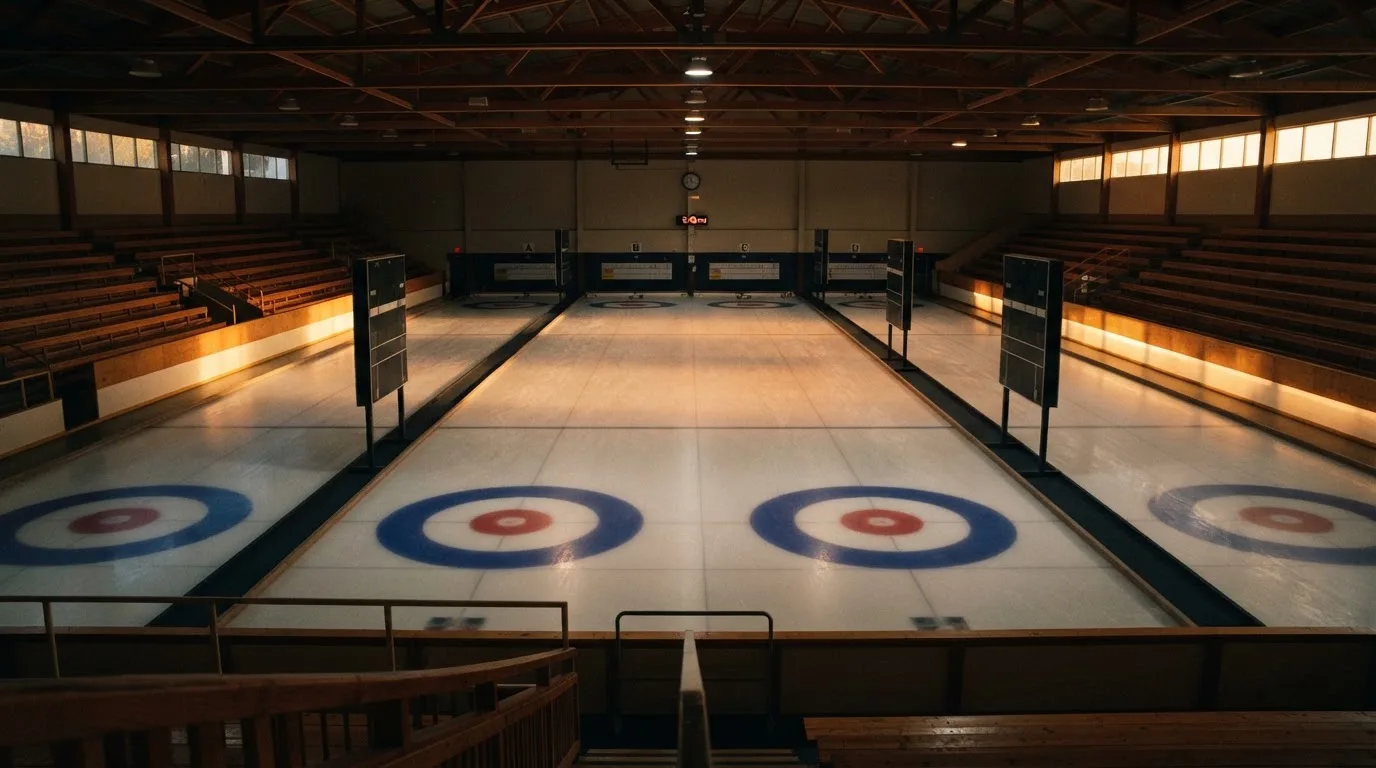
International competitive games go to ten ends by default, though eight-end formats appear at club and lower-tier levels. A team fields four players in mixed-team competition and two in mixed doubles. Between them, the side throws eight stones per end — each delivery travels the sheet, curls as the handle is released, and lands somewhere inside the circular target at the far end. After all sixteen stones have been thrown, only the team with the stone closest to the centre, the button, scores, and that team takes one point for every stone of its own closer to the button than its opponent’s nearest stone. Ties are rare but possible, and tied games go to extra ends. The hammer, the last stone of an end, goes to the team that did not score in the previous end; a blanked end keeps the hammer with the same team. Stones themselves are heavy: a World Curling Federation stone sits between 17.24 and 19.96 kilograms, which says something about the skill required to deliver one cleanly across thirty metres of pebbled ice.
Curling has been an official Olympic medal sport since the 1998 Winter Games, with mixed doubles first included in 2018. The sport now runs a World Men’s Curling Championship and a World Women’s Curling Championship every year, both organised by the World Curling Federation, alongside the World Mixed Doubles Curling Championship and a continental set in Europe, the Americas and the Asia-Pacific region. The European Curling Championships draw strong fields and have become the second-biggest annual shop window for curling betting behind the Worlds. For the punter, the practical point is that licensed bookmakers tend to price three windows: the lead-in to a major, the event itself, and a brief period of outrights and antepost markets afterwards. Outside those windows, a curling match on the betting slip is the exception.
What Betting on Curling Looks Like at a Licensed Bookmaker
A licensed UK bookmaker offering curling will, at minimum, run three market types when an event is live: the outright tournament winner, the match winner (which in curling means the head-to-head on a scheduled draw, with extra ends counted), and a small set of in-play markets depending on how the operator prices the event. Match winner is the staple — the cleanest one, two-outcome or three-outcome market depending on whether a draw is allowed under tournament rules. Outright winner markets run from the moment bookmakers price the field, sometimes weeks ahead of the first stone, and pay out on the team that lifts the trophy.
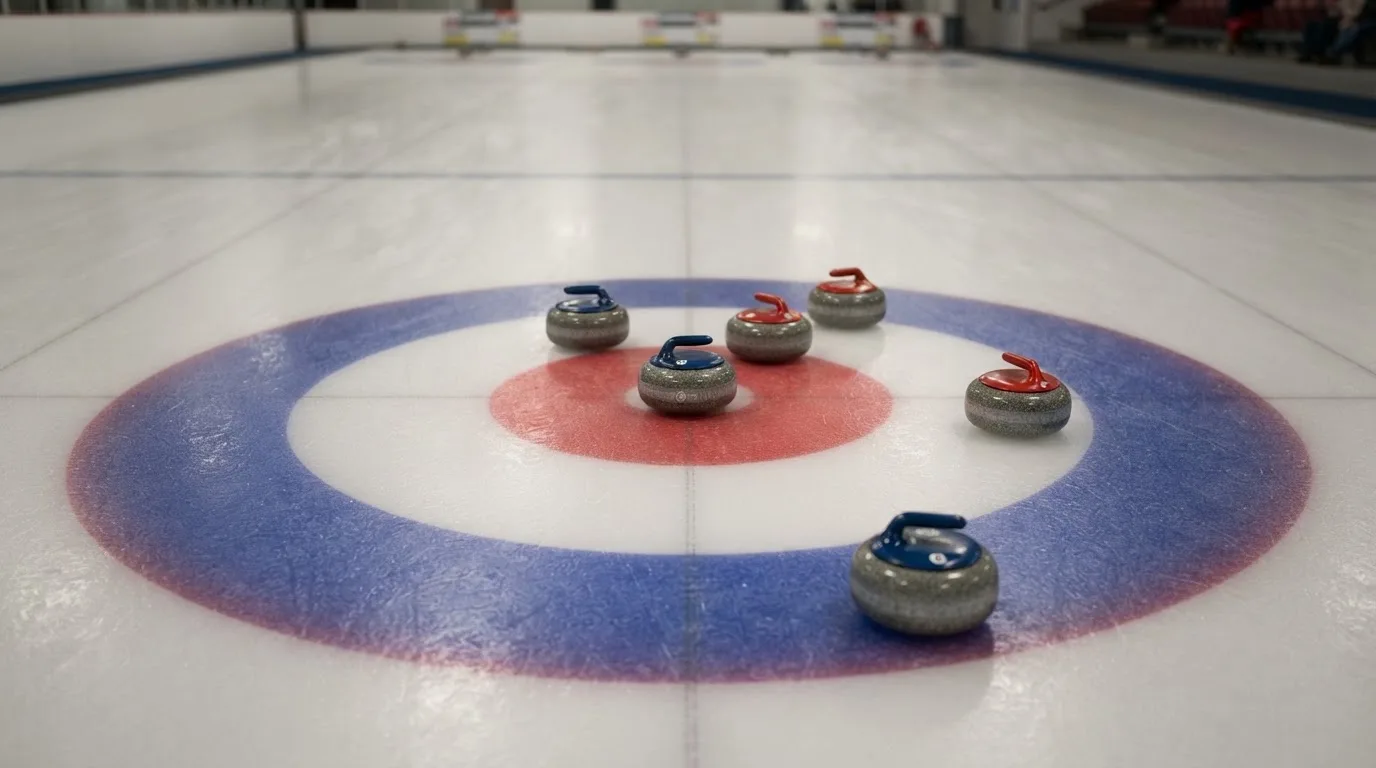
The thing a punter notices quickly is that curling match markets often sit at odds short enough to look generous, with both teams priced in the 1.70 to 2.00 region against the field, and that the spread between the two sides narrows as a competition progresses. That spread is a feature of the form: at most major events the top eight or ten teams are competitive enough that bookmakers cannot lean far off 50/50. It also means the bookmaker’s margin sits inside two narrow numbers rather than one wide one, and a punter trying to beat the margin has to bet fairly often to do it.
The bookmaker’s offer below this point varies. Some operators price curling draw No Bet markets — a wager that voids if the scheduled match ends level, which on a sport with extra ends is rarer than the market’s name suggests — and a small set of totals or handicap lines on tight matches. The bigger operators carry in-play pricing through a match, which on curling is a less developed product than in-play football or tennis, partly because matches run slowly, partly because there are fewer betting events per hour to react to. A punter looking at the sport fresh should expect match winner and outright winner as the foundation, and treat anything else as operator-dependent.
Which UK Bookmakers Cover Curling in Practice
The page ranks the ten licensed bookmakers below by a stated criterion: how a curling bettor’s stake is treated. That is, which of the named operators carry the deepest curling markets at the smallest margin, which operate the cleanest cash-out, which add a bet builder that includes curling, and which simply cover the sport as one more winter-sports tab. The verdict at the end of each block is this page’s own.
BetMGM
A LeoVegas Gaming PLC brand, BetMGM runs its UK sportsbook on a Gambling Commission licence via the Commission’s public register. The site carries a sports welcome package — four free bets triggered by a £10+ deposit and qualifying sports bet within seven days — and a casino bonus, with opt-in required and minimum odds applying. Curling coverage on BetMGM tends to be selective: World Championships, the Olympics and the European Championships get full match-winner treatment and an outright-winner market, with everything else run on a minimum staffing basis during the event window. The sports welcome package splits across acca and multiple-bet formats — two football accumulators and two sports multiples of two-plus legs — so a curling single does not use any of the four free bets in full. A punter who bets curling singles and likes BetMGM’s outright pricing will leave three free bets unused.
A clean second page by this criterion: BetMGM covers curling well enough to take an outright, the welcome package rewards accumulator betting on football more than singles on curling, and a bettor who knows that on the way in saves the disappointment.
Kwiff
Eaton Gate Gaming Limited holds Kwiff’s UK licence. The app pitches itself as a sportsbook with a £20+ deposit and qualifying bet triggering the welcome credit; the marketing angle is “supercharged” odds, where stake-and-combination prices are boosted at the moment of placement, so curling singles near match start can arrive at prices noticeably above the prevailing market. Curling coverage is broad for the sport’s calendar, with outright and match markets on the major events.
Kwiff’s angle is meaningful for this page’s topic: supercharged odds are the operator’s way of trimming the effective margin below the typical overround on curling. The trade-off is that boosts are stake-capped, so a bettor with a normal curling stake will see the boost, while a bettor with a large one will not. For the curling punter specifically, that is a friendlier package than a standard welcome credit.
Lottoland
Lottoland’s UK app combines sports, casino, lottery betting and scratchcards under one roof. EU Lotto Limited holds the Gambling Commission remote licence. The sportsbook is a smaller element of the product than at Kwiff or BetMGM, and its curling coverage follows that pattern: outright and match markets on the biggest events only, with a thinner in-play product than the dedicated sportsbooks above.
For a bettor whose primary interest is curling, Lottoland is a complement rather than a main line. The site’s sportsbook sits beside a larger lottery and casino offering, and the welcome credit is structured for sports and casino combined.
Midnite
Midnite Limited holds the licence on the Gambling Commission’s public register. The site carries an in-play product, an acca builder, popular accas and price boosts, with stated maximum-stake limits on the boosts and a sports welcome package — £25 in free bets and 50 free spins on a £5+ pre-match qualifying bet at minimum odds of EVS within fourteen days, free bets expiring within seven days of issue. Curling sits inside the broader sports coverage; outright and match markets run for the major events and the price-boost feed picks up curling singles near event start.
The acca builder is the relevant feature here: most operators do not include curling legs in their bet-builder products, and Midnite’s willingness to combine curling with other winter-sports or outright prices in one slip is unusual in the licensed UK set. A punter whose interest is curling combined bets will find Midnite more accommodating than most.
Octobet
Octopus Game Limited operates Octobet. The site’s sports welcome package is fifty per cent back as a free bet up to £50, with a £10 casino bonus alongside. Curling coverage is event-driven: the operator prices match and outright markets on the Olympics and the World Championships, with coverage of other events varying by season.
The shape of the welcome credit matters for cost. A fifty-per-cent-back free bet returns half the qualifying stake as a free bet, with the stake not returned on a win; that means a curling bettor claiming this offer is paying full price for a stake whose winning return carries the free-bet valuation. The marketing reads as a generous half-back, and the arithmetic reads as a free bet the size of half the qualifying loss, on a market with curling’s typical margin. Punters who read it as the former will overpay.
Unibet
Unibet’s UK site runs under Platinum Gaming Limited, licensed for remote general betting under the Gambling Commission’s remote licence class. Unibet says it has operated since 1999; the site’s sports welcome package is “Get £40 in Free Bets when you bet £20” — a £20+ debit-card or bank-transfer deposit, a qualifying sports bet at minimum odds of 2.0 (1/1), and £40 in free bets issued within seven days of issue. Curling on Unibet gets match and outright treatment across the major calendar, and the operator’s winter-sports pricing tends to be solid on outright markets. The bet builder covers curling for some events; outright betting on the World Championships and the Olympics runs deep and stable across the full lead-in.
Unibet sits in the middle of the licensed UK set on curling: deeper coverage than a lottery-led operator, lighter coverage than a specialist sportsbook, and a free-bet welcome that rewards a single qualifying bet rather than accumulators.
Fafabet
Taichi Tech Limited operates Fafabet in Great Britain under a Gambling Commission remote licence. The brand’s main product is a sportsbook with horse racing as the centrepiece — the operator pays Best Odds Guaranteed on UK and Irish horse racing win and each-way bets from 9am on race days, settling at the bigger of the original price and the starting price. Curling is a smaller line: outright and match markets appear on the major events and not much more.
For a curling bettor, Fafabet is a second site for an outright, not a primary bookmaker. The horse-racing product is the operator’s identity, and the welcome credit is shaped around that sport.
Bet600
Tyche Tech Limited operates Bet600 under a Gambling Commission remote licence. Like Fafabet, the operator’s centre of gravity is horse racing, with Best Odds Guaranteed on the sport. Curling coverage is event-driven and narrow: the Olympics, the World Championships and the European Championships get outright and match markets; other events are largely unpriced.
A curling bettor looking at Bet600 is looking at a horse-racing-led operator with a winter-sports tab. The BOG feature is irrelevant for curling; the qualifying bet on the welcome credit can be placed on a curling match, but the offer’s value is shaped around the racing product.
BetGoodwin
Goodwin Racing Limited runs BetGoodwin. The site offers Best Odds Guaranteed on UK and Irish racing from 9am on race days, and the sports welcome is a structured free-bet package: a £5 sports bet, a £5 acca and a £5 Sub-Cover bet, issued on a £10 qualifying wager. Curling on BetGoodwin is event-driven in the same way as Fafabet and Bet600 — major events only, with some mid-tier coverage when a major is on.
The free-bet split — three bets in different formats — is unusual. A curling punter uses the £5 sports single and the £5 acca; the £5 Sub-Cover is a horse-racing product that has no direct curling equivalent. Three-fifths of the welcome sits inside curling-adjacent products, and two-fifths is racing-specific.
Fitzdares
Fitzdares Limited holds a Gambling Commission remote licence under the Commission’s account number 400. The brand’s app carries cash out, accumulators, Lucky 15s, specials and antepost markets on horse racing, football, tennis, rugby, cricket, golf and American football, with in-play live odds. Curling is included in the antepost treatment for major events, but the centre of gravity is football and racing — the app’s curated coupon and specials feed are built around those sports.
A curling bettor looking at Fitzdares is looking at a premium-priced sportsbook where curling is part of a winter-sports coverage layer rather than the headline. The in-play live-odds feed includes curling for the major events; singles, doubles and outrights run cleanly, but the operator does not run curling as a specialist product.
How the Numbers on a Curling Slip Actually Work
A curling match-winner market is the cleanest place to read the bookmaker’s margin. With two teams priced at decimal odds of 1.90 and 1.90 — both even-money with a touch of overround — the implied probabilities add to roughly 105.3 per cent: 1 ÷ 1.90 = 52.6 per cent for each side, totalling 105.3 per cent. The 5.3 per cent above 100 is the bookmaker’s margin, the slice of every pound staked the operator keeps on average across the market.
On a wide-margin market, a £10 stake on either side at 1.90 returns £19 if the bet wins, of which £9 is profit. The operator’s expected profit on the same wager, averaged across many bets, is 5.3 per cent of that stake: 53p per £10 wagered. On a market with a 5.3 per cent margin, the punter needs to win at least 51.3 per cent of bets at fair prices to break even — and on curling, where form information is thinner than in football and bookmakers have less idea who is favourite in any given match, that bar is harder to clear than it looks.
The condition matters: a market at 1.90 / 1.90 is a heavier-margin setup than a market at 1.85 / 1.85 (margin 8.1 per cent) or a market at 1.95 / 1.95 (margin roughly 5.1 per cent). The spread of betting odds on curling is wider than on football, which means a price shopper who checks two operators on a single event will see margins ranging from four to seven per cent depending on the bookmaker, the event and the moment in the betting window. The 1.90 / 1.90 example sits in the middle of that band — neither the thinnest price on offer nor the widest.
The punter’s take is a band rather than a single figure. On a heavy-margin curling market, expected losses run higher than on football or tennis; on a thin-margin market, the long-run cost is closer to what a bettor would pay on a well-priced Premier League match. The shopping around is what moves a curling bettor across the band.
What a Licensed UK Bookmaker Is — and Is Not
A bookmaker licensed by the Gambling Commission is one whose trading name appears on the Commission’s public register against an operating licence covering remote general betting standard (real events). The Commission’s register, searchable by business name, trading name, domain or account number, is the whole test of whether the brand holds a current licence; every brand listed in the ranking above is on that register.
The Gambling Act 2005 covers Great Britain. Since the Gambling (Licensing and Advertising) Act 2014, an operator whose remote facilities are used in Great Britain needs a Commission licence wherever it is based — a Curaçao, Maltese or Gibraltar licence is not a substitute. The minimum age is 18, and a customer must verify their name, address and date of birth before they can deposit or place a bet, including with a free bet or bonus. Identity checks are not optional. Every GB-licensed online operator is a member of GAMSTOP.
The Commission does not run a list of permitted sports or markets, and no statutory cap on stakes in sports betting exists. An operator holding a remote general betting licence is licensed to offer a category of betting, and the specific markets are shaped by what the operator decides to price and what its licence conditions and LCCP require. There is no state monopoly and no cap on the number of licences; there are simply operating conditions to meet.
What the Licence Does and Does Not Guarantee
A GB licence is a permission to operate and a set of obligations the operator has signed up to. It is not a guarantee of fair outcomes on the betting slip, and it is not a mark of best-in-class pricing. The operator’s margin is set by the operator; the licence sets the bounds inside which that margin is allowed to live.
What the licence does guarantee, in practical terms:
- Money held by the operator is held in segregated accounts under the Commission’s rules. A licensed operator cannot simply pocket customer balances.
- Complaints run through an approved alternative dispute resolution (ADR) provider, which gives the bettor a route beyond the operator’s own customer service.
- The bonus cap of 10× (since 19 January 2026) applies to wagering requirements — a £10 bonus cannot carry more than £100 of qualifying turnover — and mixed-product promotions are banned.
- The £150 rolling-30-days financial vulnerability check applies since 28 February 2025, and GAMSTOP exclusion is binding on the operator.
What the licence does not guarantee:
- That the price is the best available. Shop around.
- That the operator will offer the market you want. Curling match-winner is widely priced; curling handicap lines and totals are operator-dependent.
- That withdrawals are instant. Speed varies; the licence requires the operator to be able to pay.
What an Unlicensed Operator Loses
A brand operating without a Gambling Commission licence is unregulated by the Commission. There is no GAMSTOP coverage, no Commission complaints route, no approved ADR provider, no British consumer redress if funds are withheld, and the bonus cap and the vulnerability check do not apply. The brand is also not bound by the credit-card ban or by the LCCP marketing rules.
Punishing the customer who bets on an unlicensed site is not established in the statute as this guide reads it: the offence sits with the operator under section 33 of the Gambling Act 2005. The right way to frame an unlicensed brand is therefore not “illegal to use” but “no Commission protection”. A punter who stakes with one and is then refused a payout has very limited UK recourse.
Responsible Gambling: Where the Boundary Lives
A licensed UK operator’s safer-gambling toolkit is shaped by the Commission’s LCCP and by the Remote Technical Standards. Three layers matter for a curling punter specifically.
Self-exclusion via GAMSTOP is the national multi-operator online scheme. Every GB-licensed online operator is a member; a punter who signs up for GAMSTOP is excluded from every operator’s site and app for six months, one year, five years, or five years with auto-renewal. After the minimum period the exclusion stays in place for a further seven years unless the punter asks GAMSTOP to remove it. The scheme covers online sites and apps; betting shops use a separate service.
Deposit limits are a Commission licence condition (RTS 12). Operators must offer a gross deposit limit on a fixed time frame; the first changes applied in 2025, a second phase was postponed to 30 September 2026, and whether it is in force as the page reads is not established. There is no state-set deposit or loss ceiling; limits are the customer’s choice, and the operator must make them easy to set.
Financial vulnerability checks under LCCP condition 3.4.4 apply when a customer’s deposits minus withdrawals exceed £150 in a rolling 30 days. It is a public-record check (bankruptcy, county court judgments), not an income check and not a credit-reference check. A punter who keeps deposits under £150 in any thirty-day window will not trigger it.
Beyond those, the Commission’s financial risk-assessment plan (the “affordability checks” of the press) was announced in stages on 7 July 2026 with no start date, and the punter should expect it in some form eventually.
The help routes are unaffected by which bookmaker is in use. GamCare runs the National Gambling Helpline, GambleAware funds treatment and information, the NHS operates gambling clinics in England, and Gamblers Anonymous runs peer-support meetings. A punter who feels the betting is shaping their life rather than the other way around should use one of these routes independent of which bookmaker holds the account.
Operator Backgrounds: The Names Behind the Sites
The ten operators ranked above are the trading names of nine different licensees. That matters because a licence is held by a company, not by a domain, and one licensee can carry several brands. The relevant details, drawn from the Commission’s own register, are:
| Brand | Licence Number & Holder | Curling Coverage Note |
|---|---|---|
| Fitzdares | 000400-R-103839-030 (Fitzdares Limited) | Major event outrights; part of wider winter sports layer |
| BetMGM | 039198-R-319450-029 (LeoVegas Gaming PLC) | Selective; major events only |
| Kwiff | 044448-R-323408-017 (Eaton Gate Gaming Limited) | Broad; outright and match markets on major events |
| Lottoland | 038991-R-319408-020 (EU Lotto Limited) | Major events only |
| Midnite | 101839-R-342850-001 (Midnite Limited) | Major events; acca builder includes curling |
| Octobet | 062545-R-337248-006 (Octopus Game Limited) | Event-driven; major championships |
| Unibet | 045322-R-324275-019 (Platinum Gaming Limited) | Deep coverage; consistent outright pricing |
| Fafabet | 057385-R-333191-006 (Taichi Tech Limited) | Event-driven; outright and match markets |
| Bet600 | 044731-R-323941-016 (Tyche Tech Limited) | Event-driven; major championships only |
| BetGoodwin | 002927-R-327985-008 (Goodwin Racing Limited) | Event-driven; major championships only |
Fitzdares Limited holds the licence under which Fitzdares operates. The Commission’s remote licence entry records Fitzdares Limited as the licence holder.
LeoVegas Gaming PLC holds the licence under which BetMGM’s UK sportsbook operates. The Commission’s public register carries LeoVegas Gaming PLC as the licence holder against BetMGM’s account.
Eaton Gate Gaming Limited holds the licence for Kwiff. The Commission’s register carries Eaton Gate Gaming Limited as the licence holder against Kwiff’s account.
EU Lotto Limited holds the licence for Lottoland. The brand’s combined sportsbook, casino, lottery betting and scratchcard product sits within that single licence.
Midnite Limited holds the licence for Midnite. The Commission’s register carries Midnite Limited as the licence holder.
Octopus Game Limited operates Octobet in Great Britain. The Commission’s register carries Octopus Game Limited as the licence holder.
Platinum Gaming Limited, Gibraltar, holds Unibet’s UK licence under Commission account 45322. Unibet says it has operated since 1999; the UK site is one of several the licensee operates in regulated European markets.
Taichi Tech Limited operates Fafabet in Great Britain. The Commission’s register carries Taichi Tech Limited as the licence holder.
Tyche Tech Limited operates Bet600 in Great Britain. The Commission’s register carries Tyche Tech Limited as the licence holder.
Goodwin Racing Limited operates BetGoodwin. The Commission’s register carries Goodwin Racing Limited as the licence holder.
Several licensees in the wider licensed UK market operate more than one brand; treating each as an independent bookmaker would be an error. This page treats each brand on its own terms and against its own operator background, because that is how the punter meets them in practice.
The Curling Betting Landscape: How to Choose Between the Ten
The shape of the choice across these ten operators is narrower than in football, where bookmakers compete on aggressive pricing and welcome packages. On curling, the spread lies across three narrower axes: how deep the sportsbook goes on winter sports, what the welcome package looks like at its actual price, and how the in-play feed handles curling.
For outright betting on the World Championships and the Olympics, the strongest pricing tends to come from the bigger sportsbooks — Unibet, BetMGM, Kwiff — because their trading teams price a wider set of events in-house. The lottery-led and racing-led operators add outrights on the same events, often at slightly wider margins, in part because their trading desks price a narrower book on winter sports.
For match-winner markets, the price difference across operators is small enough that a price-shopping punter will save a percentage point or two of margin on a single bet. Over a season, that compounds: on fifty match bets at average margin reduction of 1.5 per cent, the saving on £500 of stakes is roughly £7.50. Not a fortune, but not nothing either.
For bet-builder and acca coverage, Midnite stands out as the licensed operator explicitly pricing curling legs in single-slip combination products. The few operators in the licensed UK set that include curling legs in their bet builders are an even smaller subset, and a curling bettor looking for combined products can start there.
What the punter should not do is read any one of these ten as “the only” licensed brand, or as the safest choice in any universal sense. Each is licensed by the same regulator under the same statutory framework, and the differences between them are product and pricing differences, not regulatory ones. The decision is about which operator’s product fits which betting pattern — single-event match bets, outrights, in-play combinations, or free-bet-led welcome spending.
The Cost of a Bet, in Concrete Terms
Pulling the calculation above back into the shape a punter meets it. A curling match-winner market at decimal odds of 1.90 / 1.90 has an implied margin of roughly 5.3 per cent. A £10 stake on either side, at those odds, returns £19 on a win and zero on a loss — the operator’s expected profit on that stake, averaged across many such bets, is 53p.
A market at 1.85 / 1.85 has an implied margin near 8.1 per cent, and a £10 stake returns £18.50 on a win with expected operator profit of 81p. A market at 1.95 / 1.95 has a margin of about 5.1 per cent and a £10 stake returns £19.50 with expected operator profit of 51p. The band across which curling match pricing moves at the licensed UK set is roughly 4 to 7 per cent margin; the spread between the thinnest book and the widest one is about three percentage points, which on a £10 stake is 30p per bet of difference — the price a punter saves by checking two operators rather than betting the first.
The bookmaker’s margin is the sum total of what every punter pays to bet on curling: every percentage point of margin multiplied by every pound staked across the market. The figure on the punter’s slip is the margin dressed up as odds. There is no “free” curling bet on the licensed UK set; there is only a curling bet at a thinner or wider margin than the next operator’s.
Frequently Asked Questions
How does a punter bet on curling?
Pick a licensed UK bookmaker, sign up, verify identity (name, address, date of birth), deposit, and find the curling tab under winter sports. Match-winner and outright-winner markets run for the major events. Stake on the price shown and confirm on the slip.
Is curling available to bet on at UK bookmakers?
Yes — at licensed operators. The Olympics, the World Championships and the European Championships are widely priced; smaller events run when the operator’s trading desk prices them, and not every bookmaker covers every tournament.
How is a licence verified?
The Gambling Commission’s public register at the Commission’s website is searchable by business name, trading name, domain or account number. Any operator claiming a UK licence can be checked there against the named licensee.
How is a winning return worked out from a stake and decimal odds?
Return is stake × odds. Net profit is stake × (odds − 1). A £10 stake at odds of 1.90 returns £19 — that is £10 stake plus £9 profit. For an accumulator, the legs’ odds multiply into one price, and the stake multiplies that single price.
What is the bookmaker’s margin?
It is the slice of every pound staked the operator keeps, on average, across all outcomes of a market. For two equal odds of 1.90 / 1.90, it is about 5.3 per cent. It is the book’s gross margin before operating costs are paid out of it.
How do fractional odds convert to decimal odds?
Division: a/b becomes a ÷ b + 1. So 5/1 becomes 6.00, 11/4 becomes 3.75, and evens (1/1) becomes 2.00. The decimal price includes the stake; the fractional price does not.
Tennis, darts & cue sports – signupbetsguide.com
Content created by the «signupbetsguide.com» team
