
Online Formula 1 Betting 2026: The Cost Behind the Odds
 Available in US
Data current as of 30 October 2026, checked against the Gambling Commission’s public register and each operator’s own published terms.

Formula 1 betting looks simple from the outside. A driver. A price. A stake. Yet the margin baked into every price, the wagering conditions behind every welcome bonus, and the verification the law demands before the first pound is lodged all shift the question from “who wins on Sunday” to “what does it cost to play”. That cost is the subject of this page.
The 2026 FIA Formula One World Championship is the 77th running of the World Championship. Twenty-three Grands Prix are scheduled across eleven teams, with six sprint weekends on the calendar. The season opened at Albert Park on 8 March 2026 and is scheduled to close at Yas Marina on 6 December 2026. Lando Norris arrives as the reigning Drivers’ Champion, defending a title that, for the bettor, sits at the centre of every outright market the rest of the year. None of that decides a wager; the price the bookmaker posts does, and the price is built on a margin the page below unpacks.
Mobile and the App: Where the Slip Lives Now
Formula 1 runs across continents and time zones. The Australian Grand Prix starts in the small hours of a British morning; the Las Vegas race lights up the dead of a British night. For most UK bettors, the betting slip now lives on a phone, not on a desktop, and the app experience is no longer a convenience — it is the entry point.
What an F1 Betting App Has to Do
A useful F1 betting app needs three things, and most of the licensed brands below manage them in different ways. The first is live in-play prices that update cleanly through practice, qualifying and the race itself, with a cash-out button that does not vanish the moment a Safety Car scrambles the field. The second is a bet builder or same-game multi that handles driver match-ups, finishing positions and fastest-lap combinations without timing out. The third is a withdrawal path that does not ask for fresh documents every other race weekend. Brands that satisfy all three are rare; brands that satisfy the first two and stumble on the third are common.
BetUK’s app pairs a Bet Builder with an acca feed and routine boosted odds on selected Formula 1 markets. Hollywoodbets’ UK app opens with the sports welcome offer front and centre, then puts the F1 outright and race-winner markets one tap from the slip deposit. QuinnBet’s app adds a search bar that surfaces F1 by round, which matters when sprint events shift the menu between Friday and Sunday. Spreadex, the only fixed-odds-and-spread combination on this list, layers financial spread markets next to sports betting — a structure that requires a separate FCA authorisation for the spread side and a Gambling Commission licence for the fixed-odds side, and that needs careful reading of which product a button actually opens.
The Cost in Seconds, Not Just in Margin
A slow app is its own kind of cost. In-play odds on a Safety Car restart move in seconds, and an app that drops the feed at the critical moment can turn a winning position into a cash-out that pays less than the pre-race price. Midnite’s app is built around in-play events, an acca builder, popular accas and price boosts, and the maximum-stake limits on those boosts are stated on the slip itself rather than buried in the small print. That detail — the stake ceiling shown before the tap — is the difference between an offer a bettor can plan around and one that surprises them at settlement.
The Same-Screen Verification Step
Every licensed brand on this page runs identity checks before the first deposit. A phone camera scans a driving licence or passport; a database confirms name, address and date of birth; only then does the deposit button activate. The check takes under a minute on a good app and several on a bad one, and the few minutes saved on a clean app are the fewest the bettor ever wastes on the platform. NetBet’s app pairs that flow with Daily Boosts, Profit Boosts and free bet offers, alongside sports stats for major leagues that cover F1 from the opening round.
Predictions and Strategy: The Free Tip That Pays for Itself, or Doesn’t
“Free Formula 1 predictions” is one of the most searched phrases around the sport, and it pays to know what the free tip is worth before the wager goes on.
What a Tipster Sells
A tip is a forecast dressed as advice. A prediction site sells picks in bundles, by email or by subscription, and the price ranges from free to several hundred pounds a season. The marketing leans on the past: a strike rate, a return on stakes, a leaderboard. None of those figures answer the real question, which is whether the tipster’s edge is larger than the bookmaker’s margin baked into the price they recommend. Most is not. The honest test of a free tip is to lay it on an exchange at the same price the tipster quoted, or to record the price at the time of the tip and compare it with the starting price; if the tipster cannot beat the closing line over a season, the tip is the marketing, not the edge.
Bankroll, Not Crystal Ball
Strategy in F1 betting starts with a bankroll and a unit size. The unit is one per cent to two per cent of the bank, set in pounds before the season begins; a stake of one unit, two or three on a strong view, and never more than five even on a “sure thing”. The unit stops the bad weekend from ending a bankroll — DNFs and red flags are normal in F1, and a tip that turns into a mechanical failure still costs the stake. The bankroll is set in pounds, not in units of confidence: the bettor who sizes by feel tends to chase by feel, and chasing is the fastest way to lose.
Forecast vs Form
F1 form runs in cycles. A team that qualified on pole at Albert Park can struggle at Suzuka; a driver strong in the dry can be ordinary in mixed conditions. Strategy that leans on qualifying pace tends to lose on Sundays, because the race carries the variables the qualifying session hides. Strategy that runs each-way on outright markets — two bets, one for the win, one for a place — gives the bettor something back when the driver finishes third or fifth but never wins. Each-way doubles the stake and pays a fraction of the win price on the place leg, and the place terms change by race and by operator, so the small print is where the cost of each-way sits.
What Free Costs in Margin
Free predictions and free tips share a feature: the price the tipster recommends is set by the bookmaker, not by the tipster. The tip carries no edge the bookmaker has not already priced in, and the bookmaker’s margin — the slice of every pound the operator keeps before the payout — is what the tip is fighting. A two-way market at 1.90 / 1.90 keeps a margin of roughly five per cent; a three-way F1 race-winner market at 2.50 / 4.00 / 6.00 keeps considerably more. A tipster who beats that margin across a season is rare, and the free tip that cannot is just a marketing list with a stake attached.
Ten Licensed Bookmakers, Side by Side
This page compares ten operators that hold a Gambling Commission remote licence for fixed-odds betting on real sporting events in Great Britain. Every brand below is named on the Commission’s public register against a remote general betting standard (real events) licence. None of them is the only licensed brand — the register lists several hundred — and none of them is endorsed by the Commission or by this page. A place in a ranking is not a licence.
| Brand | Gambling Commission licence (account) | What the operator’s own terms state |
|---|---|---|
| Hollywoodbets | 53028 — Hollywoodbets International UK Limited | £10+ deposit unlocks stake-back free bet up to £30 on first qualifying losing accumulator (3+ legs, 4/1 or greater, settled within 7 days); one per customer |
| LiveScore Bet | 56859 — LiveScore Betting and Gaming (Gibraltar) Limited | Debit cards (Visa, Mastercard), Apple Pay, PayPal, Pay by Bank (Open Banking), Revolut Pay |
| BetUK | 39198 — LeoVegas Gaming PLC | Free bets exclude virtual sports, esports and non-UK/IE horse racing; minimum odds apply |
| Betboro | 44181 — Webmedia Development N.V. | In-play and cash-out on football, racing and tennis; boosted odds on selected singles from £10 stakes; deposit limits, reality checks, self-exclusion |
| Spreadex | 8835 — Spreadex Limited | New customer: £60 in free bets for a £10 fixed-odds bet (fixed odds and spread; qualifying bet within 28 days of opening); spread betting losses can exceed the deposit |
| Tote | 54779 — TDCO Limited | Pool-betting heritage; Best Odds Guaranteed on UK and Irish racing from 8 AM on the day, single and multiple bets; not ante-post, tote or pari-mutuel |
| William Hill | 39225 — WHG (International) Limited | Best Odds Guaranteed on UK and Irish horse racing from 8 AM, single and multiple bets; not ante-post, tote or pari-mutuel |
| QuinnBet | 61011 — QuinnBet (Gibraltar) Limited | Free bets valid 7 days from credit, any market at 1/2 (1.5) or greater, maximum odds 50/1; accumulators allowed, Trixies/Patents/Yanks excluded |
| NetBet | 39170 — Netbet Enterprises Limited | Daily Boosts, Profit Boosts and free bet offers; Bet Builder with instant dynamic odds; sports stats for major leagues |
| Geoff Banks | 54095 — GB Sports Advisors Limited | Live in-play prices and ante-post on future events |
The table above is what each operator’s own published terms state today. Licence account numbers are the Commission’s reference for the licensee that operates the listed trading name. Several licensees run several brands — LeoVegas Gaming PLC operates BetUK; WHG (International) Limited operates William Hill; QuinnBet (Gibraltar) Limited operates QuinnBet — so the licence line in the table belongs to the operator, not the trading name.
Where the Comparison Bites
Three columns carry the most information. The licence column is the test of who is allowed to take a GB bet at all: an account number that does not resolve on the Commission’s register is a brand that has no business serving a customer in Great Britain. The payment column carries the friction of moving money in and out, and the friction of an e-wallet that is not credit-card funded under the ban that has applied since 14 April 2026. The offer column carries the wagering condition, the deadline, and the cap on the free bet that decides what the welcome offer actually returns.
A column that repeated one value across nine of ten rows — a uniform “minimum odds 1.5” or a uniform “7-day expiry” — would tell the reader nothing, and that column has been dropped. The differences sit in the deadlines, the qualifying markets, the exclusion lists, and the way each licensee frames the bonus cap that has applied since 19 January 2026.
The Fundamentals: How an F1 Bet Is Built
Race Winner, Outright and Qualifying
The race-winner market is the simplest. One driver, one price, one outcome. The outright market runs for the whole season — Drivers’ Championship, Constructors’ Championship — and the price on the favourite at the start of the season rarely reflects where the season ends. Qualifying markets are settled on the official classification of qualifying, not on grid penalties applied later, and a driver who qualifies first but starts tenth because of an engine change still pays the qualifying price.

Each-Way, Accumulators and Bet Builders
Each-way splits the stake into two equal bets — one on the win, one on a place — and the place terms vary by race and by operator. An each-way bet doubles the unit stake for one selection; an accumulator multiplies the prices of several selections into one, with each leg that loses ending the bet. A Bet Builder, sometimes called a same-game multi, lets the bettor combine several markets from the same race into one price — race winner, fastest lap, podium finish — and the price updates as each leg is added. The Bet Builder price is built from a margin that is usually wider than the margin on a single market, because each leg adds its own slice to the total.
The Margin the Bookmaker Keeps
The margin is the slice of every pound wagered that the bookmaker expects to keep. It is hidden inside the odds, and it is the price of doing business with the operator. For a two-way market at decimal odds 1.90 and 1.90, the margin is roughly five per cent — that is, the payout share is about 95p for every pound wagered across both outcomes, and the bookmaker keeps about 5p. For a three-way F1 race winner at 2.50, 4.00 and 6.00, the margin is wider, and the wider margin is why the favourite rarely pays what the form suggests.
For an illustrative two-way market at decimal odds 1.90 / 1.90 (fractional 9/10), the payout share is 1 ÷ (1 ÷ 1.90 + 1 ÷ 1.90) ≈ 0.95, and the margin is roughly five per cent. The exact figure depends on the market and the snapshot date; the band sits between four and six per cent for tight F1 match-ups and considerably higher for outrights. A two-way market at 1.80 / 1.80 keeps roughly ten per cent; a market at 2.00 / 2.00 keeps nothing. The price carries the cost.
What “Free Bet” Really Means
A free bet is a token, not cash. The stake is usually not paid back with the win — a £10 free bet at 5/1 returns £50, the £10 gone — and a free bet at 1/2 pays the £5 profit and nothing back. The token is the welcome offer; the cost is the margin on the market the token is spent on, the deadline that voids the token if it is not used, and any minimum price below which the bet does not count. QuinnBet’s free bet is valid for 7 days at minimum odds of 1/2 (1.5), with a maximum price of 50/1; Hollywoodbets’ free bet is capped at £30 on a 3-leg accumulator at 4/1 or greater; Spreadex’s £60 in free bets unlocks on a £10 fixed-odds bet placed within 28 days of opening the account. None of these is “free” in the everyday sense; each is a token with a cost, and the cost is what the rest of this page is about.
The Statute: What the Gambling Act 2005 Actually Says
The Commission’s Reach
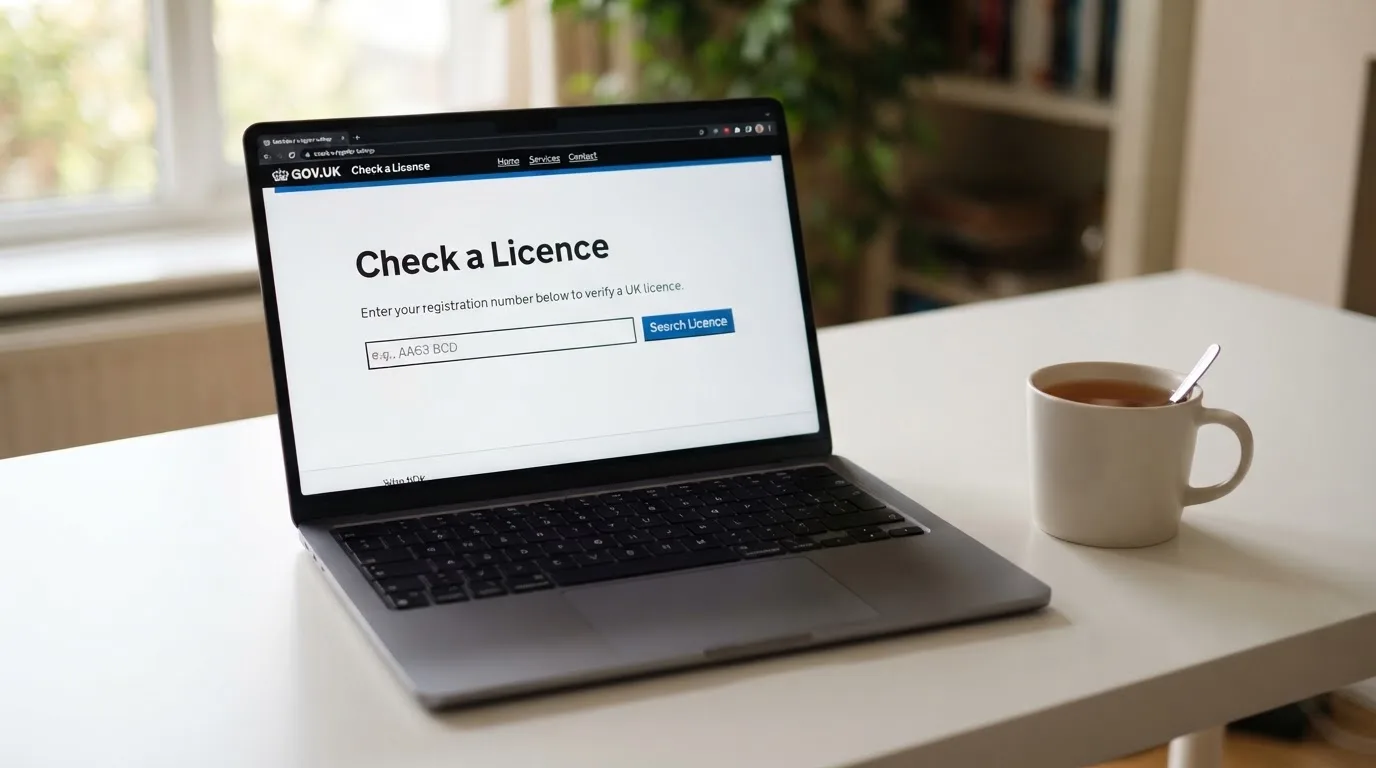
The Gambling Commission regulates commercial gambling in Great Britain under the Gambling Act 2005. Great Britain means England, Scotland and Wales; Northern Ireland sits outside the Act and runs on older law, so a GB licence is not a Northern Ireland licence. Since the Gambling (Licensing and Advertising) Act 2014, an operator whose remote facilities are used in Great Britain needs a Commission licence wherever it is based — Gibraltar, Malta, Curaçao, the Isle of Man. A foreign licence is not a substitute. The test of who holds one is the Commission’s public register, searchable by business name, trading name, domain or account number.
The Player Protection Frame
Age 18 is the floor. Identity verification — name, address, date of birth — runs before the first deposit, including on a free bet or bonus, and the check has applied since 7 May 2019. Credit cards have been banned for gambling in Great Britain since 14 April 2026 (LCCP condition 6.1.2), including credit-card-funded e-wallet payments; debit cards and bank-based payments are not covered. GAMSTOP is mandatory for online operators since 31 March 2026, with self-exclusion periods of six months, one year, five years, or five years with auto-renewal, and a further seven years after the minimum unless removal is requested.
The Wagering Cap and the Bonus Frame
Since 19 January 2026, wagering requirements on bonuses are capped at 10x — a £10 bonus at 50x required £500 of bets; under the cap no more than £100. Mixed-product promotions — an offer that asks the bettor to gamble on two or more product types, for example “bet on football to get free spins” — are banned. Whether the cap covers free bets with no wagering condition and any cap on the bonus money value are not established; describe the cap as the Commission’s published rule, not as a universal rule on every offer.
The Financial Check That Is Made
A financial vulnerability check (LCCP condition 3.4.4) has applied since 30 August 2024 to licensed remote betting when a customer’s deposits minus withdrawals exceed £150 in a rolling 30 days. The check is a public-record check — bankruptcy, county court judgments — not an income check and not a credit reference check. Financial risk assessments — the “affordability checks” of the press — are announced and staged, with no start date as of this writing.
Tax and the Player
The player pays no tax on betting winnings in Great Britain. General Betting Duty is the operator’s tax on gross profits, currently 15%, with a remote rate of 25% from 1 April 2026+1 within it while UK horse racing, self-service betting terminals, pool betting and in-person betting stay at 15%. Spread betting has its own rates (3% financial, 10% other). Until 1 April 2026+1 the remote rate stays at 15%. Never write that the duty lands on the player.
The Offshore Frame
A GB licence is compulsory at the point of consumption. Providing gambling facilities in Great Britain without the licence the Act requires is an offence under section 33 of the Gambling Act 2005 — aimed at the operator, not at the customer who bets on an unlicensed site. The customer who bets on an unlicensed site loses the GB protections: no GAMSTOP coverage, no Commission complaints route, no approved dispute-resolution body, no British consumer redress if funds are withheld, and the 10x bonus cap and the £150 vulnerability check do not apply. Enforcement is disruption rather than blocking: cease-and-desist notices, search-engine referrals, registrar and payment-provider work, and the Commission has been given or is about to receive court-order DNS blocking powers. Never write “legal to use” of an unlicensed site; the loss of protection is the honest framing.
Responsible Gambling: The Tools the Law Demands
What a Licensed Site Has to Offer
Every licensed remote operator has to offer deposit limits, time-outs, self-exclusion through GAMSTOP, and access to help-line information. The deposit limit is the customer’s choice — there is no state-set ceiling — and the operator’s system applies it on a fixed time frame. Reality checks, product restrictions and self-exclusion sit alongside deposit limits in the safer-gambling tab, and Unibet’s UK site — though not included in the comparison table here — lays out the standard set: deposit limits, a Player Profile test, product restrictions and self-exclusion, with live chat support and links to BeGambleAware, GamCare, GAMSTOP, Gambling Therapy and the BGC.
Where the Help Sits
GamCare runs the National Gambling Helpline. GambleAware funds treatment and education. The NHS runs gambling clinics across Great Britain. Gamblers Anonymous runs meetings in most cities. None of these is a substitute for the self-exclusion a bettor sets with the operator, and none of them replaces the GAMSTOP registration that excludes a customer from every GB-licensed online operator for the period chosen.
The Hardest Frame
A self-exclusion period of five years is the longest minimum, with auto-renewal as an option. After the minimum period the exclusion stays in place for a further seven years unless the customer asks GAMSTOP to remove it. The frame is wide by design: a bettor who registers in a bad moment is locked in long after the moment has passed, and the seven-year tail is the Commission’s answer to the relapses that follow a too-short exclusion.
A Note on Marketing
Marketing is not licensed by the Commission. The CAP Code (non-broadcast) and BCAP Code (broadcast), enforced by the ASA, run alongside the LCCP marketing conditions: marketing must be socially responsible, must not appeal strongly to under-18s, and no one who is or seems to be under 25 may feature gambling or play a significant role, with an exception for marketing placed where a bet can be placed directly. The rule concerns who appears in the advertisement; it does not state who may bet. The Premier League clubs’ voluntary withdrawal of gambling sponsorship from the front of matchday shirts from 2026/27 is a commercial decision, not a legal one, and sleeves and hoardings remain.
The Operator Reviews
Each review below closes on a verdict: the page’s judgement of the brand in light of the figures above. The verdict is not a recommendation; it is the picture the specifications paint, named in one sentence. The verdicts vary because the brands vary, and the verdict answers the question the block established — not the question every block establishes.
Hollywoodbets
Hollywoodbets operates under Gambling Commission account 53028, held by Hollywoodbets International UK Limited, with a remote general betting standard (real events) licence. The sports welcome offer is a stake-back free bet of up to £30 on the first qualifying losing accumulator: deposit £10 or more by card, place a 3-leg acca at 4/1 or greater, settle within 7 days, and the stake returns as a free bet. One per customer. The 4/1 minimum on a 3-leg acca is a higher bar than the 1/2 floor most welcome offers set, and the stake-back-rather-than-profit shape costs the bettor more than a matched deposit would — a £10 stake at 4/1 returns £50 in profit and £10 back only when the bet loses, so the offer rewards the worst outcome rather than the best. For the bettor who builds accumulators and seeks a safety net when the card fails, this offer provides a calculated return.
LiveScore Bet
LiveScore Bet runs under account 56859, held by LiveScore Betting and Gaming (Gibraltar) Limited. The payment menu is the standout: debit cards (Visa, Mastercard), Apple Pay, PayPal, Pay by Bank (Open Banking) and Revolut Pay. The mix covers the e-wallets British bettors actually use — PayPal most of all — without leaning on a credit-card-funded path that the 14 April 2026 ban would block. Open Banking sits beside the cards and gives a payout path that does not bounce through a card network. This platform appeals to the bettor who prioritises frictionless deposit and withdrawal workflows above the typical introductory bonus.
BetUK
BetUK is operated by LeoVegas Gaming PLC under account 39198, the same licensee that runs other LeoVegas brands. The free bet terms exclude virtual sports, esports and non-UK/IE horse racing, with a minimum-odds floor that is not in the public-facing marketing but appears at the bet slip. The exclusions are the cost of a free bet that looks generous in the headline: the bettor who wants to use the token on an esports outright finds the token void, and the bettor who wants UK/IE racing finds the door open. This operator is a strong choice for the bettor who sticks to mainstream UK sports and wants a straightforward free bet application.
Betboro
Betboro runs under account 44181, held by Webmedia Development N.V., with in-play and cash-out on football, racing and tennis, boosted odds on selected singles from £10 stakes, and the standard set of responsible-gambling tools: deposit limits, reality checks, self-exclusion. The £10 floor on boosted singles is the threshold below which the boost does not apply, and the boost applies to singles rather than accas, which costs less in margin per bet. It represents a solid option for the single-stake bettor who prefers football, racing, or tennis and wants consistent price boosts.
Spreadex
Spreadex is the only brand on this list that combines fixed-odds betting with financial spread betting, regulated by the Gambling Commission on the fixed-odds side and by the FCA on the spread side (account 8835, held by Spreadex Limited). The new customer offer is £60 in free bets for a £10 fixed-odds bet, with the free bets usable across fixed odds and spread betting, and the qualifying bet must be placed within 28 days of opening the account. The 28-day window is wider than the 7-day window most welcome offers set, and the spread side opens a market the fixed-odds brands do not. For the bettor who understands spread betting and seeks a single wallet, this is a unique integrated solution; however, the risk of losses exceeding the deposit makes it unsuitable for those unfamiliar with the product.
Tote
Tote operates under account 54779, held by TDCO Limited, and runs pool betting on horse racing alongside fixed-odds markets. The Best Odds Guaranteed guarantee on UK and Irish racing applies from 8 AM on the day of the race on single and multiple bets, and does not apply to ante-post, tote or pari-mutuel bets. The 8 AM floor is the time the guarantee kicks in, and a bettor who backs a horse the night before is on the starting price rather than the BOG. This remains the primary choice for the racing bettor who seeks the pool-betting dividend combined with traditional fixed-odds options.
William Hill
William Hill runs under account 39225, held by WHG (International) Limited. The Best Odds Guaranteed guarantee on UK and Irish horse racing applies from 8 AM on the day of the race, on single and multiple bets, and does not apply to ante-post, tote or pari-mutuel bets. The terms match Tote’s, and the difference is the menu: William Hill carries a deeper fixed-odds card and a longer-priced each-way market on the majors. The brand suits a bettor who wants the BOG alongside a full sports book rather than a pool-betting dividend.
QuinnBet
QuinnBet operates under account 61011, held by QuinnBet (Gibraltar) Limited. The free bet terms run 7 days from credit, any market at minimum odds of 1/2 (1.5), maximum odds of 50/1; straight accumulators are allowed but Trixies, Patents and Yankees are not. The Trixie/Patent/Yankee exclusion is the cost of the free bet: the bettor who would normally place a Patent has to break it into singles or accas, and the singles/accas pay less than the Patent when two of three legs win. The 7-day deadline and the 50/1 ceiling are standard. The brand suits a bettor who places singles and straight accas rather than system bets.
NetBet
NetBet runs under account 39170, held by Netbet Enterprises Limited. The product set is Daily Boosts, Profit Boosts and free bet offers, a Bet Builder with instant dynamic odds, and sports stats for major leagues. The Bet Builder price updates as each leg is added, and the dynamic-odds frame is the way the bookmaker widens the margin as the combination grows — a four-leg builder keeps a wider margin than the four singles kept together. It is the ideal platform for the Bet Builder enthusiast who focuses on major leagues and wants to capitalise on regular price boosts.
Geoff Banks
Geoff Banks operates under account 54095, held by GB Sports Advisors Limited. The product is live in-play prices and ante-post prices on future events, and the brand sits at the smaller end of the GB-licensed set. The ante-post book on F1 — Drivers’ Championship, Constructors’ Championship, race winner months before the race — is the standout, because most GB-licensed books do not post prices that far out. The brand suits a bettor who wants to back an F1 outright in October for the following March and is willing to accept a thinner in-play card during the season.
The Margin Calculation, in Plain Prose
For an illustrative two-way market at decimal odds 1.90 and 1.90 — fractional 9/10 — the payout share is the reciprocal of the sum of the reciprocal odds: 1 ÷ (1 ÷ 1.90 + 1 ÷ 1.90) ≈ 0.95, which is roughly 95p per pound wagered across both outcomes. The margin is one minus the payout share, which is roughly five per cent. The exact figure depends on the market and the snapshot date; for tight F1 match-ups the band sits between four and six per cent, and for outrights and three-way markets the band is wider. A two-way market at 1.80 and 1.80 keeps roughly ten per cent; a market at 2.00 and 2.00 keeps nothing. The price carries the cost, and the bettor who reads the price has read the cost.
What the Comparison Tells the Bettor
A licensed brand offers the same protections under the Gambling Act 2005: GAMSTOP, identity verification before the first deposit, the 10x bonus cap, the £150 vulnerability check, and access to the Commission’s complaints route. The differences sit in the welcome offers, the minimum-stake floors on boosts, the deadlines on free bets, and the menus on which the token is spent. A bettor who values the deposit flow picks LiveScore Bet; a bettor who values BOG on racing picks Tote or William Hill; a bettor who values the ante-post F1 book picks Geoff Banks; a bettor who values a spread product alongside fixed odds picks Spreadex. None of these is the safe choice by default — every licensed brand takes identity checks before the first pound, and every unlicensed brand removes every protection the Act sets. The choice is which trade-off suits the bettor’s week.
Frequently Asked Questions
How do you bet on Formula 1?
Open an account with a Gambling Commission-licensed bookmaker, complete the identity check (driving licence or passport, address, date of birth) before the first deposit, choose an F1 market — race winner, qualifying, outright, each-way, Bet Builder — and place a stake. Settle singles for the lower margin, accas for the higher payout and higher variance, and read the each-way terms because the place fraction varies by race and operator.
How is a Gambling Commission licence checked?
Search the Commission’s public register by business name, trading name, domain or account number; the register resolves account numbers to licensees, and a licence that does not resolve is not a GB licence. The register is the test of who holds one, and a foreign licence — Gibraltar, Malta, Curaçao, Isle of Man — is not a substitute.
How is a return worked out from the stake and odds?
For decimal odds, multiply the stake by the odds: a £10 stake at 3.50 returns £35 (a £25 profit plus the £10 stake back). For a combination bet, multiply the prices of the legs into one price, then multiply the stake by the combined price. The return is the stake plus the winnings; the profit is the return minus the stake.
What is the bookmaker’s margin and how is it seen?
The margin is the slice of every pound wagered the bookmaker expects to keep, and it sits inside the prices on every outcome. For a two-way market at decimal odds 1.90 and 1.90 the margin is roughly five per cent; at 1.80 and 1.80 it is roughly ten per cent; at 2.00 and 2.00 it is roughly zero. The price carries the margin, and the margin is the cost of doing business with the operator.
How do fractional odds such as 5/1 convert to decimal odds such as 6.00?
Convert fractional odds a/b to decimal by dividing a by b and adding one: 5 ÷ 1 + 1 = 6.00. For 11/4, divide 11 by 4 to get 2.75 and add one to get 3.75. For evens (1/1), the decimal odds are 2.00. The conversion is a divider and a plus-one, and the rest is arithmetic.
Which safer-gambling tools does a licensed bookmaker have to offer?
Every GB-licensed remote operator has to offer deposit limits, time-outs, GAMSTOP self-exclusion and access to help-line information. Reality checks, product restrictions and self-exclusion sit alongside deposit limits in the safer-gambling tab, and the financial vulnerability check kicks in at £150 of net deposits in a rolling 30 days. The deposit limit is the customer’s choice — there is no state-set ceiling — and the GAMSTOP registration is the only frame that excludes the customer from every GB-licensed online operator at once.
Combat & motorsport – signupbetsguide.com
Content created by the «signupbetsguide.com» team
