
A field guide to betting on hurling in Great Britain
 Available in US
Hurling looks exotic from a British sofa. A game played with a curved stick, fifteen aside, seventy minutes long, scores that read like “2-19” with a hyphen that means very little until somebody explains it. Add a sport most UK bookmakers carry as a satellite line, a tournament structure that runs four months a year, and welcome offers that promise one thing on the strapline and ask for another once a customer clicks through. The page below is a working guide for someone who wants to bet on the GAA’s premier competitions from a licensed British bookmaker, work out what the odds actually pay, and avoid giving back any edge the welcome offer took from them in the first place.

The line under this paragraph states when the figures on the rest of the page were checked. Where a price or a margin appears, it carries the date it was lifted on. A snapshot is not the season.
*Current as of 30 October 2026. Licence data: Gambling Commission public register. Operator terms: each operator’s published terms and app-store listing on the date above.*
What a bet on hurling actually pays
A single is the simplest bet a bookmaker settles. Pick a side, stake a sum, take the price the board shows, and the return on a winning bet is the stake multiplied by the decimal odds. A £10 punt at 3.00 brings back £30 (the £10 stake plus £20 of profit). A £10 punt at 1.50 brings back £15 (£10 stake and £5 profit), because decimal odds already include the stake. The piece worth holding in the head is that the decimal odds multiply the whole return, not just the profit, which is why punters converting from fractional odds (the British form a bookie quotes on a horse race, like 5/1 or 11/4) do the calculation as fractional numerator ÷ denominator + 1: 5/1 becomes 6.00, 11/4 becomes 3.75, evens becomes 2.00.

Combination bets do the same thing one leg at a time. A treble at 2.00, 3.00 and 4.00 is a single price of 2 × 3 × 4 = 24.00. The £10 stake brings back £240, £230 of it profit, on the day all three win. The cost is that one losing leg sinks the whole ticket: a treble pays everything or nothing. Each-way bets are pairs of equal stakes — one on the win, one on the place — so the stake doubles and the place leg pays at a fraction the operator’s terms state (typically a quarter or a fifth of the win price, with place terms that vary by race and field size in horse racing and by sport-to-sport rules elsewhere). In hurling and GAA markets an each-way line is rarer than on the turf, because the outright and championship markets settle on one result.
The margin every price carries
Bookmakers do not lay bets at the “true” probability of the outcome. They shade each price so that the book over-rounds: of every pound bet on a market, the operator keeps a slice. That slice is the margin, sometimes called the overround or the vig, and it sits behind every odds board a punter in Britain looks at.
The arithmetic is straightforward. On a two-way market with decimal odds o₁ and o₂, the payout share is 1 ÷ (1/o₁ + 1/o₂) and the margin is 1 − payout share. To take a worked example — illustrative, not a quoted price — a perfectly even 1.91 / 1.91 gives a payout share of 1 ÷ (0.5236 + 0.5236) = 0.955, so a margin of 4.5%. Move either side to 1.85 / 1.95 and the book rounds harder: a payout share of about 0.948, a margin of roughly 5.2%. Hurling markets, like most GAA lines on a British bookmaker, sit in the 5–8% band on outright and match-winner prices; the more exotic the market (handicaps, team totals, scorecasts), the wider the margin tends to run, because liquidity is thinner and the operator’s risk bigger. The price the punter sees is fair only against itself — the board of one operator against the board of another — never against “true odds”.
Two rules of thumb follow. First, margin compounds across selections in an accumulator: a four-leg acca at a 6% per-leg margin carries roughly 22% of margin by the time all four prices multiply, because the overround multiplies too. A long-odds acca pays more when it lands but keeps a much larger slice of every pound staked. Second, margin is the only number that compares between bookmakers for the same market at the same moment — the head-to-head price is comparison theatre until the overround behind each line is known. Most licensed GB operators do not publish their margin; readers who care to estimate it lift the prices for the same fixture from three books and do the math above.
Free bets and welcome offers: the price the strapline leaves out
The first thing every welcome offer prints is the headline number. “Bet £10, Get £30 in Free Bets.” “Stake £10, Get £10 if your first bet loses.” The number is real. What the strapline leaves out is what the free bet is worth once the operator’s terms are read.
A free bet settles the winnings only — the stake is not returned with a winning payout. So a £10 free bet at 4.00 returns £40 (£30 of profit, the £10 stake never comes back). On the punter’s side the question is what the average free bet is worth across many uses. The honest answer uses the same margin formula above: free-bet value ≈ free-bet amount × (decimal odds − 1) ÷ decimal odds × payout share. A £10 free bet punted on a market with a 95% payout share has an expected value of about £9 — close to face value on a generous sample, much less on a market that overrounds heavily. A “risk-free” offer that refunds a losing stake as a free bet is paying in free-bet money, not cash, and the refund carries the same stake-not-returned rule.
Two terms decide whether a welcome offer is worth the climb. The wagering requirement is the multiple of bonus (or bonus plus deposit) the punter must turn over before bonus funds are withdrawable. From 19 January 2026 a Commission-level cap of 10x applies: a £10 bonus at 50x needed £500 of qualifying bets before it withdrew; under the cap, no more than £100 of turnover is required on a £10 bonus. The minimum odds is the floor on prices that count toward turnover. A 1.80 floor is standard, 1.50 noticeably easier to clear. Anything below 1.50 usually disqualifies the bet entirely. Deadlines, stake caps (“Max stake with bonus: £5”), and a list of markets the bonus does not apply to (free spins on slots, virtual sports, exchange lay bets, e-sports outrights) live one click further into the page.
Two offers worth working through. Vbet’s welcome: stake £10 or more on a first-ever bet; if it loses, a £10 free bet lands in the account. The arithmetic — assume a 95% payout share on the free bet’s target market at minimum odds of 1.80, with the £10 refund being free-bet money — gives an expected value of about £9.50. Hollywoodbets’ welcome: a £10+ deposit by card, stake a £10+ acca of three legs or more at combined odds of 4/1 (5.00) or greater, settle within seven days; a losing acca returns the stake as a free bet of up to £30. The cap on the free bet (£30) and the seven-day window are the operational pinch points: read both before the first bet goes on.
A fourth kind of welcome mechanic to flag: price boosts and acca insurance. A price boost pushes the price on one selection (a “Super Boost” at bet365, for example); acca insurance refunds the stake as a free bet — again free-bet money — if one leg of an accumulator of fixed length lets the punter down. Both are layered on top of the margin on the underlying market, so the value calculation starts from a worse base than a same-market single.
Live betting and cash out on GAA events
In-play betting on hurling is a thinner market than in-play on the Premier League or a Champions League night. The fixtures run in Ireland, the broadcast is paywalled for some competitions, and the betting volume on a Munster Championship round-robin Sunday afternoon is a fraction of what a Premier League fixture pulls. That said, every licensed British bookmaker on this page carries GAA in-play lines on at least the All-Ireland Senior Hurling Championship and the provincial championships, with smaller books sometimes only offering match-winner lines and handicaps live rather than a full market.
The mechanism is the same as in-play everywhere. The bookmaker re-prices after every significant action — a goal worth three points, a point over the bar, a red card, a sin-bin — and the punter’s job is to react before the price moves. The cost is the spread. Live margins on hurling consistently sit higher than pre-match on the same bookmaker, because the operator is laying risk it cannot hedge the way it would on a Premier League goal. The cash-out button is the bookmaker’s offer to settle an open bet early at a derived price; on GAA lines the cash-out price is most often available when the operator has the underlying market priced live, and unavailable on small-market or ante-post positions. Where it is on offer, the cash-out price the bookmaker quotes is worse than the true mid of the live market — that spread is the cost of not waiting for the final whistle.
One practical point about in-play on hurling specifically: the rules settlement. A licensed British bookmaker settles GAA match-bets on the official result at the end of normal time including any added injury time, and extra time does not count unless the operator’s market rules say so. That single rule is the one a punter trips over most often, because some Gaelic games tournaments go to extra time in knock-out rounds (the All-Ireland quarter-finals and semi-finals, for instance) and the punter who read only the headline “Winner” market expects the full-time outcome. The same rule applies across the major British books’ GAA sections, but always check the per-operator rule — punters lose match-bets on extra-time results every season by not checking.
Cash-out and live markets are the operator’s product, but the underlying liquidity is shared via B2B feeds. Where the live feed on a smaller-market fixture is sparse the bookmaker’s prices update slowly and the cash-out offer is wide. The numbers on this page are snapshots — a live hurling price twenty seconds after a Tipperary goal has a margin that bears no resemblance to the pre-match price.
The hurling markets a British bookmaker prices
A British book’s hurling section opens with a few core markets and then a long tail of exotics. Worth knowing what each is, because the bookmaker’s market nomenclature is not always self-evident from the slip.
Match result (1X2 by team). The market’s “1X2” is a footballing term — three outcomes, home win / draw / away win — that the hurling pages of bigger books reuse even though GAA fixtures can end level. The draw line exists because the bookmaker offers it (and over-rounds accordingly), not because draws are common at senior inter-county: they are unusual but not rare, and a drawn hurling fixture is settled as a draw on the betting line.
Handicap. A handicap line of Cork -3 (3-point start for Limerick) means Limerick effectively begins the game three points ahead; the bet settles as Cork winning by more than three points, Limerick winning outright, or the handicap settling level. In a sport with low scores the handicap line is small by football standards — three, five, seven points — and the margin on the handicap market is frequently wider than on the match result. Totals. Bookmakers offer over/under on a total score at a band like 35.5 points, 40.5, 45.5. Useful when the punter has a read on game shape without a view on the winner. Team totals are the same market one-sided — Limerick over 22.5, for instance — and tend to overrun marginally less than the combined total because the bookmaker’s risk is single-sided. Outright championship winner. A pre-season or in-season market on the team to lift the Liam MacCarthy Cup. Long odds, low hold if priced early (because the bookmaker’s exposure is limited by small stakes), wider margin as the competition narrows because liability concentrates.
The scorecast is a popular exotic — picking the winning team and the total goals (worth three points each in hurling) scored by a named player. Margin heavy, payout huge when it lands. Player to score a goal at any time is a one-line exotic on the bigger books, sometimes only on All-Ireland semi-finals and finals. Score at the end of each quarter exists in some books’ GAA sections as a novelty but is mostly settled as a push (void) because quarter scores are not the kind of stat a bookmaker’s data feed carries with confidence.
A note on the handicap overround that the punter notices only on close inspection: bookmakers price each handicap line in such a way that the line can move in 0.5-point steps from one side to the other, and the vig they charge varies by 0.5% to 1.5% across the line range. Always pick the line with the narrowest margin, not the line with the most generous head-to-head price. It is the same observation as on football: the most popular line is rarely the sharpest.
A short glossary of the numbers that matter on a hurling coupon
- Goal: in hurling, three points. A shot under the crossbar into the netted area. * Point: one point, scored over the crossbar between the uprights. A score of 2-19 means two goals (6 points) and nineteen points (19 points) for a total of 25 points. * Spread: the difference between back and lay prices, or the band’s width between over and under on a totals line. * Each-way: a pair of bets of equal stake on a win and a place; in GAA outrights the place leg rarely has a market, so an each-way bet is a single. * Settled on the result at full time: a bookmaker rule on GAA that excludes extra time unless the market rules state otherwise — the single most expensive rule to miss.
Hurling, the sport and its competitions
Hurling is one of two Gaelic games governed by the GAA, the other being Gaelic football. Fifteen players aside, played on a grass pitch that is larger than a football pitch and slightly wider than a rugby pitch. The ball, called a sliotar, is smaller than a cricket ball and travels further when struck cleanly with the curved hurley each player carries. A senior inter-county match runs seventy minutes, two halves of thirty-five minutes, with stoppage time added by the referee. The game ends in a draw if the scores are level at full time; the fixture goes to extra time in knock-out rounds if competition rules so dictate.
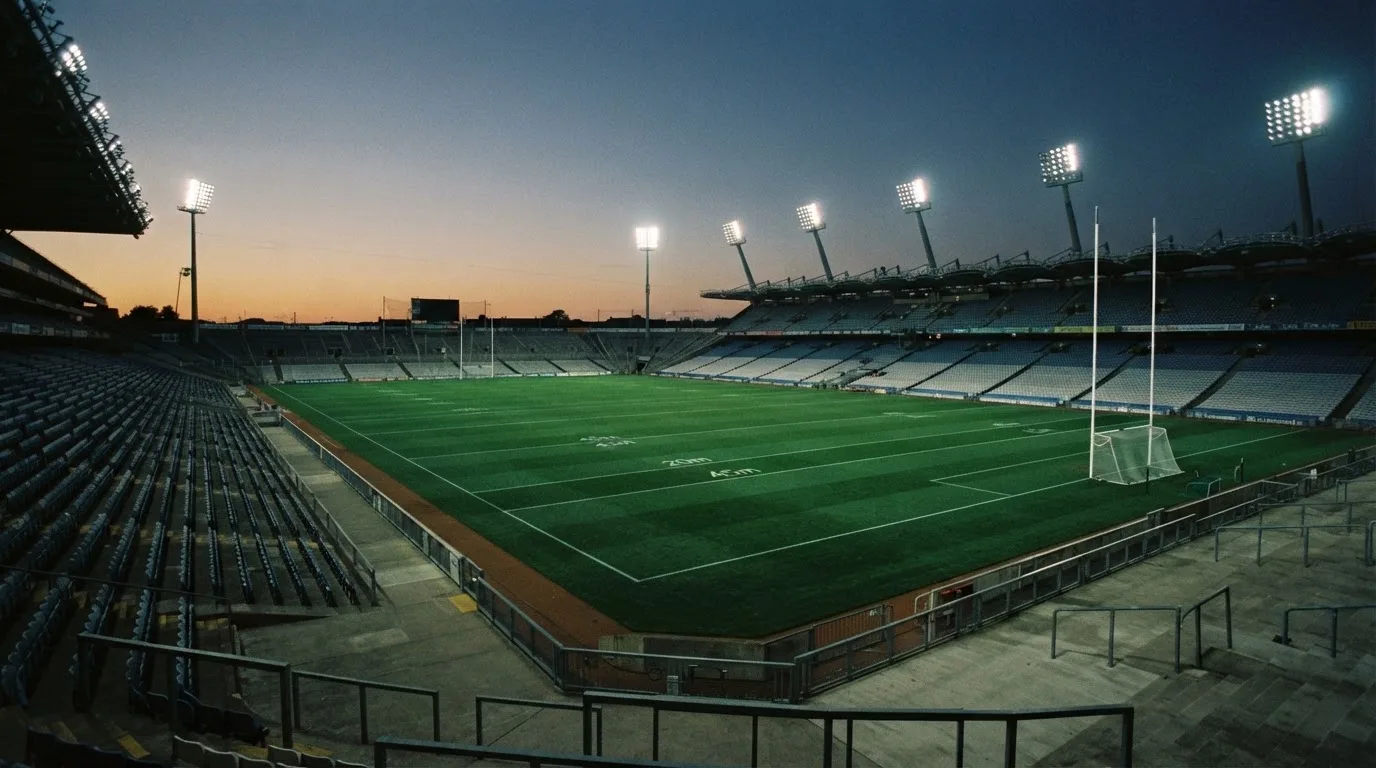
The structure of senior hurling in Ireland runs through a provincial championship in the summer — Leinster and Munster historically the dominant championships, with six and five teams respectively playing round-robin — and finishes in an All-Ireland Senior Hurling Championship across July. Limerick beat Galway in the 2026 All-Ireland Senior Hurling Championship final at Croke Park, Dublin, played on 19 July 2026. Tipperary won the 2025 final on the way to a season that ended in defeat. The Joe McDonagh Cup, the Christy Ring Cup and the Nicky Rackard Cup run a tiered second-championship structure beneath the Liam MacCarthy Cup; club hurling championships run on a parallel structure. For the punter, the practical betting calendar runs April to August, with the club championship and pre-season competitions adding fixtures before and after.
A note on fixture depth
The depth of the hurling fixture calendar is much shallower than for football. The All-Ireland SHC runs four weekends from late June; Leinster and Munster run over six to eight weekends each in May and June; the Joe McDonagh, Ring and Rackard cups run shorter windows. Off-season GAA club competitions and university hurling give the bookmaker enough fixtures to price most weeks, but the off-season is a long quiet stretch from late August to early February with limited televised hurling to anchor prices. Punters who treat hurling as a year-round market find that bookmakers pull deeper coverage in season and run a much narrower coupon (match result and outright only) in the close-season.
The All-Ireland quarter-finals, semi-finals and final are the fixtures a British bookmaker prices deepest. Provincial finals get full coverage of match result, handicap, totals and selected player markets. Round-robin provincial fixtures get match result and a handful of handicaps. Earlier rounds are priced but with wider margins. The takeaway: the wider the margin, the smaller the punter’s sample for a sharp read — and on a narrow GAA market, that increases variance without improving edge.
How each bookmaker on this page handles hurling
The ten names below are operators on the Gambling Commission’s public register holding a remote general betting licence (real events) for Great Britain. Each is checked against the register at the date in the line under the lead. The order reflects the review sequence on this page, not a ranking; the comparison runs across them at the foot of this section.
Vbet — a multi-product bookmaker with a GAA fixture list
Vbet runs the usual football-first sportsbook, and its GAA coverage extends through the All-Ireland Senior Hurling Championship, both provincial championships and the lower-tier Joe McDonagh, Ring and Rackard cups. The welcome offer is a stake-back: a £10+ first bet, if it loses, returns as a £10 free bet. The free bet settles on the winnings — the £10 stake does not return with a win — and the offer is for new verified customers only. Vbet’s licence on the public register sits under SCGO Limited (remote general betting standard, real events).
Verdict: a sportsbook that carries hurling alongside a much wider fixture list, with a small but workable welcome offer suited to a punter who already has a price in mind on a GAA fixture. The £10 refund is a useful buffer for a first bet, not a value play on its own.
Sporting Index — fixed odds plus spread betting on the same login
Sporting Index is unusual on this list. The brand runs both fixed-odds and spread betting accounts, so the same login can place a fixed-odds wager on a Limerick outright and a spread position on the Munster Championship total. The in-play section covers football and a small GAA schedule; the brand’s Bet Builder for football exists in the product but does not extend to GAA in the way football customers expect. The licence holder is Sporting Index Limited, account 27343, and the brand itself is regulated by the Gambling Commission for fixed-odds and — this is the historical quirk — by the Financial Conduct Authority for the spread-betting arm. Spread betting losses can exceed deposit.
Verdict: useful for a punter who wants to mix a fixed-odds account with a spread position on the same sport. Less useful for a GAA-only punter, because the GAA spread markets are sparse and the fixed-odds line on hurling is no deeper than competitors’.
Hollywoodbets — the acca insurance-style welcome
Hollywoodbets’ welcome offers a free-bet refund to losing accumulators: a £10+ deposit by card, stake £10+ on a three-leg acca at combined odds of 4/1 (5.00) or greater, settle within seven days, and a losing acca returns the stake as a free bet of up to £30, one per customer. The licence is held by Hollywoodbets International UK Limited, account 53028, remote general betting standard (real events). The brand’s GAA coverage sits behind bigger books on volume but covers the All-Ireland at the standard markets.
Verdict: the welcome structure is more demanding than a stake-back single (combined acca odds, a fixed window) and the £30 ceiling on the free bet is the natural brake: punters staking more than £30 get capped, punters staking less get face value on the refund. Suits a customer who builds weekly accas anyway.
BetGoodwin — three £5 free bets on a £10 first bet
BetGoodwin’s sport welcome is the “Bet £10 & Get £15 in Free Bets” structure, divided into three £5 free bets: one sports, one acca, one Sub-Cover (the brand’s specialist singles product). The licence holder is Goodwin Racing Limited, account 2927. BetGoodwin’s GAA coverage is plain — match result, handicap, totals, and outrights — without the wider player-prop menu some competitors run.
Verdict: a small welcome with the structure most useful to a customer who likes to spread bets across product types rather than stake a single large first bet. The Sub-Cover free bet has its own market rules; check before using.
bet365 — the deepest GAA menu on a British bookmaker
bet365 is the largest sportsbook on the Commission’s public register for Great Britain by volume, the official global betting partner of the UEFA Champions League, and the most-downloaded sports-betting app in the UK. The GAA section on bet365 is the deepest of any British bookmaker on this page: match result, handicaps, totals, team totals, scorecasts, player-to-score-at-any-time, method-of-first-goal, outrights and Bet Builder combinations on bigger All-Ireland fixtures. The licence holder is Hillside (UK Sports) ENC, account 55148.
The product around the markets is what sets bet365 apart. Bet Builder+ allows the punter to combine markets from a single event into one bet, pre-match and in-play. Super Boosts are daily named price boosts on selected selections. Winnings Boosts apply to Bet Builders and selected singles. In-play markets are extensive and live streaming covers a wide set of events worldwide. Bet Track, Match Live and the Live Golf Tracker are follow-the-action products for in-play monitoring.
Verdict: the most complete hurling offering of any British bookmaker on this page, with the deepest pre-match and in-play menu, the widest accumulator product, and the strongest live-streaming position. The trade-off is the same as on football: the most popular market on a fixture carries tighter margins than competitors because liquidity is higher, but exotics and Bet Builder+ lines run wider. For a punter placing singles on hurling the trade is favourable; for an acca player it improves as fixture depth increases.
Bet Ahoy — a smaller welcome tied to the standard bookmaker rules
Bet Ahoy’s welcome is “Bet £10 & Get £10 in Free Bets”, split into a £5 sports bet and a £5 acca. The licence holder is Bet Ahoy Ltd, account 100094. The bookmaker carries the All-Ireland SHC and the provincial championships, with match result, handicaps and totals, and outrights on the Liam MacCarthy Cup. No GAA-specific quirk on the welcome — the standard sportsbook terms apply.
Verdict: a small bookmaker with a modest welcome and a smaller GAA fixture list than the bigger books. Suits a punter with a specific GAA bet in mind who values a low-friction welcome over a fixture-deep product.
Paddy Power — football-first brand with a senior GAA section
Paddy Power’s app covers football, horse racing, boxing, rugby, tennis, golf, darts, snooker and F1. The GAA section sits inside a much wider product with full coverage of the All-Ireland SHC, provincial championships and the lower-tier cups. The licence holder is PPB Counterparty Services Limited, account 39439 (the same licensee that runs Betfair in the British market — sister brands, not independent operators).
Verdict: a well-known brand with a deep GAA section, an exchange product through the sister Betfair login, and a wide sportsbook beyond hurling. Suits a punter who values familiarity over the smallest margin — Paddy Power is competitive but rarely the sharpest-priced book on a GAA fixture.
Geoff Banks — ante-post and in-play on a smaller bookmaker
Geoff Banks’ app covers football, horse racing and selected other sports, with ante-post pricing on future events and live in-play sections on televised fixtures. The GAA coverage runs match result, handicap, totals and outrights on the bigger championships, with shallower coverage than bet365 or Paddy Power. The licence holder is GB Sports Advisors Limited, account 54095.
Verdict: a small bookmaker with a thin GAA schedule but useful ante-post availability for punters who want to back a team to lift the Liam MacCarthy Cup well in advance of the championship. Not the place for in-play GAA nuance.
Sky Bet — the GAA rules that settle half the coupon
Sky Bet is one of two brands on this page whose published rules explicitly address Gaelic games: bets settle on the official result at the end of normal time, including injury time, and extra time does not count unless the operator’s market rules say otherwise. That single rule governs most GAA bets placed across the bigger books, but Sky Bet’s GAA section makes the rule explicit. Sky Bet’s free bets expire thirty days after crediting, are usable only on single or each-way markets (not multiples, excluding virtuals), are non-withdrawable, and do not return the stake with winnings. The licence holder is SBG Sports Limited, account 67370, remote general betting standard (real events).
Verdict: a major British bookmaker with strong GAA coverage and explicit GAA rules. The expiry-and-restrictions structure on free bets is the trade-off: a customer who leaves a £5 free bet un-taken at day 31 loses it entirely. The non-return of stake on free-bet winnings is standard but worth restating because it cuts the headline’s apparent value in half on long-odds bets.
Matchbook — an exchange where punters lay each other
Matchbook is a betting exchange: customers lay a price, other customers back it, and the operator takes a commission on net winnings rather than building margin into every price. The exchange model is competitive on a fixture with liquidity and worse on a fixture without it; hurling sits in the second camp most weeks. The licence holder is Triplebet Limited, account 39504 — remote general betting standard (real events), and remote betting intermediary, the specific licence category covering exchanges. Matchbook’s product includes Bet Builder, multiples, in-play betting and live streaming of horse racing and greyhound racing.
Verdict: useful for a punter prepared to lay rather than back, and valuable for a sharp customer who wants to take the other side of a sloppy traditional bookmaker’s price. Less useful on small-liquidity GAA fixtures where the exchange order book is thin and the price moves a tick on a £50 stake.
How the ten compare on the licence fundamentals
The table below covers the four matters that matter to a punter choosing between these bookmakers: the remote-licence account number as it appears on the Gambling Commission’s public register, the entity that holds the licence, the brand’s GAA section in plain language, and any subject key worth flagging. Where data was not available, the cell carries a dash.
| Brand | Gambling Commission remote licence number and licence holder | What the operator’s own terms state on the key’s subject |
|---|---|---|
| Vbet | 044662-R-324273-022 · SCGO Limited | Welcome: £10 free bet on a losing first bet of £10+, new verified customers |
| Sporting Index | 027343-R-308898-011 · Sporting Index Limited | Fixed odds and spread betting on the same login; FCA regulates spread-betting arm |
| Hollywoodbets | 053028-R-330019-013 · Hollywoodbets International UK Limited | Welcome: stake back as free bet up to £30 on losing acca (3+ legs, 5.00+ combined odds, settled within 7 days) |
| BetGoodwin | 002927-R-327985-008 · Goodwin Racing Limited | Welcome: three £5 free bets (£5 sports, £5 acca, £5 Sub-Cover) on a £10 first bet |
| bet365 | 055148-R-331498-002 · Hillside (UK Sports) ENC | Bet Builder+, in-play, Super Boosts, live streaming, Bet Track, Match Live |
| Bet Ahoy | 100094-R-341742-003 · Bet Ahoy Ltd | Welcome: £5 sports + £5 acca free bets on a £10 first bet |
| Paddy Power | 039439-R-319330-013 · PPB Counterparty Services Limited | Sister brand of Betfair under the same licensee; football-first product with GAA section |
| Geoff Banks | 054095-R-330366-010 · GB Sports Advisors Limited | Ante-post and in-play on televised fixtures |
| Sky Bet | 067370-R-341330-005 · SBG Sports Limited | Free bets: 30 days to expiry, single/each-way only, stake not returned |
| Matchbook | 039504-R-319407-024 · Triplebet Limited | Betting exchange; commission on net winnings, not margin per price |
The same point about checking the register applies to every name above. A punter who has not verified an operator’s licence themselves is trusting the brand. A punter who has — two clicks on the Commission’s public register, search by the licence holder, check the trading name and domain — has the only proof the British regulator offers.
What “licensed in Great Britain” actually means
The Gambling Commission is the regulator. It licenses and supervises the commercial gambling market in Great Britain — England, Scotland and Wales — under the Gambling Act 2005. Northern Ireland runs under older legislation and a GB-licensed operator is not licensed in Northern Ireland without a separate permission there. Since the Gambling (Licensing and Advertising) Act 2014 an operator whose remote facilities are used in Great Britain needs a Commission licence wherever the operator is based. A Curaçao, Maltese or Gibraltar licence on its own is not enough — it does not authorise taking bets from a customer sitting in Manchester or Edinburgh. The Commission’s public register is the only place to verify a brand’s licence, and the licence number on every operator above is searchable there.
The Commission’s licences come in categories. A remote general betting standard (real events) licence is what most GB sportsbooks hold; a remote betting intermediary is the category for exchanges. Pool betting is its own category, used for off-course pool bets on horse and greyhound racing. Remote general betting limited is a narrower category issued under conditions; most punters will not meet an operator on that licence. A remote general betting standard (virtual events) licence covers virtual sports and is a separate category. The ten operators above all hold the first category; Matchbook additionally holds the second. Betting on sports at a GB-licensed bookmaker does not require a separate betting-permit under the 2005 Act.
The Commission’s role is not licensing the sports themselves. There is no statutory list of permitted bets or markets in Great Britain; an operator licensed in the right category may offer markets its own rules cover, and the betting terms sit within the Licence Conditions and Codes of Practice (LCCP) issued by the Commission. That is also where age controls and verification sit: minimum age 18, and since 7 May 2019 a customer’s name, address and date of birth are verified before the first deposit, including with a free bet or bonus. The bookmaker that lets a customer deposit without verifying identity is breaking a licence condition.
What may be bet on (and what is operator-led)
In-play betting: GB bookmakers offer it under their own LCCP conditions. There is no statutory rule that says in-play betting on hurling is or is not permitted; the rule is the operator’s licence terms. E-sports events are treated like any other for the purposes of the licence. Politics, TV-show outcomes and novelty markets are offered by GB bookmakers — and no statutory prohibition was found in any published rule or guidance. Spread betting that is not on a financial instrument is inside the operator’s general betting duty. The markets a punters sees on the GAA section of a GB bookmaker are the operator’s commercial decision, not a list legislated from above.
Player protection at a GB-licensed bookmaker
GAMSTOP is the multi-operator self-exclusion scheme for online gambling in Great Britain, mandatory for every online operator under Commission rules since 31 March 2020. Self-exclusion periods are six months, one year, five years, or five years with auto-renewal; after the minimum period the exclusion stays in place for a further seven years unless the customer asks GAMSTOP to remove it. A licensed bookmaker that does not enrol a customer on GAMSTOP, or allows an excluded customer to bypass the scheme, is breaking a licence condition.
Three further pieces of player protection sit at the bookmaker’s door. Financial vulnerability checks (LCCP condition 3.4.4, in force since 30 August 2024) apply at the point where a customer’s deposits minus withdrawals exceed £150 in a rolling 30 days (the £150 trigger has been in force since 28 February 2025). The check is a public-record check — bankruptcy, county court judgments, the kind of records Companies House holds — not an income check and not a credit reference check. Financial risk assessments — the “affordability checks” of the press — were announced in a staged plan in the Commission’s article of 7 July 2026, with no start date at the time of writing. Deposit limits sit under the Remote Technical Standards (RTS 12): operators must offer a gross deposit limit on a fixed time frame. The first changes applied from 31 October 2025; a second phase was postponed to 30 September 2026 and whether it is live now is not established.
There is no state-set deposit or loss ceiling for sports betting in Great Britain. Limits are the customer’s choice. Credit cards are banned for gambling (since 14 April 2020, LCCP condition 6.1.2) — including credit-card-funded e-wallet top-ups — and debit cards and bank-based payments are not covered by that ban. Help services: GamCare (the National Gambling Helpline), GambleAware, the NHS gambling clinics, Gamblers Anonymous.
Advertising, bonuses and the marketing rules
The Commission does not license advertising. Marketing runs through the CAP Code (non-broadcast) and BCAP Code (broadcast), enforced by the Advertising Standards Authority (ASA), and through the LCCP for operators specifically. CAP Code section 16: marketing must be socially responsible, must not be of strong appeal to under-18s, and no one who is or seems to be under 25 may be featured gambling or play a significant role in an advertisement (with an exception for marketing placed where a bet can be made directly). The rule concerns who may appear in an ad, not who may place a bet — but it shapes who and what a punter sees.
The promotion rules in force since 19 January 2026 put two caps on bonus-driven marketing. First, wagering requirements on bonuses are capped at 10x: a £10 bonus at 50x needed £500 of qualifying bets before withdrawal; under the cap, no more than £100 of qualifying bets is required on a £10 bonus. Second, mixed-product promotions are banned: an offer that requires gambling on two or more product types (sports betting plus casino, betting plus bingo, sports plus lottery, for example) cannot be marketed by a GB-licensed operator. Whether the cap applies to free bets with no wagering condition, and any cap on the money value of a bonus itself, are not established. The “whistle-to-whistle” rule is an industry code, not law: betting advertisements are not shown on TV from five minutes before a live sporting event to five minutes after it, before the 9pm watershed (horse and greyhound racing excepted).
Tax
The punter does not pay tax on betting winnings in Great Britain. General Betting Duty is the operator’s tax, currently 15% of gross profits; from 1 April 2027 a remote betting rate of 25% applies to most online bets under that duty. Remote bets on UK horse racing, in-person bets at self-service betting terminals, pool betting and in-person bets in licensed premises stay at 15%. Spread betting has its own rates (3% financial, 10% other). Until 1 April 2027 the remote rate stays at 15%; whether operators pass duty through odds is not established, and it is never correct to write that the player is charged the duty. The Commission’s statutory levy is a separate charge, not a tax. A professional gambler should talk to HMRC or a tax adviser.
Offshore
A GB licence is compulsory at the point of consumption. Providing gambling facilities in Great Britain without the licence the Act requires is an offence under section 33 of the Gambling Act 2005 — on summary conviction up to 51 weeks’ imprisonment, a fine up to level 5, or both (six months in Scotland). The offence is the operator’s; no offence aimed at the customer who simply bets on an unlicensed site was found. The loss of protection is the relevant fact: no GAMSTOP coverage, no Commission complaints route, no approved dispute-resolution service, no British consumer redress if funds are withheld, no application of the 10x bonus cap, no application of the £150 vulnerability check. Enforcement by the Commission is disruption, not blocking — cease-and-desist notices, search-engine referrals, work with registrars, hosts and payment providers; the Commission has been given, or is about to receive, court-order DNS blocking powers, but it is not correct to write that ISP blocking is in operation today.
How to bet on hurling without giving back the edge
A few practical points, in the order they bite the punter’s wallet.
- Check the licence first. Two clicks on the Commission’s public register, search by the licence holder’s name or by the brand’s trading name. A GB-licensed bookmaker shows up; an unlicensed one does not. The licence number on the front of the brand’s site should match what the register says. A licence that is not on the register does not exist for the purposes of British consumer protection.
- Read the welcome offer’s terms. The headline number is rarely the headline number. The minimum odds on the qualifying bet, the wagering requirement (now capped at 10x), the deadline, the cap on the free bet, the stake-not-returned rule, the list of excluded markets — every operator publishes these in full, and every gap in understanding is money the punter will not see again.
- Build a margin, not a price. Margin compounds across the legs of an accumulator; a five-leg acca carries two to three times the margin of a single. The price that “looks” better is sometimes the worse one when the overround sits behind it. The pricing comparison is the only consistent edge available across operators without a model — same fixture, same market, same moment, taking the lowest-overround book.
- GAA rules settle the coupon. Bets settle on the official result at the end of normal time including injury time, and extra time does not count unless the operator says so. The fixture going to extra time is the moment the punter who skipped the GAA rules finds out the bet was already lost.
- Single-bet discipline versus the offer’s lure. A welcome bonus is a marketing instrument whose value to the customer is lower than the headline implies. A punter who would bet on a GAA fixture anyway takes the welcome because it is face value; a punter who places a bet they would not otherwise have made to clear the bonus is paying the bonus out of pocket and giving the operator the margin on the bet.
- In-play on a small market is a cost. Live margins on GAA lines run higher than pre-match on the same fixture, and the cash-out price the bookmaker offers on a thin market is wide. Place in-play bets on GAA only when the punter has information that justifies the wider spread; otherwise let the bet sit.
Working out a margin the bookmaker’s price hides
To take the formula a step further with the page’s illustrative example. A two-way market with decimal odds 1.90 and 1.90 gives 1 ÷ (1/1.90 + 1/1.90) = 1 ÷ (0.5263 + 0.5263) = 1 ÷ 1.0526 = 0.95, a payout share of 95% and a margin of 5%. The same market at 1.85 and 1.85 gives 1 ÷ 1.0811 = 0.9249, a payout share of about 92.5% and a margin of 7.5%. As a band: a GAA match-result market on a typical British bookmaker sits between about 92% and 95% payout share — that is a 5% to 8% margin — and a pre-season outright on the Liam MacCarthy Cup sits between 80% and 92% depending on how concentrated the field looks and how early the price is posted. Where the price sits inside the band depends on the operator, the fixture and the moment in the season. The punter’s job is to take the three best prices on the same fixture at the same moment, run the calculation, and pick the book that gives the highest payout share on the market in question.
The key assumption behind any worked margin is that the prices lift together at the same moment. Lift one price at 09:00 and another at 21:00 and the comparison is invalid — GAA fixtures have moved in the gap, the operators’ liability has changed, and the margin behind each price has shifted too. Comparisons at a single timestamp is the rule.
What responsible play looks like on a GB-licensed bookmaker
The bookmaker’s licence is the start, not the end, of responsible play. Three controls sit at the punter’s side of the equation, and a fourth at the operator’s.
- Deposit limits. RTS 12 makes a deposit limit on a fixed time frame mandatory at every licensed remote bookmaker. Set the limit at registration; raise or lower it through the account’s safer-gambling page; the operator is required to honour it within 24 hours of a request to lower, and to apply any new higher limit only after a cooling-off period. The limit is the punter’s choice, not the operator’s.
- Time-out. A short break — 24 hours, a week, a month — applied to an account. The customer requests it, the operator applies it, and the account is locked for the period. Useful as a routine check on play, not a substitute for self-exclusion where the limit of play has been reached.
- Self-exclusion via GAMSTOP. The national, multi-operator online self-exclusion scheme covering every GB-licensed online bookmaker. Periods: six months, one year, five years, or five years with auto-renewal; the exclusion stays in place for a further seven years after the minimum period unless the customer asks GAMSTOP to remove it. GAMSTOP covers online play; a punters who also plays in betting shops needs the multi-operator self-exclusion scheme the shops use, separately.
- Financial vulnerability check. Triggered at £150 of net deposits in a rolling 30 days from 28 February 2025. The check is a public-record check — bankruptcy, county court judgments, the kind of records held at Companies House and the courts — not an income check and not a credit reference check. There is no “right” outcome: the operator may ask further questions, restrict the account or stop further deposits, all at the operator’s discretion under the licence condition.
Where the punter wants help, the public services listed above — GamCare, GambleAware, the NHS gambling clinics, Gamblers Anonymous — are open to anyone, regardless of bookmaker. None of them requires the punter to have a self-exclusion in place, and none of them reports back to the bookmaker. A punters whose licence check passes an account check but whose own play is outside what they want it to be has the same set of doors open as anyone.
The next page of family, in the calendar of a season, runs through the All-Ireland quarter-finals, semi-finals and final: the fixtures where British bookmakers deepen their markets and where the markets most reward patience over flat staking. A punter who walks into the championship with a licence check already done, a welcome offer already understood, and a margin benchmark already in the head has cleared most of the cost the GB betting market imposes on new accounts. The rest isGAA.
Frequently asked questions
How is a bookmaker’s Gambling Commission licence verified?
Open the Commission’s public register, search by the licence holder’s name (such as “SCGO Limited” or “Hillside (UK Sports) ENC”), or by the trading name (such as “Vbet”). The register carries the licence number, the categories covered (remote general betting standard, real events, etc.), the trading names under the licence, and any operating-condition notes. A licence that does not appear on the register is not a GB licence for the purposes of consumer protection.
How is the return on a bet calculated from the stake and the odds?
Return = stake × decimal odds. On a £10 bet at 3.00 the return is £30, of which £20 is profit and £10 is the stake returned. On a £10 bet at 1.50 the return is £15, of which £5 is profit and £10 is the stake returned. Decimal odds of 2.00 equal evens in fractional form and double the stake. The arithmetic for a combination bet multiplies the prices together first, then multiplies by the stake.
What is the bookmaker’s margin and how does it show in the odds?
The margin is the slice of every pound staked that the bookmaker keeps on average. On a two-way market with odds o₁ and o₂, the payout share is 1 ÷ (1/o₁ + 1/o₂) and the margin is 1 − payout share. A 1.91 / 1.91 market gives a payout share of about 95% (margin 5%). A 1.80 / 1.80 market gives about 89.5% (margin 10.5%). GAA match-result markets typically sit in the 92–95% payout share band; outright markets sit lower when early in the season.
How do fractional odds such as 5/1 convert to decimal odds?
The conversion is decimal odds = (fractional numerator ÷ fractional denominator) + 1. So 5/1 → 5 ÷ 1 + 1 = 6.00. 11/4 → 11 ÷ 4 + 1 = 3.75. Evens (1/1) → 1 ÷ 1 + 1 = 2.00. 4/6 (an odds-on price) → 4 ÷ 6 + 1 = 1.67. A punters who reads a British bookmaker’s horse-racing prices in fractional form applies the same rule across the board.
What tools does a licensed bookmaker have to offer for controlling play?
A GB-licensed remote bookmaker must offer: a deposit limit on a fixed time frame (RTS 12), a time-out, GAMSTOP self-exclusion enrolment, and access to safer-gambling information. The financial vulnerability check (in force from 30 August 2024, with a £150 net-deposit trigger from 28 February 2025) is the operator’s responsibility; deposit limits, time-out and self-exclusion are the customer’s tools. Public help services — GamCare, GambleAware, NHS gambling clinics, Gamblers Anonymous — sit outside the bookmaker.
Are betting winnings taxed in Great Britain, and who pays General Betting Duty?
Betting winnings are not taxed in Great Britain — the player pays no tax on the return. General Betting Duty is the operator’s tax on gross profits, charged at 15% under current rules. A new remote betting rate of 25% inside General Betting Duty takes effect on 1 April 2027 for most online bets. Whether operators pass the duty on through the odds is not established. The Commission’s statutory levy is a separate charge, not a tax. A punter whose gambling rises to the level of a profession should ask HMRC or a tax adviser.
Rugby, cricket & Gaelic – signupbetsguide.com
Content created by the «signupbetsguide.com» team
