
Online MMA Betting in Great Britain — What It Costs
 Available in US
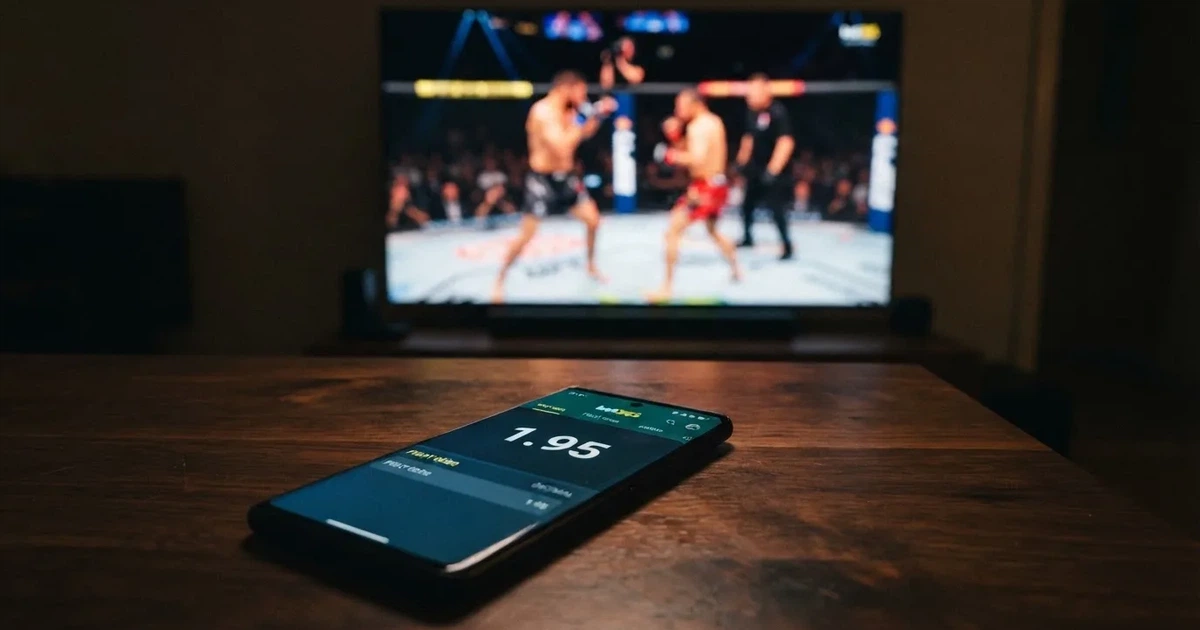
Mixed martial arts is now a staple of British sportsbooks. UFC fight nights run almost every Saturday, Bellator cards and ONE Championship events slot between them, and the licensed bookmakers serving Great Britain price each bout across a familiar menu of markets. That convenience hides a number every reader should know before placing a bet: the margin baked into the odds. This page treats MMA betting as a cost problem first, mapping the market through what it takes from a stake, what an offer really gives back, and which bookmakers quote the tightest prices on the sport. The aim is to read odds the way a bookmaker reads them, not the way an advert sells them.
Verified on 30 October 2026 against the Gambling Commission’s public register and the terms pages of each bookmaker listed below.
What MMA Betting Actually Is
A wager on a fight is a contract: the punter picks an outcome, stakes a sum, and the bookmaker pays the stated odds if that outcome lands. The contract runs through the bookmaker’s own rules — method of victory, round groupings, the timing of a stoppage, even the treatment of a no contest — so two customers can read the same market description on two sites and find different settlement rules underneath. The skill in MMA betting, as in any form of sports betting, sits in knowing the sport, knowing the bookmaker’s settlement quirks, and reading the margin off the price before staking anything.

A note on the product: the sport itself, mixed martial arts, was formalised as the Ultimate Fighting Championship in November 1993, when UFC 1 was held at McNichols Sports Arena in Denver, Colorado. The UFC now runs eleven weight divisions — eight men’s and three women’s — and most British bookmakers price every one of them, alongside Bellator and ONE Championship cards. A three-round non-title bout and a five-round title bout settle on different rules under the Unified Rules of MMA, and a bet on “fight goes the distance” reads differently on each. The bookmaker’s terms are the operative document; the rulebook is the sport’s.
The basics: how a price is built
Three numbers matter on every market: the stake, the decimal odds, and the return. The return is the stake multiplied by the odds, the profit is the stake multiplied by the odds minus one, and the rest of the page works from that arithmetic. On a method-of-victory market priced at 3.50, a £10 stake returns £35 — £10 of which is the original stake, £25 of which is profit. Two or three prices sit on a two-way or three-way market, and those prices reveal a fourth number: the margin.

The Margin: Where the Cost Lives
The bookmaker’s margin is the share of every pound staked that the book keeps on average. It is not a fee, it is not visible on the betting slip, and it is not printed next to the odds. It sits inside the prices, and the only way to see it is to do the arithmetic.
For a two-way market priced at 1.90 against 1.90 — an example, not a quoted price — the payout share is 1 ÷ (1/1.90 + 1/1.90), which is 1 ÷ 1.0526, roughly 0.95. The margin is 1 minus that, or about 5%. A £100 stake matched equally across both outcomes returns £95 in winnings on average and the bookmaker keeps £5. On a real market the two prices will not be identical, and the margin will spread across the three outcomes of a 1X2-style fight market (fighter A, fighter B, draw), but the calculation is the same: invert each price, add them up, and the gap to one is the margin.
What the number means in practice: a market at a 5% margin costs the punter about 5p on every pound staked over the long run, before any offer, any boost and any acca insurance is layered on top. A market at 8% costs nearer 8p, and that gap is what most punters call “the price”. The 3% difference between a tight market and a slack one is the difference between paying 8% and paying 11% over a season of bets, and it accumulates in the punter’s column, not the bookmaker’s.
A useful discipline: take any two-way price, convert both sides to decimal, and check whether the implied probabilities add up to more than 100%. The excess is the overround, and the overround is the margin. The bookmakers reviewed below differ in how tight they are, and the difference shows in this number, not in any headline figure.
Bitcoin, Crypto and Other Payment Routes Into MMA Betting
The British licence carries a single hard rule on payments: the credit card ban. Since 14 April 2020, no GB-licensed operator may accept a credit card for gambling, including a credit card funding an e-wallet. Outside that, the regulator has not declared on cryptocurrency. There is no statutory list of permitted payment methods and no state rule for or against bitcoin deposits at licensed operators; the question of whether a brand accepts crypto is settled by the brand’s own cashier, not by the regulator.
What a punter will actually find on the high street of British-licensed MMA books is familiar ground: debit card, bank transfer, instant bank payment, and the major e-wallets, with the operator’s own payment page being the source of truth. Crypto deposits — bitcoin, ethereum, stablecoins — are not a standard payment method on the licensed books reviewed here, and a punter who needs to bet with bitcoin will typically end up on a brand that does not hold a Gambling Commission licence. That is the trade to understand before signing up: an unlicensed brand sits outside the British consumer-protection framework, offers no GAMSTOP cover, no Commission complaints route and no British dispute-resolution service, and offers no guarantee of returning funds if the operator declines to pay. The price of using bitcoin in a British context is the protection a GB licence buys, and that protection is not a small thing.
For a punter who wants MMA markets with a GB licence, the choice is a debit card or a bank-based payment, plus whatever the operator’s cashier adds to that. A punter who wants bitcoin is choosing a different product, on different terms, under a different regulator — or none.
Bonuses and Free Bets on MMA
The bonus and free-bet sections of the British bookmakers reviewed here are where marketing language costs the most money, because the offer looks like a gift and settles like a contract. Three things to look at on every MMA promotion: what triggers the offer, what wagering sits on top of it, and what the offer is actually worth in cash.
A free bet, in the way most GB bookmakers write one, is a token that returns profit only: stake not returned, free-bet stake is forfeit on a loss, and the value of the token on average is the free-bet amount multiplied by the odds minus one, divided by the odds, then multiplied by the payout share of the market it is used on. A £10 free bet at decimal odds of 4.00, on a market whose payout share is 95%, is worth about £7.13 on average — and the headline “£10 free bet” reads more brightly than that figure.
The 10x cap on wagering requirements, in force on bonuses since 19 January 2026, sets a ceiling that did not exist before: a £10 bonus with a 50x wagering factor required £500 of qualifying bets, and a 10x cap limits the same bonus to £100 of qualifying bets. That is a real saving on a heavy bonus. The cap applies to wagering on bonuses, not to free bets with no wagering condition, and the cash value of a bonus has no statutory cap.
A second rule bites the cross-product promotion. Any offer that requires gambling on two or more product types — a sports bet that unlocks free spins, a free-bet offer that requires a casino round — is no longer permitted under the British rule in force since 19 January 2026. MMA offers that stay on a single product are unaffected; an offer that crosses into casino or bingo is not, and any punt who sees one is looking at a promotion that the British rule now blocks.
A word on the order of the calendar: every welcome offer described below is a snapshot, and the headline number is the headline number research carried. A £40-in-free-bets welcome offer is a £40-in-free-bets welcome offer at the time the operator’s terms were read; the offer’s value to any particular punter is the wagering, the minimum odds, the expiry and the market it can be spent on, in that order, and the page returns to each of those in the operator section.
Mobile Apps for MMA Betting
The British bookmakers reviewed here are, with one exception, smartphone-first products: a desktop site exists, a tablet version works, but the design target is the handset. That is true enough that the bettor’s choice of app is, in practice, the choice of bookmaker.
Two things to weigh. The first is the app’s catalogue of MMA markets: a UFC fight night is one set of markets, a Bellator card is another, ONE Championship and KSW are smaller again, and a small app might carry one card a month while a large app carries three a week. The second is the app’s in-play product, because MMA is a live sport, the odds move between rounds, and the difference between a slick in-play screen and a clunky one is the difference between reading a market and missing it.
A few app-specific things to know, drawn from the bookmaker terms research carried. The Betfred app covers twenty-one sports and over two thousand casino games, and the breadth is its selling point. The Fitzdares app carries cash out, accumulators, Lucky 15s, specials and antepost markets across horse racing, football, tennis, rugby, cricket, golf and American football, with in-play odds on top. The DragonBet app builds itself around Welsh football and rugby, racing and American football, with in-play and bet-builder markets. The Spreadex app combines fixed-odds and spread betting under one roof, with one-click, auto and partial cash out, a Bet Builder that crosses fixed odds and spreads, and live streaming on UK and Irish racing, greyhounds, tennis, NFL and selected football. Spreadex’s spread side is regulated by the Financial Conduct Authority for spread betting, and the fixed-odds side by the Gambling Commission, and the two products carry different margin profiles.
The Geoff Banks app is the lightest of the bunch, with live in-play prices and ante-post prices on future events as its published feature set. The Lottoland app is a different product class — casino, lottery, sports and scratchcards — and its sports section is one product among several. bet365’s app sits at the other end of the scale, with Bet Builder+, Super Boosts, Winnings Boosts on Bet Builders and selected singles, and a daily Bet Boost product, and is the official global betting partner of the UEFA Champions League; the MMA product on bet365 is one section of a much larger catalogue.
A punt who bets primarily on MMA from a phone has a fairly narrow shortlist: the apps that price every UFC card, run a usable in-play screen, and offer a meaningful method-of-victory market. Most of the apps reviewed do. The bet builder is a different question — not every app builds a same-fight multi on MMA the same way — and the comparison below returns to that.
Live Betting, In-Play and Cash Out
In-play MMA is a different market from pre-fight MMA. The odds move between rounds, the method-of-victory market settles on a live reading of the fight, and the round-grouping markets close as each round starts. A bookmaker’s in-play screen is a working tool, and the difference between a good one and a bad one is the difference between trading a position and watching it move.
The bookmakers reviewed here offer in-play MMA, with two features layered on top. The first is cash out: a settlement offered before the fight ends, priced by the bookmaker from the live odds, with one-click, auto and partial variants on the larger apps. The second is live streaming, which is a separate product and not a universal one — the Spreadex app streams UK and Irish racing, greyhounds, tennis, NFL and selected football, but the same app does not list UFC streams in its published feature set, and a punter should not assume that the live betting screen and the live video feed are part of the same package.
One operational rule worth knowing: the in-play product runs under the bookmaker’s licence conditions and customer-protection duties. There is no statutory rule that says in-play is “unrestricted” as a legal conclusion, and a punter who treats it as such will misread the product. Cash out can be suspended at the bookmaker’s discretion, the bet can be voided under the rules, and the live price on the screen is the live price the book is willing to lay at the moment it is shown.
MMA Betting Tips, Predictions and the “This Weekend” Question
A note before the heading turns into advice: no one knows who will win a fight, and a tipster who claims to is selling certainty that does not exist. The “top value MMA bets for this weekend” is a phrase that gets used a lot, and it does not mean what it appears to mean. A “value bet” is a price that is higher than the bettor’s own estimate of the true probability — a 2.50 price on a fighter the bettor genuinely believes has a 50% chance of winning, where the market implies 40% — and the value lies in the gap between the bettor’s read and the market’s read, not in any outside tip. A “top value” list, offered without the bettor’s underlying probability estimate, is a list of longshots dressed as analysis.
The honest framing: a bettor who wants to find value on a UFC card starts with the card, reads each fighter’s recent form, the style matchup, the weight cut, the camp, the injury reports, and the round the fight is most likely to end in. That work is the bettor’s own, and a third party’s “top picks” list does not do it for them. A paid tipster is a cost on top of the bookmaker’s margin, not a substitute for the work, and a tipster track record — when one is published — is a record of past picks, not a forecast.
The one thing the punter can do cheaply is shop the price. The same fight, the same market, will sit at 1.85 on one book and 1.91 on another, and the 0.06 gap is 0.06 of margin the punter keeps in their own pocket. The 1.91 book is the cheaper bet, and the 0.06 difference is the kind of saving that compounds across a card and across a season. That work is mechanical, it does not predict the winner, and it is the most reliable savings a bettor can find.
Bet Types and Odds on MMA
MMA markets break into three families: the moneyline (which fighter wins), the method of victory (how the fighter wins, by knockout, submission or decision, and in which round), and the proposition markets (fight goes the distance, double chance, fighter wins by stoppage in round one, and so on). Each is priced with a margin, and each margin is different. A bookmaker quoting a tight moneyline at 4% will quote a slack method-of-victory market at 9%, and the punter who can read the difference knows which market is the cheaper bet.
The specials — the round groupings, the “inside the distance” markets, the method-plus-round combinations — are priced wider again, because the market is thinner, the punter base is smaller, and the bookmaker’s margin is its compensation for the harder pricing job. A punter who bets these markets exclusively pays a hidden premium, and a punter who mixes them with the moneyline averages up the cost of every bet.
Each way on MMA is rare. Each way is a horse-racing convention — two equal bets, one on the win, one on the place — and the place terms vary by race and operator. A each-way bet on a UFC fight is unusual, the place terms are set by the bookmaker, and the cost is double the unit stake. The accumulators are more standard. A bet builder on a single fight — fighter A to win by knockout in round one, over 1.5 rounds, both fighters to land significant strikes — is a same-fight multi priced as one bet, with the legs compounding into one price. The margin on a bet builder is wider than the margin on each of its legs priced separately, because the bookmaker is taking a compounded margin on the combination.
A practical rule: if the bet builder is offered at 5.50 and the two legs priced separately compound to 5.20, the bettor is paying the bookmaker a premium for the convenience. If the legs compound to 5.80, the bet builder is the cheaper bet. The arithmetic is the same one as the margin calculation, applied to the legs of the combination.
The MMA Calendar: UFC, Bellator, ONE Championship and the Rest
The UFC runs the calendar, with fight nights almost every Saturday and a pay-per-view card roughly once a month. Bellator runs fewer events, with the heavyweight and light heavyweight divisions the most consistently priced on the British books. ONE Championship runs out of Asia and is priced thinly in Britain — the cards exist, the markets exist, but the price discovery is shallower than on a UFC card. PFL runs a season format with playoffs, and the format shapes the market: a season-long outright is a different bet from a single-fight moneyline.
A punter betting the calendar at the start of the year has an outright market on the championship of each division, an outright on fighter of the year, and a series of event-by-event markets. The outrights price the season, the event markets price the fight, and the margin on the outright is usually wider than the margin on the single event, because the season is harder to price and the book takes a wider cut for the work.
A useful fact about divisions: the UFC has eleven weight divisions, eight men’s and three women’s, and most British bookmakers price every one. The lighter divisions and the women’s divisions carry thinner markets, with fewer bookmakers offering prices, and the price discovery is consequently shallower. A bettor on the women’s featherweight or the men’s flyweight division will find fewer prices to compare, and the comparison is the work that pays.
Comparing the British Bookmakers on MMA
The table below is built from the Gambling Commission’s public register and from the bookmakers’ own published terms. The licence column is the register’s own record, naming the licence holder, the account number, and the categories on the licence. The ‘operator’s terms’ column is a single line from each bookmaker’s own published material.
| Brand | Licence | Operator’s terms on MMA and related markets |
|---|---|---|
| Betfred | Gambling Commission remote licence 039544-R-319290-010 (account 39544), held by Petfre (Gibraltar) Limited — remote general betting standard (real events) | App covers 21 sports and over 2,000 casino-style games |
| Fitzdares | Gambling Commission remote licence 000400-R-103839-030 (account 400), held by Fitzdares Limited — remote general betting standard (real events) | App offers cash out, accumulators, Lucky 15s, specials and antepost markets on horse racing, football, tennis, rugby, cricket, golf and American football, with in-play live odds |
| DragonBet | Gambling Commission remote licence 064908-R-339041-003 (account 64908), held by DragonBet Ltd — remote general betting standard (real events) | App features Welsh football and rugby markets, racing, American football, in-play betting and bet builder markets |
| BetUK | Gambling Commission remote licence 039198-R-319450-029 (account 39198), held by LeoVegas Gaming PLC — remote general betting standard (real events) | Sports welcome: deposit £10 and place a sports bet within 7 days of registering for four £10 free bets — two football accumulators of 4+ selections and two multiples of 2+ — valid 7 days, opt-in required |
| Spreadex | Gambling Commission remote licence 008835-R-104580-022 (account 8835), held by Spreadex Limited — remote general betting standard (real events); also FCA-regulated for spread betting | Combines fixed-odds and spread betting in one app, with one-click, auto and partial cash out, Bet Builder across fixed odds or spreads, and live streaming of UK and Irish horse racing, greyhounds, tennis, NFL and selected football |
| BetTom | Gambling Commission remote licence 064959-R-339314-003 (account 64959), held by Bet Tom Limited — remote general betting standard (real events) | Sports welcome: 50% back as a free bet of up to £50, with a matching 50% back up to £50 as free slot funds for casino play; full terms apply |
| BetVictor | Gambling Commission remote licence 039576-R-319370-028 (account 39576), held by BV Gaming Limited — remote general betting standard (real events) | Best Odds Guaranteed on UK and Irish horse racing, enhanced live race streaming, BetFinder for racing bets, Smart Stats |
| Unibet | Gambling Commission remote licence 045322-R-324275-019 (account 45322), held by Platinum Gaming Limited — remote general betting standard (real events) | Sports welcome: “Get £40 in Free Bets when you bet £20” — deposit and bet £20 or more at minimum odds 2.0 (1/1), free bets expire within 7 days, for new GB customers using a debit card or instant bank transfer |
| Fitzwilliam Sports | Gambling Commission remote licence 048760-R-335434-009 (account 48760), held by SBKI Limited — remote general betting standard (real events) | Dublin bookmaker with capped membership; “High Stakes Welcome” subject to compliance criteria |
| Geoff Banks | Gambling Commission remote licence 054095-R-330366-010 (account 54095), held by GB Sports Advisors Limited — remote general betting standard (real events) | App offers live in-play prices and ante-post prices on future events |
The table reads as a list, not as a ranking: every brand above is licensed, every brand carries an MMA product of some kind, and the difference is in the product mix, the offer structure and the regulated edge of the product. Two brands above carry offers that the British rule now blocks in their cross-product form — BetTom’s matched 50% back as free slot funds for casino play is a cross-product promotion that has to be read against the 19 January 2026 rule on mixed-product promotions, and the licensed operator offering it carries the responsibility for compliance. The bettor should check the offer’s current form against the rule before staking.
The Fitzwilliam Sports entry sits at the other end of the scale: a Dublin-based bookmaker, capped membership, a high-stakes welcome offer subject to compliance criteria, and a GB remote licence held through SBKI Limited. Capped membership is not a product most British punters will recognise — the brand’s published model is to limit the number of accounts, not to advertise broadly — and the welcome offer is gated by criteria the bookmaker sets. A punter looking for a quick sign-up will not find one here.
What the Comparison Does Not Show
The table is a snapshot, and a snapshot is one day’s reading. The MMA product on each book changes week to week: a UFC card is priced on every book the day of the event, the price moves between rounds in-play, and the welcome offer is a one-time proposition that becomes unavailable once the punter has used it. The bookmakers’ product pages are the operative document on the day a bet is placed, and the table above is a starting point, not a substitute for the check.
A bookmaker’s licence is a licence for the brand at the date of the register’s reading. The Commission’s register is updated, brands change hands, and the licence account number is the test. A punt who wants to check that a brand is still licensed at the moment of betting should run the search against the register on the day.
A second thing the table does not show: the spread product on Spreadex is a different regulated product from the fixed-odds product, and the FCA regulates the spread side. Spread betting losses can exceed deposits, and the Spreadex site’s own terms state that. A punter who has not read the spread-betting small print should not open a spread position, regardless of the GB licence on the fixed-odds side.
How MMA Betting Fits Into British Gambling Law
The Gambling Commission, sponsored by the Department for Culture, Media and Sport, is the regulator of the British commercial gambling market under the Gambling Act 2005, which covers Great Britain — England, Scotland and Wales. Northern Ireland is outside the Act and runs on its own older law, and a GB licence does not reach into Northern Ireland. A bookmaker serving customers in Great Britain needs a Commission licence wherever the operator is based, after the Gambling (Licensing and Advertising) Act 2014, and a Curaçao, Maltese or Gibraltar licence alone is not a substitute. There is no statutory list of permitted sports, events or markets, and the licence category — remote general betting standard (real events), the most common one for MMA — is the test of what the brand may offer. The Commission’s public register is searchable by business name, trading name, domain or account number, and is the whole test of whether a brand holds a licence. The register does not give a count of all licensed brands without an access date, and a punter who wants a fresh figure should consult the register on the day.
Financial spread betting is not the Commission’s territory — it is the Financial Conduct Authority’s, and the Spreadex entry above carries both regulators for that reason. The minimum age for any gambling in Great Britain is 18, and name, address and date of birth are verified before a customer can deposit or gamble, including with a free bet or bonus, since 7 May 2019. There is no anonymous play at a licensed British bookmaker.
Betting duty is the operator’s tax, not the punter’s, and the punter pays no tax on winnings in Great Britain. General Betting Duty is currently 15% on the operator’s gross profits, and a new remote betting rate of 25% applies from 1 April 2027 within it, while remote bets on UK horse racing, self-service betting terminal bets, pool betting and in-person betting stay at 15%. Until that date the remote rate is 15% across the board, and whether operators pass duty on through their odds is not established — never assume the punter pays it.
Responsible Gambling on MMA
A word on the framework, because the cost framing of this page is not a substitute for the question of whether to bet at all. GAMSTOP is the national multi-operator online self-exclusion scheme, and a mandatory licence condition for online operators in Great Britain since 31 March 2020. Self-exclusion periods are six months, one year, five years, or five years with auto-renewal, and after the minimum period the exclusion stays in place for a further seven years unless the customer asks GAMSTOP to remove it. GAMSTOP covers online sites and apps; betting shops run a separate service.
The licensed bookmakers reviewed here are all GAMSTOP members, and a self-excluded punter cannot open an account with any of them. A financial vulnerability check applies to licensed remote betting when a customer’s deposits minus withdrawals exceed £150 in a rolling 30 days — it is a public-record check, not an income or credit check. Financial risk assessments have been announced in a staged plan by the Commission, with no start date. Deposit limits are an operator-level product, and the operator must offer a gross deposit limit on a fixed time frame.
The help lines exist for a reason. GamCare runs the National Gambling Helpline; GambleAware funds treatment and research; the NHS runs gambling clinics; Gamblers Anonymous runs peer support. The Fitzwilliam Sports entry above links to all three as a published feature of the site, and the same help lines are reachable from any licensed bookmaker’s safer-gambling page. A punter who finds the betting is no longer fun, or who is chasing losses, or who is betting money set aside for something else, is reading the wrong page.
The Operators, Reviewed
What follows is a closer read of each bookmaker on the comparison, drawn from the public register, the bookmakers’ own terms and the published app material read in October 2026. The verdict at the close of each block is the page’s own reading, on the question the block actually answers, and each verdict is the read of a different question — the table is a snapshot, the prose is the judgement.
Betfred
Petfre (Gibraltar) Limited holds the Betfred licence (account 39544), and the brand’s app is published under Done Brothers (Cash Betting) Ltd, with twenty-one sports and over two thousand casino-style games on the same product. That breadth is the point: Betfred is a multi-product bookmaker, the MMA section is one section of a large catalogue, and the wider product is the appeal. A punt who wants MMA in the same app as horse racing, football, greyhounds, and a casino tab will find the breadth here, and the licence is the GB standard licence. The narrower read: the MMA pricing on a multi-product bookmaker is competitive but not specialist, and the bettor who wants the tightest margin on a UFC moneyline is probably looking at a different brand. The fit, then, is the bettor who wants one app for everything and is happy to take the breadth over the specialist’s edge on any one sport.
Fitzdares
Fitzdares Limited holds the licence (account 400), and the brand’s app carries cash out, accumulators, Lucky 15s, specials and antepost markets on horse racing, football, tennis, rugby, cricket, golf and American football, with in-play live odds. The MMA product is not the headline of the offering, and the published feature set leans into horse racing and football. The fit is the bettor whose MMA betting is part of a wider racing-and-football book — antepost, accumulators, specials — rather than the bettor who wants a tight in-play screen on every UFC card. The licence is a long one, in continuous operation, and the brand’s positioning as a premium bookmaker is consistent with the product.
DragonBet
DragonBet Ltd holds the licence (account 64908), and the brand’s app is built around Welsh football and rugby, with racing, American football, in-play betting and bet builder markets around the edges. The MMA product is not the headline of the offering, and the brand’s focus is regional. A bettor whose interest is Welsh sport will find a focused product; a bettor whose interest is MMA will find a small section in a regional book. The licence is a GB standard licence, the brand is GAMSTOP-covered, and the bet builder is on the product list. The fit, then, is the bettor who wants to bet on Welsh football and rugby in the same app as a smaller MMA book, and the trade is the regional focus for a thinner MMA product.
BetUK
LeoVegas Gaming PLC holds the BetUK licence (account 39198), and the brand’s published welcome offer is four £10 free bets in exchange for a £10 deposit and a sports bet within seven days of registering — two football accumulators of four selections and two multiples of two, valid seven days, opt-in required. The offer is gated on football, and an MMA-focused bettor is unlikely to clear it with MMA alone; the offer is built for a football punter. The fit, then, is the bettor who bets on football as the main product and wants MMA as a side bet, and the £10 deposit trigger is the kind of low entry point the bettor can use once. The MMA pricing sits inside the LeoVegas group’s product, and the bettor should check the offer’s current form before staking, because the 19 January 2026 mixed-product rule applies to any cross-product promotion.
Spreadex
Spreadex Limited holds the licence (account 8835), and the brand is also regulated by the Financial Conduct Authority for spread betting. The product combines fixed-odds and spread betting in one app, with one-click, auto and partial cash out, a Bet Builder that crosses fixed odds or spreads, and live streaming on UK and Irish racing, greyhounds, tennis, NFL and selected football. The two products carry different margin profiles, and the FCA-regulated spread side is a different bet from the Commission-regulated fixed-odds side. The spread bet is a leveraged product, and the Spreadex site’s own terms state that spread betting losses can exceed the deposit. The fit, then, is the bettor who wants fixed-odds and spread in one app, understands the spread product’s risk, and is happy to read both terms pages. The bettor who wants a straight fixed-odds book will find more product than they need.
BetTom
Bet Tom Limited holds the licence (account 64959), and the brand’s published welcome offer is 50% back as a free bet of up to £50, with a matching 50% back up to £50 as free slot funds for casino play. The matching casino leg is a cross-product promotion, and the 19 January 2026 rule on mixed-product promotions has to be read against the offer’s current form. The bettor should check the offer on the day, because the headline is the headline, and the rule sits above it. The fit, then, is the bettor who is happy to take the cross-product structure on the offer as it stands, and the bettor who wants a sports-only welcome offer is probably looking at a different brand. The licence is a GB standard licence, and the brand is GAMSTOP-covered.
BetVictor
BV Gaming Limited holds the BetVictor licence (account 39576), and the brand’s published feature set is Best Odds Guaranteed on UK and Irish horse racing, enhanced live race streaming, BetFinder for racing bets, and Smart Stats. The MMA product sits inside a larger racing-and-football book, and the published feature set leans into horse racing. The fit, then, is the bettor whose racing interest is the lead product and whose MMA interest is a side bet, and the BetFinder and Smart Stats features are racing-led. The licence is a long-standing one, in continuous operation, and the brand’s pricing on the racing side is competitive.
Unibet
Platinum Gaming Limited holds the Unibet licence (account 45322), and the brand has operated since 1999. The UK site runs under the Gibraltar company, and the published welcome offer is “Get £40 in Free Bets when you bet £20” — deposit and bet £20 or more at minimum odds 2.0 (1/1), free bets expire within seven days, for new GB customers using a debit card or instant bank transfer. The minimum-odds condition (2.0) and the seven-day expiry are the two figures to read, and the £20 trigger is the floor. The fit, then, is the bettor who has a £20 qualifying bet at evens or longer in mind and is happy to take a seven-day window, and the offer is a flat £40-in-free-bets deal once the qualifying bet is placed. The licence is a GB standard licence, the brand is GAMSTOP-covered, and the payment restriction (debit card or instant bank transfer) is part of the offer.
Fitzwilliam Sports
SBKI Limited holds the Fitzwilliam Sports licence (account 48760), and the brand describes itself as a Dublin bookmaker with capped membership and a “High Stakes Welcome” subject to compliance criteria. The model is a closed-membership bookmaker, and the welcome offer is not a £10-deposit trigger. The fit, then, is the bettor who wants a high-stakes bookmaker with a smaller, capped membership, and the bettor who wants a quick sign-up will not find one. Instant deposits, fast withdrawals, timeouts and deposit limits are on the published feature set, and the safer-gambling links to GambleAware, GamStop and Gamblers Anonymous are published. The MMA product sits inside a smaller, focused book, and the bettor should expect thinner price discovery than on a multi-product high-street brand.
Geoff Banks
GB Sports Advisors Limited holds the Geoff Banks licence (account 54095), and the brand’s published feature set is live in-play prices and ante-post prices on future events. The product is the smallest of the ten, and the published feature set is the smallest of the ten. The fit, then, is the bettor who wants a focused bookmaker with a smaller product, and the bettor who wants breadth will not find it. The licence is a GB standard licence, the brand is GAMSTOP-covered, and the in-play and ante-post features are the product.
The Cost Frame, Summed Up
Three numbers determine what a punter pays to bet on MMA in Great Britain. The first is the margin on the market they bet, which sits inside the odds and which the punter can read off the prices by inverting each side and adding them up. The second is the cost of the offer, which sits in the wagering requirement, the minimum odds, the expiry and the eligible markets, and which the 10x cap on bonus wagering and the 19 January 2026 cross-product ban reshape. The third is the cost of the operator, which is the choice between a multi-product high-street bookmaker and a focused, capped-membership or specialist product, and which the punter pays in the breadth-versus-edge trade.
The 5% margin on the worked example above is a reference point, not a number the punter will see in the wild. A tight MMA moneyline on a major book sits in the 4-5% range; a method-of-victory market on the same book sits in the 6-9% range; a same-fight multi on a bet builder sits above 10% on the average. A punt who wants to bet cheaply reads the prices before staking, and reads them across two or three books, and the saving between the cheapest and the priciest is the cost of the operator’s choice.
Offshore and Unlicensed Brands
A GB licence is compulsory at the point of consumption. A bookmaker whose remote facilities are used in Great Britain needs a Commission licence, and providing gambling facilities in Great Britain without the licence the Act requires is an offence under section 33 of the Gambling Act 2005 — aimed at the operator, not the customer. The practical consequence for a customer is the loss of the British consumer-protection framework: no GAMSTOP cover, no Commission complaints route, no approved British dispute-resolution body, no guaranteed return of funds if the operator declines to pay, and no application of the 10x bonus cap or the £150 vulnerability check. The punt is also outside the credit card ban, outside the operator’s safer-gambling duties, and outside the cross-product promotion ban, and the framing on these sites is not “safe” or “unsafe” by default.
Enforcement against unlicensed operators is disruption, not blocking. The Commission uses cease-and-desist notices, search-engine referrals, work with registrars, hosts and payment providers, and has been given, or is about to receive, court-order DNS blocking powers. A punt who wants to bet on an unlicensed site is making a consumer choice with their eyes open, and the framing of that choice is the framing this page uses: licensed = checks, limits, GAMSTOP, bonus cap and identity verification; unlicensed = none of those protections and possible loss of funds. Neither is the default.
Frequently Asked Questions
How does MMA betting work?
A punter picks an outcome on a fight, stakes a sum, and the bookmaker pays the stated odds if the outcome lands. The market runs from a moneyline (which fighter wins) through method of victory (knockout, submission, decision and in which round) to proposition markets (fight goes the distance, double chance, stoppage in a given round). Each is priced with a margin baked in, and the bookmaker’s own settlement rules decide how each market is read on the night. A bet settles on those rules, and the punter’s job is to read the rules before staking.
Where to bet on MMA fights with high odds?
The honest answer is the same answer that holds for any sport: a punter who wants high odds is asking the market to take the other side of a longer shot, and the bookmaker’s price is the bookmaker’s price. The brands reviewed above all carry MMA, the price differs by book and by market, and the comparison is the work. A punter who wants the highest price on a given fighter is best served by comparing the price across the books on the day, not by chasing a single brand that advertises “high odds” — the headline is the headline, and the price on the slip is the price the punter pays.
Is it top value MMA bets for this weekend?
A value bet is a price that is higher than the punter’s own estimate of the true probability, and a “top value” list is a list of bets priced as value by whoever wrote the list. No third party can tell a punter what is value for them, because the value lies in the gap between the punter’s read and the market’s read, and the punter’s read is the punter’s own. A paid tipster is a cost on top of the bookmaker’s margin, and a tipster track record is a record of past picks, not a forecast of the next one.
How can it be checked that a bookmaker holds a Gambling Commission licence?
The Commission’s public register is searchable by business name, trading name, domain or account number, and the register’s record is the test. A punter who wants to check a brand should look up the brand on the register on the day, and the licence account number, the licence holder and the licence categories are the three fields to verify. The register’s record on the date of the search is the operative record, and a licence the register does not show is not a GB licence.
How is the return on a bet worked out from the stake and the odds?
The return is the stake multiplied by the decimal odds, the profit is the stake multiplied by the odds minus one, and the rest of the page works from that arithmetic. A £10 stake at decimal odds of 3.50 returns £35 in total and £25 in profit. Fractional odds convert by dividing the numerator by the denominator and adding one, so 5/1 is 6.00 in decimal and 9/10 is 1.90. The conversion is the same on every market and every bookmaker.
What is the bookmaker’s margin and how can it be seen in the odds?
The margin is the share of every pound staked that the book keeps on average, and it sits inside the prices. On a two-way market, the payout share is one divided by the sum of the inverted prices, and the margin is one minus the payout share. The worked example on a 1.90 / 1.90 market gives a margin of about 5%, and the difference between a 5% market and an 8% market is the cost the punter pays over a season of bets. The arithmetic is the only way to see it.
Combat & motorsport – signupbetsguide.com
Content created by the «signupbetsguide.com» team
