
Online soccer betting 2026: the cost no one puts on the slip
 Available in US
The prices look small on a Saturday morning. A fiver on Arsenal, a tenner on the 2.50, an acca across the 3pm kick-offs. None of it looks like a budget decision, and that is the part the marketing never mentions. The cost of online soccer betting is not the stake: it is the margin baked into every price, the turnover rule behind every “free” bet, and the small print on the bonus that arrived the moment an account was opened. This page works through each of those costs, in the order a punter meets them, against the licensed British bookmakers the Gambling Commission actually regulates.

Data current as of 30 October 2026 and verified against the Gambling Commission’s public register of remote operating licences.
What the price on a football slip actually pays back
A decimal price of 2.10 on a home win means a £10 stake returns £21 if the bet wins: stake multiplied by the odds. The net profit is £11, because the original £10 is returned alongside the winnings. Fractional odds describe the same thing differently. Eleven-to-ten, the British way of writing 2.10, is the profit fraction: £10 of stake earns £11 of profit, and the total return is £21. The two notations are interchangeable, and every licensed British bookmaker displays both.
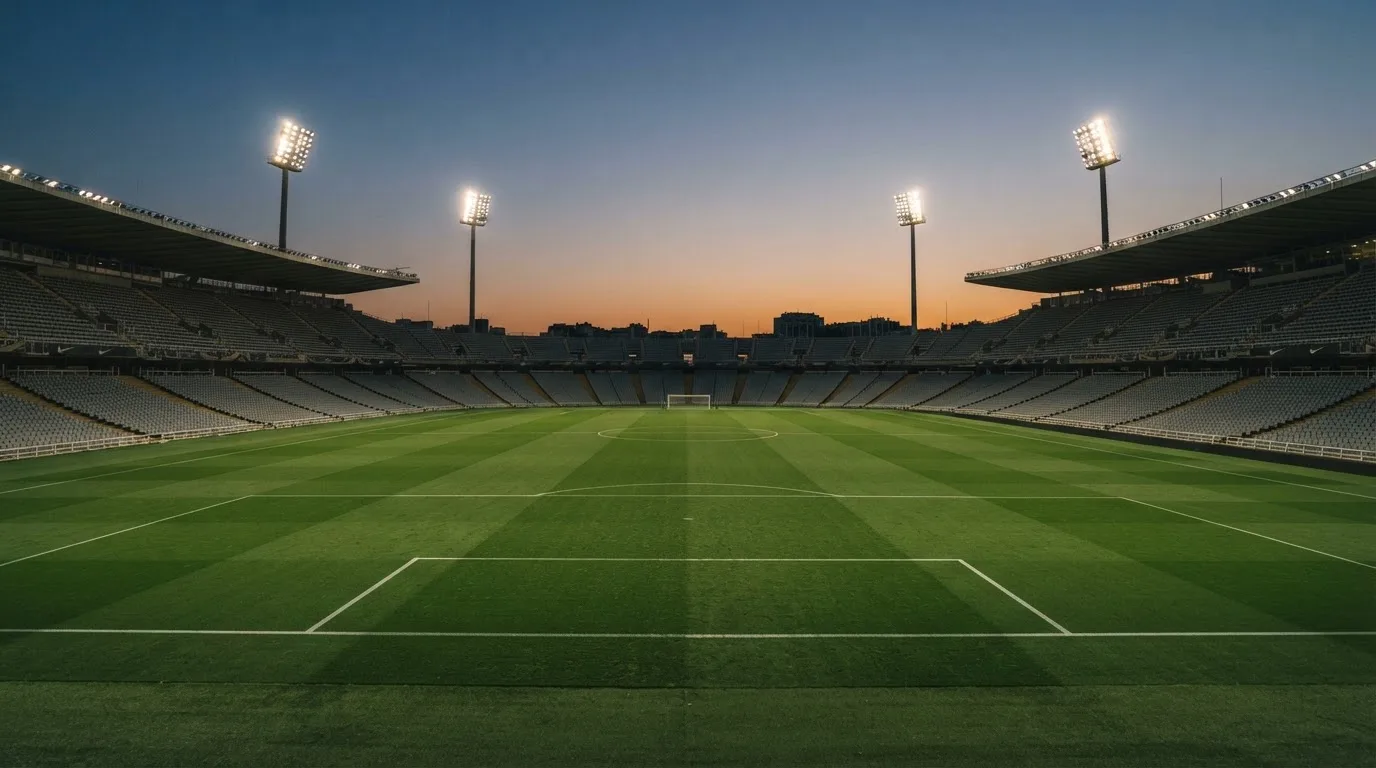
The slip is settled after ninety minutes plus stoppage time unless the market says otherwise. The Laws of the Game, kept by the International Football Association Board since 1886, give a standard adult match two halves of forty-five minutes with time added at the referee’s discretion. Extra time, the two further fifteen-minute periods a tied knockout match can go to, sits outside that ninety for settlement purposes: most match-result markets settle on the score at the end of normal time, and a market that includes extra time or penalties will say so in the title. The goal is 7.32 metres wide and 2.44 metres high, and each side has no more than eleven on the pitch including the keeper. None of that matters to a settled bet; it matters because bookmakers use it to define what counts as a goal, what counts as a shot on target, and what counts as a completed match when the weather intervenes.
For an accumulator, the calculation is the same idea applied repeatedly. Each leg’s odds multiply into one combined price. Four legs at 2.00, 1.80, 2.50 and 1.50 produce a combined price of 13.50, so a £5 stake returns £67.50 if all four win. The combined price is also where the bookmaker’s edges stack: every leg carries its own margin, and a four-fold acca carries more of them than a single.
Crypto and bitcoin deposits: what actually changes
The four search terms research turns up — soccer betting with bitcoin, bitcoin soccer betting, soccer betting sites that accept bitcoin, bitcoin betting on soccer — collapse to one practical question. Does the licensed British bookmaker, the one with a Gambling Commission account number, take bitcoin? The honest answer is that no remote general betting standard licence-holder listed in this comparison accepts cryptocurrency as a deposit method, and the legal frame explains why. Identity verification is required before the first deposit, including on a free bet, and bitcoin’s pseudonymous ledger sits awkwardly with that rule.

That does not make bitcoin betting on football impossible in Britain. It makes it possible only at operators outside the Commission’s register, and that is the trade a punter is being asked to make. An offshore site takes the deposit, settles the bet, and pays out the winnings. What it does not do is give the customer the protections that come with a British licence: GAMSTOP coverage is gone, the Commission’s complaints route is gone, the approved alternative-dispute-resolution body is gone, and a withheld-payout dispute has no British consumer redress. The 10x bonus cap, the £150 vulnerability check threshold, the LCCP social-responsibility code — all of it is gone. The bet itself is no more or less likely to win; the wrapper around it is thinner, and a punter who needs to be on GAMSTOP cannot use the offshore site at all.
The point is not that bitcoin betting on football is forbidden. The point is that the only place a British punter finds it is the place that has chosen not to be licensed for Great Britain, and that is a single decision with several consequences attached. A stake on the Premier League winner market is the same bet on either side of that line. The refund when the bookmaker declines to pay is not the same.
Free bets and sign-up bonuses: turning the headline into a number
A free £40 bet, a “bet £10 get £10” welcome, a “risk-free” first wager — these are the words that draw the eye. They are not what the offer is worth, and conflating the two is the most expensive mistake a new account can make. Three numbers decide what a free bet is really worth: the stake, the odds it is placed at, and the market’s margin.
The stake is the part most punters read past. A free bet’s stake is usually not returned with a winning bet. A £10 free bet at 3.00 that wins pays £30 in profit — not £40, because the £10 stake was the bookmaker’s money and never came back. The headline said “£10 free bet”; the slip says “stake not returned”. The full return is £30, and the punter’s net is £30 on a stake the punter did not post.
The odds matter because a free bet is only ever settled at the price the punter takes, and the margin in the market decides how much of the longshot’s payout survives the bookmaker’s cut. A free bet at 6.00 on a match-result market with a 5% margin is worth more, in expectation, than the same free bet at 6.00 on a market with a 10% margin. The same stake, the same price, two different values. The odds also have to clear the offer’s minimum: the Unibet sports welcome, for example, asks for a qualifying bet of £20 or more at minimum odds of 2.0 (1/1) before the £40 in free bets lands, and free bets expire within seven days of issue. The headline and the rule are different sentences, and both of them are on the same page of the offer’s small print.
The deadline is the third number, and it is the one that quietly destroys value. A 7-day expiry on a free bet is a working week. A punter who has not used the free bet by then loses it, and the bet is worth nothing in the bank once it has expired. The cap on free-bet winnings, where it exists, is a fourth number that does the same job: a maximum payout trims the long end of the price.
The headline price of a “Bet £10, Get £10 in Free Bets” welcome is a £10 starting point that turns into something smaller, soon, on a market with a margin in it. Read the four numbers and the offer reveals what it is.
The mobile app, the browser, and the difference
Soccer betting apps for Android and iPhone are the dominant way British punters place a bet. Three operators in the licensed comparison publish dedicated apps: the Betfred Sports, Casino & Games app, the bet365 app, and the Lottoland UK app, which bundles casino, lottery betting, sports and scratchcards under one login. The Betfred app covers twenty-one sports and over two thousand casino-style games, published by Done Brothers (Cash Betting) Ltd. The bet365 app carries the official global betting partnership with the UEFA Champions League and is described on its App Store listing as the most downloaded sports betting app in the UK. The Lottoland UK app is licensed by the Commission for customers in Great Britain.
The browser version of the same operator is functionally identical, in almost every case, and the choice between them is mostly about the device. A bet placed in a browser on a desktop settles against the same market and the same margin. The differences are smaller than the marketing makes them sound. Live in-play updates push faster to an app than to a browser tab the punter has minimised. Face or fingerprint login is faster on an app. Cash out is one tap closer on an app, and on a slow 3pm kick-off that distance matters. Geolocation is checked either way, and the credit-card ban and the identity check apply to the first deposit regardless of how it is placed.
A point worth taking seriously: the app is the more honest surface for what a bookmaker actually offers. A browser home page is built for search engines; an app is built for a punter who has already installed it, and the in-play tab, the bet builder, and the boost column are more visible there than they are in the same operator’s browser layout. The football offering is the same in both; the path to it is shorter on the app.
In-play betting and cash out: the cost of changing your mind
Live soccer betting — the in-play tab, the prices that move with the match — is where the licensed British market is deepest. The bet types are the same as pre-match: match result, both teams to score, over/under, Asian handicap, corners, cards, player shots. The settlement clock is shorter, the suspension windows are tighter, and a goal at 1-0 changes the menu for the next sixty seconds. A live bet is a bet placed on a market that is open while the match is running; a pre-match bet is a bet placed before kick-off. The two are priced separately and the margins are usually higher in-play than pre-match, because the bookmaker is paying for the suspension windows and the trading desk that runs them.
Cash out is the mechanism that turns a live bet into a closed position before the final whistle. The bookmaker offers a price — usually lower than the bet’s full settlement value, sometimes higher — and the punter either takes it or lets the bet ride. A cash-out offer is the bookmaker’s own quote, not a market price, and the margin inside it is the bookmaker’s alone. A punter who cashes out a winning accumulator at half its eventual value has paid the bookmaker to take the bet off the slip. The trade is real money for removed risk, and the cost of the removed risk is the gap between the cash-out price and the eventual payout. A punter who never cashes out pays nothing for that option.
The whistles that matter are kick-off, half-time, full-time, and the goal. Each one is a suspension window on most markets: prices freeze for two or three seconds, then re-open. The live soccer bet the punter missed by half a second is not a price that disappeared; it is a price that moved to a place the bookmaker is no longer willing to trade at, and the difference is the bookmaker’s risk in real time.
Predictions, tips, and the “strategy” with no edge
Free soccer betting tips, soccer bets today, top soccer bets today, soccer betting strategies, major league betting tips — the search terms cluster around a single promise: someone, somewhere, knows who will win. The honest answer is that no tipster, free or paid, can show an edge that survives the margin inside every price. A tip that picks a 2.10 home win is picking against a market whose payout share, after the bookmaker’s cut, is below 95%. The tip has to be right more often than the market already thinks, and the market already has the bookmaker’s trading desk and a few thousand sharp punters feeding it.
A staking plan is a different thing, and a more useful one. A flat unit — one or two per cent of a bank on every bet — is a way of surviving a losing run that is mathematically certain to arrive. The bankroll decides the stake; the form decides the bet; the rest is noise. A punter who doubles up after a loss to “win it back” is not running a staking plan, and the staking plan that doubles up is a bookmaker’s favourite customer.
The 2026–27 Premier League season starts on 21 August 2026 and runs to 30 May 2027. Twenty teams, three promoted — Coventry City, Ipswich Town and Hull City — and Arsenal as defending champions. The fixtures are the schedule the season gives; the form is the form the previous six matches show. Neither is a tip, and the tipster who sells the 3pm coupon is selling the same coupon anyone with a betting account can build for nothing.
The Spain versus Argentina World Cup final on 19 July 2026 — Spain winning 1-0 after extra time — sits in the record book and nowhere else. The next World Cup is on a date the betting market does not yet price.
The markets a British punter actually wagers on
Match result, the 1X2, is the market every bookmaker offers first. Home win, draw, away win. The odds on the same fixture vary across the licensed comparison because the bookmakers’ margins vary across the same market, and the price with the lowest margin is the cheapest to bet into.
Double chance covers two of the three 1X2 outcomes in one bet. Home win or draw, away win or draw, home win or away win. The price is lower than backing either single outcome on its own, because the bet covers more of the outcome space. Draw no bet refunds the stake if the match ends level, and the price sits between the home and away win prices. Asian handicap splits the stake across two close handicaps and refunds one half when the match lands on the split line: a -0.25 handicap on the favourite wins by half the stake on a one-goal win and pushes on a draw, the other half having been staked on the -0.5 line.
Both teams to score, BTTS in the British idiom, settles yes or no on whether each side scores at least once in normal time. Over/under on total goals, corners, cards, shots, and any number the bookmaker can price a line on, runs the same shape: a number, a line, two sides. The bet builder combines several markets from one match into a single price. The combined price is the product of the individual prices, with the bookmaker’s margin multiplied through each leg.
Best odds guaranteed, BOG, applies to UK and Irish horse racing, not football. The offer pays the starting price if the SP is bigger than the price the punter took, on singles and multiples, from 8am on the day of the race. William Hill and BetVictor both run the offer; Bet600 runs a version that pays the SP if the starting price is bigger than the early or show price. Football has no equivalent rule; the price on a Saturday morning is the price the punter takes.
Each-way betting is a horse-racing term, but the structure — two bets of equal stake, one on the win, one on a place finish — appears in some football markets at some bookmakers. The stake doubles and the place terms vary by the operator.
The competition calendar and the Premier League weekend
The 2026–27 Premier League is twenty teams over thirty-eight matchdays, the season bookending from August to May. The promoted trio — Coventry, Ipswich, Hull — are the new bookmaker lines. The relegated trio from 2025-26 are the markets that opened sharpest at the start of the season. Arsenal are the champions the rest of the league is trying to unseat, and the title market is the first to harden in August.
The FA Cup, the EFL Cup, the Champions League and the Europa League run their own calendars. The 2026 World Cup was a summer tournament and its final is in the record. The European Championship runs in 2028, the next World Cup on a date the licensed books will publish when FIFA confirms it. Each competition has its own ante-post market, its own in-play offering, and its own settlement rules, and the licensed bookmakers price them all.
The volume of matches across a Premier League weekend is the reason the licensed British books show their best margins there. A bookmaker trading a 3pm Saturday coupon is competing on price against nine other licensed books, and the overround is squeezed. A bookmaker trading a midweek EFL Cup tie has less competition on the same fixture and the margin is wider. The cost of a bet is a function of which match, which bookmaker, and which day of the week.
The comparison: ten licensed British bookmakers, side by side
Every brand in the table below holds a Gambling Commission remote operating licence for Great Britain and is listed on the Commission’s public register. The licence numbers, the licence holders and the operator’s own terms on free bets are what the table is built from. The comparison is not a ranking. It is a snapshot of who offers what, with the cost a punter pays to use each one.
| Brand | Gambling Commission remote licence | Licence holder | Operator’s own terms on free bets |
|---|---|---|---|
| Fitzwilliam Sports | 048760-R-335434-009 (account 48760) | SBKI Limited | “High Stakes Welcome” subject to compliance criteria |
| Betfred | 039544-R-319290-010 (account 39544) | Petfre (Gibraltar) Limited | Welcome offer terms set on Betfred’s own page; app covers 21 sports and 2,000+ casino games |
| Dabble | 065677-R-340363-005 (account 65677) | Dabble Sports UK Ltd | “Bet £10, Get £10 in Free Bets” on first deposit, minimum odds, 7-day expiry, stake not returned |
| William Hill | 039225-R-319373-015 (account 39225) | WHG (International) Limited | Best Odds Guaranteed on UK and Irish horse racing from 8am on race day, singles and multiples |
| Unibet | 045322-R-324275-019 (account 45322) | Platinum Gaming Limited | “Get £40 in Free Bets when you bet £20” at min odds 2.0 (1/1), 7-day expiry, debit card or instant bank transfer |
| BetVictor | 039576-R-319370-028 (account 39576) | BV Gaming Limited | Best Odds Guaranteed on UK and Irish racing, enhanced live race streaming, BetFinder, Smart Stats |
| Bet600 | 044731-R-323941-016 (account 44731) | Tyche Tech Limited | Best Odds Guaranteed on horse racing; pays at SP if bigger than the early or show price taken |
| Kwiff | 044448-R-323408-017 (account 44448) | Eaton Gate Gaming Limited | Free-bet and boosted-odds terms on Kwiff’s own page; 17+ App Store age rating |
| DAZN Bet | 048756-R-327274-019 (account 48756) | DZBT Limited | Welcome offer terms set on DAZN Bet’s own page; deposits from £5 (debit, Apple Pay, Paysafecard, Trustly, Skrill), £20 (PayPal) |
| Smarkets | 039173-R-319366-011 (account 39173) | Smarkets (Malta) Limited | Open bank transfer deposits instant from £10 to £10,000; withdrawals processed within 6 hours, £10 to £100,000 |
Fitzwilliam Sports
A Dublin bookmaker with capped membership. The licence sits in the Commission’s register under SBKI Limited, and the home page links to GambleAware, GamStop and Gamblers Anonymous alongside its own responsible-gambling tools: instant deposits, fast withdrawals, timeouts, deposit limits. The welcome is a “High Stakes Welcome” subject to compliance criteria, which is a different shape from a £10 get-£10 welcome: this is a bookmaker whose pitch is the higher-stake account, and the bettor it suits is one with the bankroll to back that pitch. The compliance criteria, named in the offer’s own small print, are the trade.
Betfred
The Betfred Sports, Casino & Games app is published by Done Brothers (Cash Betting) Ltd and covers twenty-one sports and over two thousand casino-style games, which makes it the broadest single product in this comparison. The licence is held by Petfre (Gibraltar) Limited, a name that signals the Gibraltar base the Commission’s since-2014 point-of-consumption rule accommodates. The sports welcome offer is set on Betfred’s own page and is not transcribed here; the relevant fact is that the terms sit in the same place as every other offer in this comparison, and the bettor reads them before staking.
Dabble
A “Bet £10, Get £10 in Free Bets” welcome on a first deposit, with minimum odds applying and a 7-day expiry. The free bet’s stake is not returned on a win, which is the standard free-bet settlement and the one that turns the headline into a smaller number. Dabble Sports UK Ltd is the licence holder under Commission account 65677. The offer is a thin welcome by the comparison’s standard: the £10 in free bets is worth, on average, less than £10 in cash once the stake-not-returned rule and the market margin are accounted for. For the punter focused on building a serious bankroll, this offer is a secondary choice, best used as a minor boost rather than a core betting strategy.
William Hill
The Best Odds Guaranteed offer is the headline. From 8am on the day of a UK or Irish horse race, William Hill pays the bigger of the price taken and the starting price, on single and multiple bets, with the rule excluding ante-post, tote and pari-mutuel bets. The offer does not extend to football. WHG (International) Limited holds the licence. Racing fans will find the guarantee essential, while football punters might find the market depth lacks the focus of a pure sportsbook.
Unibet
The sports welcome is “Get £40 in Free Bets when you bet £20” at minimum odds of 2.0 (1/1), with the free bets expiring within seven days. The qualifying deposit and bet have to be placed by a new GB customer using a debit card or instant bank transfer. Platinum Gaming Limited, Gibraltar, holds the licence. Unibet has operated since 1999. The £40 in free bets is the largest headline in this comparison, and the headline is what the punter reads first; the cost of qualifying at 2.0 (1/1), the 7-day expiry and the stake-not-returned rule are what the punter reads second. This welcome is one of the larger ones available, making it a natural fit for the punter who is already planning a larger qualifying stake on their weekend coupon.
BetVictor
Best Odds Guaranteed on UK and Irish racing, enhanced live race streaming, a BetFinder tool and Smart Stats. The licence is held by BV Gaming Limited under Commission account 39576. The product is built around horse racing in a way that mirrors William Hill’s pitch, with a sportsbook attached. Smart Stats and BetFinder are tools aimed at a punter who reads form before staking. While form-readers and racing fans are clearly the target audience here, the tools provided are useful enough that football punters should not discount them entirely.
Bet600
A smaller bookmaker with a Best Odds Guaranteed offer that pays the SP if the starting price is bigger than the early or show price taken. Tyche Tech Limited holds the licence. The bettor it suits is one who backs horses early in the morning and wants the upside of a drifted SP, and the football offering is the rest of the book. The size of the operation is a feature rather than a drawback: a smaller bookmaker is a thinner market, and the punter looking for a price the bigger books have already moved will sometimes find it at a smaller one.
Kwiff
A trademark operated by Spryme Ltd, licensed by the Commission under Eaton Gate Gaming Limited, with a 17+ App Store age rating. The product is built around boosted odds that arrive unpredictably — “kwiffed” is the in-house term — and the welcome offer terms are on Kwiff’s own page. The bettor it suits is one who likes the longshot at a bigger-than-market price and accepts that the boost is the hook rather than the steady edge. The boosted price still carries the bookmaker’s margin; it is just a smaller margin than the same selection on the same match at a competitor.
DAZN Bet
A newer entry to the licensed British market, with deposits starting at £5 by debit card, Apple Pay, Paysafecard, Trustly or Skrill, and at £20 by PayPal, with no processing fees. The welcome offer is on DAZN Bet’s own page. DZBT Limited holds the licence. The bettor it suits is one who pays in small amounts and through modern e-wallets, and the sportsbook is the focus rather than the racing offering. The lower minimum deposit is a real cost difference for the punter with a smaller bankroll: the £5 floor is half the £10 most competitors ask for.
Smarkets
A betting exchange, licensed as a remote betting intermediary rather than a remote general betting standard bookmaker. The difference is structural: a betting exchange matches punters against each other, with the operator taking a commission on net winnings, and the prices on the platform are set by the backers and the layers rather than by a trading desk. The deposit and withdrawal terms reflect the exchange model: open bank transfer deposits are instant from £10 to £10,000, withdrawals processed within 6 hours from £10 to £100,000, and UK debit card deposits are instant from £10 to £15,000. The bettor it suits is one who wants to back and lay the same selection and is comfortable with the exchange interface. The welcome offer is the commission structure rather than a free bet, and the cost of using Smarkets is the commission rather than the margin in the price.
The legal frame a British punter sits inside
The Gambling Commission is the regulator, a non-departmental public body sponsored by the Department for Culture, Media and Sport. The Gambling Act 2005 covers Great Britain — England, Scotland and Wales; Northern Ireland runs on its own older law. Since the Gambling (Licensing and Advertising) Act 2014, an operator whose remote facilities are used in Great Britain needs a Commission licence wherever it is based. Sections 33 and 36 of the 2005 Act, as amended, set the rule. A Curaçao, Maltese or Gibraltar licence is not a substitute, and the brand in the comparison that is Gibraltar-based holds its GB licence on top of the local one, not in place of it.
The licence categories matter because they name what the holder is allowed to do. Remote general betting standard, real events, is the category every bookmaker in this comparison holds. Remote general betting standard, virtual events, covers simulated fixtures. Remote general betting limited is a smaller-scale permission. Remote pool betting is for the pool operators. Remote betting intermediary is the licence for exchanges, and Smarkets holds it. Spreadex, the spread-betting firm regulated by the FCA for financial spread betting and by the Commission for fixed-odds betting, sits across two regulators. Its terms state that spread-betting losses can exceed the deposit — a fact the financial-spread product makes structural, because the loss is a function of how far the market moves rather than a fixed stake.
Identity verification is required before the first deposit, since 7 May 2019, including on a free bet. Name, address, date of birth. The licensed British market does not offer anonymous play. Credit cards are banned for gambling in Great Britain, since 14 April 2020, including credit-card-funded e-wallet payments. Debit cards and bank-based payments are not covered by the ban. The minimum age is 18.
The player pays no tax on betting winnings in Great Britain. The bookmaker pays General Betting Duty on gross profits, currently 15%; from 1 April 2027 a new remote betting rate of 25% applies within it, while remote bets on UK horse racing, bets on self-service betting terminals in licensed premises, pool betting and in-person betting stay at 15%. Whether operators pass duty on through the odds is not established, and the punter is never charged duty directly. The Commission’s statutory levy is a separate charge, not a tax.
The Commission’s public register is the whole test of whether a brand holds a licence. It is searchable by business name, trading name, domain or account number, and a licence number quoted in an advertisement or a footer should be checkable against the register. Every brand in this comparison holds a remote licence and is checkable.
The protection layer: GAMSTOP, deposit limits, and the £150 check
GAMSTOP is the national multi-operator online self-exclusion scheme. It is a mandatory licence condition for online operators since 31 March 2020, and every GB-licensed online operator takes part. A punter who registers with GAMSTOP is excluded from every licensed online bookmaker in Great Britain for the period they choose: six months, one year, five years, or five years with auto-renewal. After the minimum period, the exclusion stays in place for a further seven years unless the punter asks GAMSTOP to remove it. GAMSTOP covers online sites and apps. Betting shops use a separate service.
A financial vulnerability check applies to licensed remote betting when a customer’s deposits minus withdrawals exceed £150 in a rolling 30 days. It is a public-record check — bankruptcy, county court judgments — and it is not an income check, not a credit reference check. The £150 figure is the trigger, not the ceiling. Financial risk assessments have been announced in a staged plan with no start date, and writing them as “in force” is wrong: the Commission’s article of 7 July 2026 sets out the staged approach without a start.
Deposit limits are an operator requirement. RTS 12 says operators must offer a gross deposit limit on a fixed time frame, with the first changes in place since 31 October 2025 and a second phase postponed to 30 September 2026. There is no state-set deposit or loss ceiling for betting. Limits are the customer’s choice, and a punter who sets a daily, weekly or monthly limit at a licensed bookmaker is using a tool the operator has to provide.
The help is real. GamCare runs the National Gambling Helpline. GambleAware funds treatment and research. The NHS runs gambling clinics. Gamblers Anonymous runs meetings. The links are on the footer of every licensed British bookmaker.
The margin inside every price: a worked example
A bookmaker’s margin is what the bookmaker keeps, on average, of every unit bet on a market. It is built into the prices, and the way to see it is to add the implied probabilities of every outcome of a market and subtract from 100%.
Take an illustrative match-result market with decimal odds of 2.10 on the home win, 3.40 on the draw and 3.60 on the away win. The implied probability of each outcome is one divided by the price: roughly 47.6% on the home win, 29.4% on the draw and 27.8% on the away win. Add them: 104.8%. The book is paying out, in aggregate, 95.4p for every £1 staked across all three outcomes, which means the margin is 4.6% and the payout share is 95.4%. The 2.10/3.40/3.60 set is a thin book by Premier League standards; a market with a 5–7% margin is ordinary, and a 10% margin on a minor fixture is not unusual. The margin is the cost the punter pays, on average, on every bet.
Two cautions. The margin is a market-level average, not a per-bet cost, and a winning bet pays out at the price the punter took. The market with the lowest margin is the cheapest to bet into, on average, but no single bet’s outcome is decided by the margin. And a 5% margin on a Premier League 1X2 is a different number from a 5% margin on a four-fold accumulator, where the margins of each leg multiply through to a higher total: a four-fold with a 5% margin on each leg has a combined margin of roughly 18.5%, which is why a same-game acca on a bet builder is cheaper than a cross-fixture acca on the same selections.
What the headline leaves out
A headline price on a coupon is the smallest piece of the cost. A 2.10 home win is a 4.6%-margin bet on an illustrative book, on a market whose settlement clock stops at full-time. A free £40 bet is a £40 in name and less in settlement, with a 7-day clock and a stake-not-returned rule. A welcome offer is a hook whose value depends on the bettor’s next hundred bets. A crypto deposit is a payment method, and the question is not whether bitcoin settles but whether the operator holding the bet is one the British regulator covers. A best-odds-guaranteed offer is a horse-racing term that does not apply to the Saturday 3pm coupon. A margin is the cost the punter pays on every bet and the only number the bookmaker cannot advertise.
The 2026–27 Premier League starts on 21 August 2026. The fixtures are the fixtures. The form is the form. The bookmaker holds a margin in every price, the bonus has a turnover rule behind it, the free bet expires in seven days, and the licensed books in the comparison are the ones the Gambling Commission regulates. The cost of a bet is the sum of those four things, and a punter who reads each of them places a different kind of bet from the one who reads the headline.
Frequently asked questions
What is draw no bet in soccer?
A draw no bet is a two-way market on the match result that refunds the stake if the match ends level. The price sits between the home and away win prices on the same fixture, because the bet covers two of the three possible outcomes. A punter backing the home side wins on a home win and is made whole on a draw; the away win loses. The market is offered at most licensed bookmakers and is a common choice when the draw looks the most likely outcome and the punter wants the insurance of a refund.
What is asian handicap in soccer betting?
Asian handicap is a market that levels the perceived gap between two sides by giving one team a head start in goals. A -0.5 handicap on the favourite wins on any victory and loses on a draw or defeat. A -0.25 splits the stake across -0.5 and level: half the stake wins on a one-goal victory, half pushes on a draw. A -1 handicap loses on a one-goal win and wins on any victory by two or more. The handicap is read in goals, the stake is split across the two closest lines, and the half the line sits on decides which half wins and which half pushes.
What is double chance in soccer betting?
Double chance combines two of the three 1X2 outcomes into one bet: home win or draw, away win or draw, or home win or away win. The price is lower than either single outcome on its own, because the bet covers more of the outcome space. A double chance on the home side and the draw is the same as a draw no bet on a push-on-draw rule plus a smaller home-win upside. The market is offered at every licensed bookmaker in this comparison.
How can it be checked that a bookmaker holds a Gambling Commission licence?
The Commission’s public register is searchable by business name, trading name, domain or account number. A punter with a brand name, a licence number from the bookmaker’s footer, or a domain from the home page can look it up and confirm the licence category, the licence holder, and the address. The register is the test. A bookmaker quoting a Commission account number that does not appear in the register is not licensed for Great Britain, and the protections the licence brings — GAMSTOP, the £150 check, the 10x bonus cap, the LCCP — do not apply.
How is the return on a bet worked out from the stake and the odds?
The return is the stake multiplied by the decimal odds. A £10 stake at 2.10 returns £21 if the bet wins: £10 of original stake plus £11 of profit. In fractional form, the same bet at 11/10 returns £21 from a £10 stake: £11 of profit on £10 staked, with the original stake returned alongside. For an accumulator, each leg’s odds multiply into one combined price, and the stake multiplied by the combined price is the return if every leg wins. The 1X2 match-result and the over/under goals market settle after ninety minutes plus stoppage time unless the market says otherwise.
What is the bookmaker’s margin and how can it be seen in the odds?
The margin is what the bookmaker keeps, on average, of every unit bet on a market. It is seen by adding the implied probabilities of every outcome — one divided by the decimal odds of each — and subtracting the sum from 100%. On an illustrative 2.10 / 3.40 / 3.60 match-result market, the implied probabilities add to 104.8%, the margin is 4.6%, and the payout share is 95.4%. A market with a lower margin is cheaper to bet into, on average, and a market with a higher margin costs more on every bet. The margin is an average across many bets; no single bet’s outcome is decided by the margin.
Football – signupbetsguide.com
Content created by the «signupbetsguide.com» team
